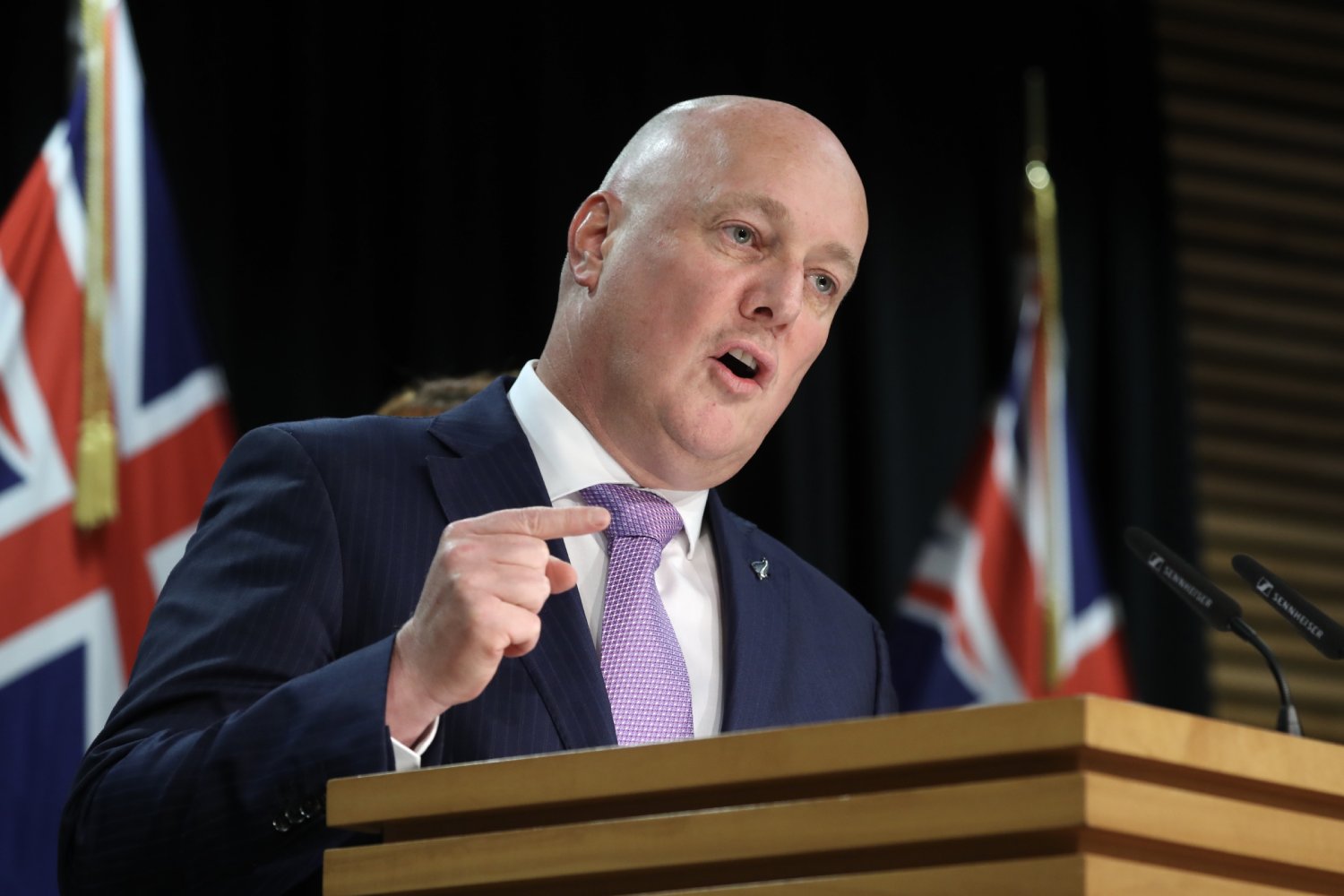
PM Christopher Luxon unveils nine new public service targets by 2030 at post-Cabinet press conference
Surgery wait times, student achievement, less crime and big reductions in welfare and emergency housing numbers are all part of Christopher Luxon’s nine new public service targets to be delivered by 2030.
The Prime Minister released them today during his post-Cabinet press conference, saying they will require the public sector to think differently and do deep dives into the root causes of key issues.
“These targets are not going to be easy to achieve,” Luxon said.
“But we’re not here to do what is easy - we’re here to do what is needed to reduce crime, shorten healthcare wait times and improve educational achievement, no matter how difficult.”
The nine targets are:
Luxon said he had scrapped former PM Jacinda Ardern’s Implementation Unit in the Department of Prime Minister and Cabinet, and would instead set up a delivery unit, which would keep a tight eye on the nine goals. That would include assessing whether various programmes were actually working, and pulling the pin on them if they were not.
He referenced comments about his CEO approach to the Prime Minister’s job: “I make no apologies for that, because it hasn’t worked for us having the career politicians for the last six years.”
Asked where those who would no longer be in emergency housing would go, Luxon said today there would be an increase in state and social housing, while increasing the supply of housing in general.
The targets come as the Government looks to find 6.5 to 7.5 per cent savings across government agencies and departments, a move that critics say will have downstream impacts on frontline services despite what Luxon has said about those being protected.
On public sector cuts at the Ministry for the Environment, Luxon said any job losses were difficult for people and their families. However, he said the public sector had to deliver savings and be sure they were working towards the targets the government had set.
The nine targets also come as workforce challenges loom in critical sectors including police, teachers and medical professionals.
Luxon said the targets were “deliberately ambitious”.
“They will be challenging and require the public sector to think differently, dig deeply into root causes, learn from other places, and be innovative and disciplined in directing resources to where they will have the greatest impact on outcomes.”
Delivery of the targets is the responsibility of a lead minister and lead public service agency chief executive, working in partnership with other ministers and their agencies as appropriate. Progress reports will be released publicly every quarter, starting from mid-2024.
Luxon was also asked about the Suicide Prevention Office and its potential closing, he said there were some communication issues between the Ministry of Health and the minister, and the office would continue.
The welfare target for fewer people on the Jobseeker benefit included those with health and disability issues on that benefit who are able to work.
“They may want to do part-time work... We want to make sure we do everything we can to get them off welfare,” Luxon said.
“Enough is enough. Excuses have to stop… We’ve got to get into this stuff - big-time.”
Some beneficiaries had been on welfare for decades, he added.
Luxon said the Government would take steps to ensure that other areas didn’t slip as a result of a focus on the main targets, saying the aim was “a quality result”.
On media trust, Luxon said he had not seen the data but did not believe politicians were partly responsible for declining trust in the media.
He said it was up to the media to ensure they were building trust with the New Zealand people “to tell the story straight and do as you should”.
He said he thought the media were a critical part of democracy and trust in them was important.
PM’s Asia visit and public sector job cuts
Luxon also announced today that he will travel to Singapore, Thailand and the Philippines next week, along with a senior business delegation, Minister of Climate Change and Revenue Simon Watts, and Paulo Garcia, New Zealand’s first Filipino Member of Parliament.
This trip was undoubtedly in mind when Luxon released his quarterly action plan last week, which included an item to “raise the energy” with respect to international engagements including in South East Asia.
His visit to Thailand will be the first dedicated visit by a New Zealand Prime Minister since 2013, while the visit to the Philippines will be the first in 14 years.
“South East Asia is a region that is more crucial than ever to our prosperity and our security. I look forward to meeting my counterparts and seeing firsthand what more we can do to deepen our relationships,” Luxon said.
Luxon said 10 per cent of New Zealand exports went to SE Asia, valued at $9.1b, and the region’s economy was increasing faster than just about anywhere in the world.
This week MPs return to Parliament after a one week recess to begin an unusual one week sitting block. It is the first sitting block since the Government announced its first quarterly plan last week, meaning we should see some legislation introduced to deliver on those plans.
Cabinet meetings are expected to be contentious this month, as ministers finalise the Budget due for delivery in May. Luxon is meant is likely to face questions on what is in the Budget and the extent to which public sector cuts are needed to pay for his tax plan.
Today, the Ministry for the Environment became the latest department to announce cost-saving measures.
Staff were told redundancies are “likely” as agencies rush to fund savings, which the Government hopes to turn into a saving of $1.5 billion a year.
Agencies are tasked with finding savings between 6.5 and 7.5 per cent to trim off their budgets, which, at numerous ministries, is resulting in proposals putting jobs on the line. The Environment Ministry needs to slash 7.5 per cent from certain lines of funding, with final sign-off to be made by the Government in relation to the upcoming Budget next month.
A voluntary redundancy scheme has opened at the Ministry, with no set target for uptake.
Luxon is also likely to give his view on immigration changes announced over the weekend. Immigration Minister Erica Stanford made immediate changes to the Accredited Employer Worker Visa, to respond to what the Government called unsustainable levels of inward migration.
In 2023, a near-record 173,000 non-New Zealand citizens migrated to the country.
The changes to the work visa scheme include introducing an English-language requirement for migrants applying for low-skilled jobs.
Stanford said the changes focus on using the local labour market first, while still attracting high-skilled migrants where there are skill shortages.
“Getting our immigration settings right is critical to this Government’s plan to rebuild the economy,” she said on Sunday in a statement.