Split Enz to benefit from Government copyright changes, Cameron Brewer to look at copyright in the AI era
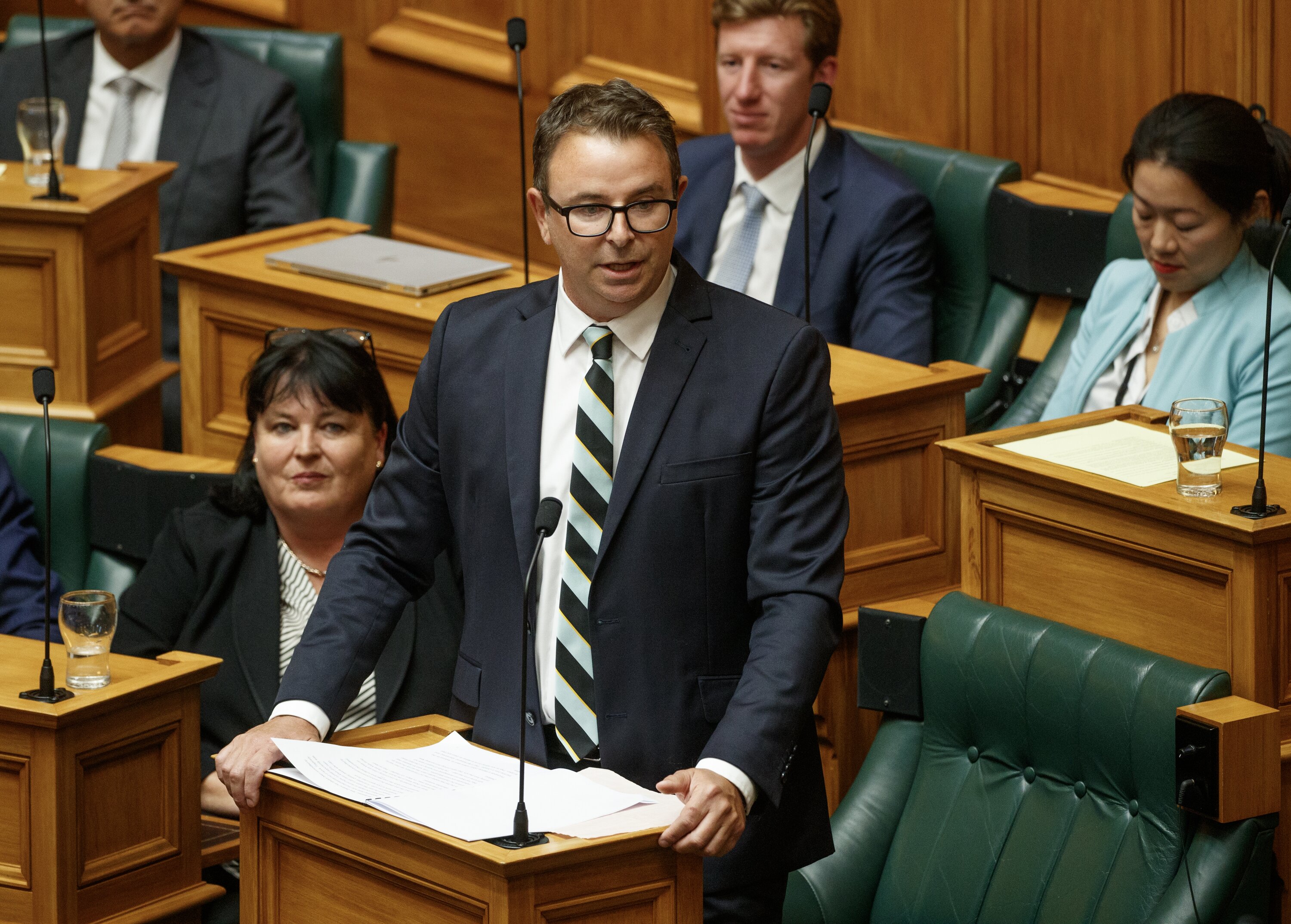
The Government is introducing sweeping changes to copyright law, which will see songs like I See Red by Split Enz, Dragon’s April Sun in Cuba and Hello Sailor’s Gutter Black enjoy extended copyright protection.
Copyright protection for these songs would expire in the next two years without the law change.
Commerce and Consumer Affairs Minister Cameron Brewer announced some of the changes last week, but this morning announced new details to the law, including protections for the likes of museums and parody and satire.
“Last week, we announced a 20-year extension to copyright protection, keeping some of our most iconic works earning for the artists who created them. Now we’re going further with a set of changes that strengthen creators’ rights and help safeguard our cultural treasures for future generations,” Brewer said.
Parody and satire are also the focus of a member’s bill from Green MP Kahurangi Carter, who has been trying to expand protections for people who used copyrighted material for the purpose of parody and satire. A member’s bill in Carter’s name, which would expand protections for parody and satire, passed its first reading in April.
Copyright reform as been on the cards since the last Government entered into trade agreements with the UK and the EU that promised to align some parts of New Zealand’s domestic law with international standards.
The changes must be made by May 1, 2028.
The laws extend the copyright protection period for most works by 20 years, so they are protected for either 70 years from the creator’s death or 70 years from publication.
The law will also strengthen protections for digital locks, which are technologies that copyright holders use to monetise and distribute works online.
The changes make some updates for not-for-profit gallery, library, archive and museum users of material.
The changes will mean these organisations can use “orphan works”, which are works whose copyright owner cannot be identified or contacted, if they have made a reasonably diligent search.
It will also allow these organisations to make digital copies of works for preservation, access and cultural continuity, particularly where works are unpublished, not being used commercially or at risk of deterioration.
Brewer said “our museums, libraries, galleries and archives are the keepers of our national story. But too much of what they hold is fragile, at risk of deterioration, and locked up by copyright rules built for a different era”.
“We are updating the Copyright Act so not-for-profit galleries, libraries, archives and museums can make digital copies of works more freely, preserving them before they’re lost and opening them up to the public,” he said.
Artificial intelligence (AI) has vexed international copyright regimes because of the way generative AI models scrape copyrighted works for training, often without compensation for the copyright holders.
Brewer said he had been asked by Cabinet to think about the issue and come back with policy options.
“Cabinet has invited me to report back by 31 March 2027 on a possible copyright framework for generative AI in New Zealand. Issues around AI and copyright are complex, and different countries have taken various approaches,” he said.