Thomas Coughlan: My verdict on Labour’s alleged ‘hidden bill’ and your chance to see if you can make the spending add up
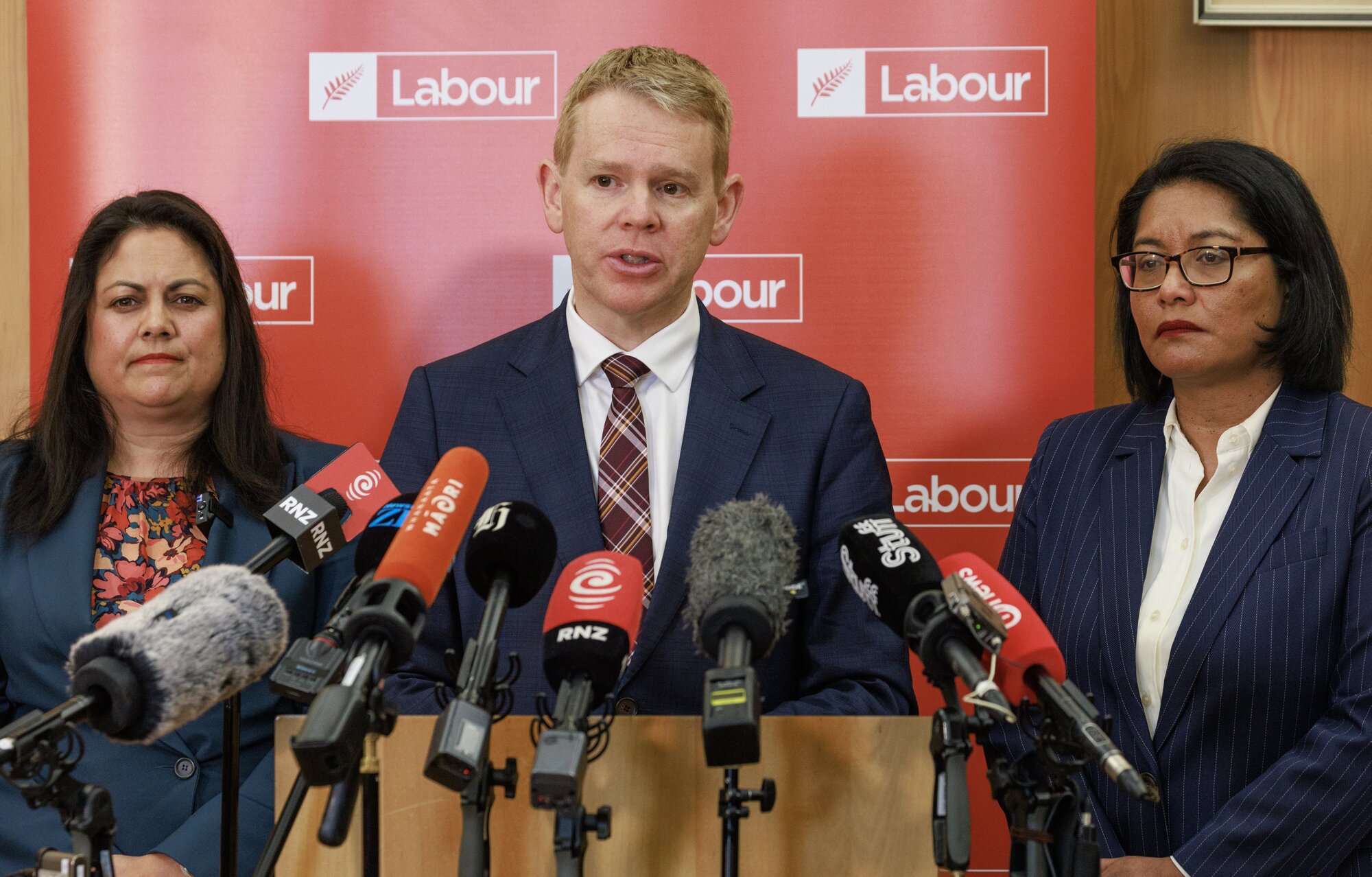
The National Party has alleged Labour has a ‘hidden bill’ in its spending plans, arguing its promises aren’t matched with funding to pay for them. Political Editor Thomas Coughlan looked at the allegations. At the bottom of this story, a budget calculator allows readers to take their own tough choices to make Labour’s promises add up.
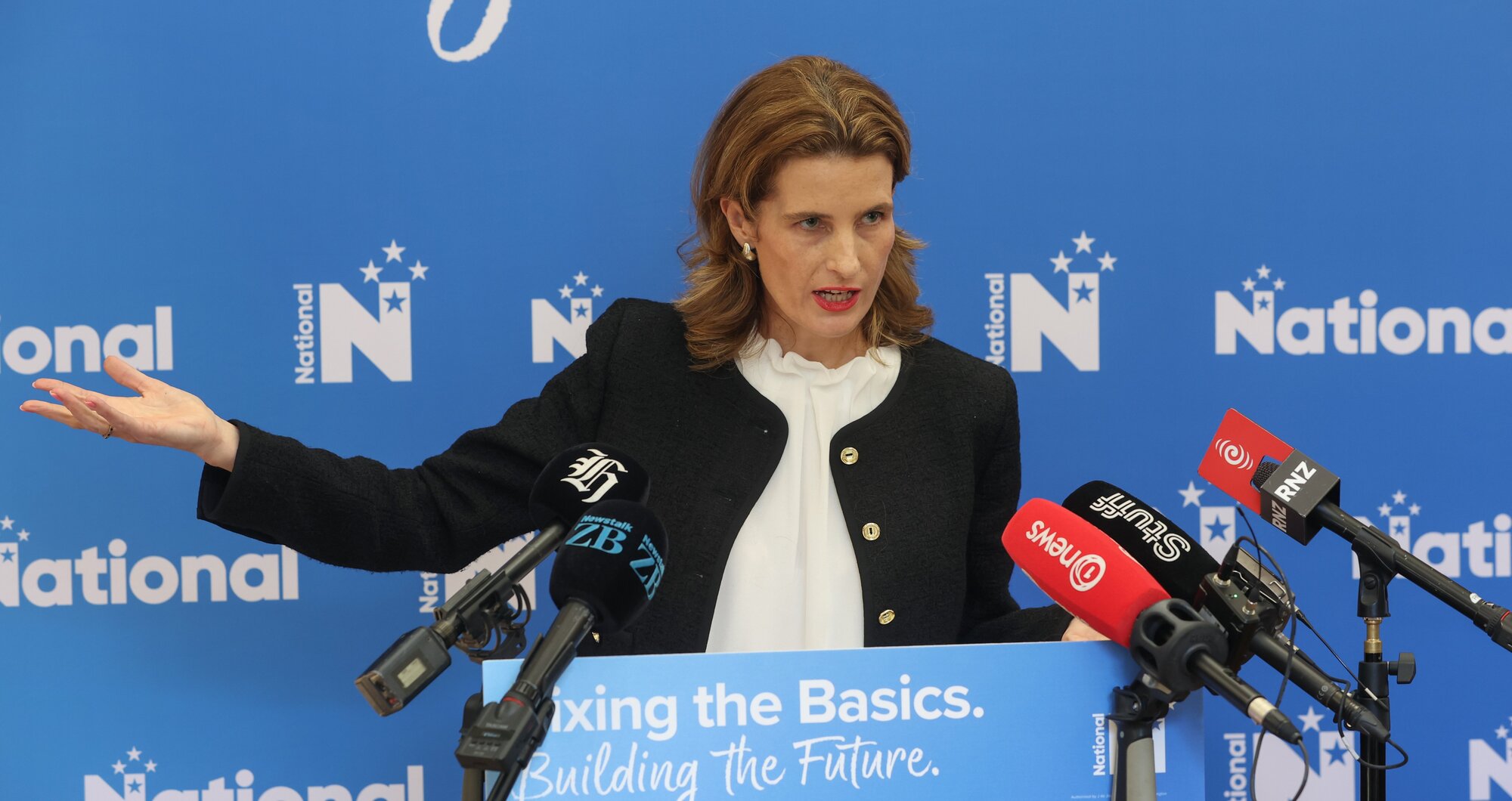
On Sunday, Nicola Willis took off her Finance Minister hat and replaced it with her National Party finance spokeswoman hat. She took off her gloves and did what every politician in her position tends to do: declared a hole in her opponent’s finances.
She didn’t actually call it a hole, in fact, she said she wasn’t ready to use that word and was instead simply seeking clarity from her opposite number, Labour’s Barbara Edmonds, on how she’d pay for her party’s promises.
But everyone knows she’s not really asking – you know what this is about, you’ve been here before… we have an allegation of a fiscal hole.
Before we look at the allegation itself, it’s worth dwelling briefly on the politics. Willis’ broadside inadvertently drew attention to a hole on the National side – a hole in the shape of CTU economist and now Labour candidate Craig Renney.
In November 2022 and May 2023, Renney published research on National’s hypothetical tax plan, first attacking its unequal distribution and then attacking its cost – and pointing out that National had not yet articulated a credible plan to pay for it. The May research was particularly brutal, because it set in motion a difficult media cycle in which every National Party campaign announcement was met with a chorus of “how will you pay for it?”.
The reason for this is strategy and psychology. Parties love announcing expensive and enticing election promises. Voters can start to get a picture about how a party’s promises might improve their lives.
The comparatively less attractive part of the equation is how these promises will be paid for. There’s no secret recipe for this. No matter who is in government, a policy needs to be paid for by some combination of tax rises, public spending cuts, or increased borrowing, none of which are particularly beloved by voters.
Unsurprisingly, political parties tend to prefer talking about the good that their spending promises will do and relatively less time talking about the unlovely and unloved trade-offs they need to make to pay for them. It’s no surprise parties tend to leave the announcement of their “fiscal plans”, the name for a political party’s alternative Budget, until the final weeks of the campaign (in National’s case in 2023, days before voting started)
One of the few advantages to being in Opposition is that you set your own rules about what you promise, what you cost and what you present to the public – you don’t have Treasury standing over your shoulder marking your homework as is the case for the Government. The only constraint on an opposition is the public’s willingness to trust their numbers.
There’s nothing wrong with an Opposition opposing something the Government is doing without explicitly promising to reinstate it, particularly in the first couple of years of a parliamentary term. That’s very normal – every Opposition does it. It’s advantageous because the nuance between opposing something and promising to actually reverse it is often lost on the public.
However, as the election nears, pressure builds on the Opposition to put meat on the bones and distinguish between things it opposes and things it will oppose and reverse. And to show how it will pay for its promises.
The sooner an Opposition starts taking a position on these things and starts talking about the grim business of taxing, cutting and borrowing, the better it is for the Government. In a majoritarian democracy, being everything to everyone is much easier than being something to some people. The sooner a Government can box an Opposition in, the better.
There is no Renney on the right side of politics – and if there is, they’re holding their tongue. Willis’ intervention on Sunday was an example of the adage if you want something done right, you have to do it yourself.
Labour has spent a lot of time promising to spend money. Willis clearly wants to bring forward the time at which Labour must lay out a credible plan to pay for these promises. She may also want to bring forward some inevitable U-turns on promises Labour has made, but which are beginning to look unaffordable.
Willis’ document
On Sunday, Willis published “Labour’s Hidden Bill”, a list of promises Labour had made or decisions taken by the coalition, which Labour had strongly criticised and may wish to reverse.
Costings were either taken from the most recent Treasury costing, or, in the case of some promises, from Labour’s own policy documents.
Willis then added the cost of Labour’s spending commitments and subtracted the cost of Labour’s only announced new revenue tool, a Capital Gains Tax (CGT) to show there was an $18.2 billion gap between the policies Labour has either promised or strongly suggested it would implement and the revenue available to fund them.
There’s no way to assess the document without looking at the individual lines of spending – so let’s go.
Spending
Reinstate the former pay equity regime
Cost: $10.9b
Who costed it: Treasury – Budget 2025
What’s the promise: Labour has explicitly said it would reinstate the old pay equity regime but has cast doubt on Treasury’s costing of it.
Comment: Labour’s promise to reinstate the old pay equity regime is at the heart of the document. It comprises about half of the spending commitments and at $10.9b, it is one of the most expensive single election promises ever made, costing more than the income tax cuts National promised last election (just under $10b).
There is a big question mark over the cost. Usually, it would be almost impossible to argue with a policy that has been costed by Treasury, but Labour has cast doubt on Treasury’s work in this case. Treasury has strongly stood by its costing, providing comment to the Herald saying the figure is robust.
There may be some merit to Labour’s scepticism. Pay equity settlements are ultimately the result of negotiation, meaning there is more uncertainty in the costing than in other lines of spending. However, it’s probably fair to say that whatever figure Labour lands on for its own costing will be a big one – this is a very expensive promise, no matter how you add it up. And Labour’s ability to truly promise to reinstate the old system is in some ways dependent on its ability to front up with the money
Forego dividends of Future Fund companies
Cost: $2.7b
Who costed it: Treasury and SOEs (kind of – more below)
What’s the promise: Labour has promised to create a “Future Fund”, funded with a $200 million capital injection. The fund would take ownership of the Crown stakes in state-owned enterprises and other Crown shareholdings and would receive the dividend revenue from these companies, which would be used for future investment. Labour has not said which companies would go into the fund and says it won’t be in a position to do so until after the election.
Comment: The dollar figure on this costing is robust, it comes from a remark by Labour leader Chris Hipkins that “state-owned enterprises, mixed ownership model companies” would be at the “ top of the list” of entities that would be rolled into the fund. Willis has taken the 2024/25 dividends of the juiciest revenue contributors, Genesis, Mercury, Meridian, Air New Zealand and Transpower, and assumed they continue through the forecast period to cost the policy at $2.7b.
The economic logic is fine. These companies are likely to pay dividends roughly in line with that forecast, and if those dividends go into the Future Fund, then they will no longer go into the core Crown account. That blows a $2.7b hole in the public finances, which would need to be paid for somehow.
The problem is this isn’t exactly what Labour has promised.
Labour hasn’t said which companies would be going into the fund. We don’t know whether it’s getting all the SOEs, or only one or two, and won’t know until after the election. In fairness to Willis, it’s not unfair for her to want some clarity on the promise. Labour has been selling the Future Fund as a job-creating solution to New Zealand’s economic woes – strongly suggesting that it’s going to be a large fund, absorbing most Crown companies.
But many commentators suspect that when it comes to making its first post-election Budget add up, Labour is likely to opt for a far, far smaller fund.
For that reason, Willis has been a bit sneaky, picking a figure that is at the absolute upper bound of what the policy is likely to cost – but that sneakiness can probably be justified by Labour’s slightly ridiculous rhetoric on the policy, saying it’s at the centre of its pro-jobs agenda while refusing to provide any costing detail until after the election. My money’s on the policy receiving a sliver of dividend revenue – and consequently not shifting the needle on the economy’s employment troubles.
Reverse Future Public Sector Baseline Savings
Cost: $2.7b
Costed by: Treasury – Budget 2026
What’s the promise: The coalition has booked savings of $2.7b by cutting public service baseline spending in subsequent Budgets (about $786m a year through most of the forecast period). Labour has said it would make “different choices”, but hasn’t fully committed to not going through with the cuts if it wins the election
Comment: Treasury’s costing is robust and Willis’ assertion that Labour would struggle to follow through on most of the cuts if it wins the election is probably fair. Labour Governments, with one notable exception, tend not to make large numbers of state employees redundant.
The big problem with this figure isn’t that it creates problems for Labour – it does. The problem is that many observers struggle to believe Willis herself will achieve these savings.
For starters, NZ First leader Winston Peters has said cuts to MFAT will be determined by election (and how well his party does). The cuts would mean heavy reductions to some departments to achieve the Government’s goal of reducing overall headcount to 55,000. It’s probably fair to assume Willis will make some savings – probably larger savings than a Labour Government – but will fall short of the overall goal. A problem for Labour, but also Willis.
Reverse income-related rent changes
Cost: $542m
Costed by: Treasury – Budget 2026
What’s the promise: The coalition has hiked the rent paid by state house tenants by $10 to $30 a week, in part to pay for an increase to the subsidy received by low-income households who rent privately. Labour has criticised the move as “cruel”, but has not committed to reversing the changes.
Comment: The Treasury costing is robust, but Labour hasn’t committed to reversing the change.
It’s hard to know what the party will do. If it reverses the policy, will it cut the increased subsidy the Government has given to private renters – that would go some way to funding the change, but it would be unpopular. It seems unlikely but not impossible that Labour will hold its nose and accept this change at least in part.
Reinstate the Previous School Lunch Programme
Cost: $427m
Costed by: Treasury has provided a costing for the current programme. The Government has calculated a “saving” by subtracting this cost from the old programme. Neither the old programme nor the current one has permanent funding. No major quibbles, but the figure isn’t as strong as some of the others.
What’s the promise: Multiple Labour education spokeswomen have promised to reverse the Government’s changes to the school lunch programme and revert to the old model.
Comment: This one is pretty black and white. The promise is clear and the costing is fine. The programme isn’t cheap, comprising about 17% of the total revenue Labour expects to net from its CGT. Labour will struggle to fund it.
Cap public transport fares
Cost: $260m
Costed by: The Labour Party
What’s the promise: Labour says it will cap public transport fares at a weekly $20 or $10 depending on where you live.
Comment: The costing for this policy looks okay – although commentary from economists reckons it probably skews on the optimistic side, with one estimate suggesting it might cost almost twice as much – up to $111.6m a year or $446.4m over the forecast period.
Labour says the funding would come from the National Land Transport Fund (NLTF), so it’s not really a hole in the Crown’s main balance sheet. However, the NLTF has a massive looming deficit and the coalition and Labour will need to prove how they can get on top of it by cutting transport projects. For that reason, it’s probably fair to include the policy in this list because it will, indirectly, put pressure on the Crown’s balance sheet, but Willis has just as many questions to answer about how she’ll make the NLTF add up as Labour.
Health promises
Cost: $3.3b
Costed by: Labour (with some adjustments by National)
What’s the promise: Labour has made a series of health promises including three free GP visits, free cervical screening and maternity scans, and axing the $5 prescription co-payment.
Comment: This costing is a little inflated by National. Labour has said all of its CGT revenue will be directed into new health initiatives, like the three free GP visits. Because the CGT takes some time to accrue serious revenue, in the first few years of Labour’s plan, expenses exceed revenue. Labour says this will be made up for in later years when revenue exceeds expenses (over the much longer term, a CGT could raise significant revenue, although this isn’t captured in the four-year forecasts).
National has taken the spending commitments and got to a figure of $3.3 apparently by taking a harsh view of the timing of spending. I think it would be unlikely that Labour would decide to do this in reality. The promise of a $2.8b CGT to pay for $2.8b of health spending has been pretty clear. The main problem Labour faces is that the property crash may mean revenue from the CGT isn’t quite as high as Labour hopes — particularly if the party decides to do another property tax like banning interest deductions again.
…other
Willis’ parting shot listed six things Labour has opposed but which she has not costed and not included in her estimates. These include things such as changing the way benefits are calculated, reinstating fees-free, and increasing the Government’s KiwiSaver contribution.
The biggest missing item from the list is an adjustment to the operating allowance. Willis has run very tight operating allowances, which means discretionary spending, including cost pressures for health and education, has been pretty tight each year. If Labour wants to change this, it’ll need to increase the operating allowance in its budgets over the next Parliament.
Doing this costs a lot of money. For example, increasing next year’s operating allowance to $3b, an allowance smaller than almost all of the last Labour Government’s Budgets, would cost an extra $2.4b over the forecast period. Doing it for all the next Parliament’s Budgets costs even more. It’s hard to see Labour not increasing these allowances, but adding them to the fiscal plan would make an already big fiscal challenge even bigger. If you ask me, this is the party’s biggest challenge after working out what to do with pay equity.
Can Labour make it add up?
On the revenue side of the equation, Willis has included only Labour’s CGT, which is meant to bring in $2.8b.
Labour hasn’t committed to any other changes to raise new revenue or cut spending to pay for its promises, but recent public statements suggest it might look at things such as reinstating the ban on interest deductions for residential landlords (a back of the envelope calculation based on old Treasury numbers suggests this could net more than $2b) and axeing the $6.8b Investment Boost tax credit scheme.
They all get Labour closer to making its promises add up but Willis has a point because Labour’s promises on the spending side are not matched by obvious sources on the revenue side. It’s unclear how big the hole is, and it varies depending on the size of Labour’s pay equity promise and how much Labour wants to repeal. But at the moment, there is clearly a hole between Labour’s spending rhetoric and revenue reality.
It’s not an impossible task, but it involves bending or breaking some promises and angering some voters – something Labour probably doesn’t want to do when it’s on a bit of a roll in the polls.
Come and have a go, if you think you’re clever enough
Reckon you can make it work? When Finance Ministers put together a Budget, some use a system of two bars: one bar involves spending commitments, the other involves revenue ideas. The goal of the system is to make the revenue bar and the spending bar equal one another, which indicates the promises in the Budget can be paid for.
We’ve created a tool for you to have a go at creating a fiscal plan for Labour. We’ve included the party’s committed and potential policies along with a list of potential funding sources. You can justify your choices to yourself. For example, you can include the cost of Labour’s public transport fare cap, even though the party says this is coming out of a different pot of money – the coalition argues the cost will eventually end up back on the Government’s balance sheet.
Likewise, we have included the cost of not going through with the 12c a litre fuel tax hike in January – $1.8b over the next transport Budget. There’s a good chance Treasury will need to reimburse the NLTF for lost revenue, hence its inclusion here.
On the revenue side, you can select Labour’s CGT, but you can also choose a number of other revenue tools, including ones the party has ruled out or is unlikely to deploy, such as the 2023 wealth tax and reversing 2024’s income tax cuts.
We haven’t accounted for the fact that if you added all of these taxes together, you’d probably break the economy.
Good luck!