Treaty Principles Bill live updates: Te Pāti Māori MP Hana-Rawhiti Maipi-Clarke suspended as haka derails bill’s first reading vote
A haka by Te Pāti Māori MPs interrupted the first reading of the contentious Treaty Principles Bill today, causing Parliament to be briefly suspended.
It also resulted in Speaker of the House Gerry Brownlee naming Te Pāti Māori MP Hana-Rawhiti Maipi-Clarke as the instigator as the House voted to suspend her.
It followed Opposition politicians grilling members of the Government, including Minister for Māori Development Tama Potaka, Minister of Justice Paul Goldsmith and Minister of Education Erica Stanford on issues relating to the Treaty of Waitangi and Māori-Crown relations.
Act leader David Seymour began speeches on the Treaty Principles Bill. With the three governing parties committed to supporting it at first reading, it was expected to pass through to a select committee before the disruption to the vote by the haka.
‘Put people in jail’: Shane Jones
Tom Dillane
New Zealand First MP Shane Jones has hit out at Te Pāti Māori for today’s haka in Parliament, inferring they should be thrown in jail.
“Parliament has inherent powers to put people in jail and the way the Maori party are carrying on, that seems to me quite the appropriate response,” he told Newstalk ZB’s Heather du Plessis-Allan’s drive show.
He described their behaviour as “threatening and ugly”.
“It turned into a circus with the Maori party, in particular, the young lady from Tai nui,” Jones said, referring to Hana-Rawhiti Maipi-Clarke.
Maipi-Clarke has since been disciplined by Speaker, Gerrie Brownlie, who named her in parliament for what he called “appalling”, “disrespectful” and “grossly disorderly” conduct.
Jones said he wasn’t surprised the Maori party was “subverting parliament”. He then referred to the party as “malcontents” who were there to undermine the legitimacy of parliament.
He said the Hīkoi was used by Te Pāti Māori as a basis to recruit members.
“The whole Hikoi, which was actually a car-Koi is designed as a clarion call to boost the appeal of the Māori party,” he said.
Willie Jackson on ejection: 'I will not apologise for what is the truth'
James Wheeler
Seymour releases statement after Treaty Bill passes first reading
James Wheeler
Associate Justice Minister David Seymour says all New Zealanders will now be able to have their say on the Treaty Principles Bill after it passed its first reading and was sent to the Justice Committee to be considered.
“I look forward to seeing what Kiwis have to say on the Bill over the six-month select committee process,” says Seymour.
“The select committee process will finally democratise the debate over the Treaty which has until this point been dominated by a small number of judges, senior public servants, academics, and politicians."
“Parliament introduced the concept of the Treaty principles into law in 1975 but did not define them. As a result, the courts and the Waitangi Tribunal have been able to develop principles that have been used to justify actions that are contrary to the principle of equal rights. Those actions include co-governance in the delivery of public services, ethnic quotas in public institutions, and consultation based on background.
“The principles of the Treaty are not going away. Either Parliament can define them, or the courts will continue to meddle in this area of critical political and constitutional importance. The purpose of the Treaty Principles Bill is for Parliament to define the principles of the Treaty, provide certainty and clarity, and promote a national conversation about their place in our constitutional arrangements.
“The Bill will not alter or amend the Treaty itself. It will be used to assist with the interpretation of legislation where Treaty principles would normally be considered relevant, in addition to legislation that refers to Treaty principles directly.
“Far from being a divisive document, the Treaty is a powerful guide for New Zealand’s future, establishing that all New Zealanders have equal rights, and that the government has a duty to protect those rights.
“I believe all New Zealanders deserve tino rangatiratanga – the right to self-determination. That all human beings are alike in dignity. The Treaty Principles Bill would give all New Zealanders equality before the law, so that we can go forward as one people with one set of rights.
“I am looking forward to this important national conversation about the place of the Treaty in our constitutional arrangements.”
Parliament halted as haka disrupts voting
Tom Dillane
Watch: Parliament halted as massive haka disrupts Treaty Principles Bill
Treaty Principles Bill passes first reading
James Wheeler
The official vote for the Treaty Principles Bill has taken place and it has passed its first reading as expected with support from National, NZ First and Act.
Labour, the Greens and Te Pāti Māori did not support it.
It was now referred to Parliament's Justice Select Committee where it was expected to go through a six-month public consultation process before coming back to the House for its second reading.
National had already committed to not support the Bill at second reading, suggesting the Bill would not progress into law without support from the Opposition, which was very unlikely.
James Wheeler
David Seymour is questioning whether others who took part in the haka should be named, particularly for approaching him.
He said a similar incident recently has been a matter of privilege.
That’s a reference to Greens’ MP Julie Anne Genter’s outburst at Minister Matt Doocey.
The Speaker said naming was a serious action and he would reserve it for the instigator.
Brownlee described it as "appallingly disrespectful conduct".
"Pre-meditated actions to disrupt the House by one of its members is grossly disorderly."
MPs voted in favour of the naming by 68-55.
'Appalling': Parliament suspends MP for disruptive behaviour
James Wheeler
Parliament has agreed to suspend Te Pāti Māori MP Hana-Rawhiti Maipi-Clarke after she started the haka that derailed the party vote for the Treaty Principles Bill.
Speaker Gerry Brownlee said the actions from the MP and her party were "appalling" and "disrespectful", deeming such pre-meditated behaviour as "grossly disorderly".
Holding a vote on Maipi-Clarke's suspension, National, Act and NZ First supported it.
Labour, Greens and Te Pāti Māori opposed it.
Maipi-Clarke was not in the House as the vote was cast.
It's unclear how long the suspension will last.
James Wheeler
The Speaker has named Hana-Rawhiti Maipi-Clarke.
He has suggested a motion suspending her. A vote is taking place.
Parties making up the Government vote in favour while others are in Opposition.
That means the motion passed.
James Wheeler
There are also no members of the public in the gallery, which the Speaker earlier cleared.
James Wheeler
The bells are ringing in Parliament. MPs are slowly returning to the chamber.
Act’s David Seymour has returned inside throughout the suspension.
James Wheeler
James Wheeler
MPs coming across the tiles say a formal vote has not taken place. They expect to return to the House shortly once the gallery has been cleared.
James Wheeler
It's unclear whether the vote on the Bill has been formally recorded, given Te Pāti Māori's haka began as the party vote was still being counted.
James Wheeler
The Herald's Adam Pearse reported the haka was deafening within the House as those in the public gallery rose to their feet and issued their challenge.
David Seymour remained seated during the haka.
Several Labour and Green Party MPs performed the haka alongside Te Pāti Māori.
Haka in the House as vote on Bill takes place
James Wheeler
Coming to the vote on the Bill, National, Act and New Zealand First voted in support.
Labour and the Greens did not support it.
As Te Pāti Māori registered its opposition, MP Hana-Rawhiti Maipi-Clarke started what became an immense haka in the House.
Speaker Gerry Brownlee suspended the House and ordered the public gallery to be cleared after the haka was started, and joined by those in the public galleries
Parliament TV moved to a blank screen after the Speaker ordered Parliament be suspended.
Maipi-Clarke, along with party co-leader Debbie Ngarewa-Packer and Rawiri Waititi, led the haka that was joined by those in the public gallery, in defiance to Brownlee's earlier rulings.
Ngarewa-Packer, Waititi and Maipi-Clarke performed their haka directly in front of Act leader David Seymour.
Brownlee could be seen on Parliament TV saying "don't do that" as Te Pāti Māori MPs began the Ka Mate haka.
He then stood up as the MPs continued.
Labour MP: 'Incessant attacks on Māori' fuel hīkoi to Parliament
James Wheeler
Labour MP Cushla Tangaere-Manuel, also the Ikaroa-Rāwhiti MP, referenced the large hīkoi currently marching from across New Zealand towards Parliament next week as she protested the “divisive” Treaty Principles Bill.
She said her constituents had told her of the “incessant attacks on Māori” they had witnessed from Parliament.
She cited the removal of section 7AA from Oranga Tamariki legislation and the scrapping of the Māori Health Authority.
“But this bill Mr Speaker, this takes the cake.”
Tangaere-Manual claimed the Bill had united iwi across the country in opposition.
National Rangitata MP James Meager acknowledged the Treaty was a topic of debate in New Zealand but he claimed his constituents talked to him about issues such as improving healthcare, improving the economy and supporting those struggling with a tough job market.
Speaker as chair of the Justice Select Committee, Meager said it was his job to hear submissions on the Bill in a respectful manner and encouraged other members to do the same.
National MP criticises Bill as 'too blunt and simplistic'
James Wheeler
National MP Scott Simpson reiterated the words from his party colleagues, saying the Bill was “too blunt and simplistic” and feared it would drive division within New Zealand.
His speech was so similar, Green Party co-leader Chlöe Swarbrick called across, “This is Louise Upston's speech” – a National minister who had spoken earlier.
Simpson was repeating many of the comments made by Luxon earlier today, saying Treaty issues should be dealt with individually.
He said National would honour the coalition agreement but was “united” in the party's view the Bill shouldn't be passed into law.
'Disrespectful at best and hateful at worst': Labour MP calls Bill 'most racist' in a century
James Wheeler
Labour MP Duncan Webb deemed the Bill as the “most racist” in a century.
He decried the Bill's intention to “re-write the Treaty itself” and creating deeply objectionable principles that denied the rights of Māori, particularly Māori's right to self-determination.
“This Bill would amount to the dictatorship of the majority,” Webb said.
He cited comments from a group of King's Counsel lawyers that said it was not Parliament's role to define the principles in such a manner.
Webb described the Bill as “disrespectful at best and hateful at worst”.
Webb finished by calling the upcoming six-month select committee process as “futile” and claimed the Government should be ashamed.
James Wheeler
Former MP Tau Henare has slammed the National Party as "dirty rotten mongrels" over the Bill on social media.
James Wheeler
Waititi challenges Seymour: Te Tiriti is superior to any law
James Wheeler
Te Pāti Māori co-leader Rawiri Waititi has stood. He removes his hat and lets it fall to the ground.
He said he stood there on behalf of all mokopuna.
Waititi said Te Tiriti is superior to any person or law. He said it is the document on which democracy was established in New Zealand. Parliament means nothing without it, he said.
The only people who can make changes are the parties that signed it, Waititi said.
He asked Seymour, which one of those are you?
Waititi said National MPs are complicit in allowing the Bill to come in front of the Parliament.
He mentioned Te Pāti Māori's policy for its own Parliament.
But there are other steps Māori must take in the meantime, and Waititi said it must act to make this a one-term Government.
He encouraged Māori to be on the Māori roll.
He finished his speech by saying to Seymour: "See you next Tuesday".
That's when the hikoi will arrive at Parliament.
NZ First MP defends debate: Democracy thrives on differing views
James Wheeler
Casey Costello said we are not a people who should fear debate or a difference of opinion.
There is nothing to fear through challenging ideas or positions, she said.
That is what brings people to the House, said Costello. The New Zealand First MP said her party rejects there are principles.
She noted that her party previously brought to the Parliament a Bill that would have deleted their mention in legislation.
We are a healthy enough democracy to survive a contentious debate, Costello said.
James Wheeler
Te Pati Maori co-leader Rawiri Waititi repeatedly slammed his hand on his desk as Paul Goldsmith went over his allocated time.
Goldsmith appealed to the Speaker for more time, saying he had been repeatedly interrupted, but the Speaker moved onto the next speaker, New Zealand First's Casey Costello.
Justice Minister calls Treaty Bill 'crude' approach to sensitive issue
James Wheeler
Justice Minister Paul Goldsmith is now speaking. He provided background to the Bill, including that it came about through the development of the coalition agreement between National and Act.
The minister said it is appropriate for MPs to debate what the Treaty means and what the courts say is “not gospel”.
However, he said, the Bill is a “crude” way to deal with a sensitive issue.
There will be a wide variety of views, Goldsmith said.
He believes most people would see the Bill as imposing one view on one group.
That is why National won't support it beyond the first reading, the minister said.
James Wheeler
Willie Jackson after being told to leave the House:
Swarbrick: We do not have equality
James Wheeler
The Greens' Chlöe Swarbrick is now speaking.
She said we do not have equality in the country and Māori get unfair outcomes because of “unfair treatment,” which started with the Crown's actions to dishonour Te Tiriti.
She spoke about the process of colonisation and how that had led to “unfair” statistics for Māori.
Swarbrick described Te Tiriti as a “gift”.
The Parliament has been built on deceit and domination, Swarbrick said.
MPs can vote to either further entrench that legacy or “be honest and do something about it”, she said.
Any MP could call for a conscience vote, she said. MPs could choose to put the country above the party or partisan politics.
Swarbrick asked are MPs here to hold on to power “at any cost” or “do the right thing”?
“If you ask the mask for a little while, it becomes your face.”
Willie Jackson ordered to leave the House
James Wheeler
Willie Jackson ends his speech by calling David Seymour a "liar".
The Speaker asked Jackson to withdraw and apologise.
Jackson said it was a message from the hīkoi.
The Speaker has told Jackson to leave the House.
This is the first time Speaker Gerry Brownlee has told a Member to leave the House during this Parliament.
Willie Jackson calls Seymour's Bill 'disgusting' in speech
James Wheeler
As Labour's Willie Jackson stands, someone in the gallery said, “get him”.
Jackson repeatedly said “shame” at the start of his speech. He said people would be ashamed of Seymour.
The Labour MP said the existing principles are about participation and redress. He said that isn't controversial.
He pointed to the likes of the collective of King's Counsel, the Waitangi Tribunal, and Crown Law – “the Government's own lawyers” as being opposed to the Bill.
Jackson said the Bill is “disgusting” and a “foul attempt” to rewrite the constitutional arrangement of the country.
As the Labour MP criticised the Prime Minister for allowing the Bill to have a first reading, the gallery clapped.
The Speaker again warned the gallery not to make such an outburst.
Jackson said Luxon had chosen to “sell Māori down the river” in order to get power.
National are allowing Seymour to have a “six-month hate tour” with this legislation, Jackson said.
Once it has passed the first reading, the legislation will go to a select committee for six months.
Māori will “hīkoi for our rights”, Jackson said.
As he said this, members of the gallery made the sign language sign for applause.
Bill fills silence of five decades - David Seymour
James Wheeler
David Seymour said all New Zealanders deserve Tino rangatiratanga. It doesn't wipe out anyone's rights, he said.
He said demographics should be looked at as more than just 'averages'.
There are some Māori that don't need help, and there are some non-Māori that do need help
Concluding his speech, Seymour said the Bill "fills a silence this Parliament has left for five decades".
He denied it is divisive.
"Shame on you" rings out in the House as Seymour finishes.
Speaker: 'Some of the calling out is ridiculous'
James Wheeler
The Speaker has stood again.
"Why is it so hard to listen to an argument before offering a rebuttal... some of the calling out is ridiculous."
Current principles have been created by a 'small number of New Zealanders' - Seymour
James Wheeler
The current principles have been created by a "small number of New Zealanders" even though we all have to live within them, David Seymour said.
He is presenting his Bill as democratising those principles, allowing all New Zealanders to have their voice in developing them.
Speaker: 'This barrage, constant, has to stop'
James Wheeler
There is a significant number of interjections from Labour, the Greens and Te Pati Maori as David Seymour speaks.
National MPs, including several ministers like Justice Minister Paul Goldsmith and Transport Minister Simeon Brown, are sitting quietly.
"This barrage, constant, has to stop," the Speaker said.
The Speaker said some MPs are "seriously deluded" if they think their interjections are helping.
Seymour said the Bill doesn't threaten Treaty settlements and it also explicitly says it doesn't rewrite the Treaty.
Seymour starts speech, Ngarewa-Packer tries to stop debate
James Wheeler
As David Seymour attempts to begin his speech, Te Pāti Māori's Debbie Ngarewa-Packer stands with another motion to try and stop the debate.
But the Speaker rules she doesn't have a point.
Seymour attempts to stand again, but Ngarewa-Packer said Seymour is “in contempt of the House” by presenting a Bill with “false” information.
The Speaker said that would be a matter for the House, not one for the Speaker to deal with directly.
He said he would not rule on it.
Seymour, now free to speak, begins by saying the Treaty of Waitangi Act, passed in 1975, failed to outline what the Treaty principles it mentioned were.
He said the vacuum has been filled by the likes of the court.
The principles that have been developed through that process suggest Māori have different rights than other New Zealanders.
He asks where in the world is it a good idea for some citizens to have different rights to others.
Ngarewa-Packer interrupts with another point of order, taking issue with a point in Seymour's speech.
The Speaker rejects that.
Seymour continues, saying it is time to say what the principles described in the 1975 legislation, and legislation since, are.
He is now reading through the principles. The principles include that the Government has the power to govern in the interests of everyone and that everyone is equal before the law.
The legislation says the Crown recognises and will respect and protect, the rights that hapū and iwi Māori had under the Treaty of Waitangi and Te Tiriti at the time they signed it.
However, if those rights differ “from the rights from everyone”, that principle will only apply “if those rights are agreed in the settlement of a historical Treaty claim under the Treaty of Waitangi Act 1975”.
Speaker sets expectations ahead of Bill debate
James Wheeler
Politicians are now preparing for the first reading of the Treaty Principles Bill.
The Speaker said he wanted to make clear his expectations of the public in the gallery.
He said the public can watch but for the most part, cannot take part in the debate.
Politicians should be able to speak about legislation without interjections from the gallery.
He warned anyone interrupting the proceedings will be told to leave and won't be allowed back.
The Greens' co-leader Chlöe Swarbrick tried to pass a motion saying the Treaty Principles Bill be discharged. This was rejected by the House.
Following this, Hana-Rawhiti Maipi-Clarke tried to get permission for another speaking slot in the debate.
This was also rejected by the House.
Seymour responds to Luxon 'simple' criticism
James Wheeler
Responding to PM Christopher Luxon who today criticised the Treaty Principles Bill as simplistic, Act leader David Seymour told reporters before Question Time that “equal rights for all New Zealanders is a simple idea, but it’s also a very powerful one”.
Seymour believed the Bill didn’t detract from the Government’s efforts to improve the economy or law and order, noting Act ministers had been active in helping achieve those outcomes.
He dismissed suggestions he and Luxon were fighting publicly over the Bill.
Minister acknowledges 'genuine hurt and pain across many communities'
James Wheeler
Back to Question Time, The Opposition is continuing to ask Potaka questions relating to the Treaty of Principles Bill and how it may be impacting the Maori-Crown relationship.
They are receiving similar answers, including that National will only support the legislation at first reading.
“I can acknowledge there is genuine hurt and pain across many communities,” Potaka said at one point.
Justice Minister Paul Goldsmith has rejected the assertion from a collective of King’s Counsel, relayed by the Greens’ Tamatha Paul, that the Treaty Principles Bill would rewrite Te Tiriti.
He said the Bill does not do that, and noted it won’t pass regardless.
Goldsmith said there was a wide variety of opinions about different legislation and lawyers often argue about laws.
“I will not be taking lectures on the rule of law from that party.”
Willie Jackson: Christopher Luxon 'is being played'
James Wheeler
Prior to Question Time, senior MP Willie Jackson said it was “cowardly” of Christopher Luxon to allow the Treaty Principles Bill to be read in the House.
He considered Act leader David Seymour, the Bill’s architect, the “most dangerous politician” and alleged the Bill’s six-month select committee process would be Seymour’s “six-month hate tour” designed to take votes off National.
“This would never have happened under [Jim] Bolger, Sir Doug Graham, Sir Bill Englis, they would never have been played that way, this Prime Minister is being played.”
Labour MP Peeni Henare encouraged National MPs to have a “good hard listen” to their communities as he suspected they would have a “far more sympathetic view” towards the Te Tiriti o Waitangi and the Māori-Crown relationship.
Potaka ackowledges opposition to Bill
Scott Palmer
While answering questions, Minister for Māori Development Tama Potaka has acknowledged there is significant opposition to the Treaty Principles Bill.
However, he said National had agreed to vote for it in line with its coalition agreement with Act.
He also made the point that National won’t support it at second reading.
Luxon's focus on NZ
Scott Palmer
Meanwhile, as Parliament prepares to vote on the Treaty Principles Bill - which the Prime Minister has said isn't helping the Government deal with the "hard issues" facing Kiwis - Luxon has tweeted about what his focus is on.
"Rebuild and grow the economy to ease the cost of living. Restore law and order. Deliver better public services like health and education."
Willis questioned by Swarbrick
Scott Palmer
Willis is now being asked questions from the Greens’ Chlöe Swarbrick.
Swarbrick also asked Willis if the Prime Minister stood by the comment that the Treaty Principles Bill was “divisive”.
Willis has a similar answer to earlier, saying the Prime Minister stood by his comments.
Willis repeated that National would support the Bill at the first reading, but not at a second reading.
When asked if members of the National Party were free to vote with their conscience, members of the gallery applauded.
The Speaker warned that would be the only “outburst” allowed from the Gallery.
Willis said that the Treaty Principles Bill would be voted on as a party.
Willis answers questions in Parliament
Scott Palmer
Finance Minister Nicola Willis is answering questions on behalf of the Prime Minister in Question Time.
Asked what he meant when he said the Treaty Principles Bill is divisive, Willis said the Government agreed in the National-ACT coalition agreement to support the bill at first reading. National won’t back it any further.
Willis said the National Party believes in equal citizenship and equal opportunities but doesn’t believe this Bill is the right way of achieving that.
As she answered questions, members of the Opposition interjected saying the Government was causing division.
Tom Dillane
The first vote on the Treaty Principles Bill in the House will be live streamed from the top of this file from 2pm.
Act leader David Seymour will begin speeches on the bill, which will eventually be voted on by all parties.
The haka was started by Maipi-Clarke as she was voting in opposition to the bill on behalf of her party during the House’s official vote.
She was soon joined by her party co-leaders Debbie Ngarewa-Packer and Rawiri Waititi, as well as MPs from Labour and the Greens and members of the public gallery.
Once the haka concluded, Brownlee suspended the House briefly before returning about 20 minutes later to name Maipi-Clarke and deem her actions “grossly disorderly”.
The House then voted to suspend Maipi-Clarke before resuming the bill’s party vote, which passed.
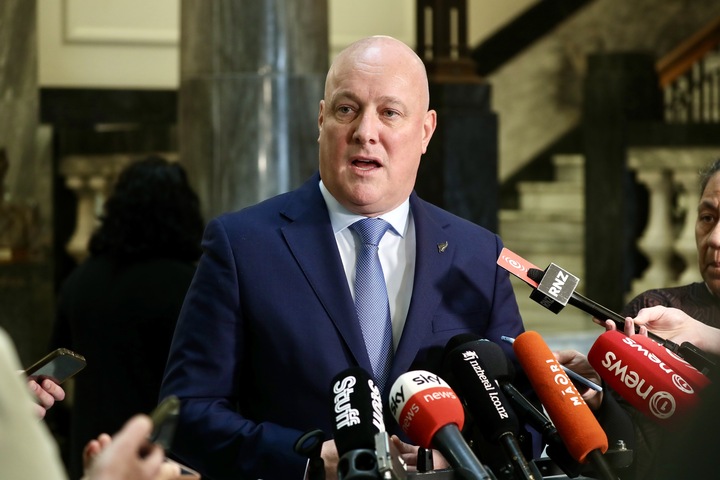
Earlier, Prime Minister Christopher Luxon delivered his strongest pushback to date against Seymour, saying National is focused on the “hard issues” concerning New Zealanders, which the “simplistic” Treaty Principles Bill isn’t helping with.
The Prime Minister wasn’t be in the House for the first reading – he’s flying to Peru for the annual Apec forum – but held a press conference on Thursday morning, where he addressed questions about his party’s position on the Treaty Principles Bill.
Asked what he made of suggestions from Seymour that there was a sizeable portion of the country that quietly backed it, Luxon said he had seen such comments.
“I’d just say, the hard issues are in fact the hard things Kiwis are dealing with right now. What they are dealing with is the cost of living, what they are dealing with is the threat of losing their jobs, what they are dealing with is rising crime, what they have been dealing with is an education system that is failing their kids,” Luxon said.
“That is what the National Party is focused on. We are focused on dealing with the hard issues. Frankly, a Treaty Principles Bill that is simplistic, that hopes to rewrite a debate and discussion over 184 years through the stroke of a pen, is not the way forward.”
He said it wasn’t helping the Government “get New Zealand back on track” and address issues like the economy, law and order, and public services.
“That is what the hard stuff is for New Zealanders. Go out here and talk to New Zealanders getting through a week. It is a tough time. It is getting better, our plan is starting to work. But that is the hard work the National Party is engaged on.”
Luxon said the three parties in the coalition – National, Act and New Zealand First – agree on “90% of our approach”, but there were compromises. He said this was a reality of the MMP political environment.
“There is no screaming, shouting, ranting, raving, high tension behind the scenes. It is just acknowledging we have got a difference.”
The Prime Minister explained his preference would be to deal with issues relating to the Treaty “case by case”.
Seymour, the architect of the legislation, denies the bill is divisive and doesn’t believe those protesting it have actually read it. He said it doesn’t do anything controversial, but instead affirms New Zealanders’ equal rights.
It seeks to define the principles of the Treaty so their meaning in legislation can be clearly interpreted. Currently, principles mentioned across legislation are not defined by Parliament but have instead been mostly derived from court rulings and Government statements.
Seymour believes the bill would provide certainty and promote a national conversation about the principles’ place in the country’s constitutional arrangements.
The principles in the draft legislation – officially the “Principles of the Treaty of Waitangi Bill” – include that the Government has the power to govern in the interests of everyone and everyone is equal before the law.
The second principle has gone through some wording changes. The legislation says the Crown recognises, and will respect and protect, the rights that hapū and iwi Māori had under the Treaty of Waitangi and Te Tiriti at the time they signed it.
However, if those rights differ “from the rights from everyone”, that principle will only apply “if those rights are agreed in the settlement of a historical Treaty claim under the Treaty of Waitangi Act 1975”.
The bill says it doesn’t amend the text of the actual Treaty and can’t be used to interpret Treaty settlement legislation.
Seymour on Wednesday said critics of his legislation should read it.
“Once you see it, ask yourself what’s wrong with the Government having the right to govern, the Government having an obligation to uphold all people’s rights and all people’s rights being equal before the law?”
He said it doesn’t “take away” the Māori language or culture or “undermine Treaty settlements”, as he said some had claimed.
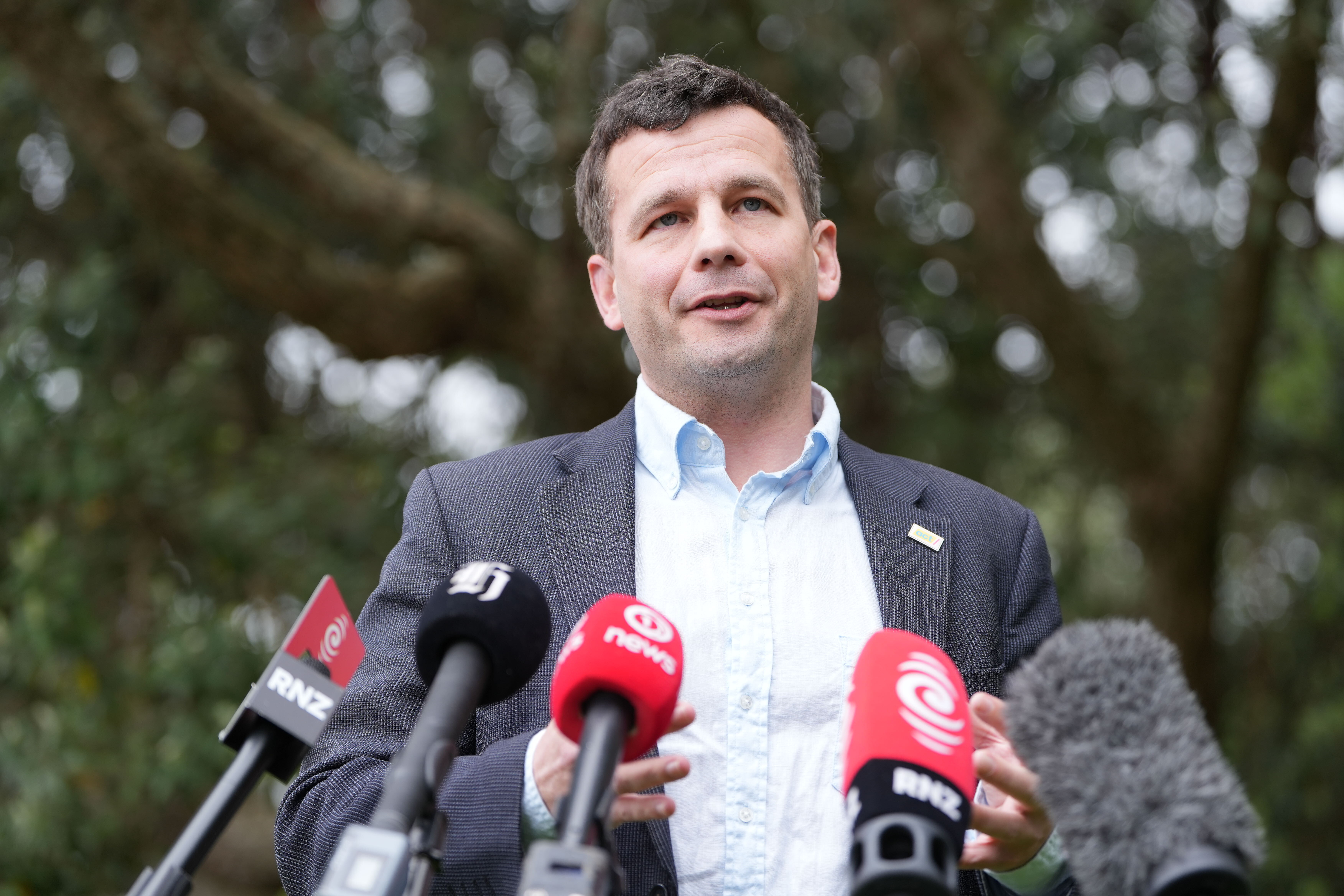
Seymour believes, over time, National may come around to the legislation.
“I think that they are perhaps less keen on taking on a tough issue. That has always been true. Act is a party that will take on hard issues and often, like Three Strikes, like charter schools, give it a few years and the National Party says, ‘best thing we ever thought of’.
“We are quite happy because we know there is no limit to what you can achieve if you don’t care who takes the credit.”
Late on Wednesday, a collective of King’s Counsels outlined their concerns about the bill, including that the proposed principles didn’t adequately reflect the articles of the Treaty and that it would cause significant legal confusion and uncertainty.
They noted that the existing principles have been developed by the courts over the past 50 years and now represented settled law.
The lawyers also said that while a select committee process allowed for public engagement, there should have been specific engagement with Māori prior.
“In addition to the obvious risk of a poor legislative outcome, this has created mistrust and calls into question whether the stated objective of an open, informed public debate is genuine.”
Seymour said on Thursday that he understood “why they don’t like” the bill.
“Eeryone gets a say, even if you’re not a KC,” he said.
“The debate over the Treaty has until this point been dominated by a small number of judges, senior public servants, academics, and politicians. The select committee process will finally democratise that debate.
“The courts and the Waitangi Tribunal have been able to develop principles that have been used to justify actions that are contrary to the principle of equal rights. Those actions include co-governance in the delivery of public services and ethnic quotas in public institutions.
“The Treaty Principles Bill provides an opportunity for New Zealanders – rather than the courts and the Waitangi Tribunal – to have a say on what the Treaty means. Did the Treaty give different rights to different groups, or does every citizen have equal rights? I believe all New Zealanders deserve to have a say on that question.”
The Waitangi Tribunal last week said the bill would be “the worst, most comprehensive breach of the Treaty/Te Tiriti in modern times”. It also argued there had been a lack of consultation with Māori.
“At present, the progressing of the bill is having serious impacts on the relationship,” the tribunal said. “But the bill, if enacted, would kill that relationship.”
Parliament is preparing for protests both inside and out as the bill gets its first reading this afternoon.
The Speaker is expected to warn members of the public that if there are any attempts to disrupt proceedings, he will clear the public galleries.
Brownlee would not comment on his plans for the debate, saying only that he intended to speak to the House at the start of the debate on the bill.
“I will be talking to the House at the start of the bill, but I’m not making any comments before that.”
Staff at Parliament were emailed this morning and advised protests were expected today and police would be on hand to help parliamentary security if there were any issues. Increased security measures will also be in place at Parliament next week – and public tours will be cancelled on Monday and Tuesday.
Thousands have been marching towards Wellington in opposition to the Treaty Principles Bill over recent days. The Hīkoi mō te Tiriti (march for the Treaty) moved through Auckland on Wednesday and is expected in the capital by next Tuesday.
The parliamentary staff email said the hīkoi was expected to be peaceful and organisers had been working with the Speaker’s office to ensure it did not breach the rules for protests on Parliament grounds.
Politicians from Labour, the Greens and Te Pāti Māori joined those protesting on Wednesday, including Te Pāti Māori co-leader Rawiri Waititi, who said he was proud of the unity on display in the hīkoi and expected the numbers to grow before it hit Wellington next week.
“By the time we get to Wellington, this would have quadrupled in size and in mass, because people are really concerned about how the country has been divided through legislation like the Treaty Principles Bill,” he said.
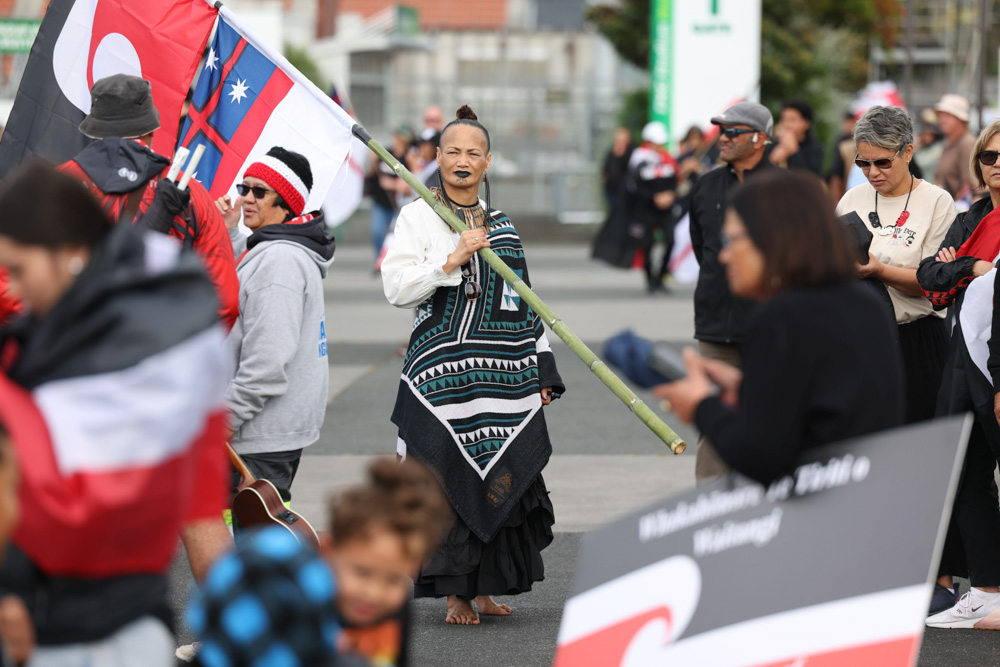
Labour leader Chris Hipkins said the hīkoi showed people unified in not wanting “divisive politics”. He said it wasn’t too late for the Prime Minister to pull his support.
“The National Party can honour the commitment that it made to New Zealanders before the election and vote against this bill.
“They never should have agreed to it in the coalition agreement. They said before the election that they wouldn’t support it. I think they’ve betrayed voters’ trust in signing up to it as part of the coalition agreement.”
Jamie Ensor is a political reporter in the NZ Herald press gallery team based at Parliament. He was previously a TV reporter and digital producer in the Newshub press gallery office.