Debate on Te Pāti Māori haka punishment delayed in shock Government move
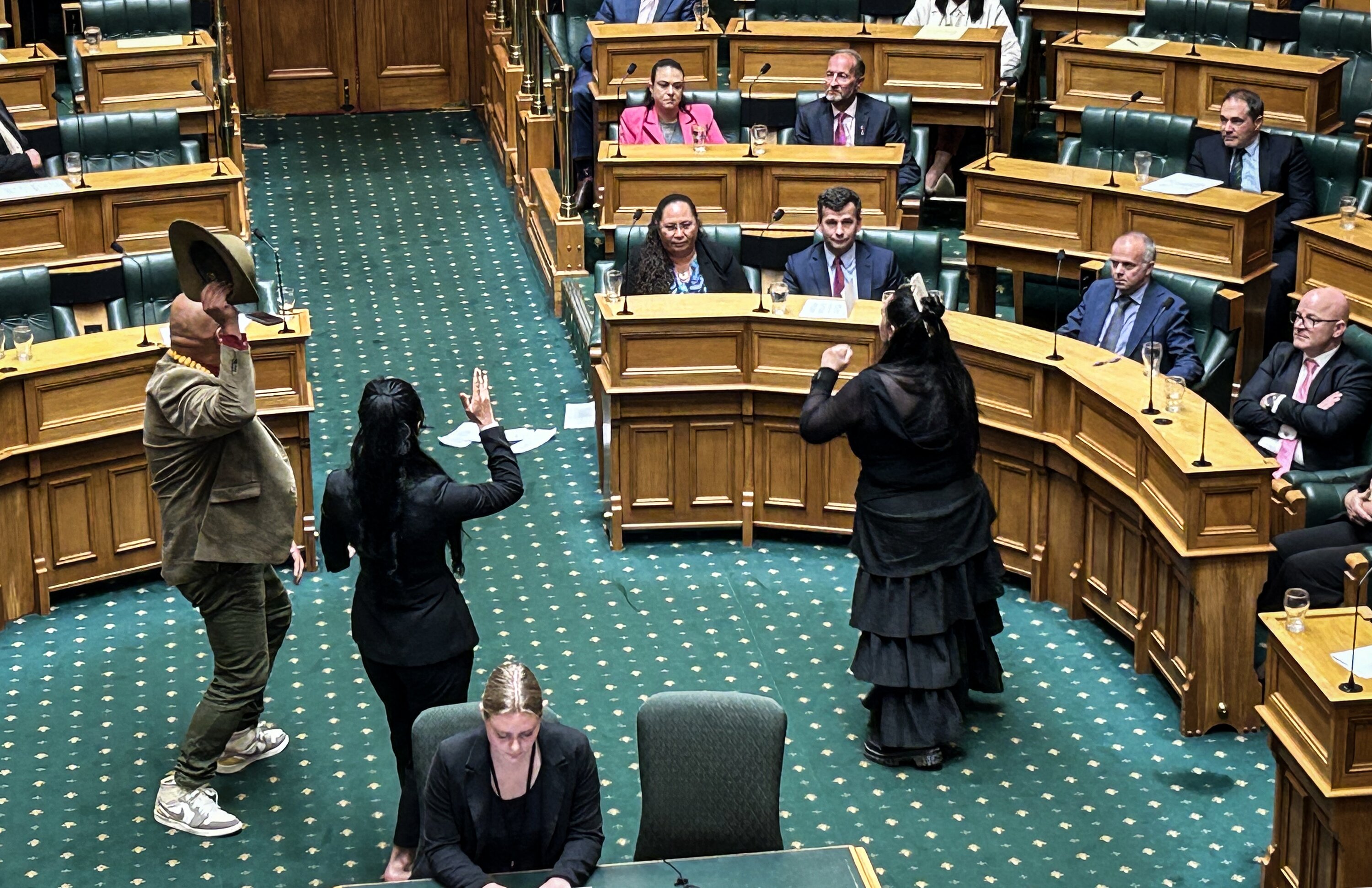
A shock move by the Government has resulted in another delay to Te Pāti Māori MPs learning their punishment for participating in last year’s controversial haka in the House.
Te Pāti Māori co-leader Rawiri Waititi likened it to being on remand, “waiting for sentencing” and facing “psychological warfare”.
Debate on the recommendations by the Privileges Committee, which included suspending three Te Pāti Māori MPs for up to 21 days, had already begun on Tuesday afternoon when Leader of the House Chris Bishop moved an unexpected motion for it to be adjourned.
The motion, which passed with support from the governing parties but opposition from Labour, the Greens and Te Pāti Māori, pushed the rest of the debate out until June 5.
Bishop’s justification was that if the Te Pāti Māori MPs were suspended from Parliament this week, they would miss the debate on the upcoming Budget. He also believes it brings the temperature “down a notch” after recent heated commentary.
“The Budget is the central Parliamentary event of the year, which gives the House the chance to debate and then either endorse or reject the Government’s spending plans,” Bishop said in a statement after the motion passed.
“Constitutionally, there is nothing more important than the Budget process, which gives the House the opportunity to express confidence in the Government. Deferring consideration of the debate means all members will have the opportunity to debate and vote on the Budget.”
He said the Government’s position remained that the recommended punishments from the Privileges Committee were unchanged, arguing the MPs’ actions “were unprecedented in their disrespect for Parliament and the taxpayers to whom we are accountable”.
STORY WILL CONTINUE AFTER LIVE BLOG
Bishop releases statement
Thomas
Leader of the House Chris Bishop has released a statement.
Vote deferred, but no change to punishments
While the punishments recommended by the Privileges Committee will remain as they are, the House’s vote on the report will take place following the Budget, Bishop says.
“The actions that led to these punishments were unprecedented in their disrespect for Parliament and the taxpayers to whom we are accountable,” he says.
“Our position on the recommended punishments remains unchanged.
“It is critical that there are consequences for wrongdoing in Parliament. Te Pāti Māori’s co-leaders have never accepted what they did was wrong. They have never apologised despite many opportunities, and it is not clear they even accept the jurisdiction of the Privileges Committee. They have never turned up to explain themselves despite numerous opportunities.
“The Budget is the central Parliamentary event of the year, which gives the House the chance to debate and then either endorse or reject the Government’s spending plans. Constitutionally, there is nothing more important than the Budget process, which gives the House the opportunity to express confidence in the Government.
“Deferring consideration of the debate means all members will have the opportunity to debate and vote on the Budget.
Debate adjourned until June
Thomas
Bishop's motion to adjourn the debate until after June was successful, with the governing parties voting for it.
'Democracy hanging by a thread': Hipkins
Thomas
Labour leader Chris Hipkins is urging the committee to explain its recommendation.
If it is going to propose the harshest sentence ever imposed, it should be clear about the criteria it used, Hipkins says.
The committee is accusing one party of breaking the rules of Parliament while not following the rules itself, Hipkins claims.
He says democracy is "hanging by a thread" around the world and days like today hold a "razor blade up to that thread".
Hipkins says this is a good example of why people are losing faith in democracy.
Hipkins says this would remove the Te Pāti Māori MPs during the Budget debate, to which MPs from the Government side – including NZ First MP Shane Jones – yell out, where were they last year?
Leader of the House Chris Bishop is trying to call the debate to a close
Thomas
After just two speeches, Leader of the House Chris Bishop is trying to draw the debate to a close.
Speaker Gerry Brownlee is asking for further information.
Bishop explains that Te Pāti Māori's MPs should be allowed to scrutinise the Budget, kicking the debate until after the Budget.
"Constitutionally, it is right for them to participate," he says.
He wants the debate to resume on June 5.
Labour leader Chris Hipkins offers compromise
Thomas
Labour leader Chris Hipkins is asking the House to agree to a compromise.
He proposes the Te Pāti Māori MPs are censured, but that Ngarewa-Packer and Waititi are suspended for one day (rather than 21) and Maipi-Clarke for no further length, given she was briefly suspended on the day.
He says the actions of Te Pāti Māori were serious and there should be some sanction.
However, he believes the committee's proposal is "totally out of line" with precedent and disproportionate with the actions.
Hipkins says the MPs should not be sanctioned for not appearing before the Privileges Committee as to not turn up is their right.
He says the sanctions being proposed are unprecedented, noting that people have engaged in a fist-fight and driven up the steps of Parliament and not been sanctioned to this extent.
"It is disproportionate. A sanction is appropriate. This level of sanction is not," he said.
Hipkins added his concerns that the Privileges Committee was not able to come to a unanimous recommendation, as it usually does.
Collins argues for Privileges Committee recommendation
Thomas
Collins says the committee sought to arrange hearings with Te Pāti Māori, but they declined the opportunities. Accordingly, the committee had to consider video footage and written statements.
Collins says a number of MPs joined the haka started by Hana-Rāwhiti Maipi-Clarke.
Co-leader Debbie Ngarewa-Packer and Rawiri Waititi joined in and moved across to the Act Party, with Ngarewa-Packer using a gesture similar to a gun, Collins says.
The written evidence from the Te Pāti Māori MPs suggested they were acting in accordance with tikanga. The Te Pāti Māori MPs didn't believe matters of tikanga are for the Privileges Committee to consider.
The committee believes it should consider the rules as they are. One of these is that no actions should impede the business the House.
No permission was sought for the haka, Collins says.
She says the haka impeded the business of the House. Collins says this is not about the haka, tikanga or the Treaty of Waitangi, but about following the rules of the House.
As Collins speaks about the committee's recommended punishment for the group, Te Pāti Māori MPs are looking straight ahead without visible emotion.
Watch: Speaker Gerry Brownlee asks Deputy Prime Minister Winston Peters to leave
Thomas
Privileges committee chair Judith Collins lays out reasons for suspension recommendation
Thomas
Collins says the committee sought to arrange hearings with Te Pāti Māori, but they declined the opportunities.
Accordingly, the committee had to consider video footage and written statements.
Collins says a number of MPs joined the haka started by Hana-Rāwhiti Maipi-Clarke.
Co-leader Debbie Ngarewa-Packer and Rawiri Waititi joined in and moved across to the Act Party, with Ngarewa-Packer using a gesture similar to a gun, Collins says.
Peters returns for debate
Thomas
Speaker of the House Gerry Brownlee has introduced the debate on Te Pāti Māori's actions in the House.
He has reiterated his comments last week, stating that there should be a proper opportunity to debate the issues.
Brownlee reminded MPs that while they could criticise, they shouldn't devolve into personal attacks.
With all MPs being able to make speeches, Brownlee urged them to constrain themselves to relevant points and avoid repetition, otherwise he would end the speeches early.
Winston Peters, who was earlier told to leave the House for an out-of-order question, has been allowed to return for the debate.
The debate on the Privileges Committee's report is commencing
Thomas
Speaker Gerry Brownlee is reminding MPs to keep their speeches to the point, perhaps indicating he expects the debate to get rowdy.
Judith Collins, the chair of the committee, is reading the recommendations of the Privileges Committee to suspend the three MPs, and asking the House to agree to that recommendation.
A majority of the House is likely to agree to it, however we may be in for a long debate.
Unlike other debates, all 123 MPs can take a call in this debate – and all MPs can also take a call on any amendments to the motion. That means the debate may go on for hours – although it will not interfere with the Budget debate later this week.
Winston Peters asked to leave the House
Thomas
Deputy Prime Minister was asked to leave the chamber by Speaker Gerry Brownlee after he asked a question deemed not to be in order.
Gallery closed
Thomas
Today's Question Time – and the debate later on the Privileges Committee report – is taking place without anyone in the public gallery.
Having an empty public gallery during the 2pm Question Time is very rare. It happened in November on the same day as the hīkoi to Parliament.
The doors leading into the gallery, normally open, are closed and security staff are checking people have access cards before allowing entry.
Privileges debate likely to start soon
Thomas
Parliament is at question nine of 12 in Question Time. The Privileges Committee debate will be after that.
Bishop says 'too large a gap' between National and Labour to form agreement
Thomas
Bishop said text messages on the issue had been exchanged with Labour and that a proposal had been "kicking around for a day or two".
However, he said that ultimately there was too large a gap between the parties and no agreement could be reached.
"Parliament is in a difficult situation. No one wants the debate to drag on. Ultimately, we're not here to debate these sort of issues, we're here on Budget week to debate the future of the country," he said.
Hipkins contacts Luxon over debate
Tom Dillane
Labour leader Chris Hipkins says he will speak in this afternoon's debate on the committee recommendation. Any Labour MP would be able to speak, he said, but the party hadn't decided to deliberately draw out the debate.
Hipkins confirmed he had tried to contact Prime Minister Christopher Luxon and Leader of the House Chris Bishop to discuss how to facilitate the debate but they hadn't responded, according to Hipkins.
Judith Collins, who will start the debate as Privileges Committee chairwoman, simply said she would "get the job done", when asked for her thoughts ahead of the debate.
Labour will propose amendment on Te Pāti Māori penalties
Tom Dillane
Labour leader Chris Hipkins says his party will propose an amendment suggesting a 24-hour sanction for Debbie Ngarewa Packer and Rawiri Waititi and no new sanction for Hana-Rāwhiti Maipi-Clarke.
David Seymour has suggested a couple of months' suspension and said Act may submit an amendment calling for a longer sanction during today’s debate.
Winston Peters has refused to say whether his party would support any amendments to the Privileges Committee recommendations.
MPs debate over Te Pāti Māori punishment for haka
Tom Dillane
- Parliament is preparing for a lengthy debate over the penalties to be handed to Te Pāti Māori for last year’s controversial haka in the House.
- The House is set to debate the committee’s recommendation after Question Time this afternoon.
- Speaker of the House Gerry Brownlee last week said he would ensure all views and potential amendments relating to the recommendation would be extensively canvassed.
Story continues below
The move came as hundreds gathered outside in support of Te Pāti Māori, with speakers criticising the treatment of the party’s MPs in Parliament.
Waititi told attendees the Government’s decision to defer the debate “made me feel like I am on remand ... waiting for sentencing”.
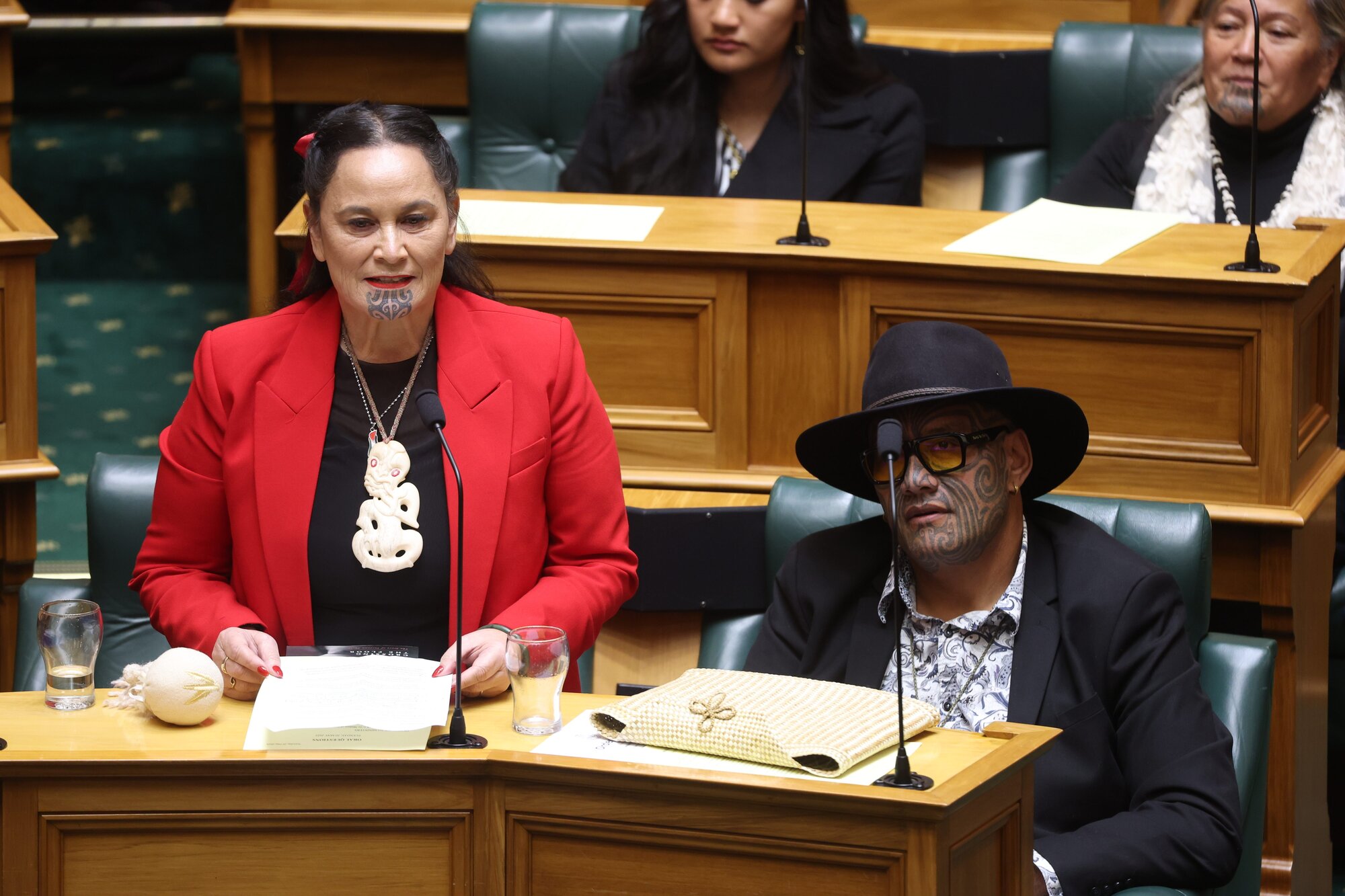
“We don’t need their sympathy. We don’t need them to prolong the psychological warfare they are prepared for us to endure.”
He said his party was not willing to leave anyone behind and called on non-Māori to stand beside, not behind, Māori, when rallying support for Treaty rights.
“Other parties in here want your vote, they don’t want your voice ... We’re not here for the money, for the accolades, we’re here to be a voice for you.”
He said the Government may have “suspended the suspension” but: “They can suspend our bodies, but they can never suspend our movement.”
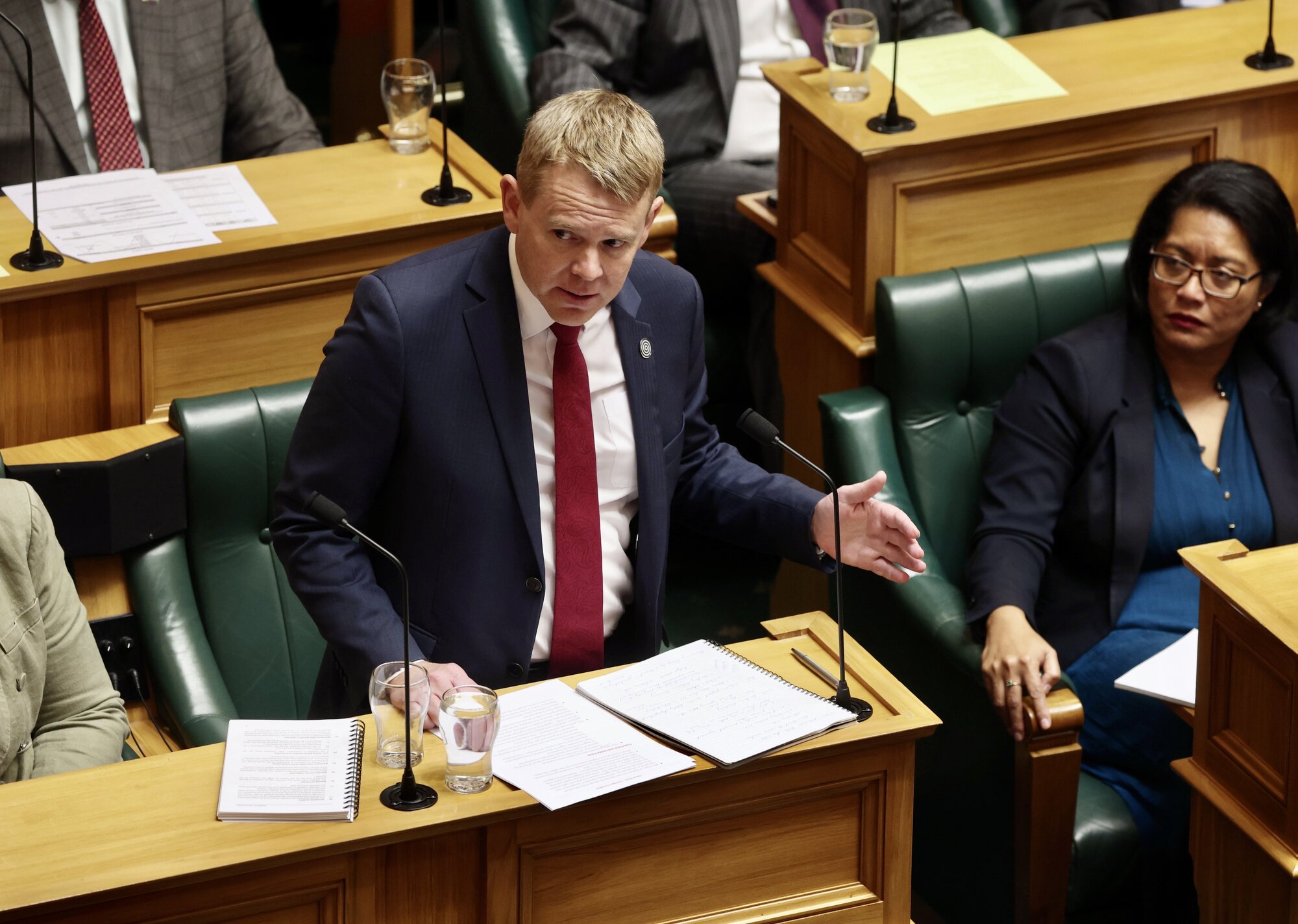
Labour leader Chris Hipkins expressed surprise at the Government’s motion after he said it had rejected calls for a compromise over recent days.
“Had they approached us this morning and say, ‘look we want to defer this debate, we want to put it off til later on’ we would have been open to having that conversation,” Hipkins said.
“We’ve been trying to talk to them for the last 48 hours. They haven’t even bothered to return phone calls and then they do this. They just look like they’re out of their depth, I don’t know what they are doing.”
Hipkins said this meant the issue of the haka and its consequences continued to hang over Parliament for another couple of weeks.
Hipkins warned democracy is “hanging by a thread” around the world and days like today hold a “razor blade up to that thread”.
The Privileges Committee had recommended suspending Te Pāti Māori co-leaders Debbie Ngarewa-Packer and Waititi from the House for 21 days and MP Hana-Rāwhiti Maipi-Clarke for seven for their involvement in November’s haka.
The committee believed that behaviour impeded the business of the House during the voting process on the first reading of the Treaty Principles Bill.
Prior to the debate being called off, committee chair Judith Collins said the punishments being recommended were not about doing a haka, tikanga or the Treaty of Waitangi, but instead a consequence of not following the rules of Parliament.
“It does not matter our gender, our ethnicity or our beliefs. In this House, we are all simply Members of Parliament. Like any institution, it has rules,” she said.
Collins said this was a “very serious incident” she hadn’t seen the likes of in 23 years in Parliament.
“I am a robust debater, as many of you will know. But I follow the rules of this institution, and I am a proud member of it,” the National MP said.
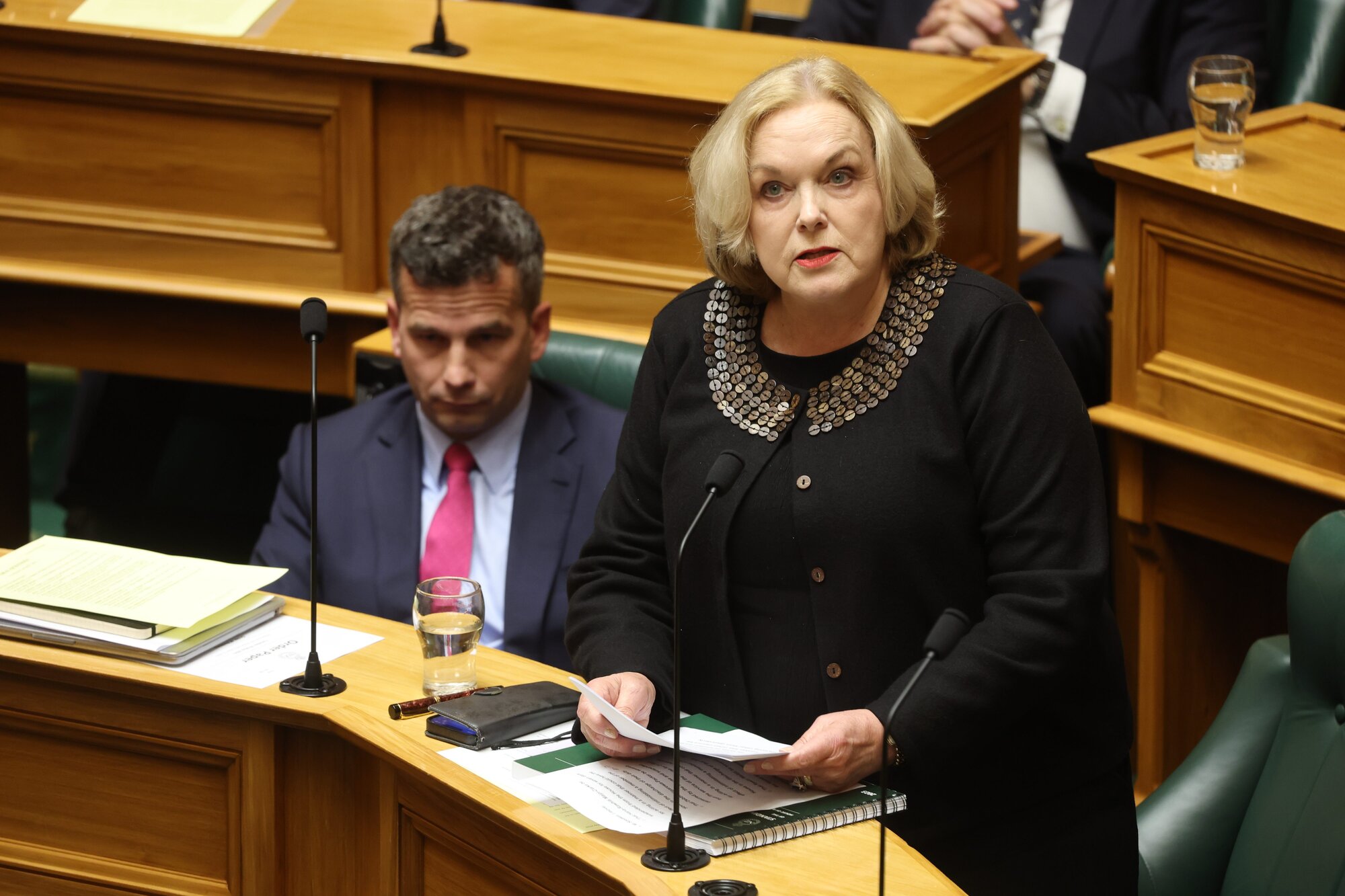
Hipkins also spoke in the short-lived debate, initially proposing Te Pāti Māori MPs were censured for their actions – Labour agrees they broke the rules – but their sanction be weakened.
He suggested a 24-hour suspension for Ngarewa-Packer and Waititi, and no further sanction for Maipi-Clarke as she was briefly suspended on the day.
He said the committee’s proposal is “totally out of line” with precedent. The previous record is a three-day suspension for former Prime Minister Sir Robert Muldoon for criticising the Speaker.
“It is disproportionate. A sanction is appropriate. This level of sanction is not,” Hipkins said.
Entering the House ahead of the debate, Act’s David Seymour said the right penalty sent a message to Te Pāti Māori that “either you’re in or you’re out”.
“You can’t get the pay and the privileges of being a parliamentarian while trying to politically profit from taking the mickey of the Parliament everyone else is paying for.”
Seymour suggested “a couple of months” would be an appropriate period for them “to think about it”.
Talks of a compromise between Labour and National were “kiboshed” yesterday as Prime Minister Christopher Luxon stated his party would support the committee’s proposal.
Labour MP and Shadow Leader of the House Kieran McAnulty said he was surprised by Luxon’s commitment, citing talks of possible compromises with Bishop.
“When you’re having a yarn and they say, ‘Okay, we’ll take that back’, you expect that there’s going to be some discussions, but Luxon made it out like he was speaking on behalf of the caucus.”
Bishop wouldn’t comment on his conversations with McAnulty but accepted the Government and Opposition parties were probably “too far apart” to reach a compromise.
Hipkins defends ‘indigenous people’ claim
Earlier today, Hipkins told TVNZ Collins had publicly condemned “uncivilised behaviour from indigenous people” in relation to Te Pāti Māori’s actions.
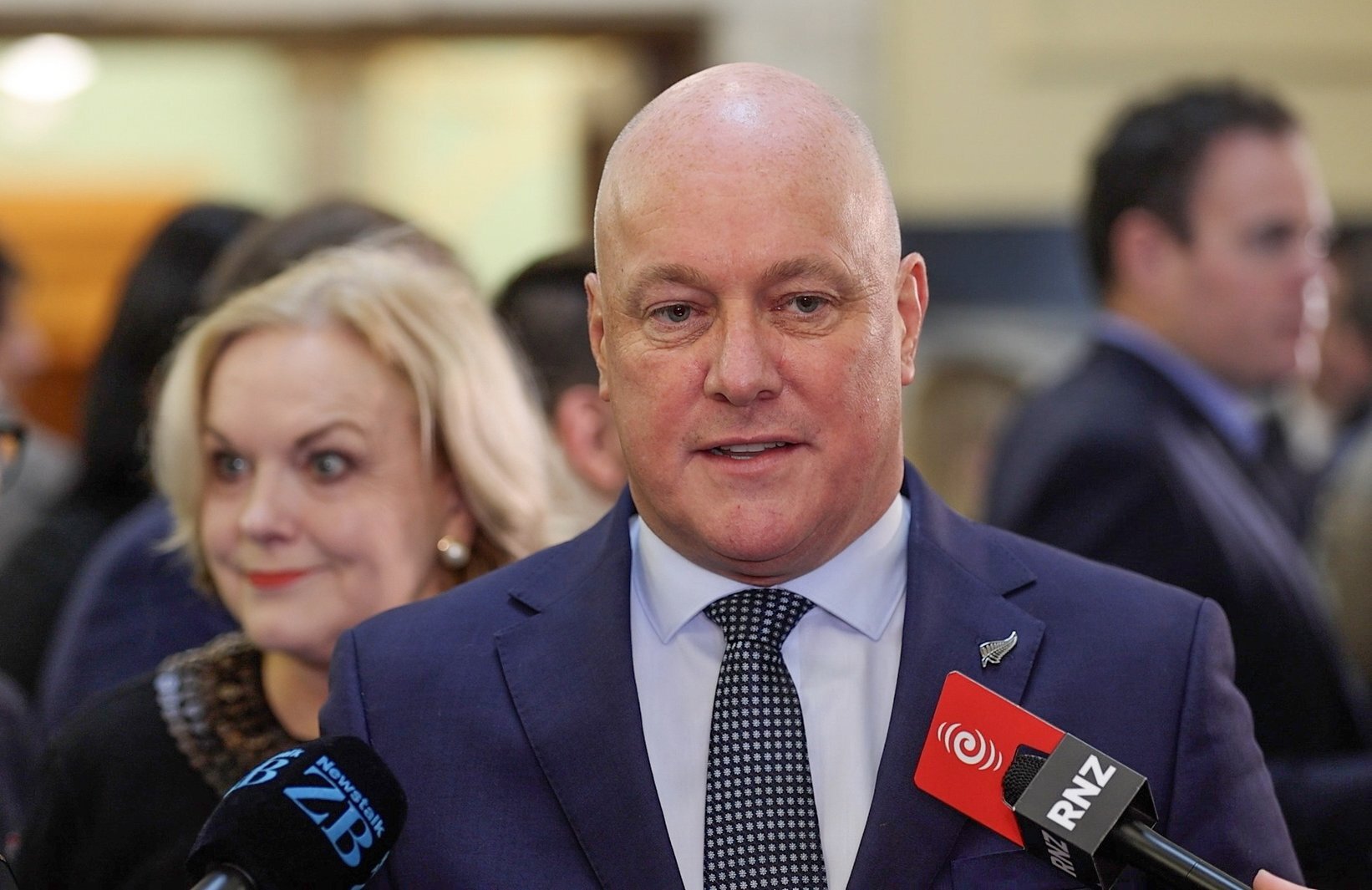
Collins has rejected Hipkins’ claim, demanding that he produce evidence or apologise. She appeared behind Luxon to emphasise that point on Tuesday morning.
Hipkins this morning defended his comments by claiming Collins had “talked about the lack of civility from the Māori Party”.
“It was on record last week. She was talking about it in the media ... I understand she was talking about the Māori Party at the time,” he said.
“My understanding was that the interview was all about the Māori Party and the privileges committee report on the Māori Party.”
He said he was working off what he had seen reported, but if his understanding was incorrect and she hadn’t said that, he would be “happy to go back and look at it”.
Luxon called on Hipkins to “get his facts straight”.
“Judith Collins did not say what he said she said. She said there has got to be civility in the Parliament and I fully agree with her. That is why we back the decision of the Privileges Committee.”