Why Chris Hipkins still refuses to answer the big Winston Peters question
Observing Labour’s year in 2025, leader Chris Hipkins is quite content.
His party, emphatically denounced two years prior, has kept largely free from the upheaval and scandal that can so easily follow such a resounding defeat.
“If I had to put it in one word, I’d say solid,” Hipkins told the Herald as he reflected on the last 12 months.
“We’ve made a lot of progress, but no one’s banking anything. We know that next year, election year, it’s going to be a hard year.
“It’s going to be a lot of work, and we’re ready for that.”
Labour’s fortunes in public polling have been another bright spot, steadily rising over the last year to rival and sometimes surpass National’s level of support.
Earlier this month, Taxpayers’ Union-Curia, which also conducted polling for National, had Labour’s support at 31.6% and above National’s 30%. The outfit’s December 2024 poll had Labour teetering above the low 20s at 26.9%.
The latest 1News-Verian poll, released this month, had Labour at 35%, just shy of National but a marked improvement on 29% a year ago.
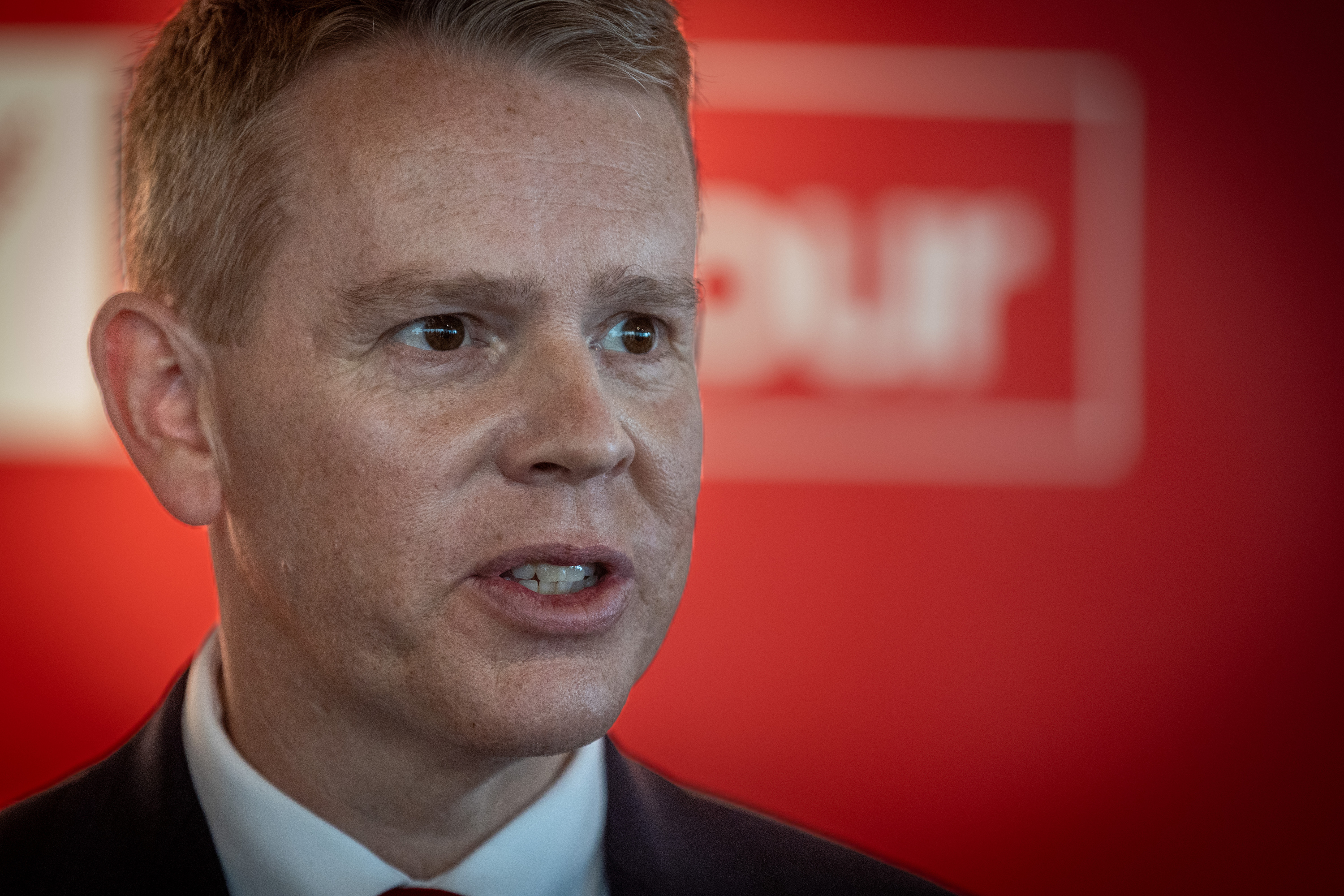
Hipkins, resolute in his desire to remain leader, has largely kept pace with Christopher Luxon in the preferred Prime Minister rankings. Verian had Hipkins at 21% and two percentage points below Luxon this month, closer than the nine-percentage-point gap he recorded in December last year.
Curia has found Hipkins besting and equalling Luxon at points throughout the year, its latest poll putting the Labour leader just within two percentage points of Luxon’s 19.7%.
“Probably at least half of the publicly available polls have Labour polling ahead of National, that’s very good progress for us,” Hipkins said.
Despite the growing support, it hasn’t been enough to show Labour having the necessary votes to govern with its preferred partner the Greens, meaning help from Te Pāti Māori or New Zealand First is required.
Hipkins has thus far refused to speculate on any potential Labour-led three-party governing arrangements, insisting Labour’s vote growth is on track to give them the option of a two-party government.
However, with the polls yet to back it up, Hipkins has had to regularly bat away questions about working with a conflict-consumed Te Pāti Māori or an NZ First led by a man who maintains he won’t support the current Labour leader.

Hipkins’ answer has been to kick the can down the road, promising he would outline who Labour could or couldn’t work with but not until weeks out from the election campaign.
“We’ll set it out when we’re ready to … we’ll look at the state of the other parties, we’ll look at the policies that they’re making their priority and the things that they’re campaigning on … it all factors in.
“Six months ago, Te Pāti Māori were polling at 7%, now they can’t even make 1%. Winston Peters was voting in favour of the Regulatory Standards Bill, now he says he wants to repeal it.
“Those other parties are all shifting around quite a lot at the moment so the sensible thing for Labour to do is just to let that run its course.”
With Peters vowing not to work with Hipkins (his denials become more vague when asked about a new Labour leader), Te Pāti Māori has been considered Labour’s primary avenue to returning to power, given the party has publicly stated its desire for a coalition with Labour and the Greens.
But the minor party’s turmoil in recent months is welcomed by Hipkins, who is also setting his sights on the seven Māori electorates.
“Their support has collapsed in the last few months and it’s coming back to Labour and I welcome that.
“We want to win back all seven of those Māori seats, and that would be a very good thing for Labour,” Hipkins said when asked if a broken Te Pāti Māori was good for Labour.
Of particular satisfaction to Hipkins had been the public’s response to the party’s initial policy releases, most notably its proposed capital gains tax designed to fund universal three free GP visits.
He hinted upcoming policy would target what he described as a “real sense of anxiety” among Kiwis amid record numbers of people leaving the country.
“So you’ll see more speaking to the vision of a country where young people want to stay.”
Adam Pearse is the Deputy Political Editor and part of the NZ Herald’s Press Gallery team based at Parliament in Wellington. He has worked for NZME since 2018, reporting for the Northern Advocate in Whangārei and the Herald in Auckland.