Waikato Hospital ED swamped as winter patient surge overwhelms staff
The winter rush is already hitting the country’s hospital emergency departments, with a Waikato Hospital ED nurse saying she recently experienced the “worst day” of patient overload in her 18-year career.
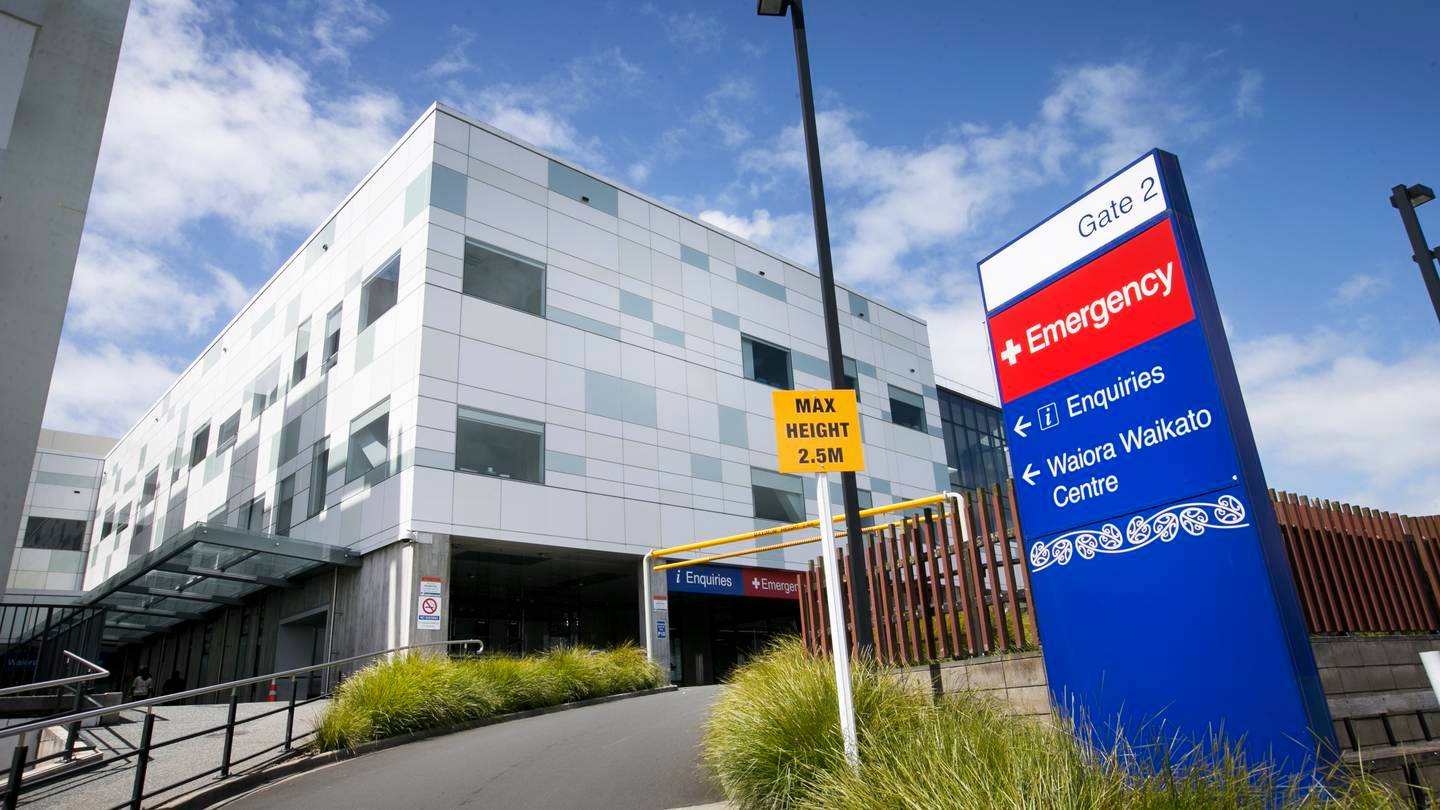
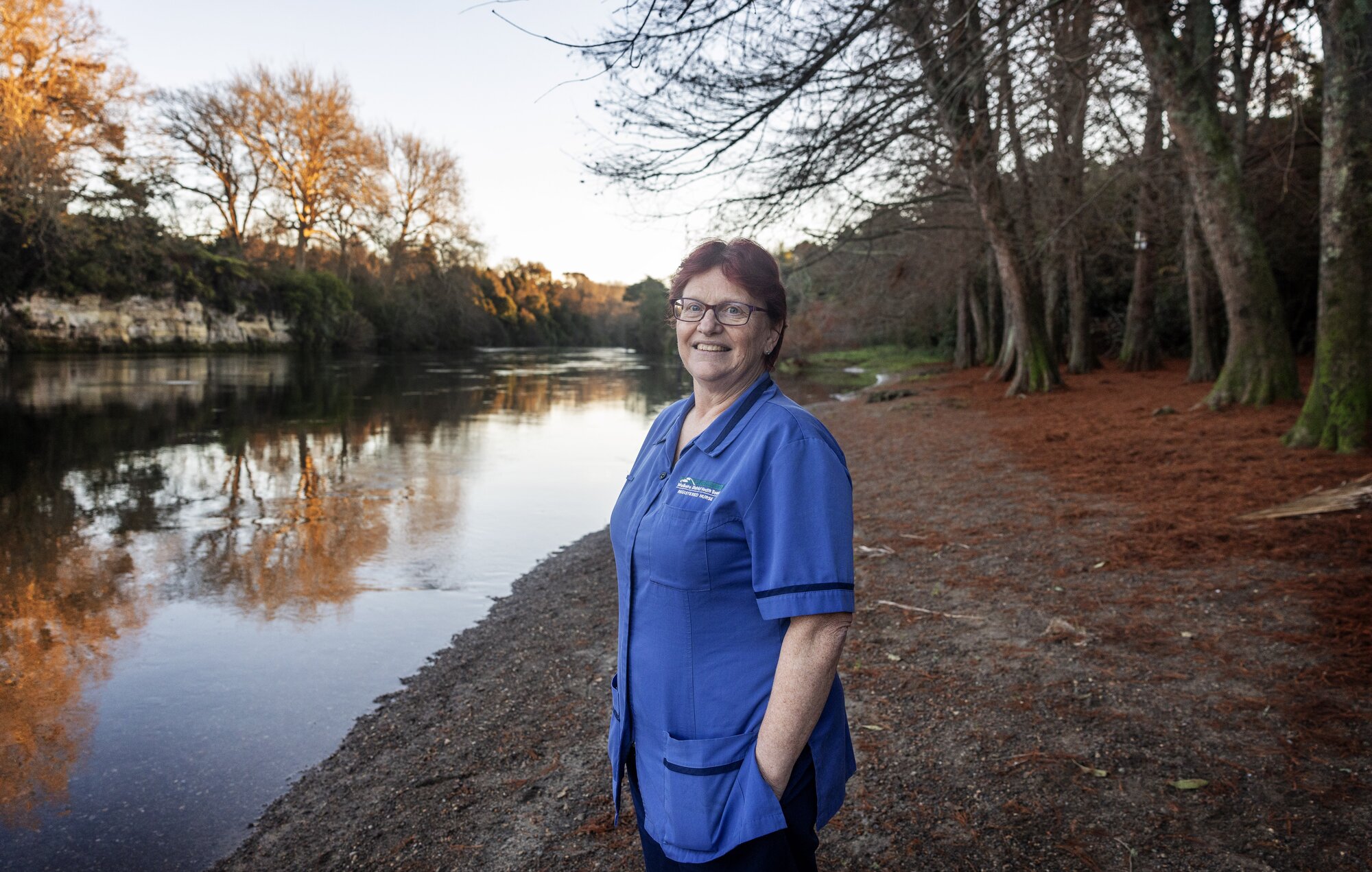
Tracy Chisholm, who spoke to the Herald in her capacity as a delegate for the New Zealand Nurses Organisation (NZNO), says around 300 patients arrived at Waikato Hospital’s ED over the course of a single day on June 8, with the waiting room so busy staff ran out of seats.
“That was the worst day I’ve seen in 18 years. It was standing room only. We brought out extra chairs ... and there were still people standing. It was at capacity,” she told the Herald.

At its busiest, she said 48 patients were in the waiting room, with some remaining there longer than six hours before being thoroughly assessed by a nurse.
“We had a huge influx of patients, way beyond the capacity of the staffing in the department.”
She claimed that “it led to unsafe waits”.
North Shore Hospital’s Emergency Department, which has 35 patient beds, has also been overrun in recent days, according to sources.
Health New Zealand executive regional director Chris Lowry confirmed that on June 8, Waikato Hospital’s ED had 301 patients turn up, which was “very unusual” and a number not seen since March last year.
“We normally see between 240 and 275, there has been no identified reason for the large presentation numbers,” she said.
She said staff were “adaptable” and provided care to all patients on the day.
Lowry also said occupancy at North Shore’s ED has increased in recent weeks with “high presentations of abdominal and chest pain”.
“Winter is always a busy time for health services, and it is something we prepare for every year,” she said.
‘Risk to the public’

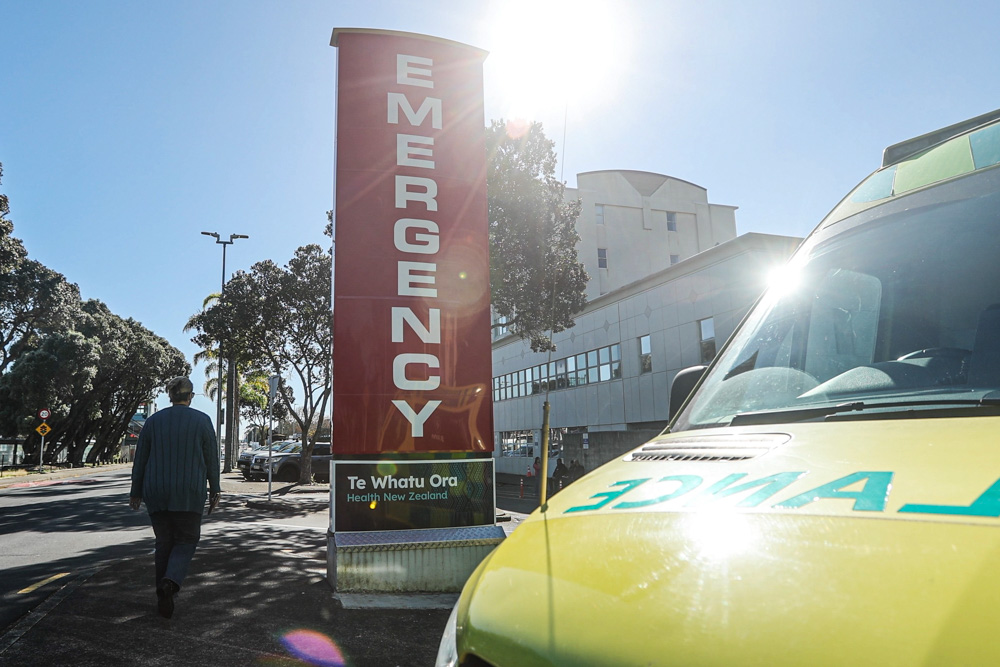
Australasian College of Emergency Medicine (ACEM) chair Dr Michael Connelly said overcrowding of EDs was increasing across the country.
He said this was because of an older patient population who often presented with complex medical issues and were seriously unwell.
Connelly said the crush on EDs was exacerbated by issues accessing primary care services like, for example, getting prompt appointments with GPs.
He said the key reason EDs became overwhelmed was because of what’s known as “bed block” – where hospital wards were full and patients languished in an ED cubicle waiting to be admitted.
“Access block [bed block] puts enormous pressure on EDs and is a serious health risk to the public.”
He said that when patients were effectively “boarding” at the ED, it increased pressure on the system and was “taxing” for staff.
“For the most part, there’s just increasing strain on the workforce at large.”
Lowry said more than 230 fulltime equivalent staff had been recruited nationwide by HNZ to help hospitals as part of winter planning, with another 74 positions to be “covered internally”.
“As recruitment for the remaining FTE continues, Health NZ is collaborating with healthcare partners including general practices, pharmacies, and primary providers to support the plan’s delivery,” she said.
Lowry emphasised the “critical” importance of vaccinations to prevent serious illness and hospitalisation.
Do EDs have enough staff?
Figures obtained by the Herald under the Official Information Act (OIA) show that from September 2024 to December 2025, the total number of ED staff across all 20 health districts nationally increased by 294, from a total of 5527 to 5821.
The figure includes both corporate and frontline ED staff, including nurses, care and support workers, diagnostic staff, junior doctors and senior medical officers.
Health Minister Simeon Brown told the Herald the figures showed progress.
“There are more frontline staff and more nurses working in our emergency departments than ever before, and patients are being seen and treated faster as a result,” he told the Herald.
However, Chisholm didn’t believe that was a fair reflection of the situation – especially for those EDs that had not seen a boost in staff numbers.
“It’s a broad sweeping statement which hides reality in many, many hospitals around the country,” she said.
While the national total of all ED staff across the country is edging upwards, some districts have seen reductions in frontline workers, especially nurses, according to the Herald’s OIA.
The OIA – the latest available data from HNZ – tracks fulltime equivalent staff numbers across 20 health districts.
The Waikato district showed a drop in total ED nursing staff over the 15 months – which would consider all EDs in the region, including Thames, Te Kūiti, Tokoroa, Taumarunui and Waikato Hospital EDs.
Chisholm says Waikato Hospital’s ED had seen an increase in nursing and healthcare assistant staff in the past year and a half, but other EDs had not.
She had particular concerns about ED workforce numbers in Rotorua, Christchurch and Whangārei.
Canterbury, Lakes, Nelson Marlborough, Hutt Valley, Auckland, Waitemata, Counties Manukau and Wairarapa districts saw a modest decline in nursing staff, according to HNZ’s data.
On the flipside, Bay of Plenty saw an increase in both nursing and senior medical officers and so did Hawke’s Bay.

A spokeswoman for Brown’s office suggested the Herald was “cherry picking” data by looking at specific districts, and the most reliable comparison was the national totals which showed continuous increases in ED staff numbers over consecutive years.
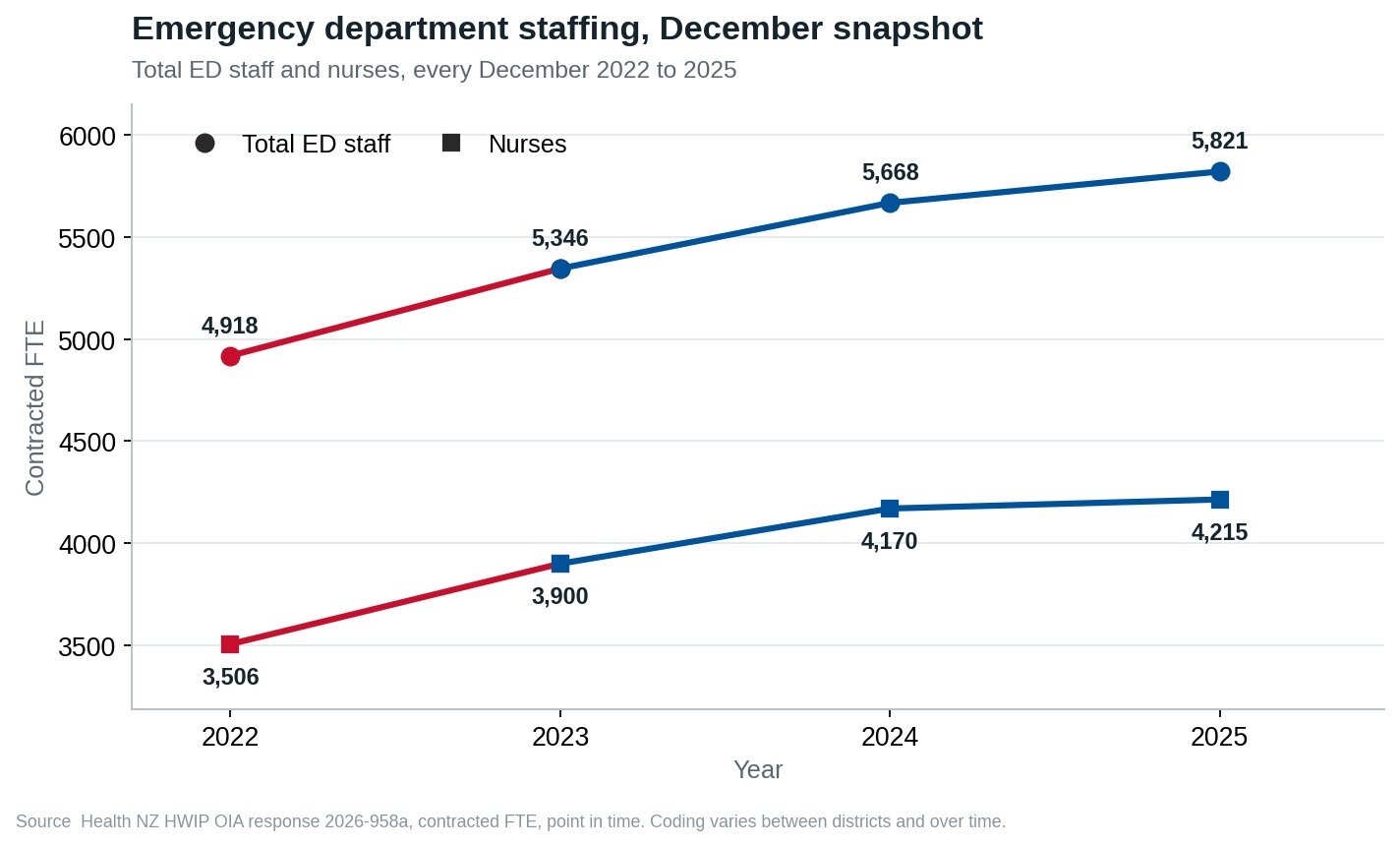
Brown said the Government was doing much better than the previous Labour government and provided the Herald with a graphic charting the increase in total ED staff, and total nursing staff, each December between 2022 and 2025.
Connelly said the reality on the frontline was that “stress and burnout is weighing heavily” on emergency staff, which had prompted some to leave for Australia or slash their hours.
“You’re seeing people that might be leaving the emergency departments or the front line to go into different parts of the health sector, they might be going overseas, or they might be going part-time,” he told the Herald.
He said “persistent” staff shortages and “maldistribution” of staff in different parts of the country mean many EDs are currently operating at or above capacity.
Michael Morrah is a senior investigative reporter/team leader at the Herald. He won News Journalist of the Year at the 2025 Voyager Media Awards and has twice been named reporter of the year at the NZ Television Awards. He has been a broadcast journalist for 20 years and joined the Herald’s video team in July 2024.