Wellington Mayor Tory Whanau’s 27 campaign launch promises: How many has she achieved?
THREE KEY FACTS
Georgina Campbell is a Wellington-based reporter who has a particular interest in local government, transport, and seismic issues. She joined the Herald in 2019 after working as a broadcast journalist.
ANALYSIS
Eighteen of the 27 promises Wellington Mayor Tory Whanau announced when she launched her campaign for the city’s top job have either been achieved or are in progress.
However, many of Whanau’s policies have been delivered by projects and work already under way before she took the mayoral chains.
Wellington City Council’s tight financial position has not left much room for new spending. Meanwhile, the project that Whanau did not campaign on but one she would have been able to claim as her own, the controversial Reading Cinemas deal, has fallen over.
The key promises Whanau has not achieved were linked to the $7.4 billion Let’s Get Wellington Moving (LGWM) transport plan that the National-led Government cancelled soon after it came to power.
The Herald looked at the 27 policies listed as bullet points that Whanau gave to the media on the night of her official campaign launch event. The list is referred to by Whanau’s office as her manifesto, although it is worth noting it is not an exhaustive list of policies.
Whanau also campaigned on issues like fixing the city’s ageing water pipes for which $1.8b has just been allocated in the council’s long-term plan.
Whanau told the Herald she was proud to have implemented many of her commitments for the city.
“I’m looking forward to working with councillors on the annual plan to continue delivering for the city.”
Government pours cold water on urban revitalisation promises
Whanau’s flagship policy was to deliver a new major urban revitalisation project between Wellington’s waterfront and the hospital, including Kent Tce and Cambridge Tce.
She proposed to use the Urban Development Act to designate the area as a specified development project.
The project would form part of the then Government’s preferred light rail route to Island Bay – a corridor which Whanau envisaged would enable 20,000 homes.
Unfortunately for Whanau, while she advocated for light rail early in her mayoralty, this policy was tied to LGWM, which no longer exists.
Whanau has therefore not achieved her urban revitalisation promises.
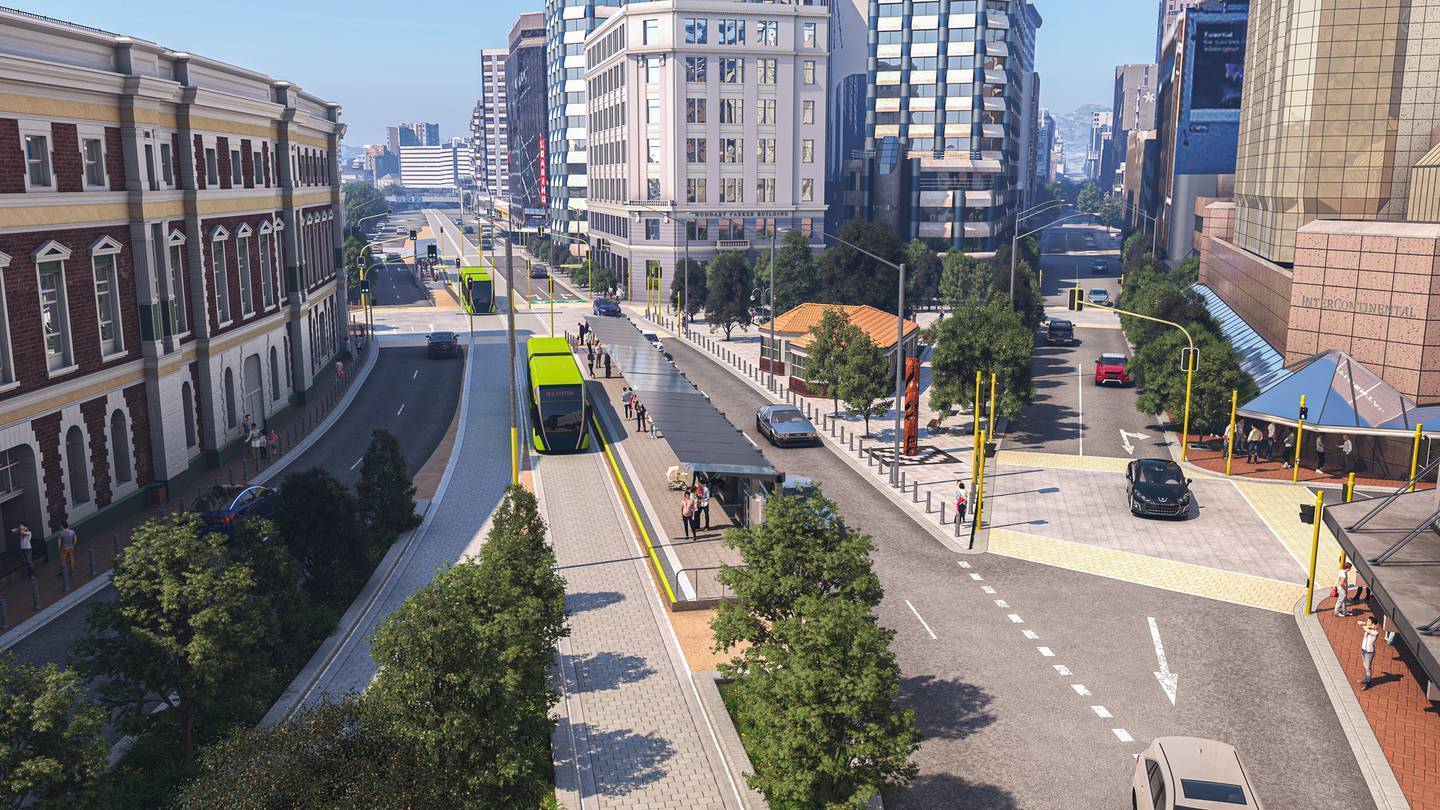
The Government now wants to prioritise building a second Mt Victoria tunnel which Infrastructure and Housing Minister Chris Bishop has said will create “exciting opportunities for more urban development and housing”. The Government is also investigating a mega tunnel underneath Wellington.
Whanau does not support a second “car tunnel” but is keen to explore the opportunities for housing around the Basin Reserve and Kent Tce area.
More cycleways, bus lanes, EV chargers
Whanau promised more bus priority lanes to make routes faster and more frequent. The council has installed 4km of new or improved bus lanes this term, doubling the network to 8km across the city.
However, projects like the Tinakori Rd and Bowen St bus lanes and the Riddiford St and Adelaide Rd bus lanes were already planned before Whanau took office.
Commuters have taken a while to get used to the new road layout. The council dished out 4087 fines in six months to motorists for driving in the newly opened bus lanes, totalling more than $600,000.
A “second spine” bus route of priority lanes between Aotea and Jervois Quays is also being designed.
Whanau salvaged some projects from LGWM before the final nail was put in its coffin.
One of those projects that the council brought in-house was installing part-time bus lanes in both directions along Thorndon Quay and Hutt Rd.
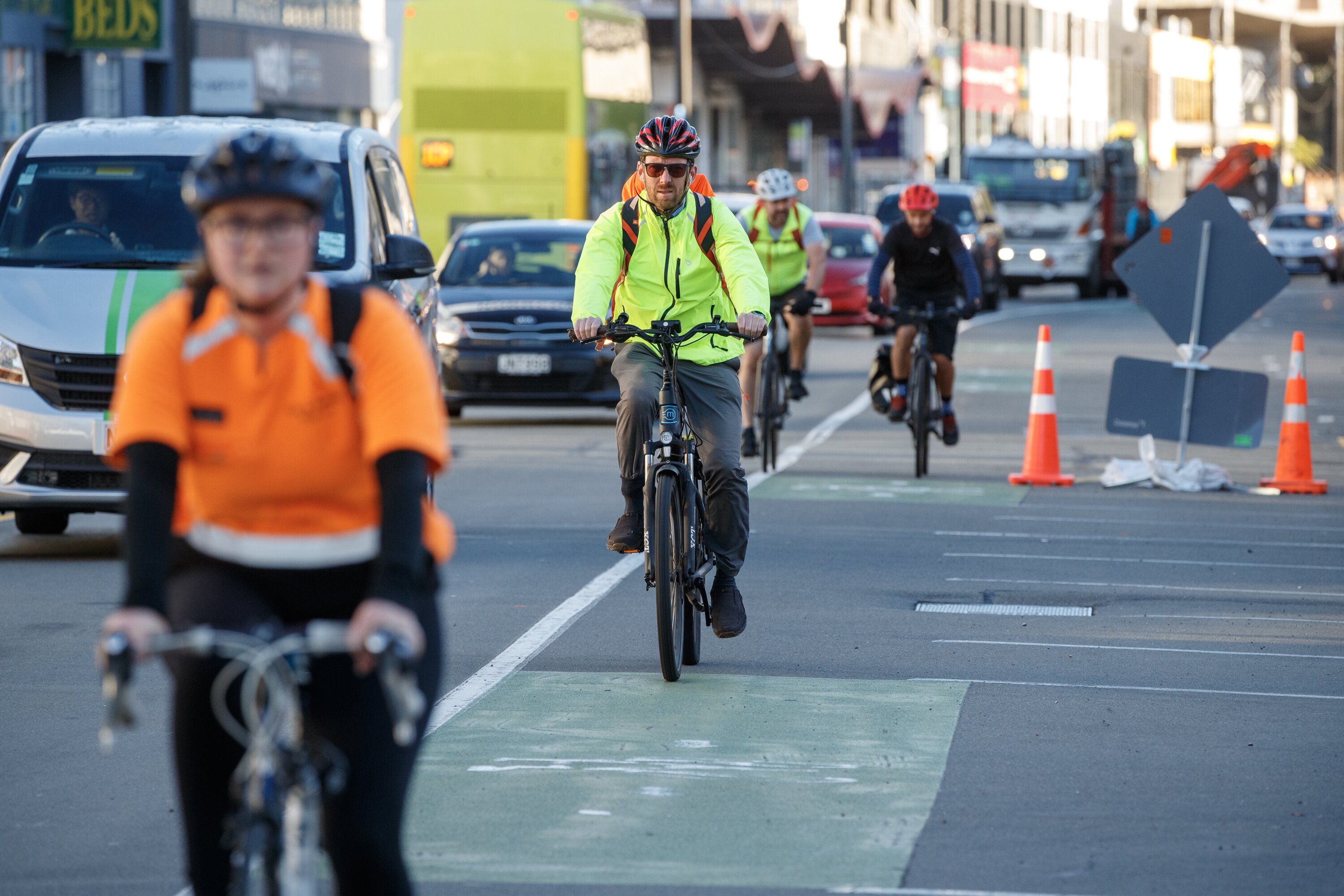
However, cost pressures led to the Hutt Rd section being stopped.
Many of the new bus lanes in the city have been rolled out alongside a city-wide bike network which was agreed to before Whanau became the mayor.
She promised to accelerate the rollout of that network. The council has delivered 22km of new cycleways across the city compared to the 8km rolled out last term.
The council has also cut $80 million from the network’s budget to find cost savings. The mayor’s office is confident the network can still be delivered in full and more efficiently.
It will likely mean the network will continue to be built in the current “pop-up” style and more long-term changes, like kerb realignment, will be deferred.
Whanau was also keen to trial the use of community storage facilities for bikes. Her office said new racks were being rolled out as part of the new cycleway network.
The mayor promised to advocate for free public transport and has supported community campaigns to retain half-price fares but the Government has cancelled that policy too.
She also pledged to roll out a comprehensive network of EV fast chargers across the city. The council has spent $3m to roll out 60 chargers around the city – a partnership with Meridian Energy announced before Whanau’s time.
The council is keen to work with the private sector and the Government to deliver a more comprehensive network, Whanau’s office said.
Overhaul of district plan delivers housing promises
Whanau promised development bonuses to unlock more capacity however the overhaul of the district plan has surpassed this including the removal of maximum height restrictions in the CBD.
The district plan has also delivered Whanau’s promise to provide more mixed-use zoning and street-facing developments.
The main changes to the district plan have been several years in the making with former Wellington Mayor Andy Foster at the helm during more heated debates about heritage and higher-density housing.
Whanau also promised council tenants warm, dry affordable homes.
The council is spending $593m over the next 10 years on upgrading its social housing portfolio. This is to fulfil a deal made back in 2007 with Helen Clark’s Labour Government.
Whanau was keen to seek opportunities for the council to partner with Kāinga Ora on housing developments but no significant new developments have eventuated.
Golden Mile redevelopment to ‘transform’ city safety
Another project Whanau salvaged from the axed LGWM transport plan was removing private vehicles from the city’s Golden Mile. This is the stretch from Lambton Quay to Courtenay Pl.
The project includes dedicated bus lanes, bike lanes and wider footpaths to prioritise walking and cycling. Whanau has described it as transformational change.
This project will deliver her promise of supporting inner-city safety through better street design.
Whanau also promised emergency callboxes throughout the central city. Her office confirmed there won’t be extra call boxes but the existing ones will be retained along the Golden Mile corridor.
Whanau promised to help fund community organisations dedicated to mental health support and reducing alcohol and drug harm. The council has boosted social grants for safety initiatives in the CBD by $500,000 a year.
On drug use, Whanau wanted to support community organisations to establish safe and supervised environments for drug testing and use to reduce the risk of accidental overdoses. This has not been achieved but her office said it will be raised as part of discussions with the newly established city safety leadership group.
The council has boosted the training and presence of safety ambassadors in the city, including having a presence at night, Whanau’s office said. This was another one of her promises for a “safe and supported environment”.
Going green and pedestrianising Cuba St
Whanau promised to create more green space in urban areas. The council has allocated $4.2m in its long-term plan to implement a green network plan, including 1000 trees to be planted in the central city and eventually two new central parks, Whanau’s office said.
One of Whanau’s more prominent promises was to pedestrianise Cuba St. That has not happened yet, but council officials have been directed to prioritise work on pedestrianisation options, including temporary pedestrianisation.
Whanau pledged to plant a million new native trees and shrubs over the next decade. Last year 110,105 trees and shrubs were planted with the help of community groups.
She wanted to daylight streams which means removing obstructions like pavement and restoring them to their previous conditions.
This has been difficult considering many run diagonally across the city and under roads and buildings.
She was keen to trial the use of low-traffic neighbourhoods by using planting to create dedicated space for people rather than traffic. This has not been achieved.