Why Mayor Tory Whanau’s crumbling support is good for Wellington – A Capital Letter
Georgina Campbell is a Wellington-based reporter who has a particular interest in local government, transport, and seismic issues. She joined the Herald in 2019 after working as a radio journalist.
ANALYSIS
Wellington City Council’s crumbling left-leaning voting bloc could be the making of Mayor Tory Whanau and her elected colleagues.
Councillors Ben McNulty, Nīkau Wi Neera and Nureddin Abdurahman have publicly withdrawn their unconditional support for the mayor’s policies after a controversial decision to sell the council’s airport shares.
They are concerned it was presented to them by council officials as a fait accompli, that the mayor did not campaign on the sale but championed it, and it was revealed at the eleventh hour that $450 million of capital spending would need to be cut if the shares were not sold.
The loss of their support leaves Whanau without a reliable working majority.
Wellington City Council is more obviously politically partisan than most New Zealand local authorities. The capital is the seat of government, after all.
There are four Labour councillors and three Green councillors on the current council. The Greens endorsed Whanau’s mayoralty. It’s worth noting there are also two former Green councillors turned independents.
The 2022 local body elections delivered both a convincing win for Whanau as mayor and a left-leaning council.
This gave her the confidence at that time to appoint Labour and Green councillors to chair the council’s three key committees. Green Party councillor Laurie Foon was made deputy mayor.
This was despite Whanau’s preparation on the campaign trail that she might not enjoy a working majority if elected.
She pitched herself as someone who could reach across the political spectrum and build consensus after her experience negotiating with New Zealand First and Winston Peters during her time as Green Party chief of staff.
The council’s recent Long-Term Plan deliberations were the first time Whanau has so plainly had to do just that.
The usual voting blocs were cast aside to form an unlikely alliance in favour of selling the council’s 34 per cent share in the airport.
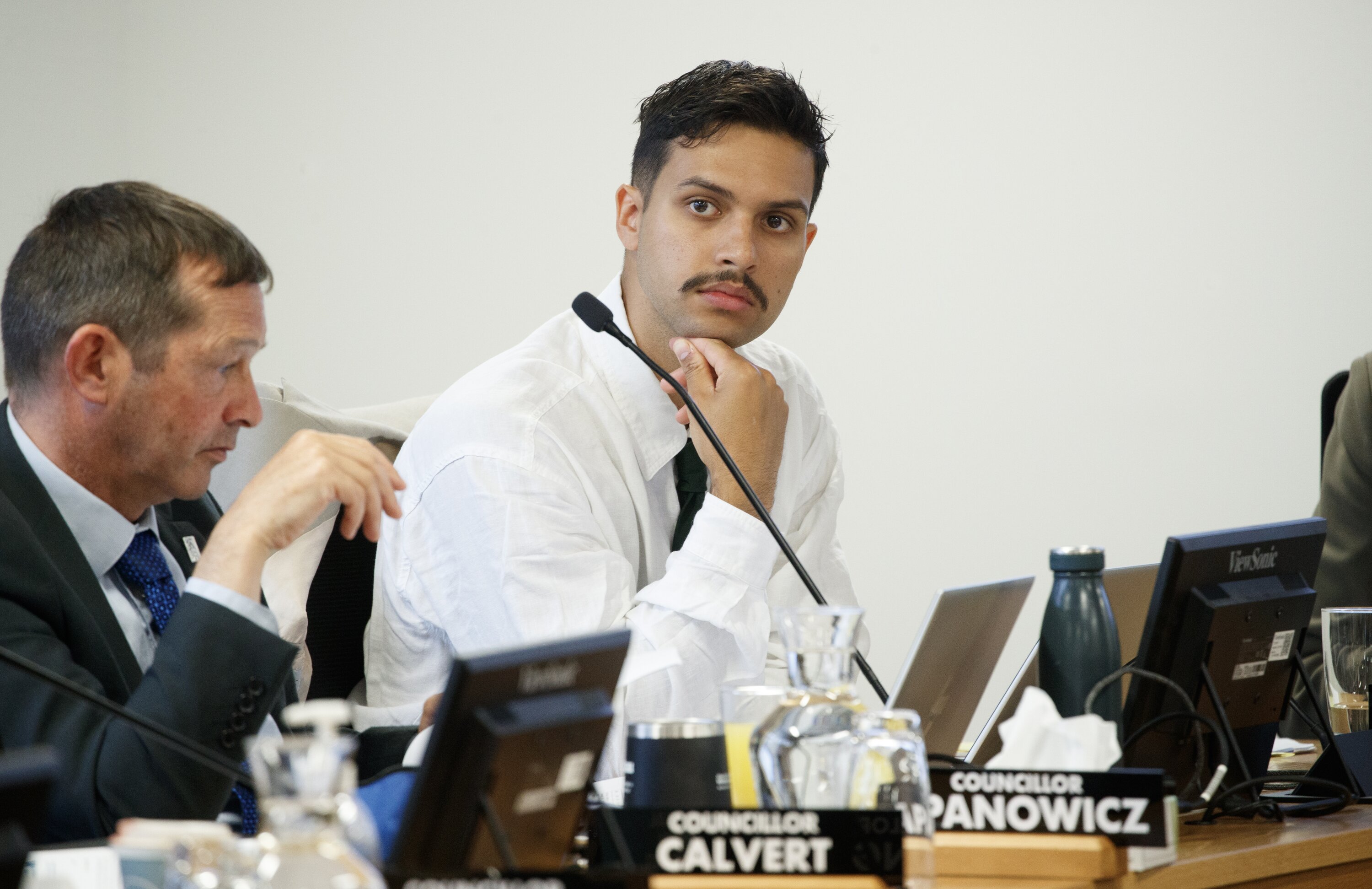
For example, independent councillor Diane Calvert voted in favour and managed to negotiate to keep her local pool open for another season, following an outcry from residents at the council’s proposal to close it for good.
A 2021 review by Peter Winder into the former council’s governance problems remains a useful document for understanding the challenges and triumphs of local government.
Winder said that typically, a majority is formed around council tables in one of two ways.
The first is when councils effectively operate like a board of directors in a highly collaborative way. This tends to happen in smaller provincial councils where there is a low turnover of elected members.
The second is when there is a majority faction which effectively forms a Government with a minority of councillors predominantly fulfilling the role of Opposition. The majority is typically aligned with the mayor.
Whanau has been operating under the latter model. Based on Wellington City Council’s recent history, it’s difficult to imagine the former model ever playing out in the city.
She now faces a similar reality to her predecessor Andy Foster, where majorities were formed continuously issue by issue.
Under Foster, Wellington’s continuous state of government formation made decision-making appear “noisy, difficult, and from the outside unpredictable”, Winder said in his report.
So, how could a repeat of this reality possibly be a good thing for Wellington?
There is one key difference, and that is that Whanau is not Foster.
She has more political nous than Foster, who had operated as a bit of a lone ranger in his position as a councillor of 27 years.
People overwhelmingly voted for her vision of the city, providing her with a 17,751 majority, whereas Foster’s accession to the mayoralty probably said more about his predecessor Justin Lester than him, with just 62 votes between them.
Furthermore, Whanau should still be able to rely on a convincing majority for the progressive projects she campaigned on, which the left-leaning council generally support.
McNulty, Wi Neera and Abdurahman won’t oppose policies they are also personally in favour of out of spite for the mayor.
The mayor’s crumbling majority is a good wake-up call and could lead to a healthier Wellington City Council.
Negotiating with centre-right independents isn’t a bad thing. They were elected to have a voice around the council table too.
Whanau may be coming under fire from her own side, but if it leads to decision-making driven by what councillors believe is best for the city – rather than political allegiances – that can only be a good thing.