All Blacks enjoy record payday; who really sold out the Chicago test; Englishman becomes front-runner to be NZR CEO; US set to become home away from home for men in black

This is a transcript of the Inside Rugby newsletter. To sign up, click here, select “Sports Headlines” and save your preferences.
By Gregor Paul in Edinburgh
There is still a little financial dust to settle, but reconciliations so far make the fixture at Soldier Field against Ireland the most lucrative one-off test the All Blacks have ever played.
As much as New Zealand Rugby (NZR) tried to push the narrative that the All Blacks were in Chicago to spread the rugby gospel and serve as evangelists for the sport, the match is believed to have netted the biggest payday the All Blacks have received from any test they have ever played.
The national body made a profit of between $5.5 million and $6.5m – which is more than games they have hosted in New Zealand, tests they have played in Hong Kong, Japan, USA and tests they have played outside World Rugby’s designated window in London and Cardiff.
The two tests in Auckland during the British and Irish Lions series in 2017 may have delivered higher returns than the Chicago game but the calculations are difficult to break down and the comparison is not necessarily one which pits apples against apples.
The previous best payday the All Blacks had known came last year when they played England at Twickenham outside World Rugby’s designated Regulation 9 window, taking what is believed to have been a match fee of $5m.
To further illustrate the financial horsepower of the Chicago test, it is believed the final profit will end up being more than 50% higher than the average return from the six home games the All Blacks played in New Zealand this year.
Two questions jump out from this revelation: why was the profit from the 2025 Soldier Field game so much higher than the return delivered from the same venue and same opponent in 2016 (and all the other offshore games the All Blacks have played in the last two decades)?
And given the proven financial riches that can be made from playing in the USA, how will this likely impact future decisions about where the All Blacks play?
The answer to the first question is that NZR, having grown in confidence about the marketability of the All Blacks in foreign markets, has lost its risk aversion that was at the heart of its previous financial modelling for these offshore tests.
In 2016, unsure how the US market would react to a fixture between the All Blacks and Ireland, it is believed NZR (and Ireland) engaged a promoter and said they both wanted a minimum guarantee of receiving a cheque for $3m after the game.
The promoter carried the risk of being on the hook for $6m, so if thousands of tickets remained unsold, it carried the risk of not being able to pay the two cheques.
But the promoter also had the greater reward scenario as selling out the 61,000-capacity stadium would potentially mean that it took more money from the game than either NZR or the Irish Rugby Football Union.
The game last week is thought to have operated under a revised economic model where the promoter was paid a set fee and NZR and Ireland agreed a 50-50 revenue share.
The 2025 also yielded a higher per-seat revenue, helped by a more strategic sales strategy that saw tickets released in tranches, the second of which was subject to a dynamic-pricing algorithm.
Having seen how successful this formula can be, and with World Rugby having raised US$250m ($441m) to invest in the USA ahead of the 2031 World Cup, the All Blacks are now provisionally slated to play tests there in 2028, 2029 and 2030.
World Rugby is keen for major unions to organise high-profile games in cities that are bidding to host World Cup games, and part of that US$250m will be used to incentivise teams like the All Blacks to play in the USA.
NZR has previously looked at playing a Rugby Championship test against Argentina in Miami – a concept it will likely reconsider in 2028, with a November test a possibility in 2029 (a decider against Ireland in Chicago?) and a fourth test in the Greatest Rivalry series against South Africa in 2030 a high probability.
The All Blacks also looked at playing a Bledisloe Cup fixture in Las Vegas next year, but that has been ruled out, given the heavy travel demands the team are already facing with six weeks in South Africa and the Nations Cup in the UK.
A big part of the investment thesis espoused by NZR’s private equity partner Silver Lake is based on finding, growing and monetising an All Blacks fan base in the USA, and so in this regard it is almost perfectly aligned with World Rugby.
NZR chief executive Mark Robinson says the plan is to build a greater brand presence in the US and ultimately find more corporate partners by following a similar model to the one that has been used to build the All Blacks’ profile and financial returns in Japan.
“If you look at Japan, going back there every year, aside from the match-day benefits of the revenue we get there, we have got four or five major partners that we didn’t have three or four years ago,” Robinson says.
There is no doubt that being a regular presence in a market, building relationships, getting more familiar with fans around your playing personalities, your coaching personalities, the brands the team – all that builds awareness that sponsors, broadcast partners and a whole range of people in the commercial space see value in.
“If you apply that to the States, you would say the same thing would ring true. It is just a more challenging environment. You have a different history in the game. It has been around for 100 years but not in an organised fashion like it has been in Japan,” Robinson says.
“It doesn’t have the same resonance in the US Government, for instance, as it does in Japan. It is a massive country, different time zones and some states are seen as rugby states and some are not.
“But the principle of getting return in market is broadly the same, it is just the execution in the market.”
Brand Ireland packs quite the punch
NZR’s confidence about being able to make inroads into the US market has been buoyed by the success of the Soldier Field Rematch and the stats – unverified – that it produced which claim that tickets were bought from people in all 50 states as well as all 10 Canadian provinces.
But what’s underappreciated in New Zealand is that the crowd in Chicago was overwhelmingly Irish, with best estimates that around 90%-95% of fans were wearing green.
There should be some caution, therefore, about overestimating what the sell-out occasion and record profits from Soldier Field truly say about the power and reach of the All Blacks as a sporting brand.
Ireland is a whole powerful brand in itself with an estimated 70 million people worldwide eligible to hold Irish passports and about 400,000 inhabitants of Chicago claiming heritage to the Emerald Isle.
Being Irish – and having a familial connection to Ireland – is big business, which is why Chicago has a world-famous St Patrick’s Day celebration, why there are Irish pubs all over the world and why Guinness is enjoying a revival among Gen Z.
The test had the feel of being a home game for Ireland and it is worth pondering whether the stadium would have sold out had the All Blacks been playing Australia or South Africa.
Englishman leads the way in race to be NZR CEO
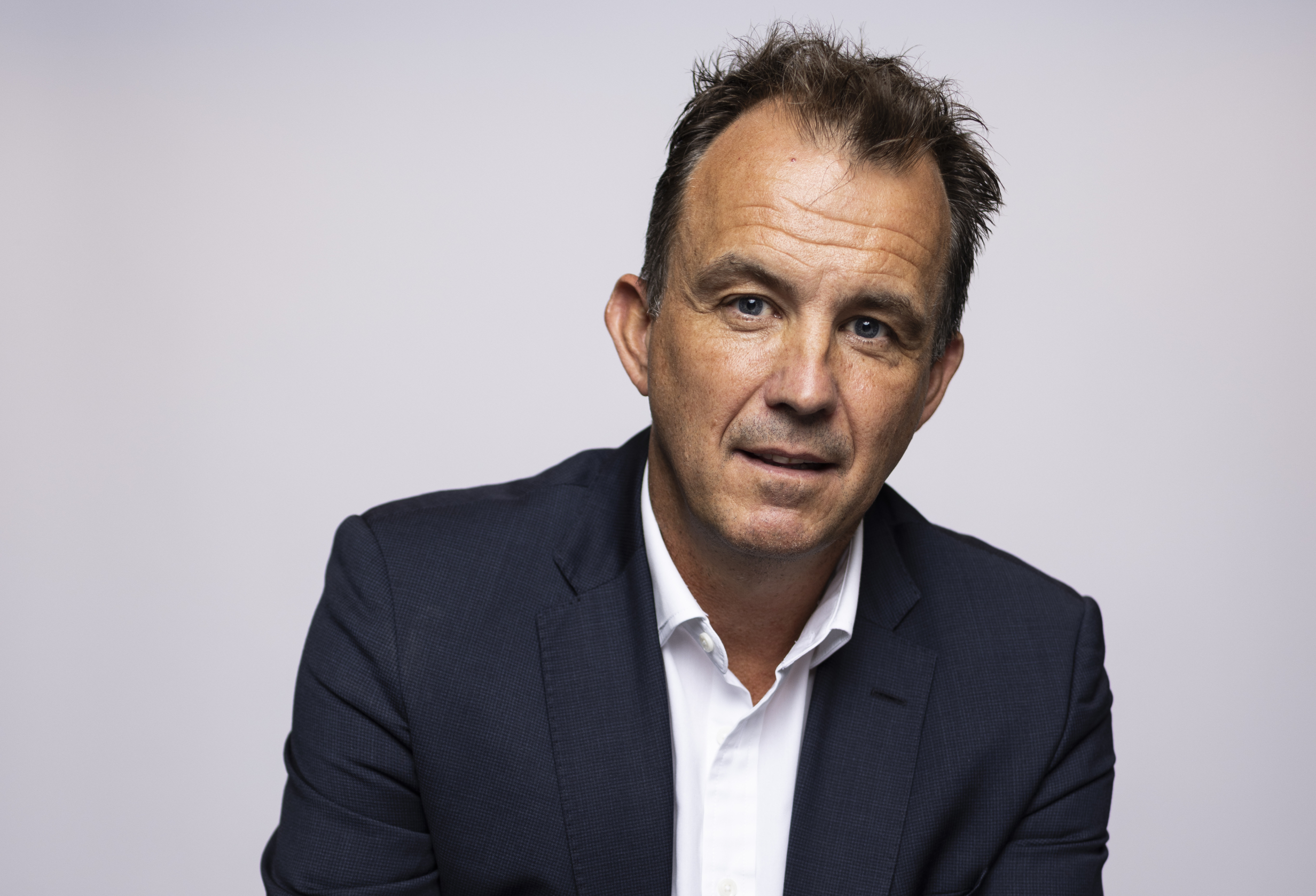
NZR is believed to be close to picking a preferred candidate as its next chief executive, with Englishman Tom Harrison said to be the front-runner to replace the soon-to-depart Mark Robinson.
Harrison is currently the chief executive of the Six Nations, a job he took in 2023 after serving for seven years as chief executive of the England Cricket Board.
Before taking the ECB job, Harrison – who also played professional cricket at county level in England – held senior management roles at IMG and Star Sports.
It is understood that Harrison was interviewed by a panel that consisted of four board members two weeks ago, with the Herald having been told that former Blues and New Zealand Cricket chief executive David White was also interviewed.
It is not known how many other candidates were on the shortlist but one other name being linked with the role is Brent McAnulty – TVNZ’s interim chief news and content officer.
The Herald understands that NZR’s board has been disappointed with the lack of female applicants for a job that has a pay range of between $900,000 to $1.1m for the right candidate.
There has also been some intrigue within executive circles about the number of people who have claimed to have been shoulder-tapped and encouraged to apply by Sheffield, the recruitment agency helping conduct the search.
One name supposedly approached by Sheffield is former Rugby Australia boss and current chief executive of Sport New Zealand, Raelene Castle.
But the Herald understands that Castle rang NZR chair David Kirk directly to ask if she should apply and was told that she shouldn’t bother as she was not at all what the national body is looking for.
Interestingly, at about the same time candidates on the shortlist were being interviewed, the Blues announced they had hired former ASB Classic head honcho Karl Budge as chief executive.
Budge, having made the ASB Classic a must-go-to summer event for Kiwis and having been influential in establishing SailGP as a viable concept, is fast building one of the most impressive CVs in sports administration and leadership and is viewed as a potential future CEO of NZR.
Can an English high-flyer connect with NZ grassroots rugby?
It’s easy to understand why NZR would be interested in Harrison. His long-term background is in the broadcast industry and he was instrumental in striking a vastly improved media rights deal that saw $2.4 billion flood into English cricket in 2020-2024.
NZR’s biggest challenge is driving more revenue from its broadcast rights, with global sales the key, as the domestic market is challenged by the lack of competition and the relatively tiny population of just over five million people.
This year NZR announced that it has renewed its partnership with Sky in a five-year rights extension from 2026, but that the value is down from about $100m a year to about an estimated $80m a year.
All the international content deals for the next five-year cycle have not yet been finalised, but NZR is forecasting that once they are, it will maintain its circa $100m-a-year broadcast income as it will secure uplifts in the fees it gets from overseas broadcasters.
But maintaining the same broadcast income in 2026-2030 cycle was not NZR’s goal. The national body was aiming to see a significant increase in broadcast dollars, given the quality of the content slate it has put together, which will see the All Blacks play two Greatest Rivalry tours with South Africa, host the British and Irish Lions in 2029 and the new Nations Cup launch in 2026.
Harrison’s experience in negotiating broadcast deals in international markets will be the key reason he’s of significant interest to NZR.
But also, as chief executive of the Six Nations, he will have gained experience working with a private equity partner, as CVC owns a 28% stake in the Northern Hemisphere’s showpiece tournament.
And as a former professional cricketer, he has some insight into the world of high performance.
But the unknown will be Harrison’s ability to connect with the community game in New Zealand and understand the varied histories and manage what can often be difficult and complex relationships with provincial unions.
As an Englishman, it may prove hard for him to understand New Zealand’s unique rugby landscape, the continued importance of the club game to small communities and the passion that exists for the NPC.
There is also, after the prolonged governance review saga last year, a significant amount of trust to be rebuilt between the national body and its member unions, many of whom feel they have been disenfranchised and devalued in the rush to corporatise and commercialise the All Blacks.
Speaking with the Herald earlier this year, Kirk, the NZR chair, said that the board was not looking for someone who only had sports brand experience as the job will straddle both the professional and amateur worlds of rugby.
It was being pitched as a job that requires someone to be as comfortable in gumboots on a muddy sideline as they are in leather moccasins around the boardroom table.
“There will be a lot of people who would love to run a global sporting brand – the All Blacks’ global sporting brand,” Kirk said.
“But they are not coming just to do that. It is way more than that, because you have the community element to it.
“They are coming to run New Zealand community rugby. People with only a professional sporting background coming thinking they are running a professional sport will not be appropriate.”
If Harrison is appointed CEO, the potential workaround to his lack of experience/knowledge of the grassroots game could be finding either a chief commercial or chief financial officer with history in this area – as NZR is also recruiting people for those roles.
Gregor Paul is one of New Zealand’s most respected rugby writers and columnists. He has won multiple awards for journalism and written several books about sport.