All Blacks 2025 review: Forwards advance but backline doubts persist – Gregor Paul

THE FACTS
By Gregor Paul in Cardiff
The raw numbers from the All Blacks’ 2025 season have ended up sitting in a hard-to-determine grey zone of not being great but without being catastrophic.
The glass-half-full types will say the All Blacks were one 25-minute spell in Buenos Aires from winning the Rugby Championship, while the glass-half-empty sorts will say they were one dropped ball away from making unwanted history in Edinburgh.
As All Blacks coach Scott Robertson has said all season, test rugby swings on tight margins, so this kind of retrospective accounting, where a ledger of missed opportunities is created, ultimately serves no purpose, as its true value on any balance sheet is zero.
In essence, at the highest level of the game, the whole business of working out who is best comes down to that one key statistic – who most regularly wins those small moments.
This is high performance in a nutshell – no one turns up wildly out of shape and clueless: it’s the best versus the best and the separation points are measured in fractions and multiple decimal points, but they signify a hard-earned power advantage, or technical superiority, or skill development.
South Africa clearly lead the way on this front, and New Zealand’s 10 victories from 13 tests would suggest that they are not so far behind.
The world rankings place New Zealand as the closest team to the Springboks, but gut feel, and the changing dynamics of performances in the past four weeks, make that seem a generously high assessment of where the All Blacks truly sit.
The rankings are not a sophisticated enough mechanism to truly reflect the here and now and perhaps a better method would be to attribute a likely win rate, should teams have to play each other multiple times.
On this scale, it would be a reasonable assumption that the All Blacks would likely beat the Springboks once in four games (which is actually their record against South Africa under Robertson).
England they would likely beat twice in five; France (the real version as opposed to the diluted team that came to New Zealand in July) once every three, and Argentina? The actual rate over the past two years of beating them every other time they meet seems about right.
The All Blacks look capable of beating Ireland consistently now – but that’s more to do with the demise of the latter.
On this new scale, the All Blacks sit fourth-equal with the Pumas – a position that doesn’t meet expectation, but one that is not so low as to make the summit feel like a place that will never be reached.
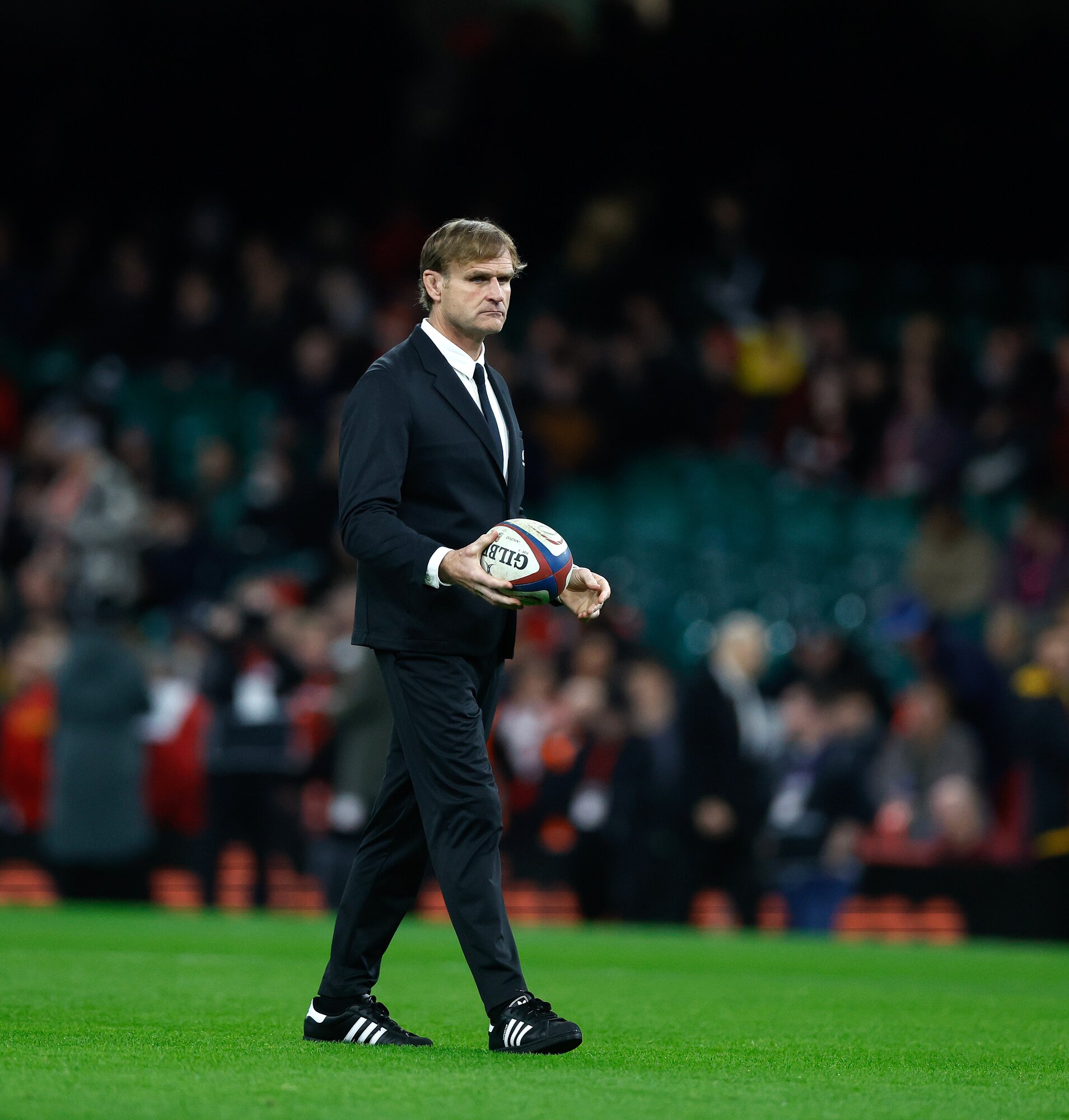
And this question of potential is one with which New Zealand Rugby chair David Kirk and his board are going to have to ponder deeply over the next couple of weeks. They must determine whether they believe the All Blacks, in their current set-up, can learn the art of exploiting small margins and bump themselves up the rankings.
The foundation for optimism is the forward pack, which grew both its stature and talent pool in 2025. They have a depth of young, dynamic tight forwards now who look capable of holding their own against the best.
The scrum creaked a bit against the Boks, but was mostly strong otherwise, while the lineout was weaponised this year and became arguably the best in the world.
Peter Lakai and Wallace Sititi – playing alongside Ardie Savea – have given the All Blacks a loose trio combination for most occasions, with both Simon Parker and Tupou Vaa’i capable of being the bigger-body No 6 that might appeal in certain fixtures.
The All Blacks are maybe one heavyweight loose forward short of what they will need at the World Cup, but with five, maybe six, genuine test-quality locks and a long list of props to work from, Project 4-4-4 is well on track in those two areas.
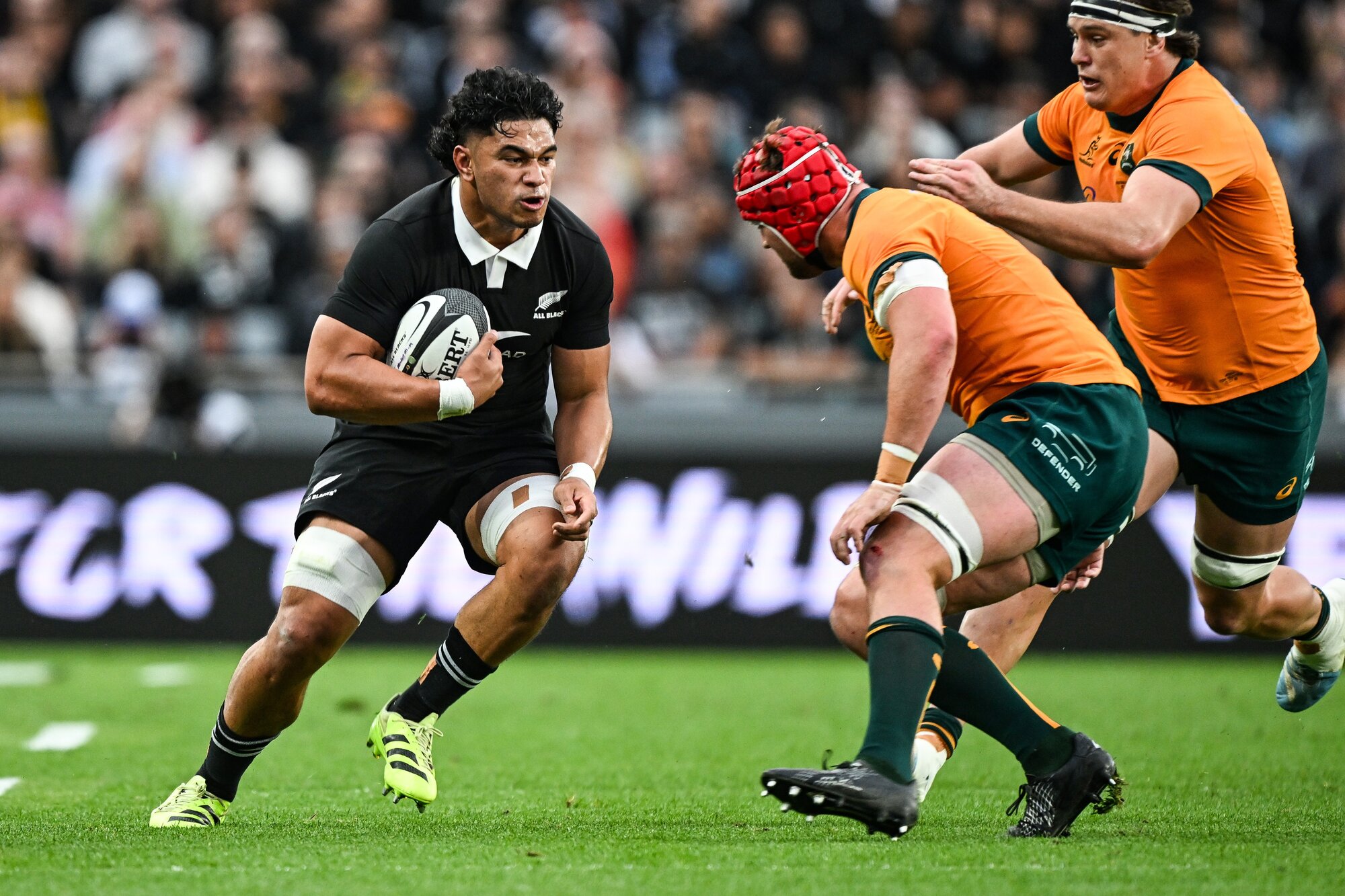
The doubt, though, about where this team is heading stems from the lack of certainty about what the right backline set-up might be, the inability to consistently deliver a cohesive attack game, the continued erratic nature of their kicking strategy and the lack of depth at wing.
Cam Roigard has come through 2025 with a claim to be the most exciting halfback in the game and Caleb Clarke was starting to look like the player he was when he first burst on to the international scene in 2020.
But those two success stories aside, the backs haven’t had a great year – shelling high kicks, leaking tries and not getting their game management right – and it’s not clear whether they have a personnel problem, a coaching issue or a combination of the two.
Richie Mo’unga will become available later next year, but it would be a risk to pin too much hope on him being transformational.
He’s a super No 10, but it won’t be easy for him to pick up the pace, intensity and tactical nuances of test rugby after three years of not playing it.
On balance, it’s hard to say that the All Blacks have ended 2025 a better team than they were at the end of 2024. They haven’t necessarily gone backwards, but stagnation at this level is the same as going backwards as South Africa and England, certainly, have advanced this year.
Deciding whether to be an optimist or a pessimist about what 2026 will bring for the All Blacks is impossibly difficult as the evidence is so mixed, given the progress of the forwards and regression of the backs.
Gregor Paul is one of New Zealand’s most respected rugby writers and columnists. He has won multiple awards for journalism and written several books about sport.