All Blacks review: How Perth performance sets up Grand Slam tour push
THE FACTS
The Perth test presented a perfect opportunity for this All Blacks team to demonstrate they could back up one strong performance with another against a much-improved – yet still developing – Australian side.
In short: mission accomplished.
However, as passionate rugby followers, we must look beyond the scoreline and dig deeper into what worked, what didn’t and what this means as the All Blacks prepare to head north for their Grand Slam tour against Ireland, Scotland, England and Wales.
Why this was best test of the year
1. Tactical game management (80-minute control)
The All Blacks managed the game superbly from start to finish. Despite a few soft moments, they appeared in control throughout. In challenging conditions, the balance between ball retention and a disciplined territory game was smart and effective. The side demonstrated patience and maturity, a clear sign of tactical growth.
2. Defence returns to test standard
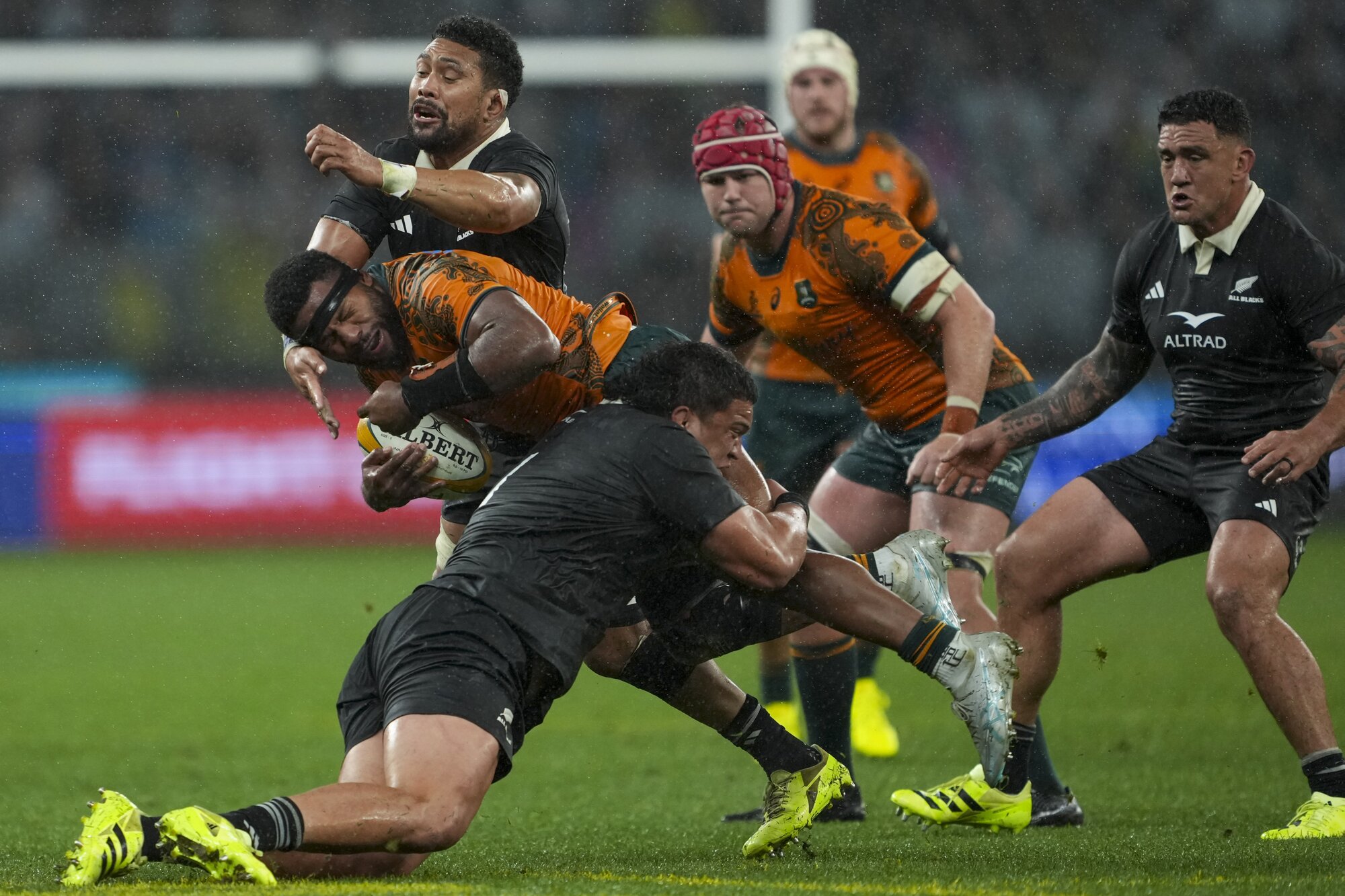
Defensively, this was a significant step up. The interior phase defence was well-organised, line speed improved and contact dominance returned – limiting Wallaby gainline and post-contact metres. Of note was the set-piece defence, especially around the seams – between the scrum and ruck, and between the lineout tail and first defender. These areas, most recently exploited by opponents, looked far more secure.
3. Aerial composure in difficult conditions
The aerial game was tidy and assured. A handful of big moments – particularly defusing dangerous Wallaby attacks inside the 22 – highlighted composure and better execution under pressure.
4. Set piece – scrum as a weapon
The scrum was a genuine weapon, anchored by Tamaiti Williams, Fletcher Newell and Codie Taylor, whose combination delivered consistent dominance. While the lineout remains a work-in-progress, the late withdrawal of Tupou Vaa’i certainly disrupted their rhythm.
5. Standout individual performances
Several individuals stood tall in Perth:
What does it all mean?
This performance reinforced the All Blacks’ dominance over the Wallabies. But more importantly, it showed belief that this team can now replicate performance and maintain consistency – a key marker of a team building towards the big prize.
While far from flawless, this was a step forward in maturity, control and cohesion.
All Blacks rating in Perth: 6.5/10
Now what?
Rather than contextualise the 6.5, let’s focus on how this group can climb towards a 10.
1. Build a dominant tight five
The foundation for sustained success is a tight five that consistently dominates the set piece. This will require technical refinement and physical evolution, alongside building true positional depth and work rate.
2. Develop three competitive loose forward combinations
Having at least three distinct 6-7-8 combinations will drive competition, tactical flexibility and form-based selection. New Zealand teams should encourage variety across NPC, Super Rugby and the international calendar to promote contrast and balance.
3. Clarify and develop our game drivers
The All Blacks’ No 10 remains the most critical jersey. We must decide who our 10s are and how we’re developing them into genuine world-class game managers – tactically sharp, technically precise (especially when challenging defences) and mentally unshakeable.
4. Cement midfield partnerships
Midfield remains an evolving area. Scott Robertson and his coaches must define the skill sets they require at No 12 and No 13 and then build partnership consistency over the next 12 months. The same principle applies to the wing positions, where connection, aerial proficiency, defence and finishing must sharpen.
5. Achieve 80% aerial accuracy
Continue developing our aerial skill set – catch, contest, chase and kick execution – with an objective of reaching a minimum of 80% success rate under pressure.
6. Become feared for relentless intensity
The All Blacks must return to being a side that makes opponents earn every inch, every second of the match. Physicality, fitness and unrelenting defensive pressure should again define the black jersey.
7. Perfect and evolve our attack systems
The current attack framework is promising, but it must be perfected. Continue developing layered options, tempo control and an insatiable appetite to innovate – learning and adapting with every test.
The road to 10
To reach a perfect 10, the coaching and selection programme must build ruthless internal competition, genuine honesty and trust and an uncompromising standard – one where mediocrity has no place.
This standard applies to everyone who enters, exists within or departs the All Blacks’ environment.
The All Blacks’ next frontier isn’t simply about displaying talent alone – it’s consistency, accountability and collective ruthlessness.