All Blacks v England: Humble Beauden Barrett plays down test-turning heroics
By Gregor Paul at Eden Park
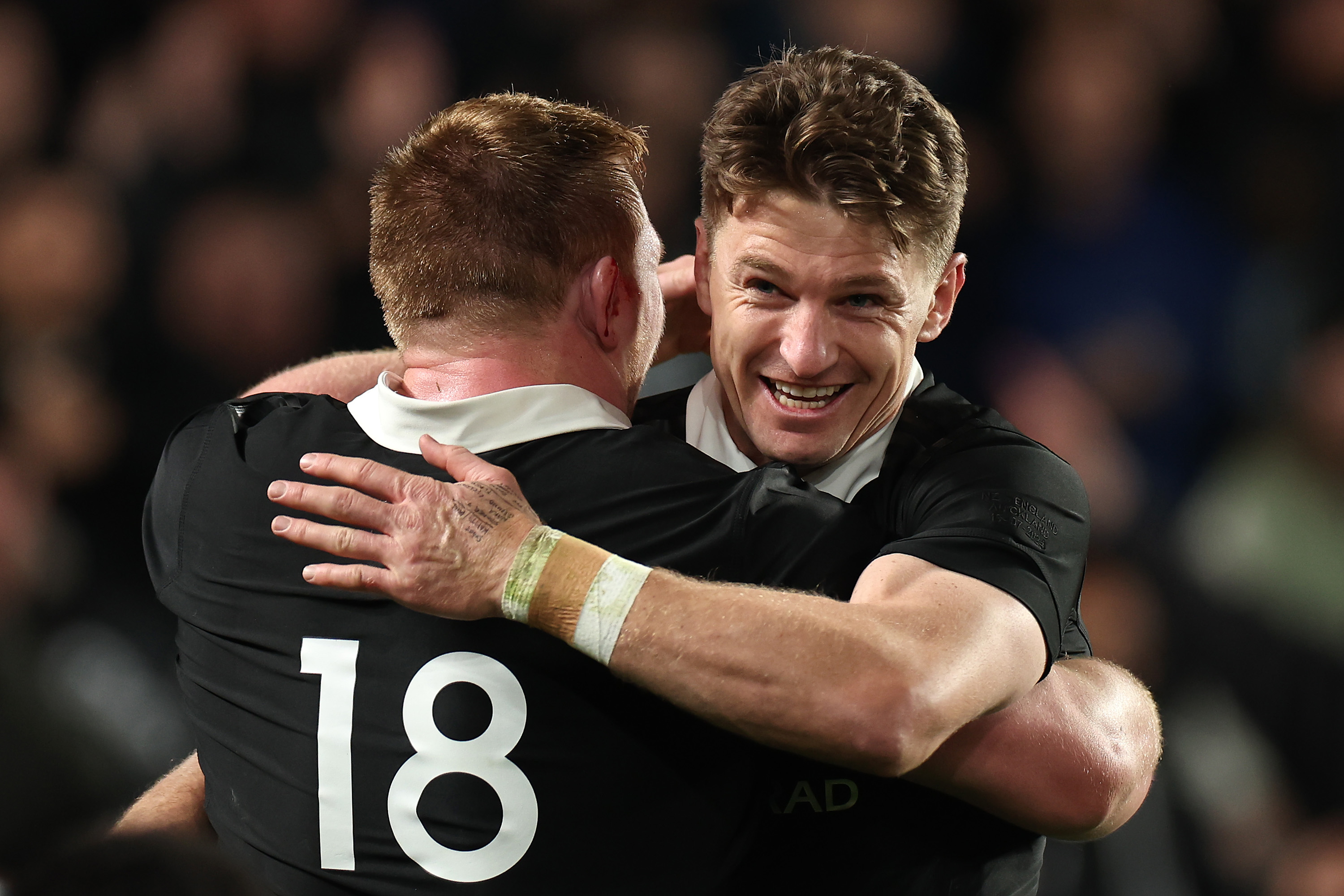
In typical Beauden Barrett fashion, he played a winning hand in his 30-minute cameo at Eden Park – effectively rescued a game that was slipping away and preserved the game’s most astonishing home record – and yet brushed it all off as another day at the office.
As New Zealand Rugby hunts for self-promoting heroes who can sell themselves to a global audience, they might find Barrett is an enigma who captivates with his on-field brilliance but isn’t interested in talking himself up.
His reaction to his own performance was muted and unremarkable – in stark contrast to his brilliance beforehand, where he broke the All Blacks out of the territory deadlock England held them by booting 60 metres down the field and then nailing fullback Freddie Steward.
He made a number of other telling kicks, set up the winning try with a stunning linebreak and saved the day in the last play by getting himself tangled in an England maul.
And how did he do it?
“I just tried to stay calm with the reserve boys and commentate the game – stay connected and stay on the same page because we understand the influence we can have,” he said.
“I was sitting next to Cortez [Ratima] and Anton [Lienert-Brown] and we were probably keeping each other calm and ready to get into the game.
“I had 50 minutes to sit and watch and analyse but ultimately it’s on pure instinct. Yes, there are a couple of key messages that we drove to win back momentum and close out that game. But to be fair it came down to the wire.”
It was classic Barrett – a reminder of when he was first starting out as an All Black and would be sent into the fray to make stuff happen and never failed.
He was so good at it between 2012 and 2015 that everyone lost count of how many times he’d change the dynamic of a test or do something so undeniably influential as to be considered the defining play.
He was dubbed a “super sub”, an ace in the pack to play late in the piece.
But the All Blacks of 2024 are going to find it hard to keep Barrett on the bench because in the last two weeks they have been exposed without him.
There was a lack of direction and certainty about the All Blacks until Barrett came on in both Dunedin and Auckland.
At Eden Park in particular, they were adrift, unable to build pressure or relieve it and for 25 minutes it was as if they were in a washing machine, stuck in this spin cycle where they would scramble out their 22 only to be back in it two plays later.
It was only when Barrett came on, that the momentum shifted – he brought energy, direction, accuracy and a willingness to get after England and ask them different questions.
He tidied up the backfield, organised his wings, offered a decision-making presence and then popped up in the backline at the right time to play a critical role in getting outside England’s rush defence to set up Mark Tele’a to score.
The All Blacks were a better team with Barrett on the field – less vulnerable to England’s successful cross-kick strategy that bagged them two first half tries – and while Stephen Perfofeta didn’t do much wrong in either of his two starts, there is no substitute for 125 test caps and the confidence that brings and injects.
“We got what we analysed and we confirmed that early on in the game,” said Barrett in why he was able to see things clearly when he came on.
“But trying to find that space under that linespeed pressure is easier said than done but as the game went and sped up we found more opportunities as it speed up.
“I guess it is about being on the same page and stickling to the plan. It is nothing special. A lot of it is energy and giving us options to pull the strings.
“We had prepared fort hat kind of intensity – heat – from the English defence and it is hard to defend the whole field if you are going to come that fast and be that narrow.
“It is effective most of the time but if you are good enough have time on the ball and depth those are the spaces that can open up. It was just one of those opportunistic things that we took advantage of and we trained through the week for it.”
Gregor Paul is one of New Zealand’s most respected rugby writers and columnists. He has won multiple awards for journalism and has written several books about sport.