All Blacks v Ireland: Eden Park victory the final nail in the coffin of this brilliant rivalry - Gregor Paul
Gregor Paul at Eden Park
The All Blacks clocked a good win at Eden Park, against a good Ireland team and gave a nation reason to feel good about itself.
It’s a seriously tough gig these days just to win a test against one of the recognised heavyweights, but to smack them about, run them a little ragged and post 40 points against them is reason to rejoice.
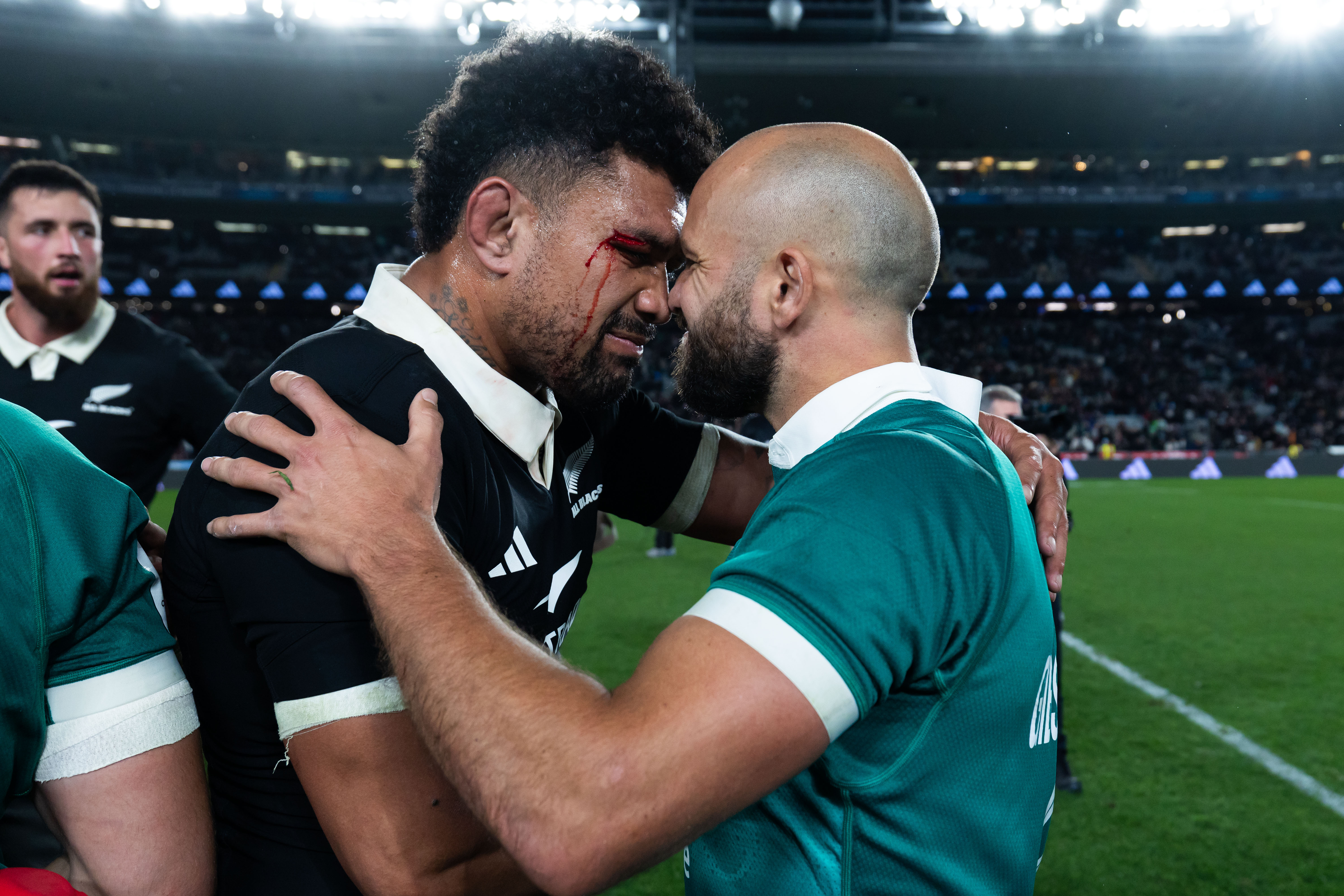
Other than a few niggly incidents where there was a bit of push and shove after the whistle, there was no real sense that this game was illustrative of New Zealand versus Ireland being the great new rivalry of the modern age.
There was only ever going to be one winner because it was obvious from the first exchanges that the All Blacks were playing with too much speed, balance and accuracy for Ireland to cope, and maybe that was emblematic of how these two teams are now on different trajectories.
New Zealand looked fresh, innovative, energetic and a team on the up – a team with obvious growth prospects. Ireland looked flat, tired, inaccurate and short of ideas.
Maybe it was just illustrative of one team being midway through its season while the other was at the end – playing the last game of a 10-month slog and were understandably tired and fuzzy.
But perhaps it was more than that. Perhaps it was a sign of how the power dynamics have changed.
Ireland were the dominant force four years ago, but not now. The All Blacks have beaten them on four successive occasions now and each time the gap between them has grown them a little.
And now that gap is as big as it has been in a decade. The All Blacks for periods – certainly for most of the first half – were threatening to produce a great performance and deliver the sort of statement victory that said they were truly back.
Certainly, for the first 40 minutes it was like the old days: the pre-2013 period where there was never any doubt about who was the better team and who was going to win.
The All Blacks blasted Ireland in all sorts of devastating ways. It was a full assault – all the weaponry was on show, and the mix of power, speed and skill restored all sorts of nostalgic feelings of this being what All Blacks teams are supposed to look like.
This was the sort of rugby on which the legend was built – the kind of performance that couldn’t help but invoke an element of patriotic pride.
It was New Zealand destroying one of the best teams in world rugby at a ground at which they haven’t lost since 1994. It felt like a demonstrable show of power – a giant flex of their newfound confidence and identity.
They hit them with direct powerful ball carrying, using the ever-willing Patrick Tuipulotu, Asafo Aumua and Tupou Vaa’i to blast holes in the defence.
Tuipulotu looked like an entirely different player to the one he’s been to date. He was brutal, relentless and irresistible.
But there was so much variety to the All Blacks’ play. They had smash and bash – raw physicality and set-piece solidity, but they also worked so many dangerous attacks off Jordie Barrett with runners whizzing around him.
They also had some genuinely smart moments. Ruben Love stopping, thinking and then booting the ball back over the Irish defence to win the 50:22 – an act which typified how he’s become a commanding and assured presence in the No 10 jersey in an incredibly short time.
Ardie Savea talking control at the back of a scrum just before halftime to pick and go and use his pace to cover the five metres and score before the Irish had even realised the ball was out.
All this combined to leave a definitive impression that this was a fluid and aggressive performance. There was so much to like about it. The speed of the All Blacks’ attack was next level and the work rate was off the chart.
They looked like a team that was connected strategically, culturally and emotionally and Ireland, who defended supremely well, were ultimately overwhelmed.
If there is a gripe, and it is curmudgeonly to be quibbling on a night that had so many positives and was easily the most impressive performance the All Blacks produced in July, they could have killed Ireland if they had come out in the second half with the same accuracy and energy they started the first.
Ireland were teetering at halftime. They had seen the score go from 14-7 to 28-7 in the blink of an eye and Savea’s try epitomised the speed, athleticism and determination with which the All Blacks were playing.
If the All Blacks had scored early in the second half, Ireland may have been broken and while it may seem a little mean-spirited to be labouring this, developing a killer instinct will be imperative if the All Blacks are to keep winning when they go to South Africa.
Gregor Paul is one of New Zealand’s most respected rugby writers and columnists. He has won multiple awards for journalism and written several books about sport.