David Kirk’s nuclear option; NZR’s deficit between promise and performance; the high-performance conundrum; chasing the Boks – Inside Rugby
This is a transcript of the Inside Rugby newsletter. To sign up, click here, select “Sports Headlines” and save your preferences.
By Gregor Paul in Cardiff
Until recently, the deficit New Zealand Rugby was most troubled by was the gap between money going out and money coming in.
In 2025, that remains a concern – but the problem has morphed, and what is holding New Zealand Rugby (NZR) back now is a deficit between its commercial ambition and its high-performance capability.
In crude terms, NZR – in tandem with its private equity partner Silver Lake – has built a financial blueprint of hawking the All Blacks across the globe, playing high-end fixtures in the hope of hiking gate revenue, snare major sponsors and win the hearts and minds of offshore fans.
It’s a plan which has seen NZR take a $1 billion-plus gamble to succeed (this is the long-term cost of selling equity) and a plan into which it has invested (or intends to) $40 million of short-term operating capital.
NZR has gone all-in – even blowing up next year’s Rugby Championship to take the All Blacks to South Africa for a four-game, four-test tour.
But while its commitment to its commercial operations has been total, it has not made a similar investment in its high-performance arm. New Zealand – so say the legions of coaches and support staff who have left in recent years – has fallen a long way behind its major international rivals in its ability to prepare players to succeed on the global stage.
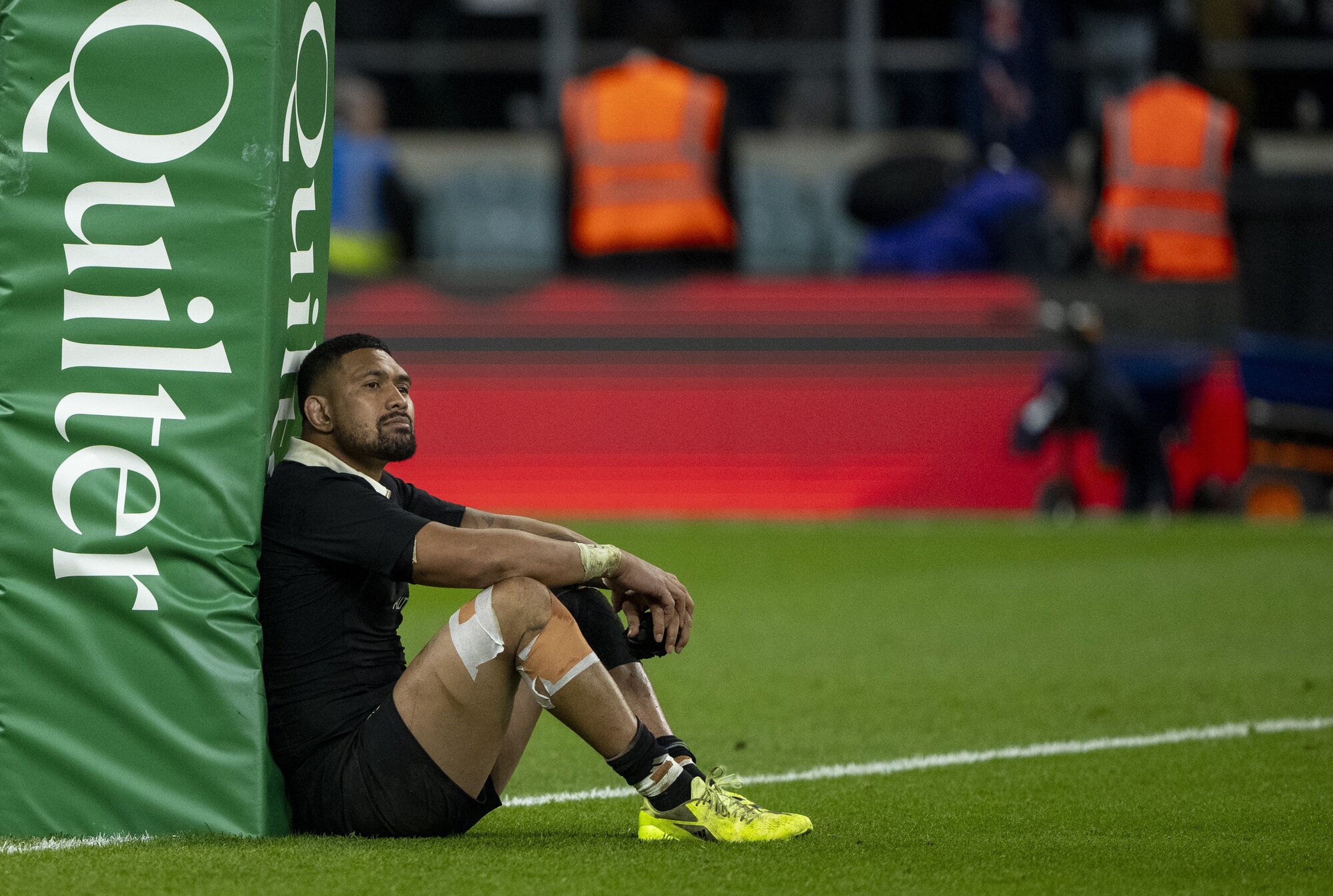
A system that was once the envy of the world now lags its peers in almost every facet – skill development, game structures, coaching methods and review processes, medical facilities and expertise and talent identification.
The evidence of the system’s endemic failings is much greater than the continued game-management meltdowns and skill errors committed by the All Blacks.
The New Zealand Secondary Schools team were beaten 81-48 by their Australian counterparts in September.
The Under-20 team, from winning five titles between 2005-2015, have managed just one world title in the past 10 years, while the men’s sevens have only twice taken the World Series in the past 10 years, after winning it seven times in the previous decade.
The Black Ferns won the World Cup in 2017 and 2022, but their semifinal exit this year reflects that their win ratio has gone from 83% between 2005-2015, to 78% in the last 10 years.
The only genuine international success story for New Zealand since 2015 has been the Black Ferns Sevens, who have won six World Series and two Olympic gold medals.
The Herald has spoken to several high-profile Kiwi coaches based overseas, who say that while they love their country and want teams in black to win on the world stage, they have no interest in coming home because they don’t believe the high-performance system is operating at best-practice levels, and they don’t trust NZR to consistently make good decisions around coaching and management appointments.
Some coaches have said they fear NZR has become dismissive of what it could learn and borrow from other countries and that it has shut itself off entirely from the rest of the world, which is partly why they say the All Blacks’ defensive and attacking patterns are outdated and ineffective.
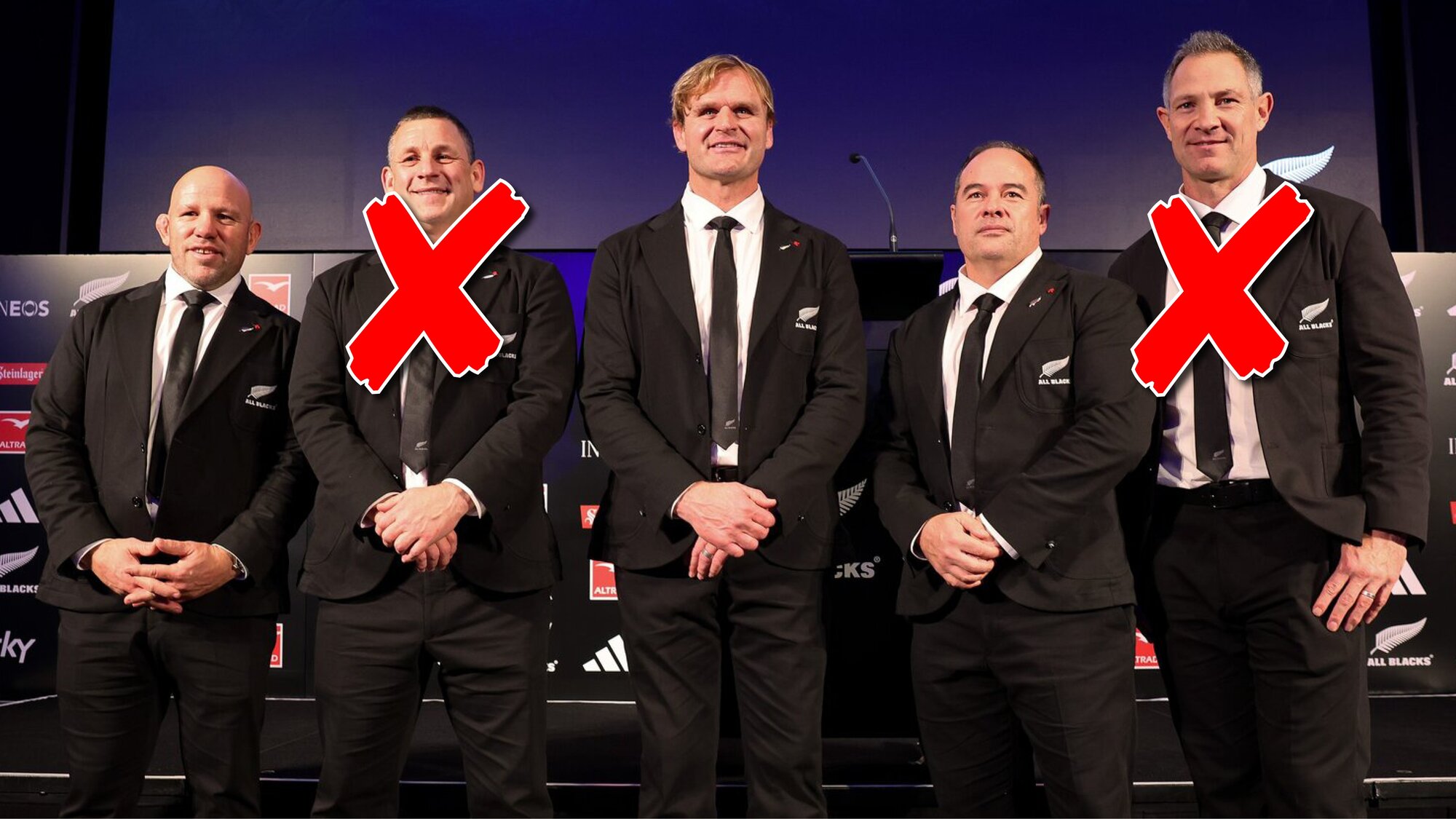
The shortcomings of NZR’s appointment processes have been felt across the ecosystem, with All Blacks assistant Leon MacDonald quitting after four tests and fellow assistant Jason Holland not seeking reappointment, while earlier this year, former Georgia coach Milton Haig quit as head of the U20 team on the eve of the tournament.
But it was the way NZR handled the All Blacks coaching role in 2023 – opting to run the process six months before the World Cup – that has done the national body the most reputational damage as a high-performance backwater, and the single decision that has done most to erode the confidence of quality overseas coaches and deter them from coming home.
The decision to run the 2023 process before the World Cup – something NZR had never done before – was sold to incumbent All Blacks coach Ian Foster as a shift to align New Zealand with the best high-performance practices of England, Wales and Australia, who all sacked their head coaches a year out from the tournament.
But Foster, as revealed in his book Leading Under Pressure, believes the timing reflected a growing fear within NZR that Scott Robertson, who had won six Super Rugby titles (including the Covid-era crowns) at that point, was going to be snapped up by an international rival.
Speaking with the Herald’s Shayne Currie in Chicago a few weeks ago, NZR chair David Kirk – who was not in his role at the time of Robertson’s appointment – said: “It’s generally accepted by most people that that was an unfortunate process, and that it was sub-optimal for everyone – actually for Scott as well as for Ian.
“We’re not in the business of having sub-optimal processes. We would certainly seek to avoid that type of process in the future. I would very much hope not, certainly when I’m the chair.”
NZR missing a Tricker
Unlike other countries, New Zealand hasn’t overly invested in a standalone high-performance unit that holds an overarching role in talent identification and development, preferring instead to throw more of its money at resourcing individual teams to enable them to secure the best coaches and support staff.
NZR may not have spent large on independent high performance, but it did historically spend wisely by appointing the respected Don Tricker, who had ample experience and success coaching softball and baseball.
Tricker was NZR’s high-performance leader between 2010-2017 and former All Blacks head coach Sir Steve Hansen says Tricker’s astute oversight and influence on what he was doing with the national team and further afield with player development programmes was invaluable.
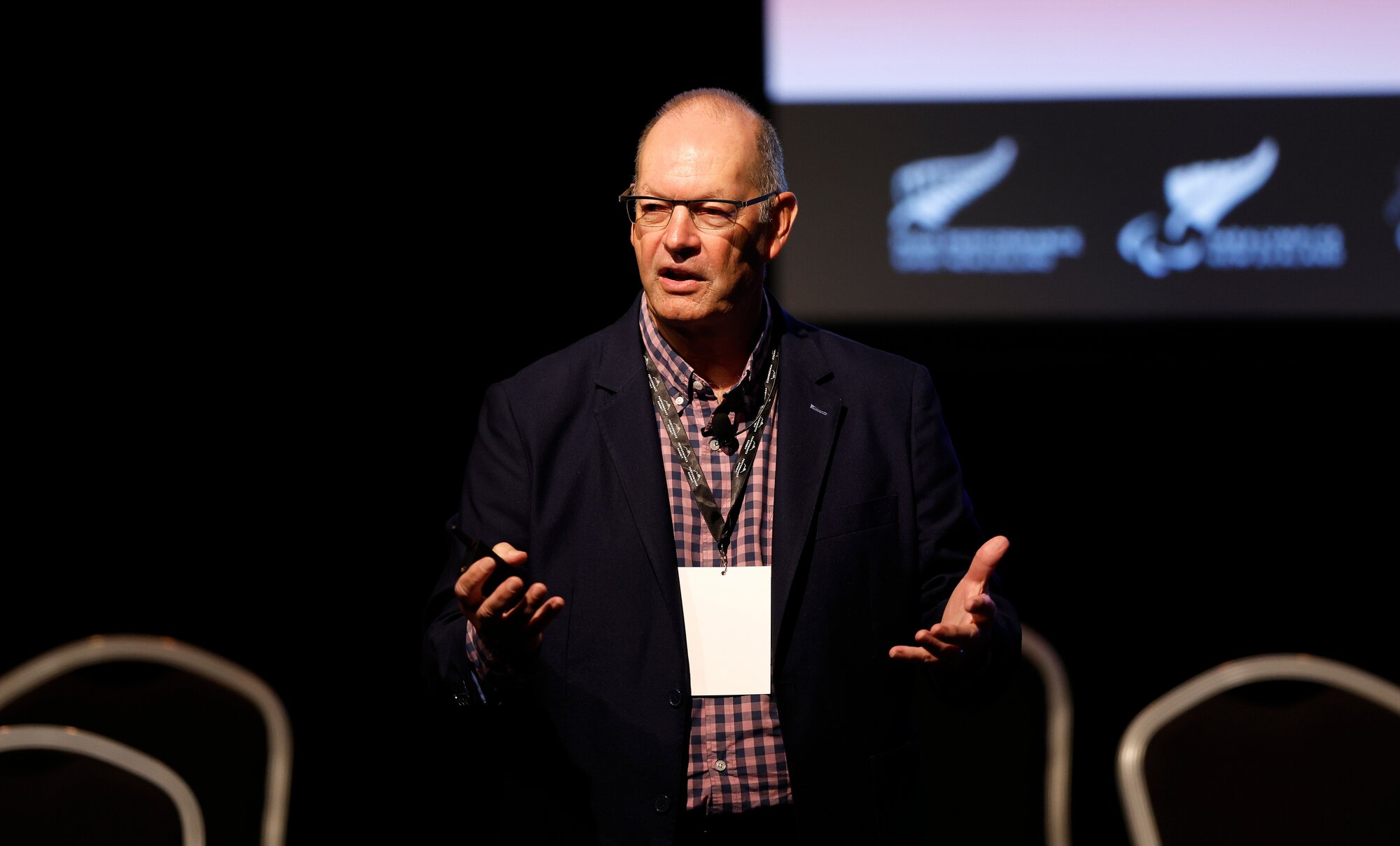
“Don has been a critical part of our teams’ and organisation’s success over the past decade,” former NZR chief executive Steve Tew said when Tricker left to coach the San Diego Padres in 2017.
“In many ways, he’s been our secret weapon, with sports from all around the world seeking to understand the structures and elements that make the All Blacks so successful.”
The landscape has changed significantly in the past 10 years however, and the scale of professional rugby, the divergent and complex needs of all the various teams – from NPC to Super Rugby to teams in black – is such that the network needs NZR to have a strong, skilled, well-resourced and influential high-performance unit. This unit needs to be able to align vested but competing interests and ensure world-class players and coaches are the ultimate product of labour.
Ireland have shown the value of investing in a high-performance unit, after they hired former Blues and Brumbies coach David Nucifora in 2014 and empowered him to build unified development pathways for players and coaches.
He can take considerable credit for Ireland’s success on the world stage in the past decade, which is why Scotland snapped him up last year to do a similar role for them.
NZR replaced Tricker with Mike Anthony, a much-liked figure who is recognised as one of the leading authorities on strength and conditioning, having held roles in that field with the Crusaders, the All Blacks and internationally with Gloucester.
According to Anthony’s LinkedIn page, his role as NZR’s head of high performance is to: “Provide the overall vision and direction for the high-performance team in the development and implementation of high-performance programmes that support the professional players, coaches, performance staff and match officials and ensure NZ teams, including the All Blacks and All Blacks Sevens, sustain success on the world stage.”
The overseas Kiwi coaches the Herald has spoken to believe it would be in NZR’s best interests to have a major rethink about its high-performance direction and structure and consider more deeply what skills and experiences are required to lead it.
They also say NZR should consider whether the role should be extended into having more direct oversight of the All Blacks, with the head of high performance being with the team week-to-week and in the coaching box during games.
This wouldn’t necessarily be a significant departure from what currently happens, as Anthony has been with the All Blacks for much of their Grand Slam tour, but the argument is that the role needs to be elevated and legitimised in the hierarchy.
Currently the role is more observational and advisory, but a reset could see things changed so the All Blacks coach reports directly to the head of high performance.
This would bring NZR into line with other nations, it would likely restore confidence among the coaching diaspora about coming home to work, and there would be no shortage of credible candidates with the likes of Todd Blackadder, Dave Rennie, Ian Foster, Joe Schmidt and Pat Lam eminently qualified.
Kirk’s nuclear option
A high-performance reset is a long-term project, but NZR faces having to make a more pressing decision about what to do specifically about the coaching set-up within the All Blacks.
The criticism about the process to appoint Robertson has focused mainly on the timing, but what’s become apparent since is that an NZR board with no high-performance expertise on it at the time signed off on a plan that fans are starting to feel duped by.
Robertson was announced to the public in March as the All Blacks head coach-elect – and that he would work with NZR to populate his wider coaching team before starting in 2024.
But Robertson’s vision was never for him to undertake the tasks that most would agree constitute the role of head coach – setting the overall playing vision for the team and then overseeing the delivery of that plan.
Instead, Robertson pitched himself as a culture coach, responsible for theming campaigns, communicating one-on-one with players to manage their expectations and career progression.
As Robertson confirmed to the Herald this week in Cardiff, it is his assistant, Scott Hansen, who effectively operates in the role most would recognise as the head coach.
Hansen, who presents as an obvious deep thinker and passionate custodian of the All Blacks brand, mainly operated as a defence coach prior to his current appointment, having had stints with Canterbury, the Leicester Tigers and the Crusaders.
There are three significant issues with how this has played out. The first is that the team are not playing particularly well, having lost seven of their 26 tests under Robertson/Hansen.
Those results are a confirmation of sorts that the team have not yet found their identity: they have not produced a definitive style of rugby that has caught the imagination and the Northern Hemisphere media have been hugely underwhelmed by the All Blacks these last few weeks.
Secondly, the question needs to be asked that if Hansen had applied to be the head coach in 2023, would he have been given the role?
And this creates the third and most contentious problem, which is that it feels like the public have been mis-sold the truth about the All Blacks.
There was huge public support for Robertson to be promoted to the All Blacks in 2023, because he’d earned the promotion through his success with the Crusaders.
But it feels now like the people voted for a President who has handed the keys of office to the unelected Vice-President, without a mandate to do so.
The situation – given results, performances and the division of labour – seems entirely unsustainable.
Kirk spoke to the Sydney Morning Herald before the first Bledisloe test in late September and said: “It’s less mourning and more, you know, unacceptable,” of the All Blacks’ results this year.
“We [the board] are not happy, no one is happy. I take my chair hat off and put my fan hat on, because that’s the lens through which I answer these questions.
“I just don’t feel as if the All Blacks are playing consistently well enough. They’re playing really well when they play well, and they’re letting their standards drop, as they’ve done twice now this season. So, as a fan, just feeling like they can do better.”
There has been no discernible evidence that much has improved since then and having said that performances were “unacceptable”, Kirk has created a narrative that now requires him and the board to take action.
And responsibility for deciding the fate of the All Blacks coaching panel sits squarely with Kirk and the board, as chief executive Mark Robinson is finishing up in the next few weeks and his replacement is unlikely to be in the role much before April next year.
The most obvious fix is to reposition Robertson in a hands-on, head-coaching role, and streamline Hansen’s job into attack coach – effectively replacing the departing Jason Holland.
That would see assistant coach Jason Ryan in charge of the forwards (with Bryn Evans doing lineouts), Hansen (attack) and Tamati Ellison (defence), with a licence granted to recruit a skills coach whose priority will be improving the All Blacks’ kicking and aerial game.
Having seen two assistants already leave, there’s reason to question whether any world-class attack coach would be willing to join the All Blacks as a replacement for Holland, as there is a question mark about how much influence and authority the role carries.

The nuclear option would be to fire Robertson, appoint Jamie Joseph, let him decide who stays and empower him to build the coaching team he wants to take the team to the 2027 World Cup.
But making a distress appointment mid-cycle would make it hard for Joseph to recruit new assistants if he wanted them as most – nearly all – potential candidates will be locked into contracts elsewhere.
The most obvious candidate Joseph would want to hire is his former Highlanders and Japan sidekick, Tony Brown, but he’s signed with the Springboks through to 2027.
Chasing the Boks
The nuclear option would be unprecedented and a harsh outcome for Robertson, who has thrown his soul into the job and built what he believes has been an innovative new coaching structure that better reflects the best high-performance environments.
Some of his thinking has been genuinely innovative – such as borrowing from the NFL the idea of special teams and giving individual coaches responsibility for positional units.
But his decision last year to effectively have a five-man selection panel – himself, Ryan, Hansen, Holland and MacDonald – felt gimmicky and unwieldy, which is presumably why it was quietly shelved this year and the panel trimmed to three – Robertson, Ryan and Hansen.
Kirk and the board have to determine how much faith they have in Robertson’s methodology and coaching structure and ask themselves whether they truly believe that the All Blacks are set up well enough to surpass South Africa by 2027.
The Springboks have been the talk of Europe these past few weeks, with the UK, French and Irish media all seeing them as being streets ahead of everyone else.
The Boks have beaten Japan, France and Italy – and they won the last two playing with 14 men for most of both games.
South Africa have incredible strength in depth, are building an imaginative and brilliant attack game, have set-piece power that is off the charts and this week, three of their players were shortlisted to be World Player of the Year.
South Africa are head and shoulders the most dominant and imaginative rugby force on the planet – a position the All Blacks used to hold and NZR still covets.
There is a direct financial correlation to the question around being able to usurp South Africa, as the All Blacks are playing four tests against them next year in what will be a lucrative venture.
The tour – dubbed the Greatest Rivalry – is a 50/50 revenue share and with the final test to be played at a yet-to-be-declared European venue, that one match alone could be worth more than $5m to NZR.
Next year will see the Nations Championship launch, with the revenue from the finals weekend to be shared and a bigger slice going to the two countries who play off to be one and two.
Also, NZR will next year begin the process of looking for All Blacks kit sponsors – front of jersey, back of shorts and training kit – hoping for a significant uplift on the estimated $60m-a-year it currently earns from those assets.
So much of NZR’s commercial plan for next year and beyond is dependent – directly and indirectly – on the All Blacks winning and living up to their billing as the world’s most consistently successful team.
The pressure is mounting on the All Blacks to not just win the series in the Republic next year and be crowned inaugural Nations Championship winners but change opinions globally about South Africa being the game’s leading rugby nation.
It’s against this commercial imperative that the decision about the All Blacks coaching set-up must be made.
Doing it the hard way
NZR’s commercial strategy is both a major stress point for Robertson’s All Blacks and to some degree a mitigating factor in the results since 2024.
The argument could be made that the All Blacks – more than they ever have – are being given a playing schedule that is heavily weighted towards making money rather than best serving the team’s high-performance needs.
Excluding the World Cup, Robertson’s All Blacks will play 63% of their tests away from home in the 2024-2027 cycle.
By comparison, in Sir Graham Henry’s first four years (2004-2007) as head coach, the All Blacks played 47% of their tests away from home.
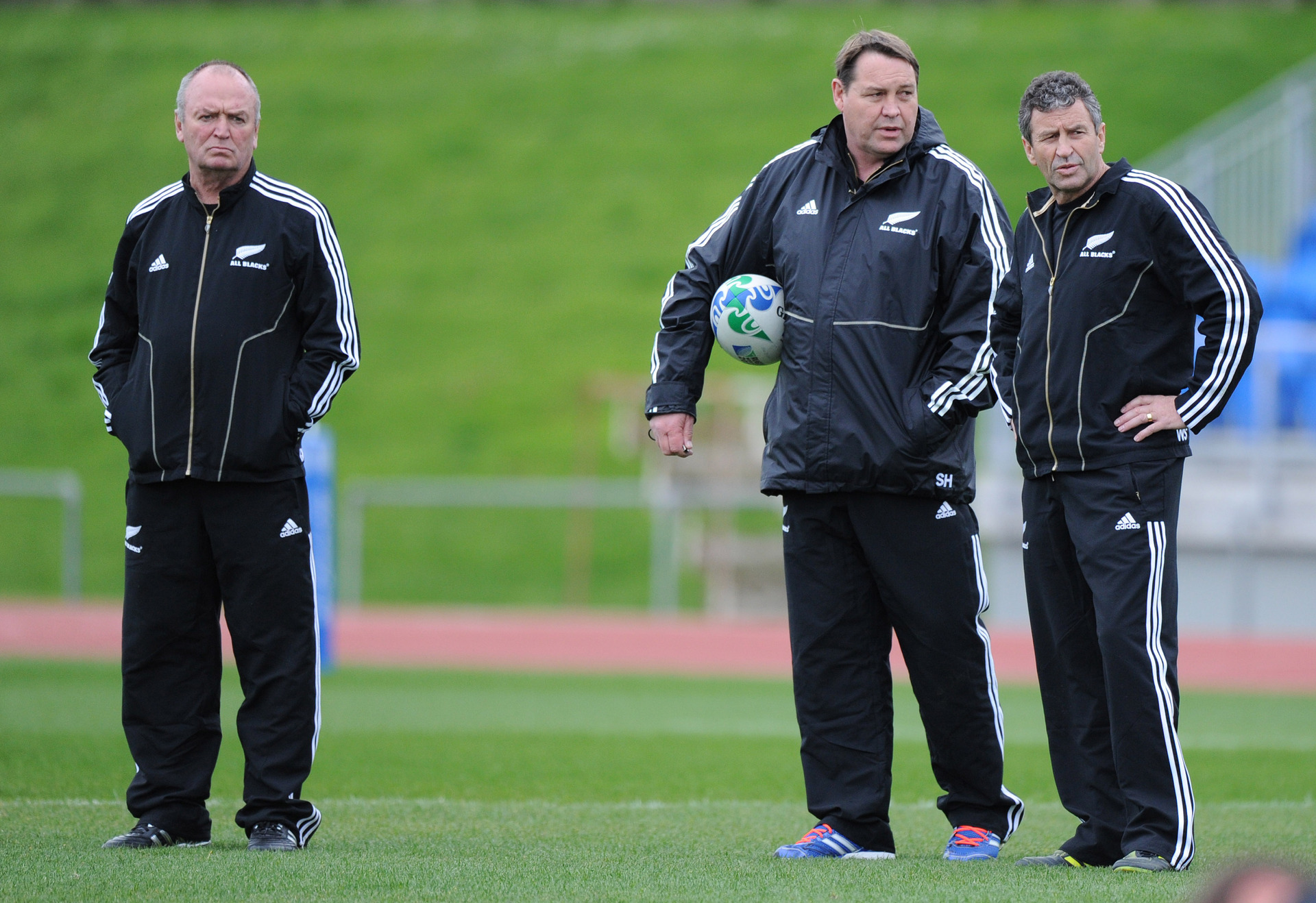
In Sir Steve Hansen’s first four years as head coach (2012-2015), the All Blacks played 54% of their tests away from home, and Ian Foster’s All Blacks saw that number rise to 64% – albeit it was affected by the Covid pandemic and the decision by New Zealand’s Government to close the international border in 2020 and 2021.
(If the All Blacks had been able to fulfil the schedule they were originally slated for, they would have played 58% of their tests away from home, but the Rugby Championship in 2020 and 2021 was played entirely in Australia.)
Also, the quality of opposition has changed because of the need to play higher-profile fixtures, and this year the All Blacks have played every team currently ranked in the top seven at least once, and their two “easiest” games have been against Scotland (now ninth) and this week against Wales (12th).
Next year, their “easiest” games will be against Wales, Italy (who are 10th but who recently beat Australia and had South Africa on the ropes last week for 70 minutes) and Scotland.
Not only that, but they will have to travel around the world almost three times – to South Africa, up to Europe and then back to the UK after they have returned to New Zealand to play the Bledisloe Cup.
No other coach has faced such a demanding schedule. Asked in Cardiff this week whether he felt the commercial ambition was detrimentally affecting the All Blacks’ high-performance capability, Robertson said: “It is the current reality of the game and where we sit and where we live in the world.
“And population has a lot to do with that and that is the challenge – the beautiful challenge it is. If you don’t embrace it, you hide from it; we are in that position, and you have to keep trusting your instinct on it. Keep building a foundation that makes you rock-solid – 2027 is a target for everyone that is coaching in world rugby.”
Gregor Paul is one of New Zealand’s most respected rugby writers and columnists. He has won multiple awards for journalism and written several books about sport.