Jamie Joseph v Dave Rennie exposes NZ Rugby’s high-performance failings - Gregor Paul
THE FACTS
Kudos to New Zealand Rugby for sticking members of its All Blacks coach recruitment panel on planes to Dunedin and Japan to observe the two applicants in their natural habitats.
There won’t be accusations levelled against the national body about a failure to do due diligence once a decision has been made on whether to appoint Jamie Joseph or Dave Rennie as the next All Blacks coach. To send NZR interim chief executive Steve Lancaster and former All Blacks hooker Dane Coles first to Dunedin to see how Joseph coaches at the Highlanders, and then to dispatch the same pair to Kobe next week to spend time with Rennie, is a commendable way to deepen the understanding of how both men operate.
But the fact that NZR is having to build this depth of knowledge about two veteran coaches, both of whom have spent long periods working in New Zealand, also illustrates the deep failings of its high-performance system.
For a business that is valued at $3.5 billion, it is staggering that money and time are being spent building a dossier of intelligence on Joseph and Rennie.
This should already exist. There should be an intimate understanding of two coaches who have spent long periods of their respective careers in New Zealand, employed by the national union.
Equally, it seems like another significant failure that the process to appoint the next All Blacks coach has once again descended into a scenario in which both candidates will be interviewed by a five-person panel, which will then make a recommendation for the NZR board to approve.
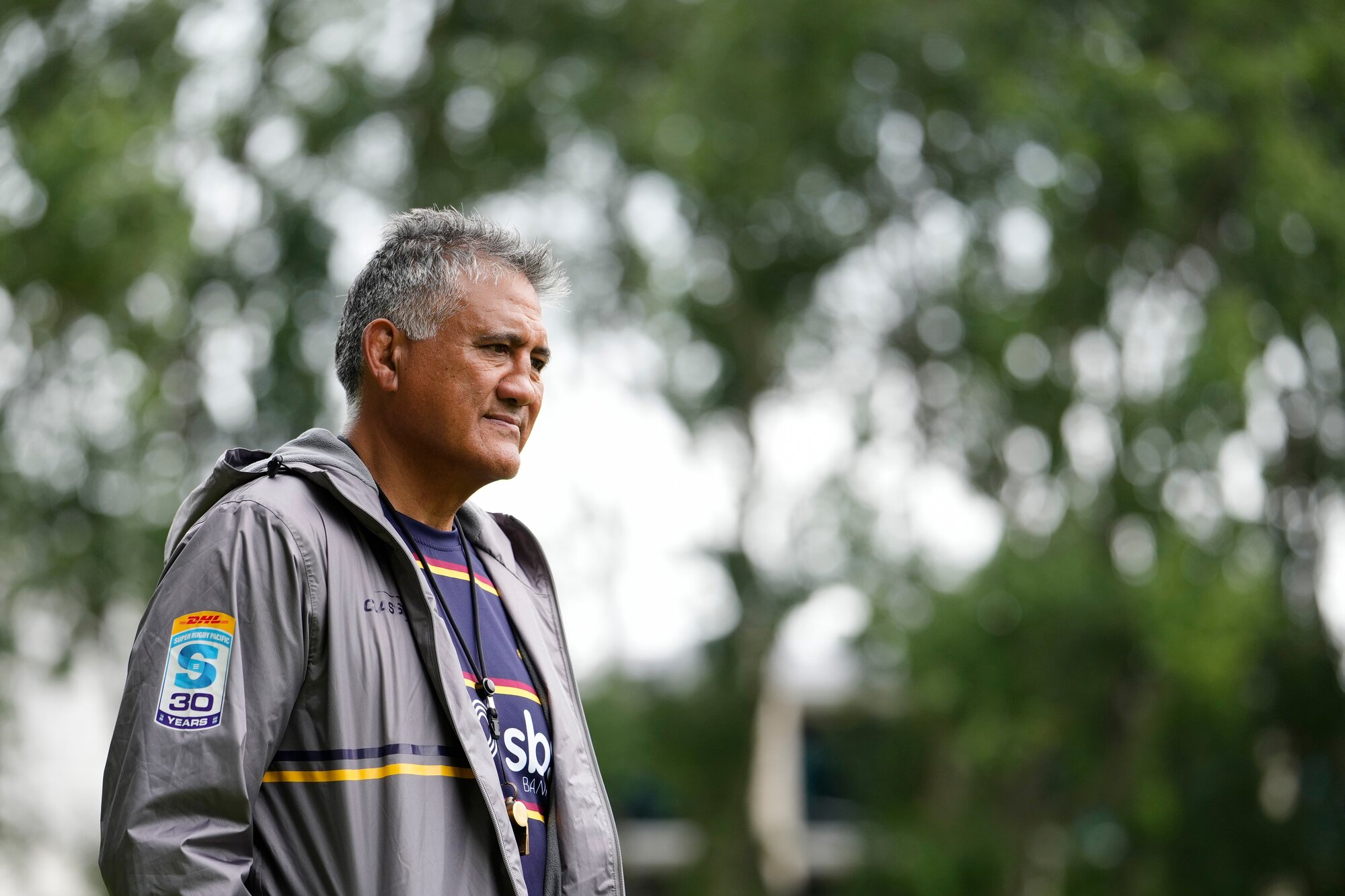
Why NZR doesn’t already have a deep understanding and knowledge of the respective styles, strengths and weaknesses of both men is a question the board should be asking of the national body’s high-performance department.
It is understood that Joseph, in particular, is miffed that, having coached Wellington, the Highlanders, the Māori All Blacks and the All Blacks XV as recently as last year, he is now having observers sit in on his coaching to take notes.
He’s thought to be perturbed, too, that his fate will be determined by how well he presents in an interview, when he feels his coaching achievements are all known and documented, and by far the better means by which to assess his worthiness.
He coached the Highlanders to their only title in 2015, took Japan to the quarter-finals of the 2019 World Cup, and was in the UK with the All Blacks XV last year for a successful campaign that was comprehensively reviewed.
Rennie hasn’t coached in New Zealand since 2017, but he had charge of Manawatū, Wellington and the New Zealand Under-20s, as well as six seasons with the Chiefs, during which he led them to back-to-back titles.
He’s also the last coach of Australia to lead the Wallabies to a win against the All Blacks and, like Joseph, he must be wondering why NZR is scrambling to gather intelligence and still putting its faith in face-to-face interviews as the best way to make coaching appointments.
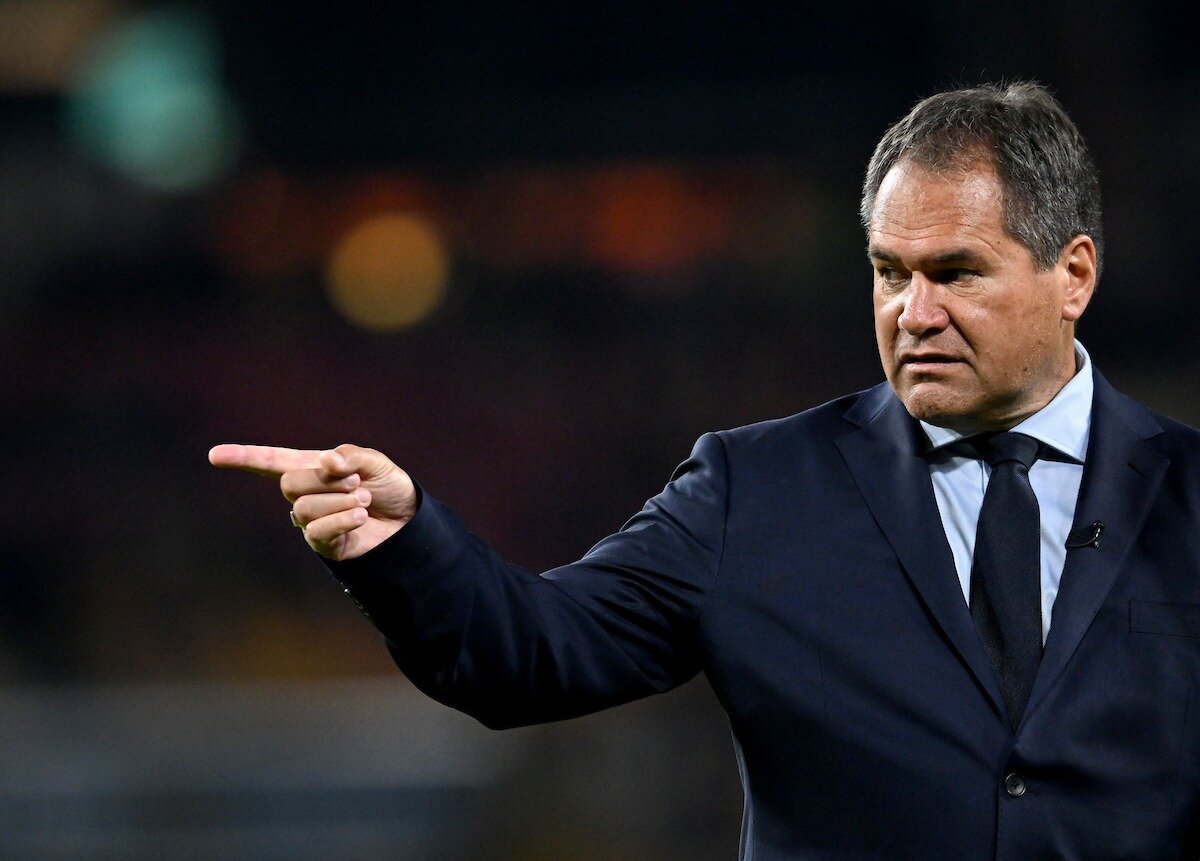
It feels not only archaic but a gross malfunction in what is supposed to be a world-leading high-performance programme.
The world’s biggest football clubs operate with in-depth knowledge of coaches scattered over the globe. When they need to make a change, they pre-determine what sort of leader they want – personality, style, tactical preferences, previous successes – what kind of football they want to play, and then dig into their data pool to identify appropriate prospects.
It’s all well-considered, targeted recruitment in which the club sells itself and its vision to a carefully identified candidate.
The fact that NZR didn’t know who it wanted the instant it parted company with former coach Scott Robertson is an indictment of its entire elite rugby development system.
The failings are not confined to the All Blacks role. The Blues are in the market for a new head coach to replace Vern Cotter, and their choices are so limited as to be alarming.
There are no standout candidates, and the two proven performers who have been approached, Ian Foster and Jason Holland, are believed to have declined.
There’s simply no one obvious in the country for them to approach, and seeing a club the size of the Blues, with their enormous depth of playing resources, genuinely trawling the globe for a coach is yet another red flag of which NZR needs to take heed.
The truth is that New Zealand’s identification, development and retention systems have fallen into a state of stunning disrepair, and the national body desperately needs to revamp its high-performance set-up, starting with the appointment of a director of rugby.
The game is crying out for a highly experienced, successful figurehead to rebuild the high-performance network and instil cleaner development pathways for players and coaches, drive better communication between the provinces, Super Rugby and national teams, and improve appointment processes.
The All Blacks coach should also report to the director of rugby, and that’s why the job would suit someone such as Sir Steve Hansen, Joe Schmidt or even Rennie, if he misses out to Joseph for the national job.
Hansen, having been involved in two successful World Cup campaigns and built coaching experience in Wales and Japan as well as New Zealand, has the skill-set, vision, force of personality, credibility and mana to be the lead candidate. NZR doesn’t need to build an intel dossier about him, or interview him, but should instead get on with appointing him to fix a broken system.
Gregor Paul is one of New Zealand’s most respected rugby writers and columnists. He has won multiple awards for journalism and written several books about sport.