Scott Robertson exit: Inside New Zealand Rugby’s All Blacks review and player feedback – Gregor Paul
THE FACTS
The rest of the world can use the departure of Scott Robertson to convince themselves that the All Blacks are in disarray, held hostage to an all-powerful playing cohort who started a revolt because they didn’t like their coach and threatened to leave en masse unless he got the chop.
But the events of the past six weeks have illustrated precisely how high-performance environments are supposed to work.
Far from being a chaotic mess, the All Blacks are now well-placed to rediscover their mojo and storm back to the top of the world rankings, having had the bravery to first shine an unforgiving light on themselves and then make the necessary changes to fix the problems they found.
In some quarters, the narrative has taken hold that Ardie Savea was the ringleader in a senior player coup – but this is as hyperbolic as it is untrue.
New Zealand Rugby (NZR), having witnessed two years of inconsistency from the All Blacks, decided that it needed to take an unusually deep dive into the inner sanctum of the national team to determine the state of affairs as they pertained to the game plan, selection, culture and coaching.
The typical end-of-season review trundles along well-trodden formulaic lines where the players effectively answer questions from a template, the forms are gathered up by the head of high performance and put into a report that is sent to the NZR board.
But this time, a decision was made to be more nuanced and targeted – with NZR chair David Kirk and board member Keven Mealamu working alongside head of high-performance Mike Anthony, head of professional rugby Chris Lendrum and independent observer Don Tricker to interview 20 players.
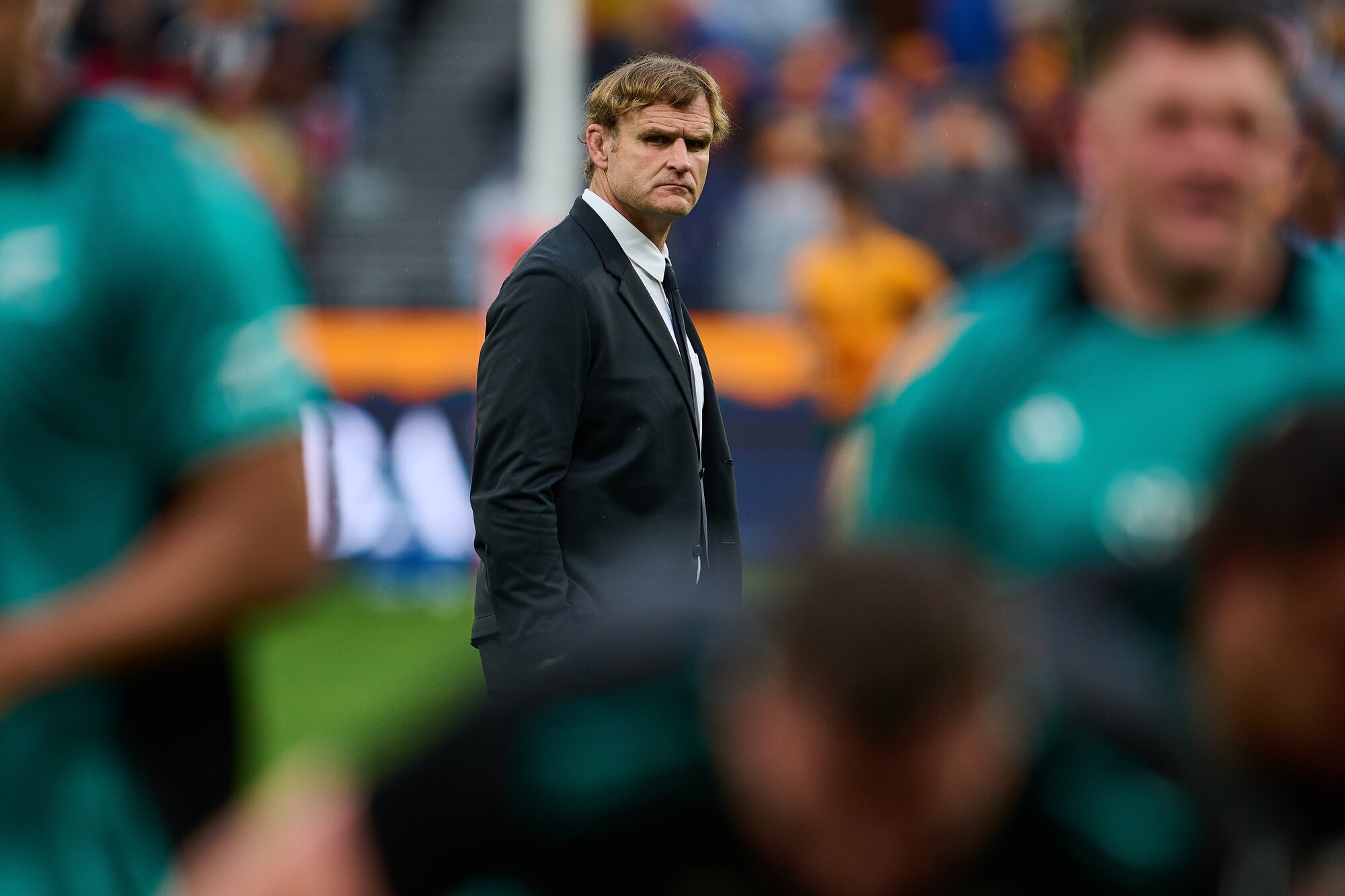
As the Herald understands it, the interviews were designed to get straight, non-emotional answers that gave genuine insight into Robertson’s coaching style and effectiveness.
Kirk and Mealamu had little appetite for gossip or individual gripes, hence the questions were understood to be along clear lines such as:
“Is the game plan serving the team well?”
“Is the game plan adapting effectively?”
“Is the environment setting the team up to succeed?”
Straight questions got honest answers from a playing group who care deeply about legacy and want a high-performance environment in which they feel the team is set up to succeed.
Between the findings of the review, the team’s patchy performances and the board’s intuitive sense of Robertson’s competencies and capabilities, the decision was made to terminate his contract.
It is believed that one of the most significant findings/failings that the review uncovered was confusion around the coaching structure, division of labour and who held responsibility for what.
The unusual set-up of Robertson styling himself as culture coach was something the Herald highlighted several times last year, and it would appear that the review found that players were confused by the lack of clarity.
The idea that Savea somehow got Robertson fired is preposterous, as is the characterisation that player power led to the coach’s demise.
NZR ran a robust review process in which the players gave heartfelt and constructive feedback. NZR’s board used that feedback as part of a wider portfolio of intelligence to make a decision in the best interests of the All Blacks.
This was less about player power and more of an evidence-based process where the time was taken to fully and properly understand the state of play and make an informed decision about the best course of action.
All sorts of rumours and speculation are swirling about what the review uncovered, but the big clue that it didn’t find significant fault with Robertson’s assistants is that they are still, for now, employed.
Again, as the Herald understands it, there were no red flags raised in relation to either Scott Hansen, Jason Ryan, Tamati Ellison (or Jason Holland, who has left of his own volition).
The feedback appears to have been that the players were comfortable with their respective technical work, level of detail and coaching styles, and the respective futures of Hansen, Ryan and Ellison will not be determined by the findings of the review, but by the choices of the incoming head coach.
NZR will be comfortable if the new coach wants to retain one, two or all three of them – but whoever is appointed won’t be obliged to keep any.
It would have been a tough old day for Robertson yesterday, but it was a good day for the All Blacks.
NZR did everything by the book – and for the first time in years, looked like a world-class, high-performance institution.
Gregor Paul is one of New Zealand’s most respected rugby writers and columnists. He has won multiple awards for journalism and written several books about sport.