Why Dave Rennie beat Jamie Joseph to land All Blacks coaching job – Gregor Paul
THE FACTS
There is a lovable and compelling madness about Dave Rennie’s journey, which saw him fired by the Wallabies in early 2023 and now hailed as the prodigal son returning to New Zealand, having been appointed All Blacks coach.
His journey also saw him win the NPC with Wellington, establish New Zealand as the dominant age-grade force on the global stage, collect two Super Rugby titles with the Chiefs and lay the foundations for Glasgow to become genuine European heavyweights.
It is quite the resume – and even though his Wallabies stint wasn’t statistically impressive, there was an undeniable sense Australia were poised, until his untimely and unjustified sacking, to come fast down the home straight and make a statement at the 2023 World Cup.
Rennie is a serial winner – a coach who doesn’t need self-help books to know how to build a unifying and inspiring culture and, in direct contrast to his predecessor, subscribes to the school of speaking in plain English.
It’s maybe no wonder then that back in 2020 – after the Wallabies drew with New Zealand in Wellington – that Sir Graham Henry said that it had been a mistake not to appoint Rennie coach of the All Blacks.
But Rennie’s appointment as All Blacks coach in 2026 is not a vote for assuaging regret, but a victory for good decision-making after a fair process, and a selection that gives the national side a strong chance of redirecting its famously off-course trajectory.
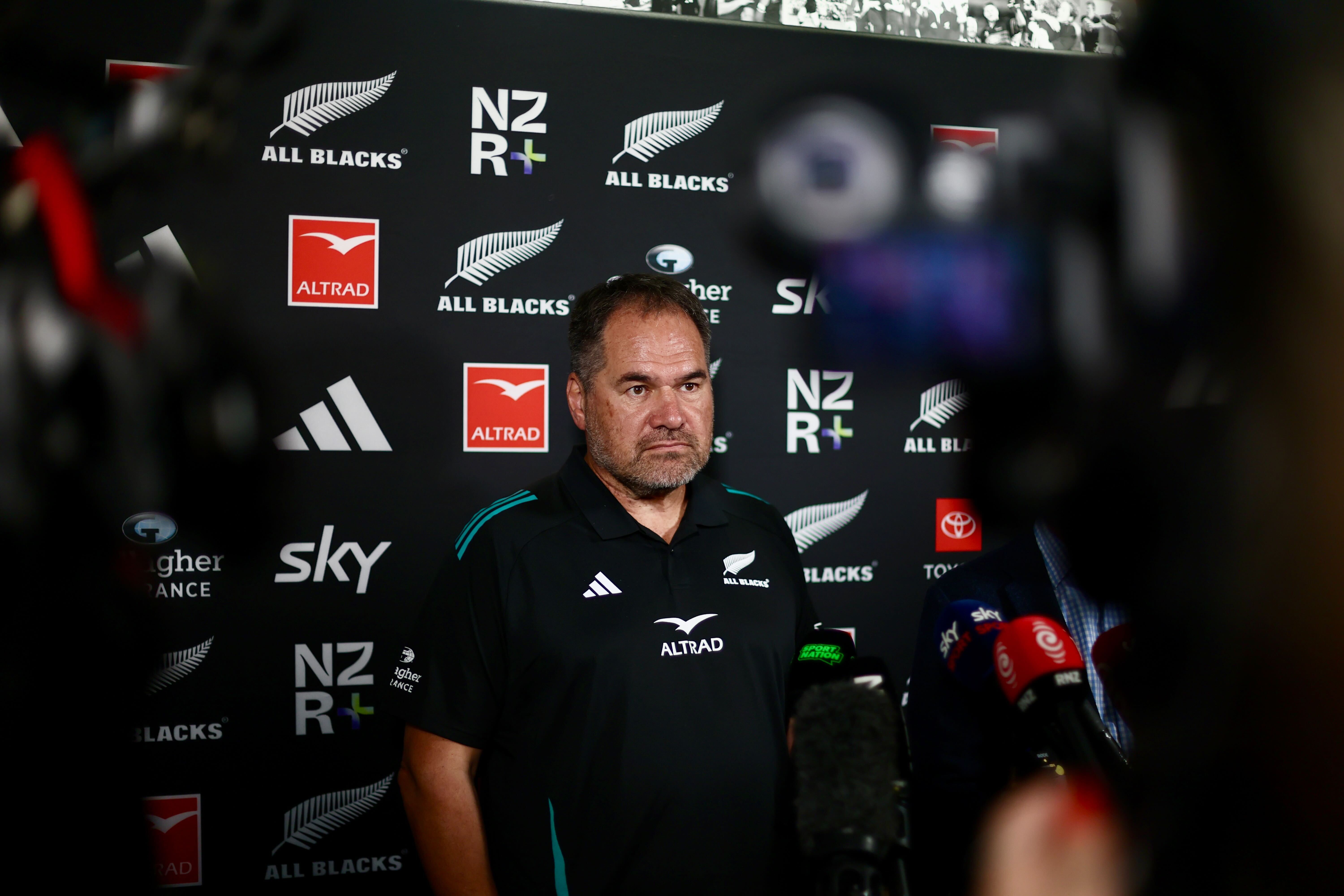
Keeping with the slogans of the times, Rennie can make the All Blacks great again as what surely became apparent to New Zealand Rugby’s (NZR) five-strong appointment panel, is that Rennie was the clear, preferred choice of the players.
Grapevines are notoriously unreliable at accurately conveying messages, but the noise coming through these past few weeks has suggested that an influential cabal of former Chiefs players with serious All Blacks credentials have been glowing in their praise of Rennie.
Players talk to one another, and if NZR’s appointment panel did indeed go as deep as it needed to in its due diligence, there would have been no horror stories unearthed about Rennie over the years.
To have had charge of various teams in New Zealand, as well as in Scotland, Australia and Japan and have players across the globe provide positive feedback, is irrefutable evidence that Rennie is a values-based coach, who operates with a consistency of vision and purpose.
That of itself does not guarantee success, but it does mean he has the rare and valuable quality of having players wanting to play for him – something that by all accounts was not happening under former All Blacks coach Scott Robertson.
In contrast, the noise that came through about Joseph was cautionary – certainly not universal the way it was about Rennie.
Some players such as Lima Sopoaga have been on record that they thrived in Joseph’s tough love environment at the Highlanders between 2011-2016, but it was a period that generated stories about overly long training sessions that were more likely to break than make players.
It would seem that the story of his time in Japan between 2016-2023 was much the same.
Former Springboks captain Victor Matfield, who joined the Japanese coaching team following Joseph’s exit, made quite the damning comment recently.
“One thing I must say from the Japanese players, they weren’t too happy with Jamie Joseph at the end,” Matfield said.
“Why that is, it sounded like he was very strict and very set in his ways. But he understands the New Zealand culture. He played, he looks like a rugby man, so it will be interesting.”
Joseph has been attributed the euphemistic tag of being “old school” and – even if it was applied as a term of endearment – it likely proved detrimental to his quest to be All Blacks coach given NZR’s desire to rebuild its high-performance culture and reshape itself as modern and cutting edge.
So too was his case for promotion most likely hurt by the unavailability of Tony Brown, who has long-played Robin to Joseph’s Batman, injecting both creativity and empathy to wherever they have been a coaching duo.
It would be all too easy, on the balance of evidence, to interpret that Rennie’s appointment was driven, or at least partly driven, by a playing group that didn’t fancy being exposed to the hard edges of Joseph and his bootcamp philosophies.
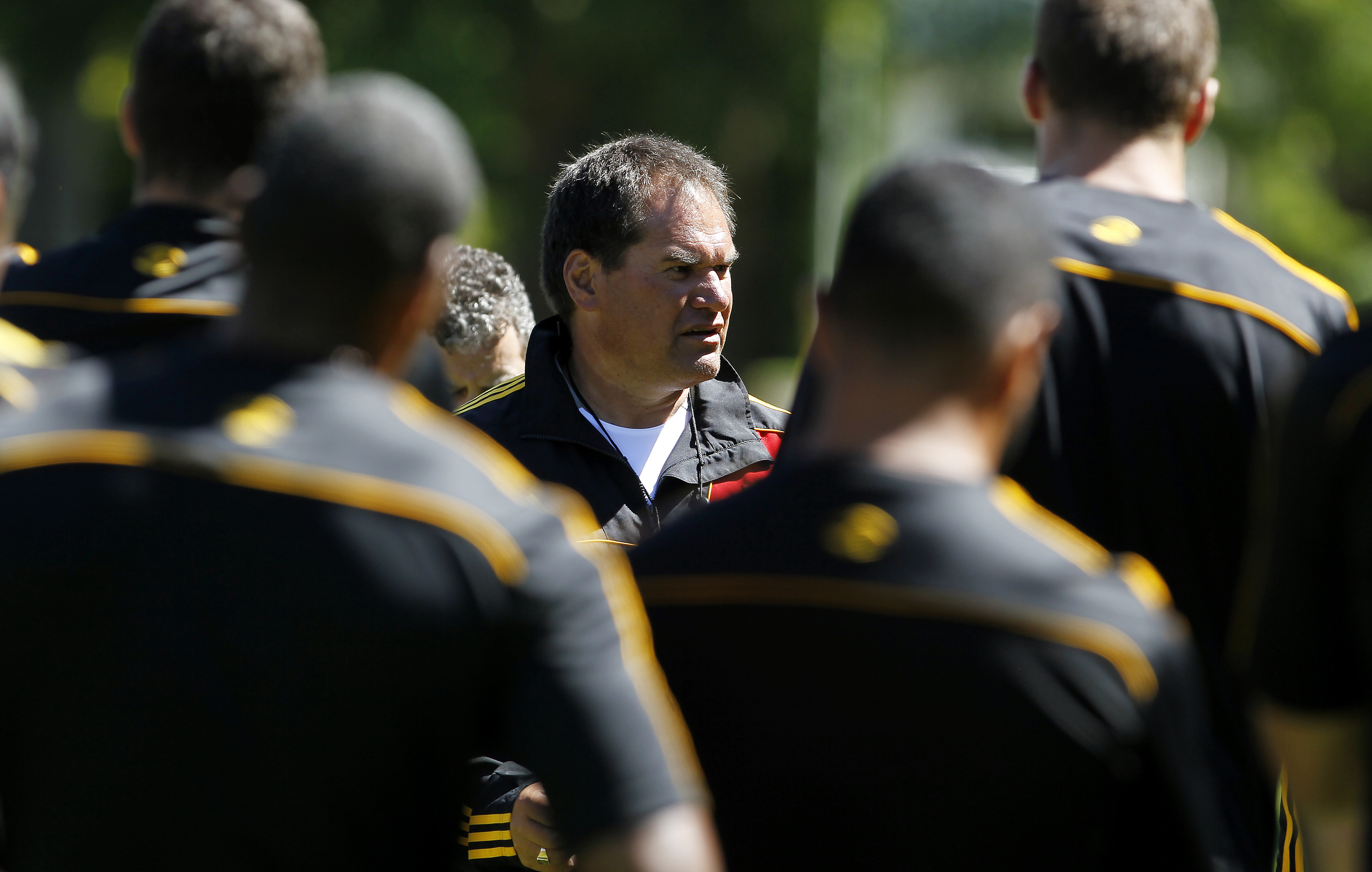
But just as the players didn’t have the power to oust Robertson as has been suggested, nor did they alone have the power to appoint Rennie.
The appointment panel took the temperature of player feedback on both candidates, but it formed only part of the picture. and while it likely strengthened Rennie’s case, it certainly didn’t singularly make it.
Some may wonder why players have a voice at all, but contrary to the widely held perception that players are after a coach who creates a comfortable environment and who has selection favourites, they are advocates for those who know how to get the best out of them and set the team up to deliver unrelenting excellence.
They know world-class coaching when they see it and so their opinions are valid because they are the only people to have user experience.
It is a curious reversal that the All Blacks are picking up a former Wallabies coach, but that’s only because they were originally daft enough to throw him away.
Gregor Paul is one of New Zealand’s most respected rugby writers and columnists. He has won multiple awards for journalism and written several books about sport.