World Rugby’s new rules: Too slow for the modern game? - Paul Lewis
OPINION
They say it can take a loaded container ship travelling at full speed about four miles to come to a halt, such is its mass and speed. World Rugby, the heavily loaded super-freighter of global sport, has taken years to come to a stop but, fair play, its recent rule changes (those adopted and to be trialled) should make the game more entertaining.
There’s just one teeny-weeny thing. The immediate changes are, well, a bit too teeny-weeny and the ones being trialled don’t go far enough.
It’s the big difference between rugby league and rugby union; league considers a change, decides and implements it - all in less time than it takes to say “Up the Wahs”. They are the jet boats of sport, darting here, zooming there, making an impossible turn at speed, and thrilling their customers.
On board the Good Ship World Rugby, things happen at a more sedate pace. On the bridge, if a change in a journey is required, opinions are sought from the shareholders, the crew’s union, the harbourmasters, tugboat skippers, the passengers, the cook and maybe passing seagulls.
However, this column set out to be positive and it’s fair to say we’ve gone a bit off course. So, the new rules banning scrums to be set instead of free kicks, the change to the offside rule designed to promote fewer “kick tennis” bouts, and the banning of the crocodile roll - big tick.
But why, oh why, are we now having to go through trials to see if the other changes can be approved?
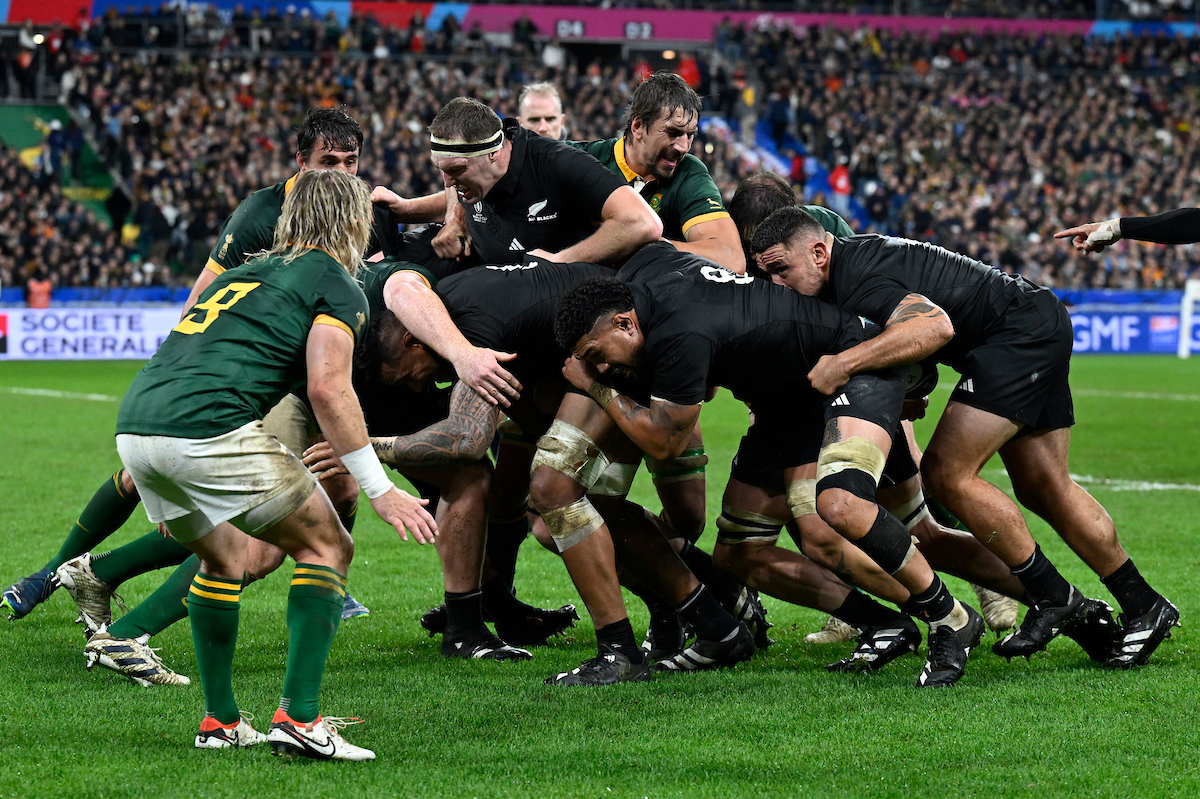
The big two in a band of other potential changes being tried out in six “closed law trials” are the 20-minute red card and the ball to be played from a maul after one stoppage, not two, as at present.
Do we really need a trial? It’s simple, innit. A player is sent off for a red card offence. That player is gone - but he can be replaced by another after 20 minutes so the whole game is not stuffed up and people go home muttering about stupid rugby and its leaders. Do it now. Same with the maul.
Okay, World Rugby has stopped short of getting rid of the ugly rolling maul - which contravenes their own general rule of rugby (attacking players ahead of the ball are offside and obstructing defenders) - but now defending sides only have to stop it once before knowing the attacking side have to use the ball differently.
Excellent. Do it now. Why in the name of Sir Colin Meads’ tanalised fence posts are we mucking around with a trial? Everyone agrees. Do it now. However, if you read World Rugby’s media release, you come to a sub-heading that says: “Phased action plan roll-out continues” - a collection of words that makes your heart sink when it comes to actually doing anything.
There is a lot more World Rugby could be taking a long, long time to implement.
Specialist working groups looking at “future innovations” (to be completed by November, sigh...) are considering a major review of the breakdown, the TMO’s remit, the number of replacements and the tackle height in the elite game. Any recommendations will then be tested in new “rugby law labs” to assess impacts on speed and safety.
Words fail me. Look, it’s comparatively easy. Half a team of heavily trained, heavily built power athletes coming on not long after halftime has marred rugby. Yes, it makes it a 23-man game but that hasn’t always been a good thing. Games have dribbled away into mistakes and drudgery when replacements don’t manage to attain the same rhythm and accuracy as those they replaced. I say keep the eight-man bench, but only allow two or three tactical replacements. Others (maybe two more?) can be replaced - but only when it is a genuine injury. We don’t need trials or labs for that - that’s how rugby used to be played.
Do it now – it will change the shape of today’s game into something more entertaining and allow smaller, nippier players to have a big impact on games. Case in point: Damian McKenzie.
If we really want to increase the entertainment value of rugby, go further with the offside law. Stand defences metres further back at rucks and mauls, toeing an invisible line policed by the assistant refs with whom the defenders must be parallel. Rugby league manages to do this effectively; they allow two markers close to the play-the-ball; the rest must be 10m back, leaving more room for attackers - and yet that does not prevent defences from doing their job.
Why isn’t rugby doing it too? Or are we just too scared to take a page from rugby league’s book - and that is more important than being “entertaining”?
World Rugby knows that their fan base, if not actually disgruntled, are a very long way from gruntled. Time to do something about it that does not involve trials, labs and the sad sight of a behemoth unable to arrest its own motion.
Paul Lewis has been a journalist since the last ice age. Sport has been a lifetime pleasure and part of a professional career during which he has written four books, and covered Rugby World Cups, America’s Cups, Olympic & Commonwealth Games and more.