Inside Dave Rennie’s All Blacks shake-up with Mike Blair and new assistants – Gregor Paul
THE FACTS
It’s tempting to say that All Blacks coach Dave Rennie has emerged victorious in a battle of wills with his employer having been granted permission to sign the assistants he wanted.
But it would be hyperbolic to frame the journey to appoint assistant coaches as confrontational and combative – some kind of power struggle – when it was essentially precisely the sort of robust process New Zealand Rugby (NZR) has been accused of failing to run in the past.
What happened in this case is that when Rennie presented his proposed team of assistants, NZR pushed back on the inclusion of Mike Blair as attack coach – not because of any concerns about his pedigree or nationality (he’s Scottish) – but because the national body felt there was a strong candidate in Scott Hansen already on the books who was worthy of consideration.
How much consideration Rennie gave it and how far he actively explored it in terms of meeting Hansen and drilling into his rugby philosophy is not known, but his decision to stick with Blair – with whom he’s had a professional relationship since 2017 and continues to work with at Kobe – is a sign that the new All Blacks coach knows his own mind.
So too could it be said that it’s also an indication that he has a detailed plan of how he wants the All Blacks to train and play, aligned to a vision of who they need to be and that he knows with an unshakeable level of precision how each assistant is going to do their part.
And, to some extent, Rennie has won a little war against his employer by getting Blair over the line – and he’s won it not through belligerence or stubbornness but through reasoned and resolute arguments about what he believes will ultimately be best for the All Blacks.
There is maybe too a sense of a deeper narrative running under the surface, which is the leverage that Rennie may have as a result of being dropped into the job 18 months out from a World Cup – barely four weeks after he gets on the tools, he’s taking the All Blacks on a seven-week tour of South Africa.
It could hardly be called a doomed mission because he’s picking up a team that is loaded with talent and highly motivated, but their confidence may be shot and the timeframes to patch things up are tight.
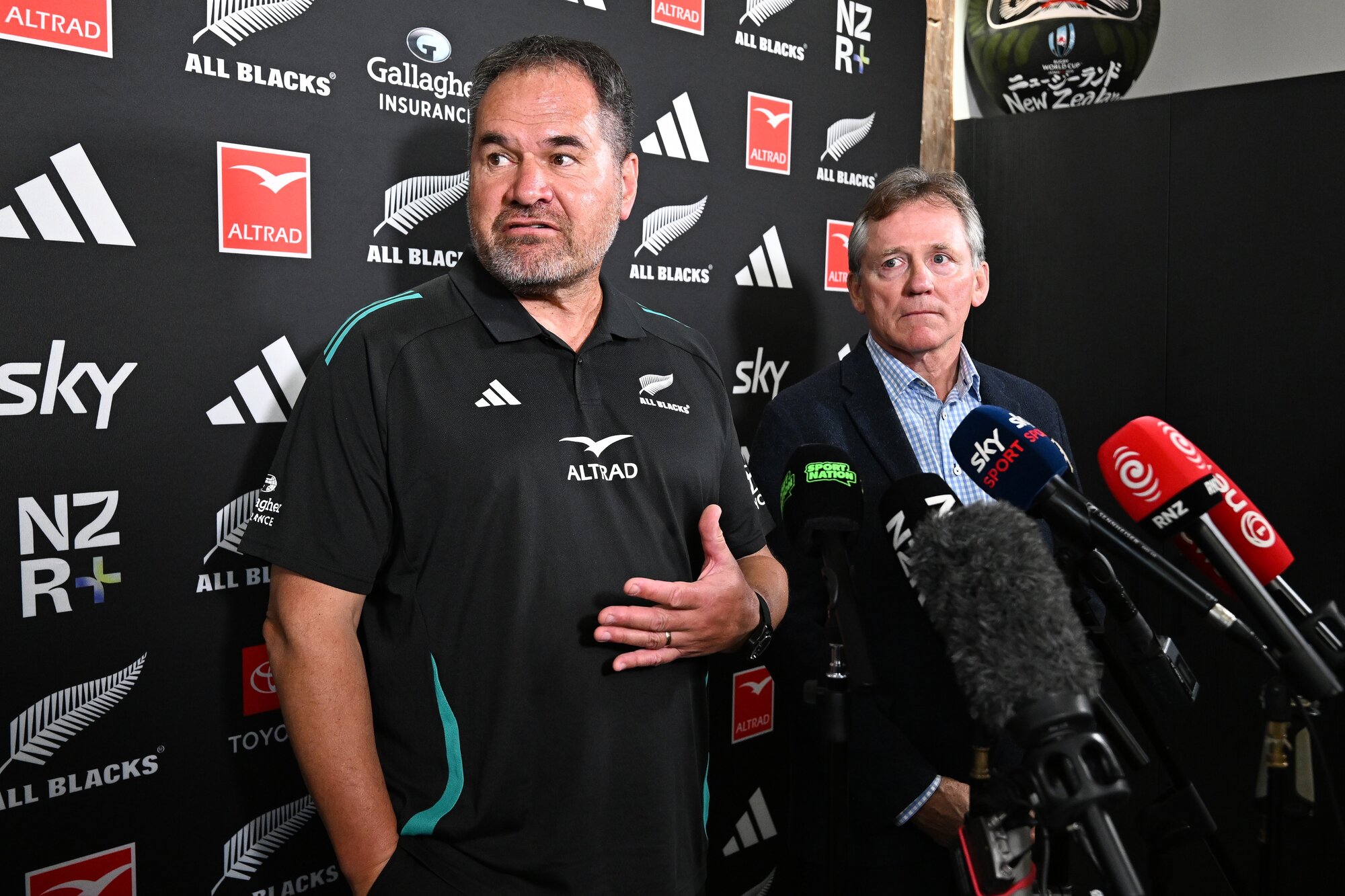
It is a big ask to expect Rennie to pick up the pieces, glue the All Blacks together in a month and get them through a test series in South Africa with a defined sense that they are on a better trajectory.
The situation of Rennie and Blair being in Japan until at least late May, with Umaga locked into Moana until early June, does not make things any easier.
All three can reasonably be expected to multi-task and stay committed to their current jobs while simultaneously planning for their next ones, but still, it wouldn’t be anyone’s preference for this to be the way that 60% of the coaching group prepares for the season ahead.
Weighing all that up, NZR rightfully conceded that Rennie needed a sense that his employer accepted the specifics of the situation, and he got the group of assistants he wanted.
That there was a bit of friction between Rennie and his paymaster is no bad thing as, arguably, this was one of the failings of the previous regime – it wasn’t adequately stress-tested before it was put on the road and perhaps inevitably, a couple of wheels flew off before the whole thing collapsed in a heap.
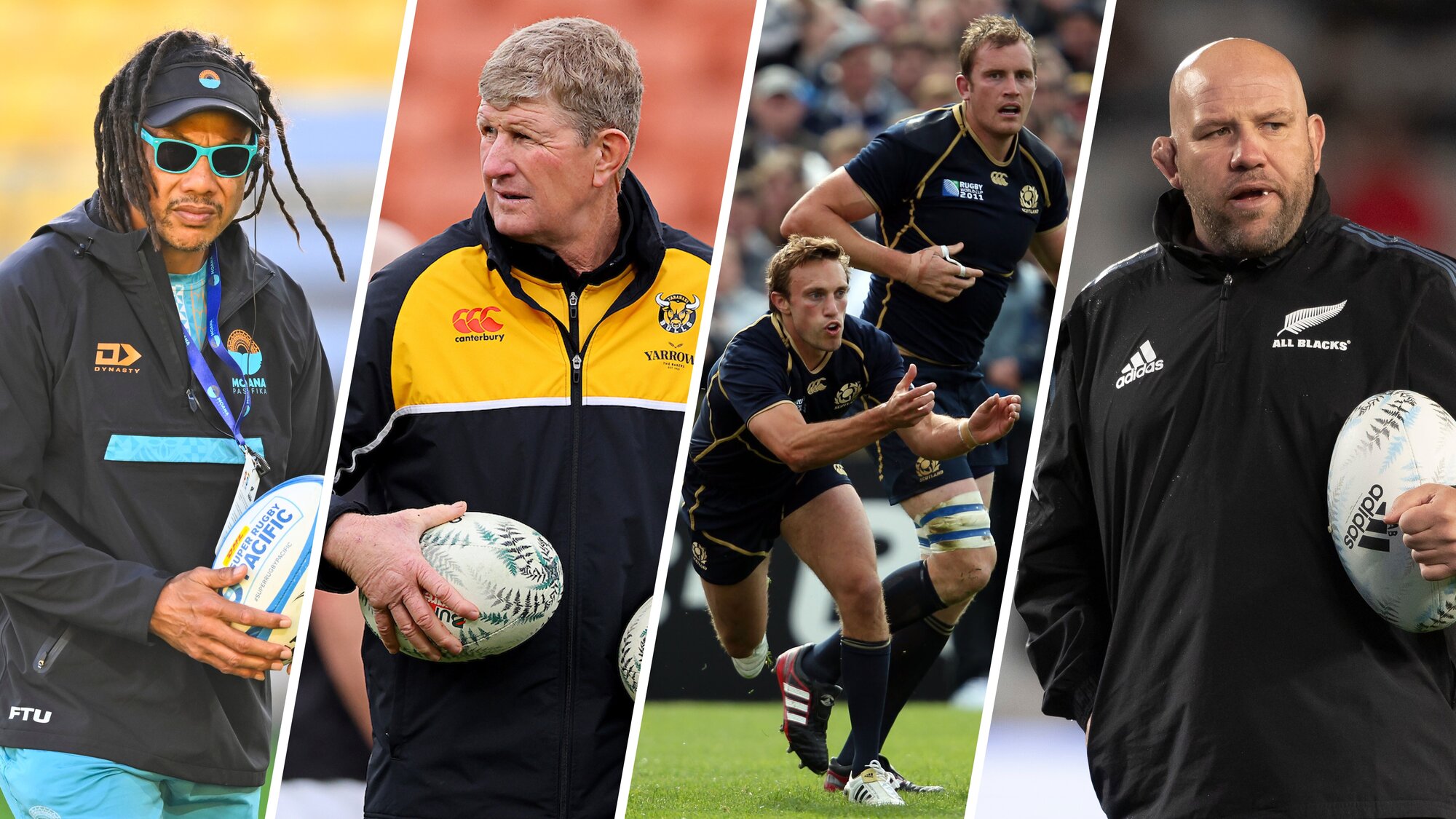
Rennie has been forced to justify his picks and NZR has been satisfied that his reasons for wanting each of Blair, Tana Umaga, Neil Barnes and Jason Ryan are sound.
And on the subject of friction, Rennie has picked four assistants with the experience and character to speak their minds and challenge what they don’t believe is right.
Barnes, who was the star of the Six Nations Full Contact Netflix series for his say-what-you-see approach while working with Italy, seems to have that rare quality of unfiltered authenticity.
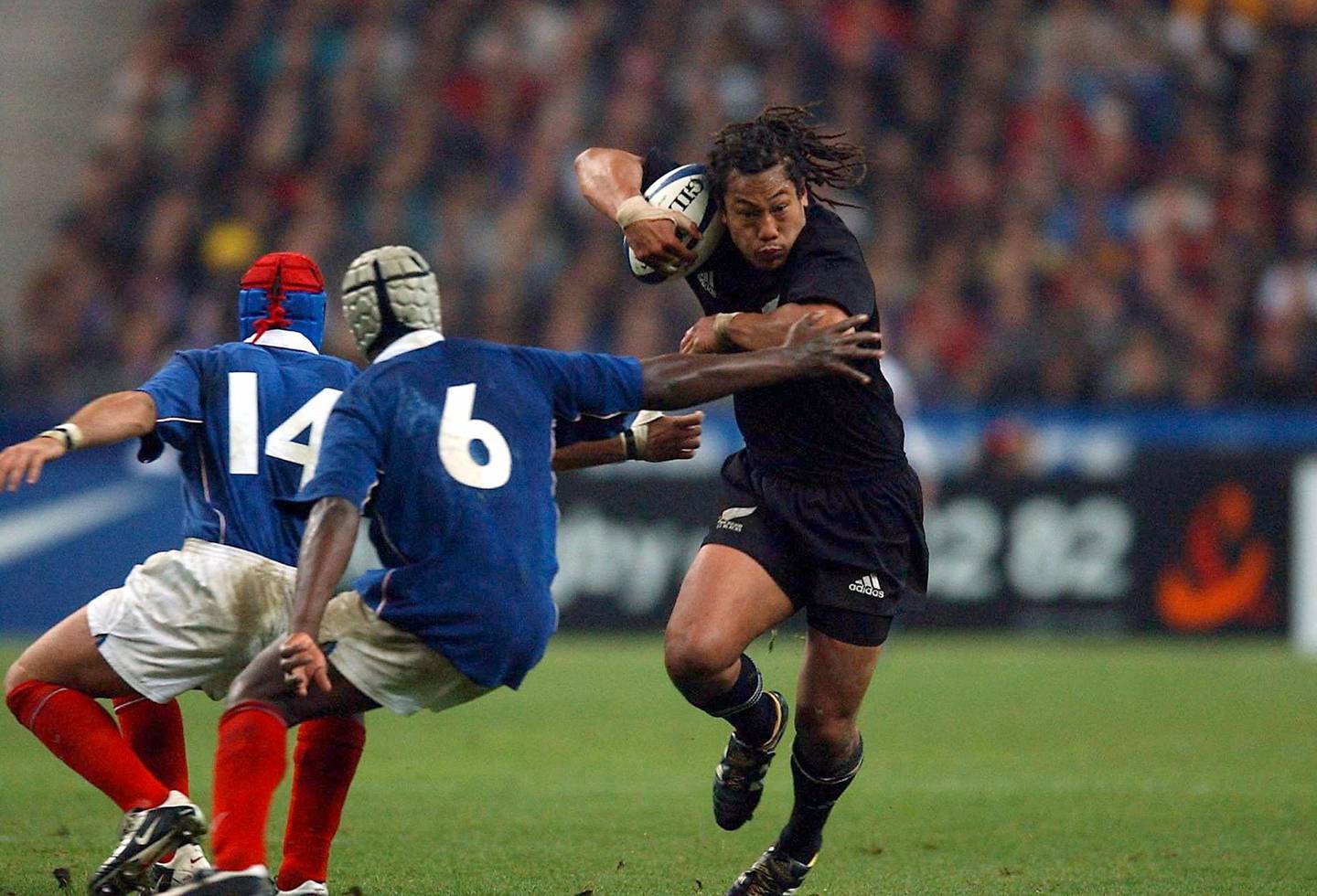
Umaga is a former All Blacks captain who never shirked from telling teammates what needed to be said, Ryan comes with a strong sense of what standards are required from the forward pack and what’s required to get them there, while Blair wouldn’t have worked with Rennie for as long as he has if he wasn’t prepared or able to have robust exchanges with the head coach.
Rennie has been around for long enough to understand that he’s the boss, but he won’t always be right and so much of the job is about knowing who to listen to, when to concede or compromise and what is non-negotiable.
Unlike the past two processes to get All Blacks assistant coaches in place, this one has followed a better path and that significantly enhances the likelihood of delivering a better outcome.
Gregor Paul is one of New Zealand’s most respected rugby writers and columnists. He has won multiple awards for journalism and written several books about sport.