Rugby World Cup 2027: Winners and losers from the match schedule
World Rugby announced the match schedule for the 2027 Rugby World Cup yesterday and while it had the opportunity to open the event with a Bledisloe banger, instead it decided to go with non-rivals Australia and Hong Kong China.
Cameron McMillan runs through the match schedule and picks the winners and losers.
Loser – On opening night, everyone
Okay, that might be a bit harsh but pitting the hosts, Australia, against the 23rd-ranked team, Hong Kong China, in a 24-team competition doesn’t really get the neutral rugby fan, or more importantly the new rugby fan, hyped. Not even sure a hardcore Wallabies fan will be excited. Especially compared to 2023, when it was France against the All Blacks to open the tournament – now that was a way to get the party started. This feels more like opening with a Wiggles playlist than AC/DC.
The Wallabies-All Blacks fixture was sitting there on a plate for the opener but World Rugby, led by Aussie Brett Robinson, has decided to save that fixture for a sold-out Stadium Australia in Sydney a week later, assuming the thinking is the opening fixture would get a strong crowd regardless so why waste a sure sell-out.
Yes, World Rugby’s hand was forced when the draw was made and Pool A saw the All Blacks and Wallabies grouped with two “minnows” in Chile and Hong Kong China, meaning the alternative to not opening with the Wallabies against the All Blacks wasn’t that great.
But then again, World Rugby dealt its own cards for that hand by increasing the tournament by four teams and making it six pools. If it was the same groups as 2023 then Australia could have faced Wales or Fiji in the opening game – a much more appealing option. Adding an extra round in the knockout phase has diluted the pool phase and increased the danger of more blowouts.
And oh boy, are we going to see some blowouts. There’s a strong chance Perth will see more centuries in the opening two games than last year’s Ashes test at the same stadium. The opening five games all look set to be very one-sided affairs. Scrolling through the match schedule, it’s not until the sixth match between Japan and Samoa that we could see a competitive game and that’s ignoring the fact the last time those teams met, Japan won by 22 points. Hopefully World Rugby is thinking a slow start won’t matter if it’s a strong finish to the tournament.
Winners – New Zealand viewers
Let’s get positive for a moment. A tournament on our side of the world means no early mornings. The kickoff times for the All Blacks are great – Friday 6.15pm, Saturday 7.10pm and Saturday 7.15pm. A potential quarter-final against South Africa at 6.45pm. Brilliant. The semi-finals and final, should the All Blacks advance that far, will start at 10pm but as long as that’s not a State of Origin-like ever-extending kickoff time then that’s fine.
Losers – European viewers
Maybe this is revenge for making Australian fans have to get up at 1.45am, 2am, 5am and 2.45am to watch pool matches in France three years ago. But European nations Wales, Ireland, Scotland and France, as well as the Springboks, all have earlier kickoff times that don’t suit a huge chunk of the TV viewing audience. In 2003, only two games started before 7am UK time, in 2027 it will be 18.
Rugby is also growing in Spain, where there is potential to gain a new audience – and the best way to do that is gaining hype during a World Cup.
Winner – The All Blacks
They start in Perth, which means they can set up camp there well in advance of the opening game against Chile before spending the rest of the pool matches on the east coast in Sydney and Melbourne. They also have seven-day gaps between two of the matches, while the likes of Japan have three six-day rests.
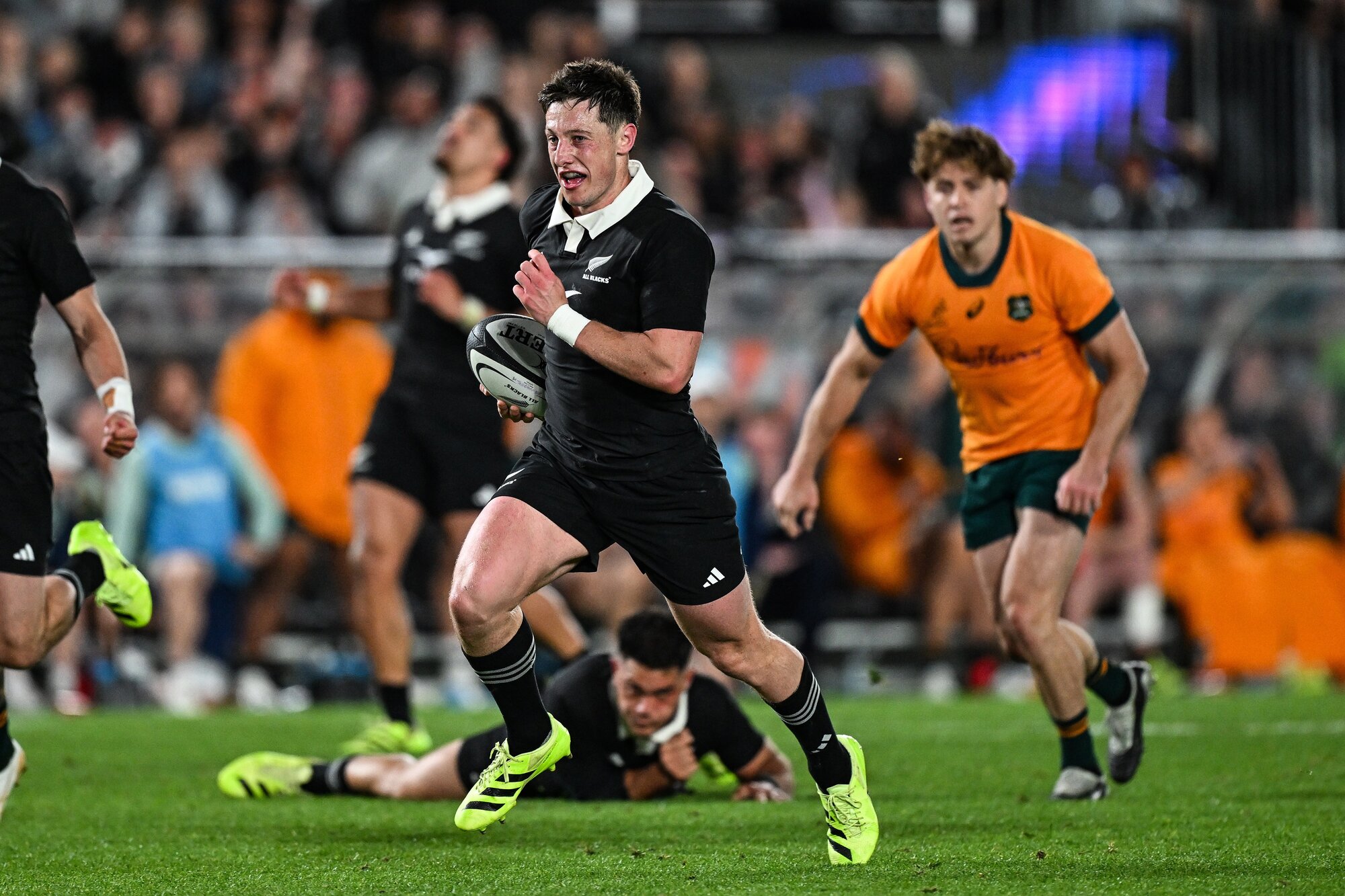
Winner/loser – Perth, teams playing in Perth
South Africa, meanwhile, head to Perth in their final pool game against Romania, where they will likely play their Round of 16 game before travelling across Australia to Sydney for a possible quarter-final against the All Blacks. Ireland and Scotland also have to travel to Perth midway through pool play. The last time Australia hosted the World Cup in 2003, the Perth games were all early in the same pool, which reduced the travelling, but the city has a new stadium and a Western Australia state government keen for as many games as possible. Think of it as a warm-up for all the long-haul flights needed for the USA World Cup in 2031.
Winner – England
The draw also seemed to suit England because if they top Group F, they’ll likely avoid the All Blacks and Springboks until the final. But the schedule has also worked in their favour with all three matches on the east coast, similar night kickoff times and with an eight-day gap before their final pool game. Like the Springboks through, they will need to travel to Perth for the Round of 16, should they top their group and fly to Brisbane to potentially face the hosts, who would be waiting for them in Sydney.