Super Rugby Pacific final: Don’t bag the Chiefs too much, the Hurricanes would have beat most test sides – Phil Gifford
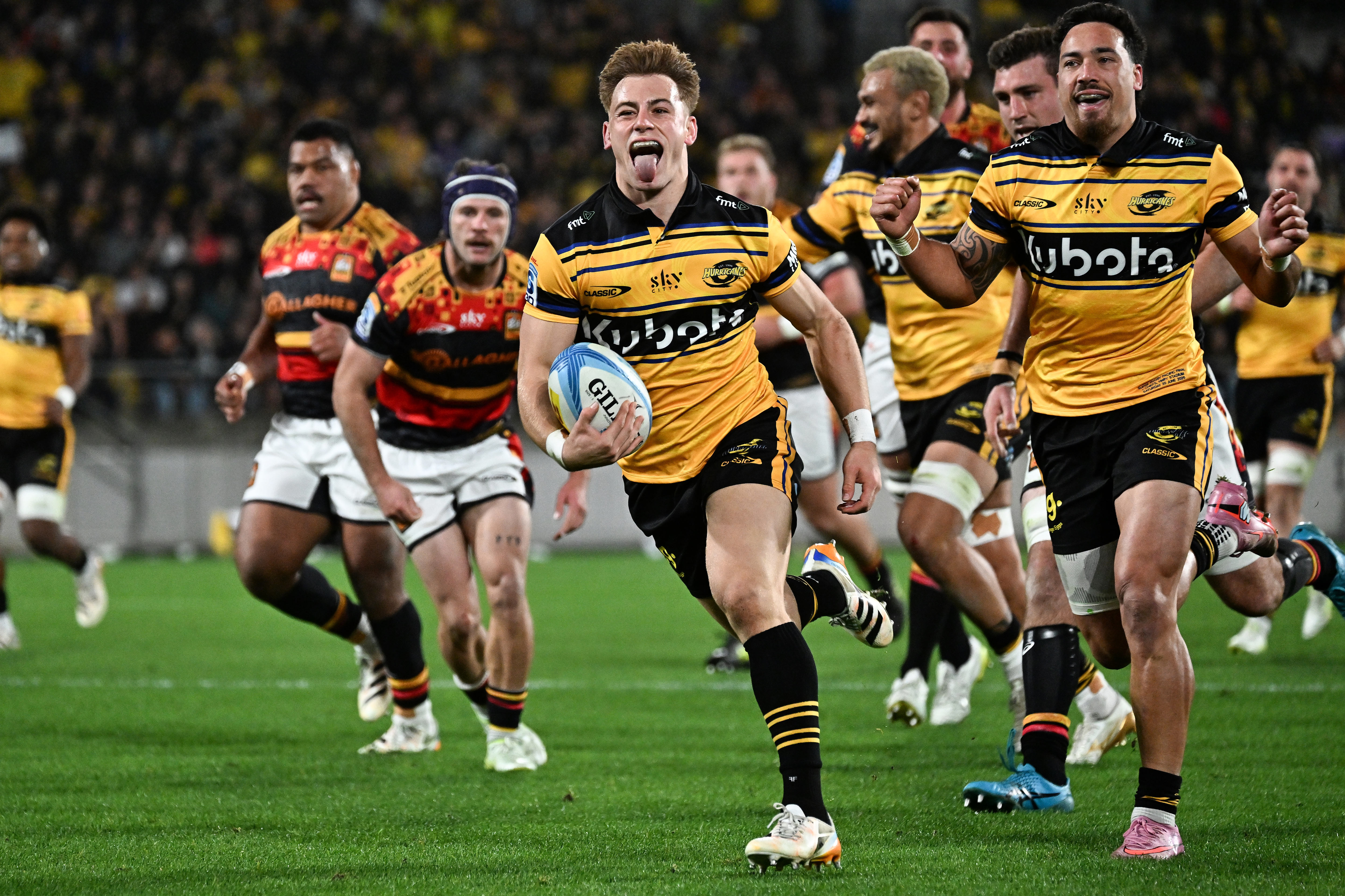
The Hurricanes’ amazing 60-5 victory over the Chiefs in the Super Rugby Pacific final in Wellington was a display of extraordinarily cool control by the hosts.
In the process we saw the duo, in halfback Cam Roigard and first five-eighths Ruben Love, who you can picture guiding the All Blacks at the next two World Cups.
Decades ago, the great Canadian rocker Neil Young wrote a song about the perils and drama of romance with the chorus: “You are like a hurricane/There’s calm in your eye.”
What was remarkable on Saturday night was how in a massive game of rugby, the Hurricanes kept the calm in their eyes throughout, most notably Roigard and Love.
Who could have blamed them and the Hurricanes for getting feverish as the score kept mounting? Instead, the whole team stayed as committed and concentrated as if the margin was three or four points, not 29-0 at halftime, or 48-0 after 60 minutes. It wasn’t all expressed in orthodox ways.
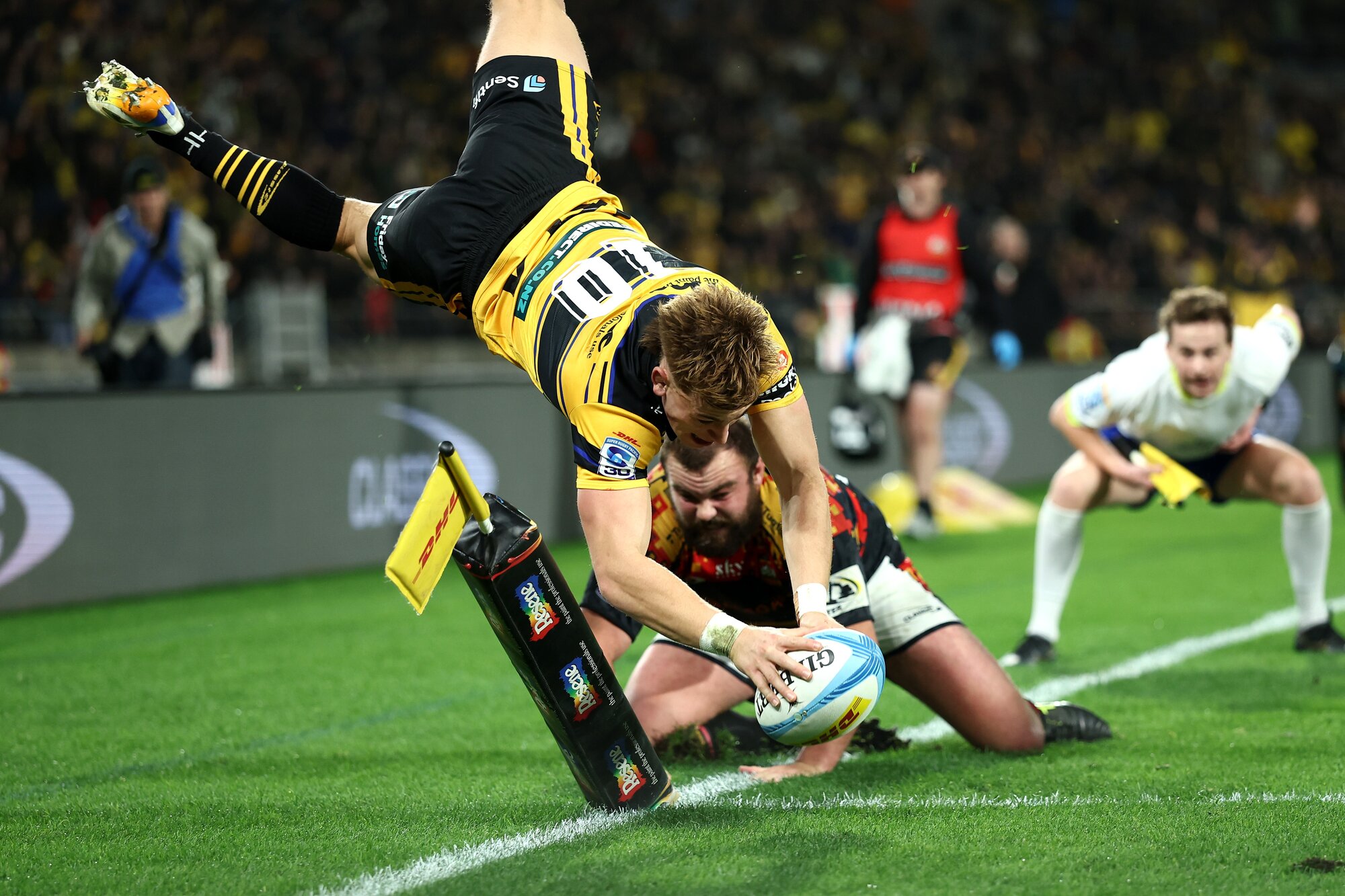
In the 63rd minute, Love scored a try with a spectacular NRL-style acrobatic leap and dive. Was it exuberant? Certainly. But it was also the perfect action at the perfect time. If he’d just stayed on his feet, it’s likely he would have been tackled into touch. Deciding in a split second to soar through the air guaranteed the try.
Not too much help as a trial
Oddly, considering the Hurricanes’ sublime form, the final probably wasn’t the perfect match to act as a high-pressure trial for the All Blacks selectors. They would have been delighted to see Jordie Barrett having a storming game at second five-eighths. But the Hurricanes were so dominant that, as a prime example, Quinn Tupaea, who has been a midfield rock for the Chiefs this year, hardly saw the ball on attack. Josh Moorby was one player, albeit a Hurricane, who must have helped advance his international career. Moorby’s 27 but his pace is eye-opening.
Don’t bag the Chiefs too much
In a region as keen on rugby as Waikato, it’s hard to imagine there being much joy in the cowsheds in Kiwitahi and Eureka over the result of the Wellington final. But sometimes a very good side has a golden 80 minutes and it was the Chiefs’ misfortune to strike a Hurricanes side that could have challenged, and might well have beaten, any test team in the world. It’s very much worth remembering that the Chiefs made the final the old fashioned way, by winning their knockout games and without the benefit of any lucky loser rule.
Rugby on its death bed? Yeah ... nah
It would be fair to say, both in some areas of the media and online that you can get the strong impression that rugby in New Zealand is at a stage where it’s about as fondly regarded as the Iran war is by Americans. That would obviously be news to the 20,000-plus fans who in 15 minutes bought out every ticket for the final.
The reality, like so much in life, is infinitely more complex. The days of nobody blinking when the head of one of the largest schools in Auckland congratulated (as used to happen in the 1980s) “the boys” in the football First XI and “the men” in the rugby First XV for their weekend victories have long gone. Of course rugby doesn’t have the stranglehold here it once did on our sporting winter, whether in numbers playing or watching. But get the mix right and there’s still a large cohort for whom nothing appeals more than an All Blacks test, or, as we saw at the Cake Tin, a national championship final.
Aussie, Aussie, Aussie ... oops
For Super Rugby Pacific, the most urgent matter has to be finding a way for Australian teams to consistently provide more than token opposition. It would be wonderful if South African teams returned, but the money available in Europe and the fact there’s basically no time difference between Toulouse and Cape Town makes that about as likely as Shane Jones flying in economy class. To make Super Rugby feel international again, it’s basically imperative that Kiwi and Aussie officials work together to examine and execute every imaginative idea they can dream up to bolster Australian franchises.
Return of the giants?
If there’s one team who could help light up Super Rugby next year, it’s surely the Blues. I was one of many deeply impressed with the grit Vern Cotter coached into the 2024 team who won the first post-Razor Robertson Super title. Unfortunately, the platform provided by the tough and technically exact play of people like Sam Darry and Dalton Papall’i wasn’t fully exploited to set the backs free, to the point where the Blues became one of the most one-dimensional, forward-oriented sides in the 2026 season. New coach Jason Holland will inherit a side with solid foundations up front. If he can develop the potential in the backline, the Blues could be title contenders again.
No matter how sufferers from CDT (Crusaders Delusion Syndrome) may feel about it, Super Rugby suffered this year from the often-erratic performances of the Crusaders. Coach Rob Penney wore a lot of the backlash, which, considering the cruel injury list in his squad, sometimes went beyond ill-informed to flat-out unfair. Scott Hansen takes over next year after his stint at the All Blacks, and if he can operate with a near full-strength, injury-free side, the results could be fascinating.
Hardcore fans in the rest of the country may not be thrilled at the prospect of a resurgence from the Blues and the Crusaders, but whether it’s Super Rugby or the NPC, local derbies can be the heart and soul of a competition.