Why rugby’s Nations Championship structure should change - Nathan Limm
OPINION
The Nations Championship has undoubtedly captured the imagination of the rugby world.
It’s an innovative and deliciously refreshing update to an international calendar which had begun to feel stale.
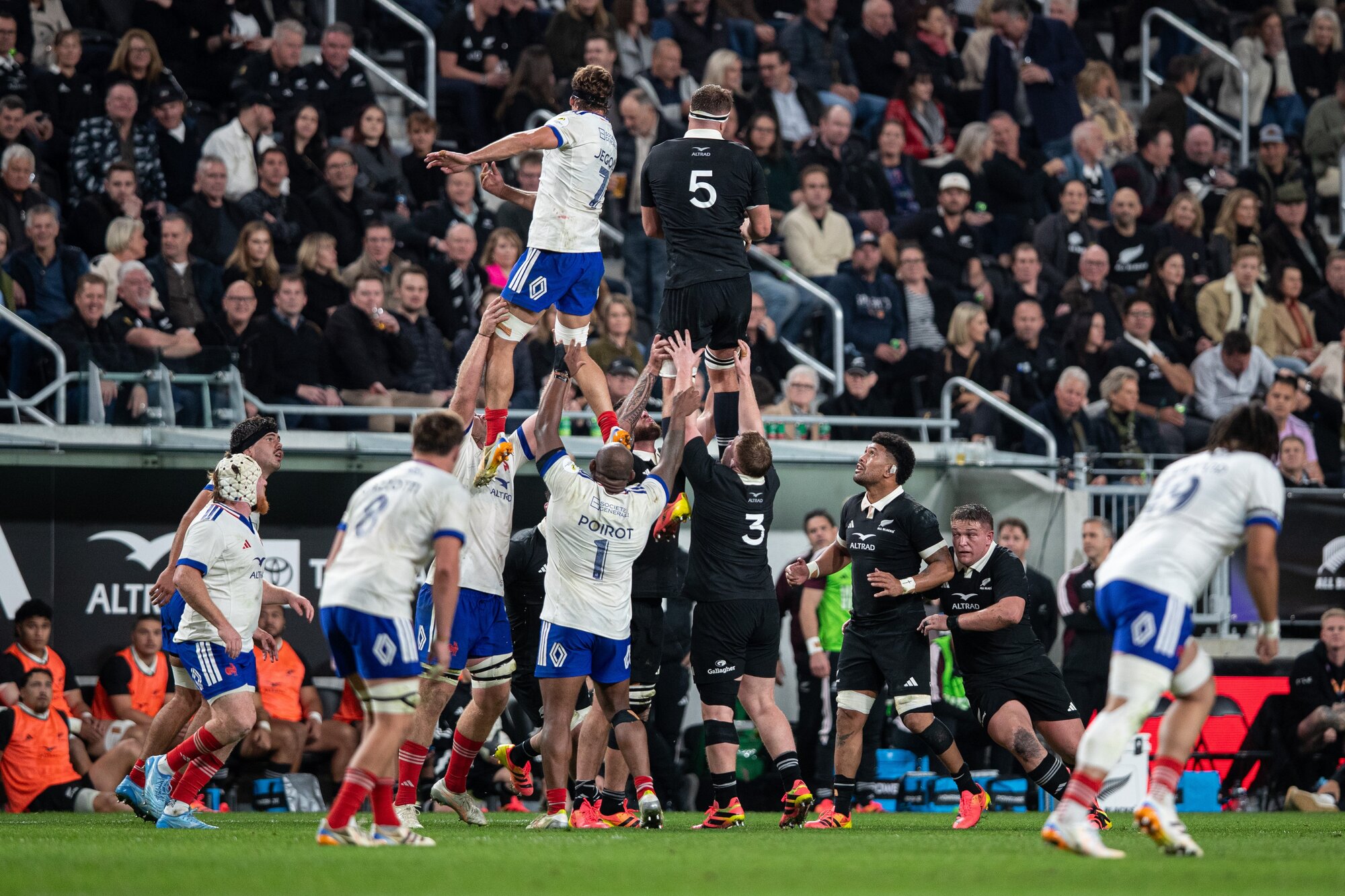
In week one, it delivered. A pulsating, blow-for-blow clash between Australia and Ireland proved the highlight, with the All Blacks’ tight win over France a close second. South Africa crushed England, Scotland edged Argentina, Wales trumped Fiji, and Japan ousted Italy.
Running midway through World Cup cycles, the Nations Championship pits the Northern and Southern Hemisphere sides against one another. It features three weeks of tests in the south – and Japan – in July and three in the north in November.
All teams then head to Twickenham to play a finals series with three double-headers across one weekend. The top-ranked Southern Hemisphere team plays the No 1 Northern Hemisphere side, second faces second, and so on.
Presumably, the objective of any world tournament is to find the world’s best team. However, the Nations Championship is advertised as a North vs. South contest, effectively putting the respective hemispheres on the same team.
The winner of each of the second through sixth-place finals earns one point for their hemisphere, while the winner of the top-ranked final earns two. At the end of the weekend, one hemisphere is crowned champions.
There are two issues here. Firstly, if two teams from the same hemisphere clean sweep their group games, they can’t meet in a final to determine an individual winner. Points difference will have the final say.
Why not have two semifinals? The first-placed Northern Hemisphere side against the second-placed Southern Hemisphere team, and vice versa. Then a true grand final could be contested the following weekend.

You could still determine a victorious hemisphere ahead of the grand final, with the winning team earning the world No 1 ranking.
The second issue is the structure assumes fans will cheer on their biggest international rivals. Can you imagine the French, Scottish, Irish and Welsh fans banding together to cheer England on against Fiji for a Northern Hemisphere win? I can’t.
Regardless, World Rugby’s innovation should be applauded and encouraged. The Nations Championship is far more thrilling than another meaningless three-test June series against a tired European outfit.
It just means Kiwis have to get used to cheering for South Africa.
Nathan Limm has been a journalist with Newstalk ZB and the NZ Herald since 2020. He covered the Netball World Cup in Cape Town in 2023, hosts The Big League Podcast and commentates rugby and netball for Gold Sport.