Once burnt: Is there a link between barbecues and cancer?
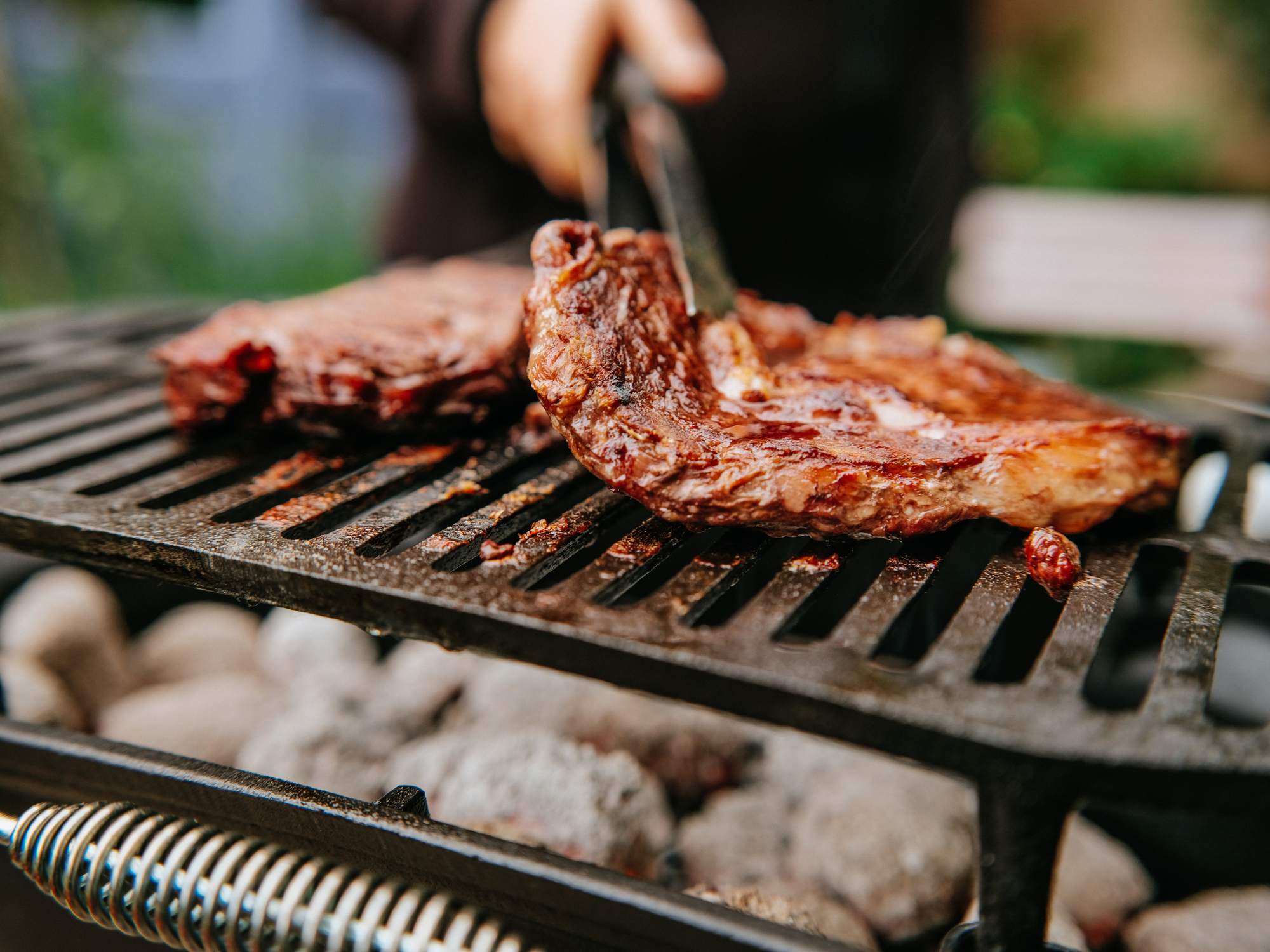
The jury’s out on the link between barbecuing meats and cancer, but in the meantime, taking some simple steps can reduce risk. By Jennifer Bowden.
Q. What is the healthiest way to barbecue meat? I know burnt bits on meat are not good, but aside from eliminating those, what else should we do?
A. The popularity of the Kiwi barbecue knows no ends, with small portable charcoal barbecues now seeing a resurgence in popularity that almost matches their 1970s heyday.
Add to that all the backyard gas barbecues churning out flame-grilled dinners. But because high-heat cooking methods can alter meat in unhealthy ways, it pays to consider a few steps that can improve the healthiness of your barbecued meal.
Cooking muscle meats, such as beef, lamb, pork, chicken and even fish, on a barbecue at high temperatures can produce several suspected human carcinogens. The World Cancer Research Fund (WCRF) says there is “limited – suggestive” evidence that these compounds could result in humans developing certain cancers.
Though not conclusive, this evidence does warrant taking a few simple precautions, particularly given New Zealand’s high rates of colorectal cancer. Indeed, a 2020 observational study found an association between higher intake of barbecued and grilled meats and increased risk of colorectal cancer in women, adding to previous similar findings for both men and women.
According to the fund, cooking meats at high temperatures, prolonged exposure to heat, and cooking by various types of grilling results in the formation of compounds which have been linked to colorectal cancer development in experimental studies.
During high-heat cooking, compounds known as HCAs (heterocylic amines) form through a reaction between protein and creatine, a chemical compound found in muscle meats.
Cooking temperature is a crucial factor: high-heat cooking methods such as grilling, barbecuing and frying tend to form more of these compounds than baking, boiling or roasting.
Another type of compound, known as PAHs (polycyclic aromatic hydrocarbons), form from the incomplete combustion of organic materials such as wood or meat.
When barbecuing over a direct flame, these compounds form because fat from the meat drops on the fire, partially combusts, and then rises as smoke, sticking to the meat surface. Wood fires tend to be worse than charcoal fires, and again, heat is a factor.
Some, but not all, of these compounds formed during barbecuing of muscle meats are considered possible human carcinogens by the International Agency for Research on Cancer.
But whether eating barbecued meats increases cancer risk remains debatable.
A 2018 report by the World Cancer Research Fund and the American Institute for Cancer Research also noted there is “limited – suggestive” evidence that grilled meats may cause stomach cancer and colorectal cancer.
More research is needed to fully determine if these carcinogens have a real impact on our cancer risk.
Nevertheless, follow these tips to reduce the formation of heterocyclic amines and polycyclic aromatic hydrocarbons in your barbecued meats: