40 people drown as France seeks relief from record heat
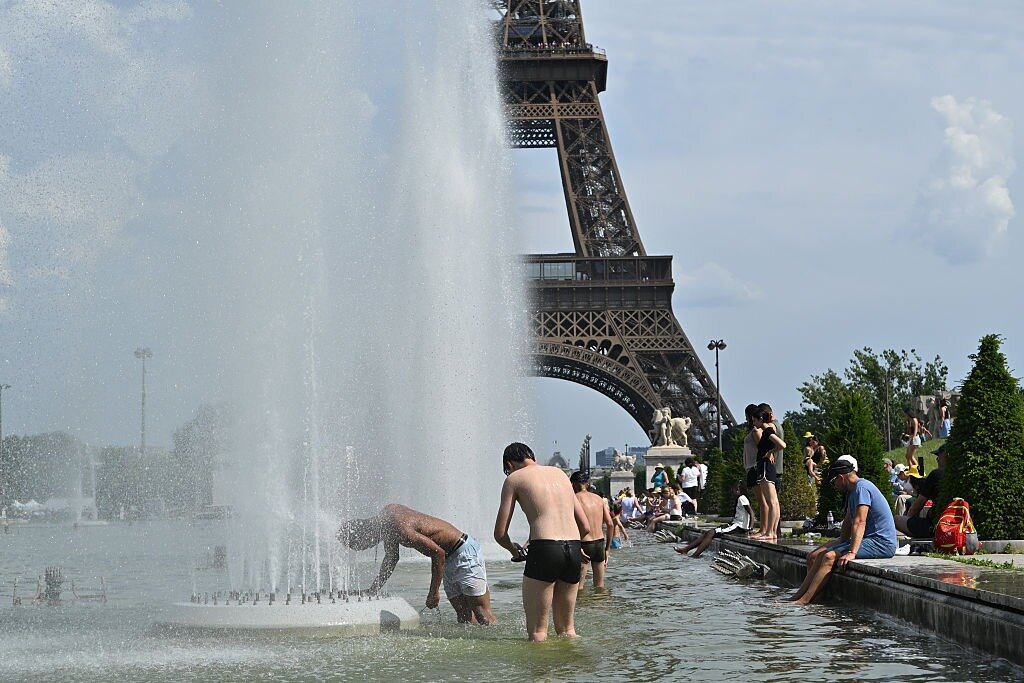
A record-breaking heat dome has scorched France, where officials and local reports have said at least 45 people have died amid the high temperatures, including 40 by drowning. Officials have said many young people went swimming in unsupervised locations seeking relief.
Prime Minister Sebastien Lecornu on Tuesday described the heatwave as “an episode of exceptional intensity” and said temperature records are being broken “every day and night”. The French Government was planning for several scenarios, including the possibility that the heat extends into July. According to local reports, three of the deaths were elderly people who succumbed to health issues related to heat and two were children who died in a hot car.
The Prime Minister did not share details of the circumstances around the drownings, but authorities have suggested many of the incidents were related to people swimming in unauthorised locations to escape the heat.
Officials also warned against swimming in unsupervised waters, citing the risk of dangerous currents and temperature variations.
“It’s not something to be taken lightly, going swimming in unsupervised areas during a heatwave,” Sports and Youth Minister Marina Ferrari said earlier.
Ferrari also urged people to “respect security measures” and said the Government is following drowning incidents closely.
Hundreds of temperature records fell on Monday alone – including some all-time records – as temperatures climbed to levels higher than nearly the rest of the planet.
The heatwave will expand north and east across Europe through the weekend. Through Sunday, about 400 million people across the continent are forecast to experience 32C. Of that number, around 115 million people can expect 37C.
In France alone, the temperature reached about 44.3C on Monday in the west-central part of the country. In Paris, it reached around 37.7C.
Less than 1% of the planet was expected to be hotter than France’s hottest places on Tuesday. Only parts of the Sahara, the Middle East and the US Desert Southwest were forecast to be hotter – highlighting the extreme nature of the heat in a country where only a quarter of homes have air conditioning.
“We won’t count the records, we will list the few lucky ones,” that don’t break records, said weather historian Max Herrera.
The core of the heat will also soon move northward into the United Kingdom, where the meteorological office has issued its highest-level “red warning” for extreme heat on Wednesday and Thursday.
“Population-wide adverse health effects experienced, not limited to those most vulnerable to extreme heat, leading to serious illness or danger to life,” the agency wrote.
The agency also warned about the dangers of cooling off in coastal waters.
In its post noting the heat warning, the UK Met Office cites Samantha Hughes, national water safety partner at the Royal National Lifeboat Institution, who noted that “with warmer weather approaching, it’s important to remember that the water is still cold. Entering it unexpectedly can lead to cold water shock, causing a sudden increase in breathing and heart rate, which may trigger panic”.
But it’s not just the heat.
Southern parts of Britain, including London, can expect their most humid day on record on Tuesday. That will be followed by even higher humidity on Wednesday, before the sticky air swells into Ireland on Thursday.
Peak humidity levels there will be similar to a notably muggy day in the Mid-Atlantic.
The blob of record-breaking heat will push eastward from Friday through the weekend, reaching Belgium, the Netherlands, Germany, Denmark and several other nearby countries, before gradually fading early next week.
Some weather models show another heat dome developing in Western Europe during early July. The elevated frequency of heat domes in the region may be counterintuitively connected to a cold blob of ocean water in the North Atlantic, causing the jet stream to buckle there but lift up over Western Europe – allowing heat to flow in from Africa.
While heat domes aren’t new, they can now produce higher temperatures and humidity than in the past because of climate change, making them more dangerous.
Sign up to Herald Premium Editor’s Picks, delivered straight to your inbox every Friday. Editor-in-Chief Murray Kirkness picks the week’s best features, interviews and investigations. Sign up for Herald Premium here.