As Europe warms, scientists ask: How much hotter could summers get?
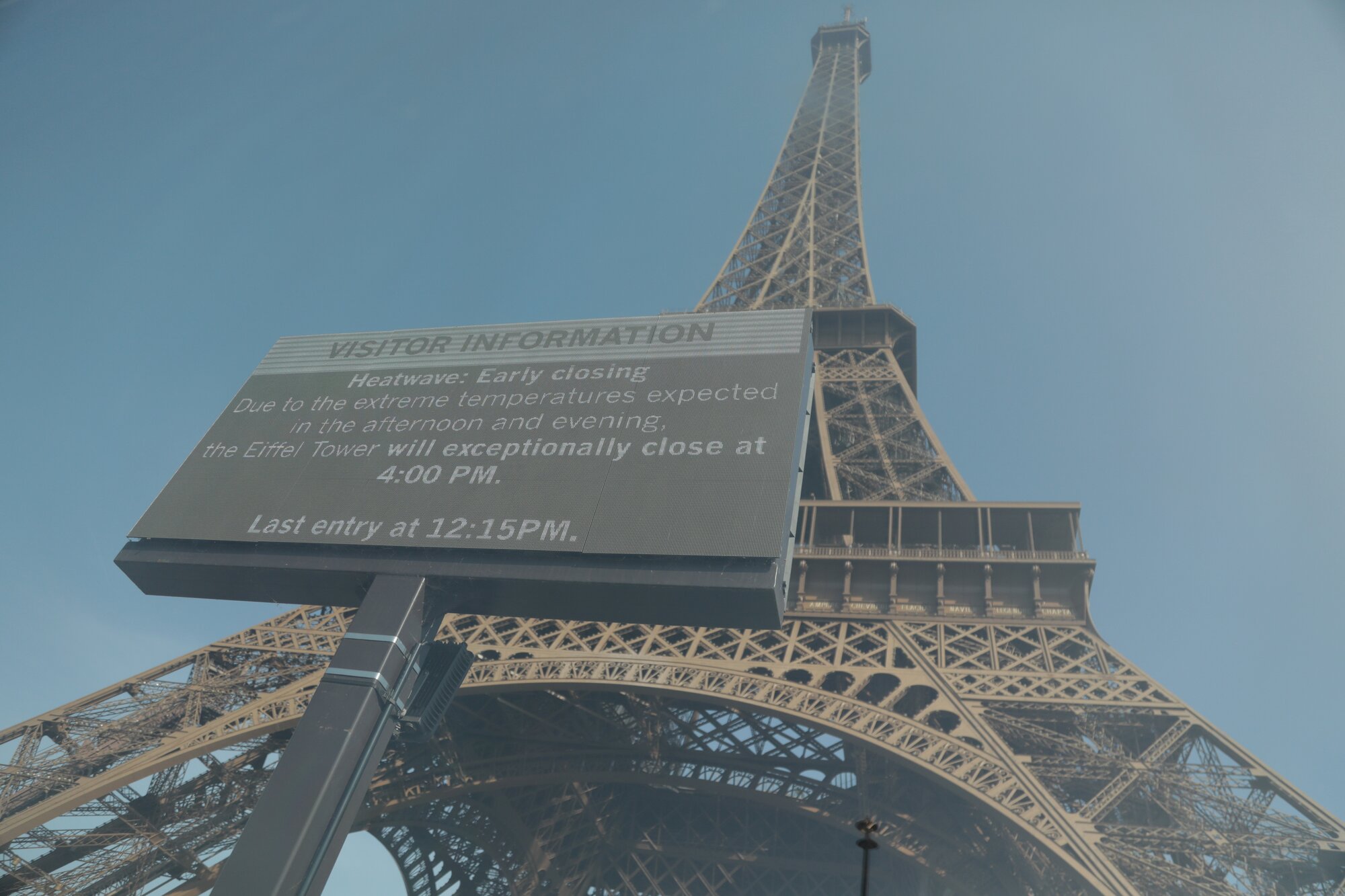
Records are being broken for the second time in a month, leading scientists to probe the upper limits of what the warming climate can dish out.
Millions of people seeking refuge from the dangerous heat in France this week have found little relief with the setting sun, as temperatures shatter both daytime and nighttime records. Highs in Britain could reach 38C on Wednesday and Thursday, beating the country’s previous June temperature record of 35.5C. Heat warnings are in place from Spain to Germany.
Summer is just getting started, but Western Europe is already sweating through its second severe heatwave of the year. Greenhouse gases from burning fossil fuels are raising temperatures across the globe, and Europe is warming faster than any other continent, priming it for more extreme hot spells.
That’s prompting scientists to confront an urgent question: how hot can a heatwave actually get? Not in future decades, as global warming continues, but today. Maybe even this summer.
“We do know that heat waves are becoming more severe and more frequent, and they’re lasting longer,” said Rebecca Emerton, a senior scientist at the European Centre for Medium-Range Weather Forecasts in Reading, England. What’s striking now, Emerton said, is the big margins by which temperature records are being broken.
In Western Europe, heat records are being smashed this week for the second time in a month. Tuesday was France’s hottest day ever recorded, the national weather agency said, with the mercury climbing as high as 44C in the country’s southwest.
During the year’s first heatwave a month ago, temperatures exceeded Britain’s May heat record by more than 2C. They also came close to surpassing the country’s June record, Britain’s Met Office said.
And the nights have offered scant comfort. During last month’s hot spell, Britain experienced its first night on record in which the average low temperature was above 20C.
Europe is warming faster than the rest of the world for a combination of reasons. Nations have curbed air pollution, which has improved air quality but left fewer particles called aerosols in the sky to deflect sunlight back into space. Snow cover has declined, causing the land to absorb more solar radiation. And shifts in the patterns of atmospheric circulation around Europe have contributed to more frequent and intense summer heatwaves.
By definition, record-breaking temperatures should be rare. But, as humans warm the planet, extreme heat is appearing much more often than would be the case if the climate were stable, scientists have found. That has led researchers to try to figure out where the upper limits of our human-heated climate may lie.

Scorchers of such intensity might not occur every summer, but knowing how bad they can be could help cities, hospitals and utility companies prepare for the worst.
Using computer simulations, scientists have made “substantial progress” in establishing what the most extreme extremes might plausibly look like in different places, said Erich Fischer, a climate scientist at the Swiss university ETH Zurich. What’s less clear, he said, is how long such extraordinary heat could possibly persist, exposing people to sweltering conditions day after day, week after week.
“Is there a limit to that?” Fischer said. “That’s where actually I think we still have relative limited understanding.”
In a recently published study, Fischer and another climate scientist, Laura Suarez-Gutierrez, showed that many of the most severe European heatwaves in their computer simulations occurred shortly after another heatwave in the same summer. One reason is that a heatwave can set up the next one to be more intense: after a first round of high temperatures dries up the land, more of the sun’s energy in the next round goes toward heating up the air instead of evaporating moisture in the soil.
Back-to-back hot spells also leave less time for humans and communities to recover.
“We’re preparing a bit more for that particular day that is 50 or 40-something degrees” Celsius, said Suarez-Gutierrez, an assistant professor of atmospheric dynamics at Wageningen University in the Netherlands. “We’re not preparing, necessarily, for a month of 36 degrees” Celsius, she said.
“It doesn’t look as extreme on paper, but I don’t think our resources right now are prepared for that,” she said.
This article originally appeared in The New York Times.
Written by: Raymond Zhong
©2026 THE NEW YORK TIMES