The toll of a ‘missing scientists’ conspiracy theory on the families left behind
CONTENT WARNING: This article discusses suicide.
The claim that their loved ones’ deaths and disappearances are linked is almost certainly false – but the loss remains real.
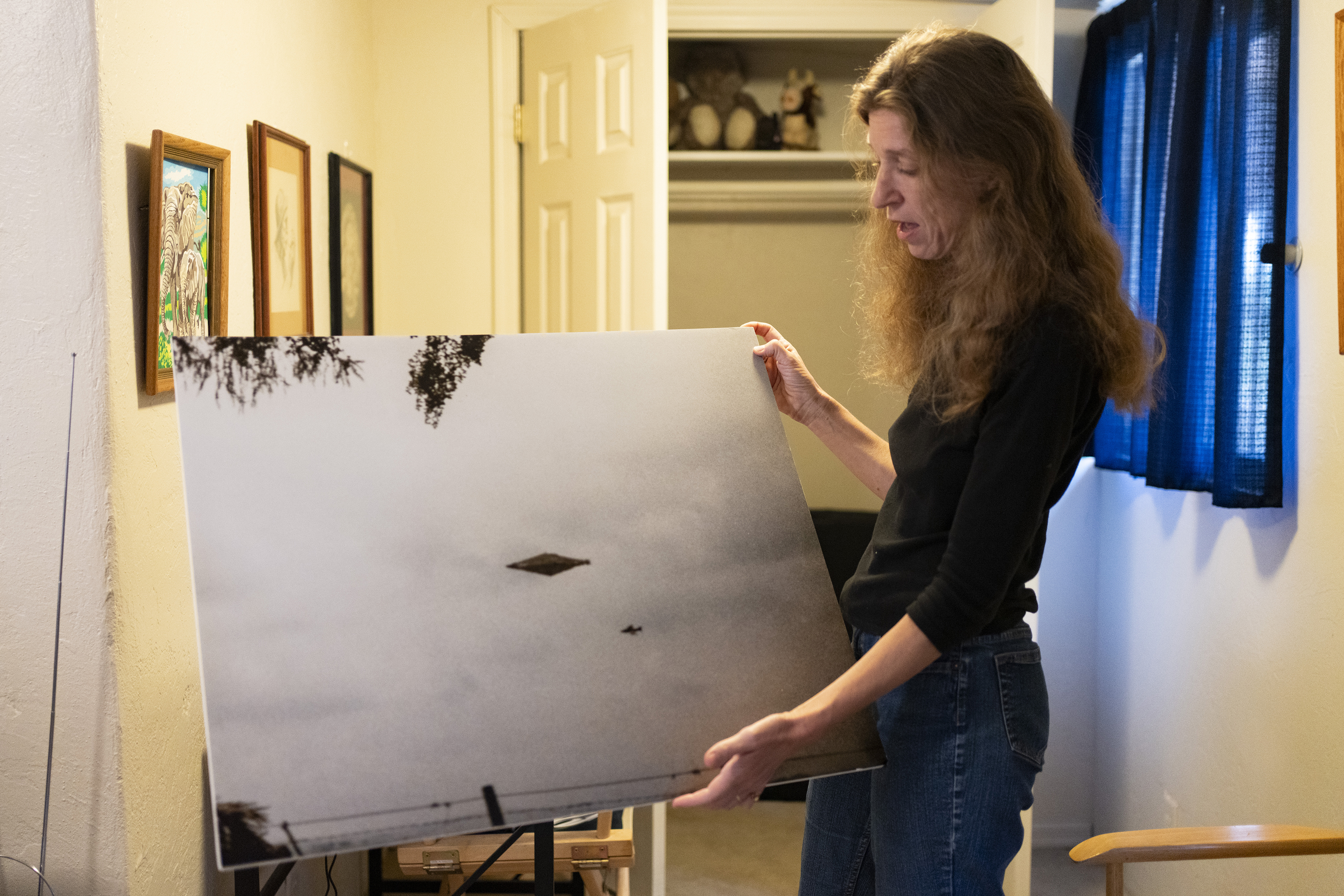
David Wilcock’s life changed forever when, as a child, he found an old book about UFOs that had been gathering dust in the basement. His father, Donald, remembers that the book wasn’t written for children. David devoured it.
As an adult, David Wilcock became increasingly interested in the supernatural. In 2004, he co-wrote a book that claimed he was the reincarnation of Edgar Cayce, a famous 20th-century psychic. He regularly appeared on the popular series Ancient Aliens and started a paranormal-themed YouTube channel called Divine Cosmos, which has 550,000 subscribers.
Even as he became a well-known commentator on the subject of extraterrestrial life, he faced mounting financial troubles. He was also prone to depression. In 2021, his marriage of four years broke up.
“I knew he was struggling,” his father said. But not in “a million, million years” did he expect what happened in April.
Shortly before 11am on April 20, sheriff’s deputies in Boulder County, Colorado, were called to David Wilcock’s house in Nederland, in the Rocky Mountain foothills. When they arrived, David Wilcock emerged holding a gun. “Within minutes of deputies’ arrival, he used the weapon on himself,” according to the sheriff’s office.
The pain that swept down on Donald Wilcock was like an avalanche: “No father should ever have to go through what I’m going through,” he said in an interview.
But soon, his grief would transform into rising anger, as he watched his son’s death become grist for a conspiracy theory metastasising across the internet.
For weeks, online sleuths had been piecing together what became known as the “missing scientists” theory – based on an observation that 10 to 12 figures involved in US nuclear, aerospace or extraterrestrial research had died or disappeared. Some of these figures, like Frank W. Maiwald, a researcher at Nasa’s Jet Propulsion Laboratory, had died years before (in Maiwald’s case, 2024). Other characters in this dark drama, like a retired Los Alamos National Laboratory construction foreman, Anthony Chavez, who went missing last spring, were highly unlikely to know any sensitive information.
Maybe it was Iran exacting revenge for its own slain scientists, or China trying to gain an edge? What if the US was silencing its own best and brightest, in fear of what they might reveal? There was no evidence for any of these suggestions, yet they proliferated all the same. The border between fact and fiction has become so porous, it was inevitable that the implication of serial scientist killing would find its way to the White House.
“I hope it’s random,” President Donald Trump said in an interview on the South Lawn. “Some of them were very important people,” he added a few minutes later.
The Wilcocks released a statement insisting that foul play was not involved in David Wilcock’s death, but it was not enough to stem the conspiratorial tide. David Wilcock “was silenced for speaking out against the Federal Government and it’s never been more obvious”, David Woltkamp, who runs a conspiracy-themed YouTube channel, said in a social media post.
The miasma of lies surrounding his son’s suicide has felt, to Donald Wilcock, like indignity layered on tragedy. “Nothing in my life of 82 years has come close,” he said. And as the number of deaths and disappearances swept into the storyline has grown, family members like Wilcock have discovered a dark new dimension to their grief.
The birth of a conspiracy theory
There are 73.6 million Americans who work in scientific and science-related fields, according to the American Association for the Advancement of Science. The number involved in researching astrophysics and spaceflight is, of course, far smaller, but the Bureau of Labor Statistics still puts the number of jobs in physics and astronomy in the US alone at 26,400. The occupants of those jobs die, just like the rest of us. They go missing, as do hundreds of Americans each day.
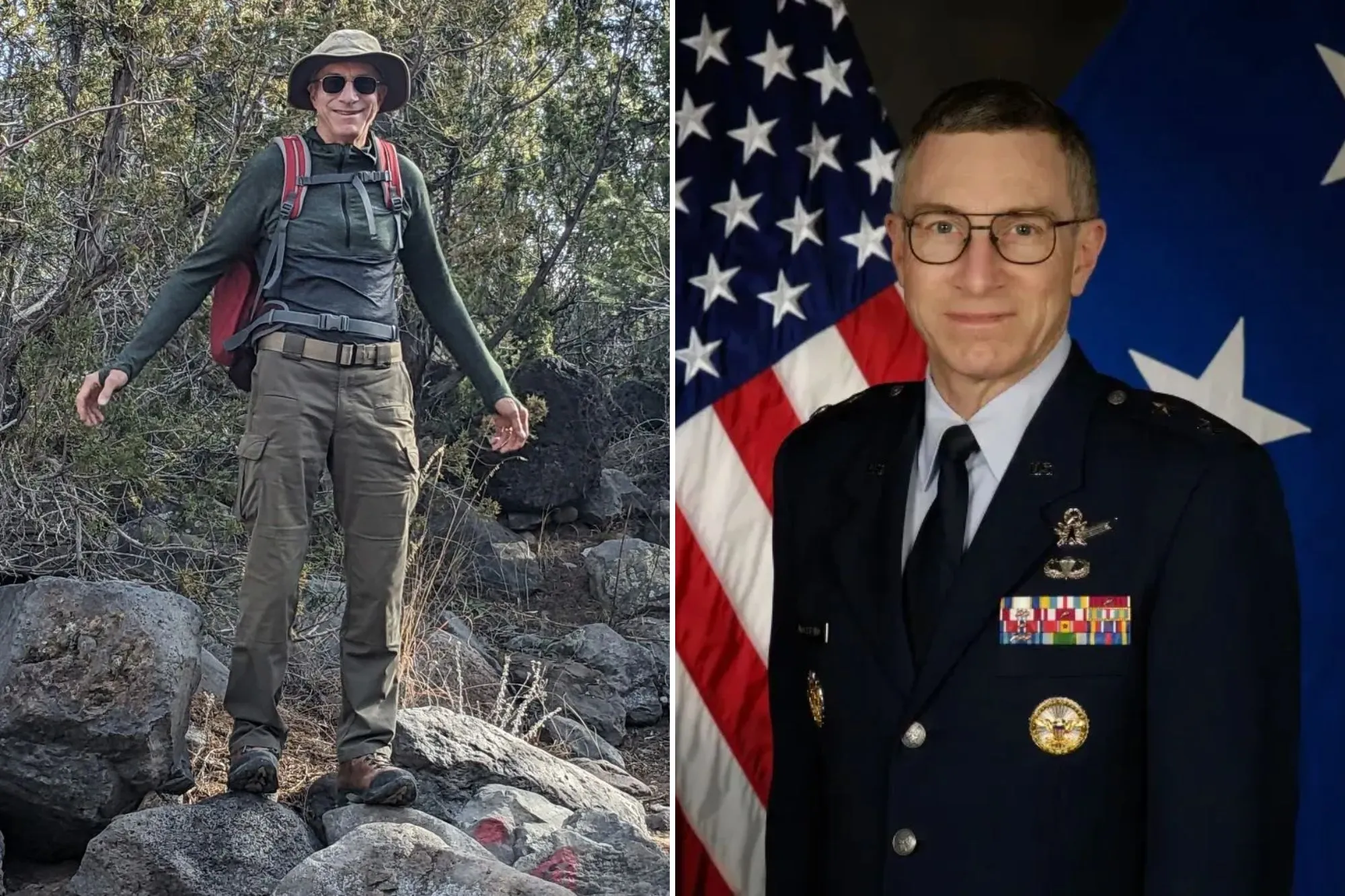
Thousands of people have security clearances, too, explained Scott A. Roecker of the Nuclear Threat Initiative, which are parcelled out on a strict need-to-know basis. The idea that a small handful of scientists has access to a kind of shadow archive of secret knowledge (encounters with aliens, colonies on Mars) makes for good screenwriting copy but isn’t close to being true. “You wouldn’t do damage to the US nuclear programme by targeting a dozen officials or scientists that work in it. That wouldn’t have a strategic impact,” Roecker said.
Still, our brains have an inherent bias toward sense-making; life would be too chaotic otherwise. Perhaps for this reason, the human mind is subject to the “clustering illusion”, which teases out patterns that don’t actually exist. Studies have also found that conspiracy theories provide a sense of community, which is sorely lacking in society today. Suddenly, you’re no longer an atomised individual but part of a truth-seeking collective.
‘We’ve divorced ourselves from death’
“If you start looking for patterns, you will find them,” said Elizabeth Weiss, recalling something her husband, Nick Pope, a prominent UFO researcher, would often say. During his career, Pope tried to separate good-natured curiosity about what lay beyond our solar system from lurid, overheated suppositions that discredited the entire field of extraterrestrial research. After being diagnosed with esophageal cancer, he expressed a wish to die at home, which he did in April at age 60.
“I was with him right up to his last breath,” Weiss said. “I was right by him.
“In some ways, I don’t feel anything about it because my grief at losing Nick is so overwhelming,” Weiss said in late May, several weeks after her husband passed away. At the same time, she felt that the conspiracy theories about his death sullied his legacy, the seriousness with which he approached his own investigations.
“The conspiracy theory turns our – mine and Nick’s – painful journey into a farce,” she wrote in an email. “To believe the conspiracy theory, you would have to believe the government planted a cancer gene that would lead him to have cancer when he was 59 years old; or that the doctors would be in on it; or that the various tests – from MRIs to blood work – would be faked.”
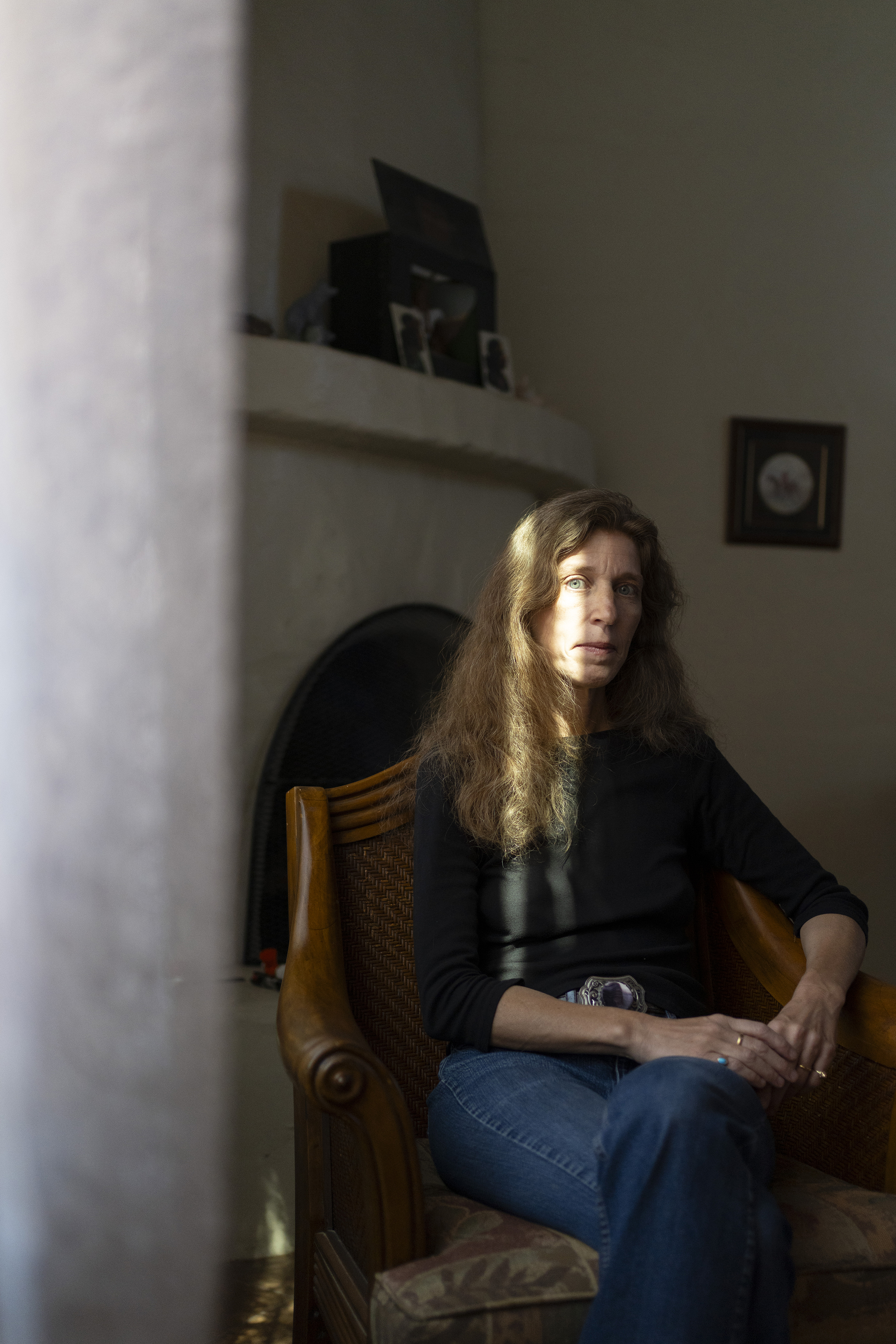
Weiss is an anthropologist. She has often thought about how ancient cultures faced mortality – and how our own culture avoids doing so, reverting to a conspiracy of silence.
“We’ve divorced ourselves from death,” Weiss said. “People die in hospitals, so it seems like death is this foreign thing: ‘Oh, something must’ve gone wrong. There must be a bad reason that this happened, not just bad luck.’”
It was perhaps the wisest and most humane explanation for why, after Pope’s death, he became yet another disappearance for the conspiracy theorists to obsess over.
“Another Military UFO Guy Just Died,” said a headline on the tech site Futurism. A commenter on Facebook wondered, “Correct me if I’m wrong, but isn’t he the fourth or fifth one recently?”
This article originally appeared in The New York Times.
Written by: Alexander Nazaryan
Photographs by: Rebecca Noble
©2026 THE NEW YORK TIMES