UK protests over student murder case turn violent as leaders urge calm
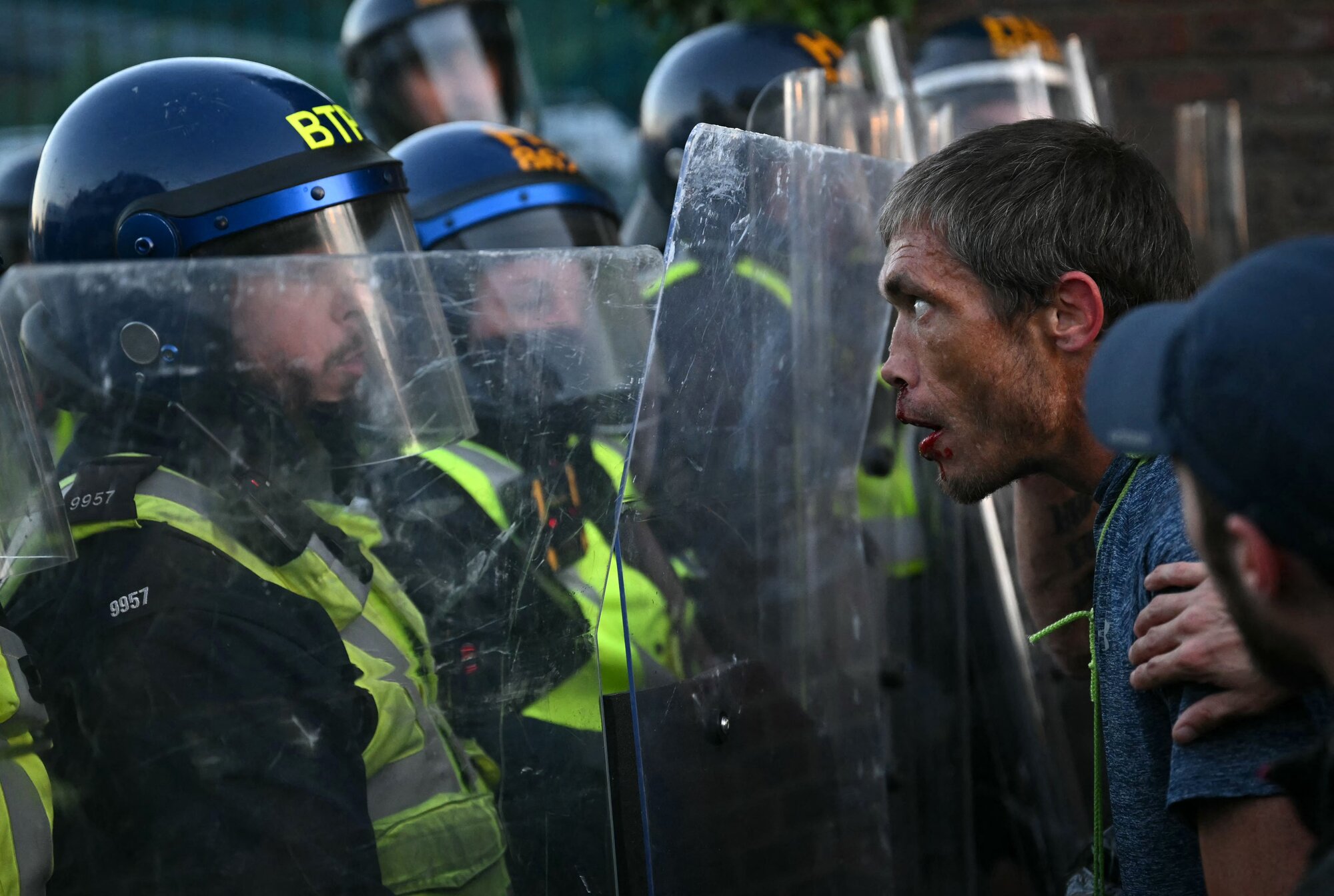
Eleven officers were wounded in clashes with demonstrators after right-wing politicians and commentators accused the police of anti-white bias.
Police and lawmakers in Britain have urged calm after a night of protest that devolved into violence in the city of Southampton, in southern England, on the heels of a shocking murder case.
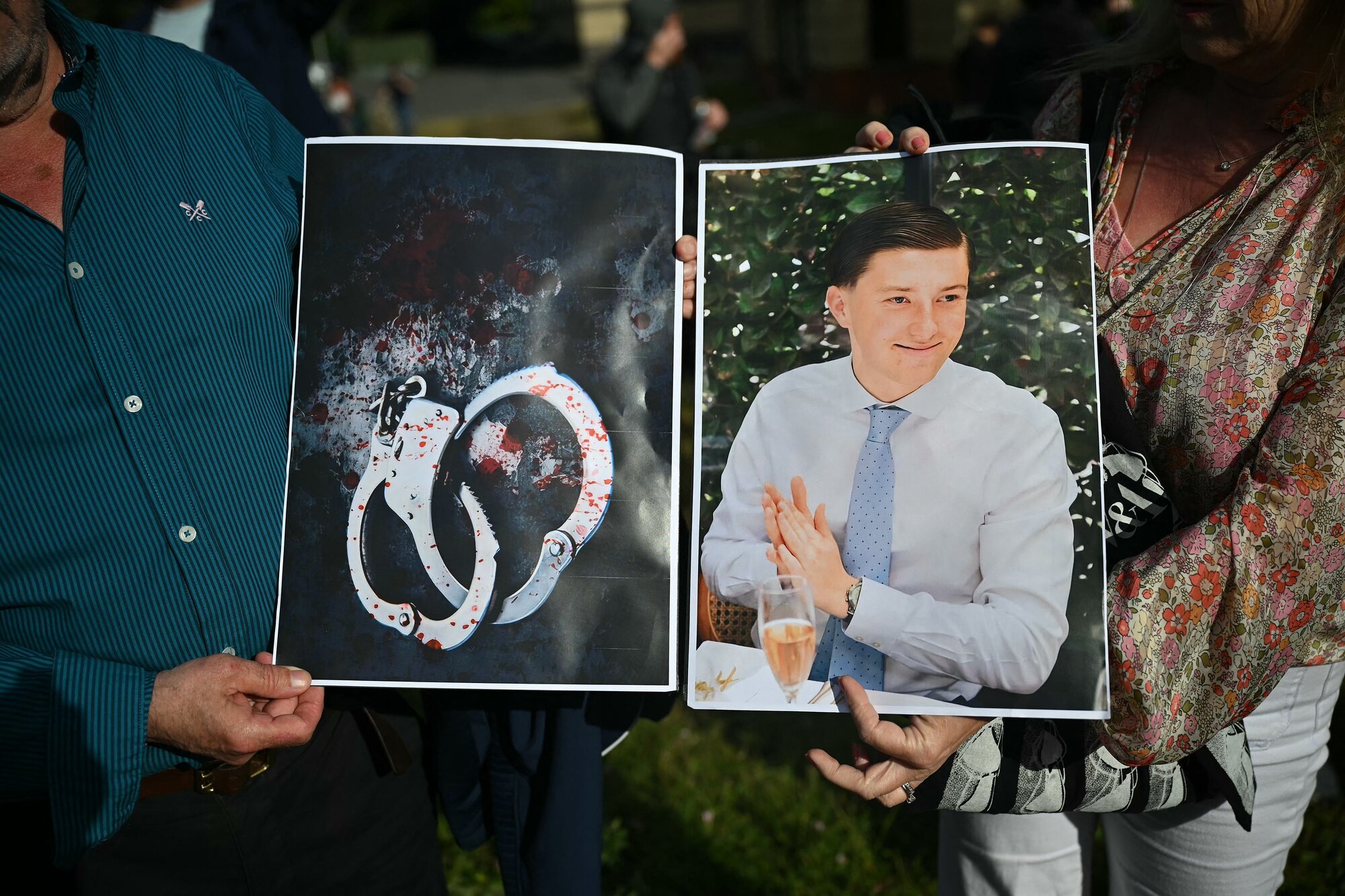
After footage was released on Monday evening (Tuesday NZT) of officers handcuffing a stabbing victim, Henry Nowak, while his attacker looked on last December, right-wing commentators and politicians claimed that the British police were biased against white people.
Nowak, 18, was attacked by Vickrum Digwa, 23, after the two men met in a chance encounter on the street in Southampton. Digwa, who is Sikh, stabbed Nowak and then lied to police, saying that he had been the victim of a racist attack, according to evidence presented at Digwa’s trial.
Police officers arrested and handcuffed Nowak for about a minute before they realised that he was severely wounded and began administering first aid, a judge said in court on Monday as he sentenced Digwa to life in prison for murder.
Nowak’s father, Mark Nowak, said outside court on Monday that his son had not “died with dignity” and criticised the police for how they had treated him. But he added that the family did “not want his death to be used to create further division, hatred or tension”.
Despite that, the case has been seized upon by far-right activists online and by Nigel Farage, leader of the right-wing populist Reform UK party.
After Tommy Robinson, a far-right agitator with multiple criminal convictions, posted calls online for people to gather in Southampton on Tuesday night, hundreds of people congregated outside the main police station there.
Robinson, whose real name is Stephen Yaxley-Lennon, told the crowds, “This is about race; he was murdered because he was white.” The authorities have not alleged that Nowak’s killing was racially motivated.
Demonstrators tried to enter the street where the convicted killer’s family lives and attacked officers who had blocked the road, as well as elsewhere in the city. Footage shows protesters throwing rocks, flares and rubbish bins at the police, and punching and kicking officers’ riot shields.
Shabana Mahmood, the British home secretary, who oversees policing, called the scenes “completely unacceptable”.
“There can be no justification for hijacking this tragedy to stir up violence and disorder,” Mahmood said. “Those responsible can expect to face the full force of the law.”
Eleven police officers were wounded in the violence, according to the Hampshire and Isle of Wight Constabulary, which oversees policing in Southampton.
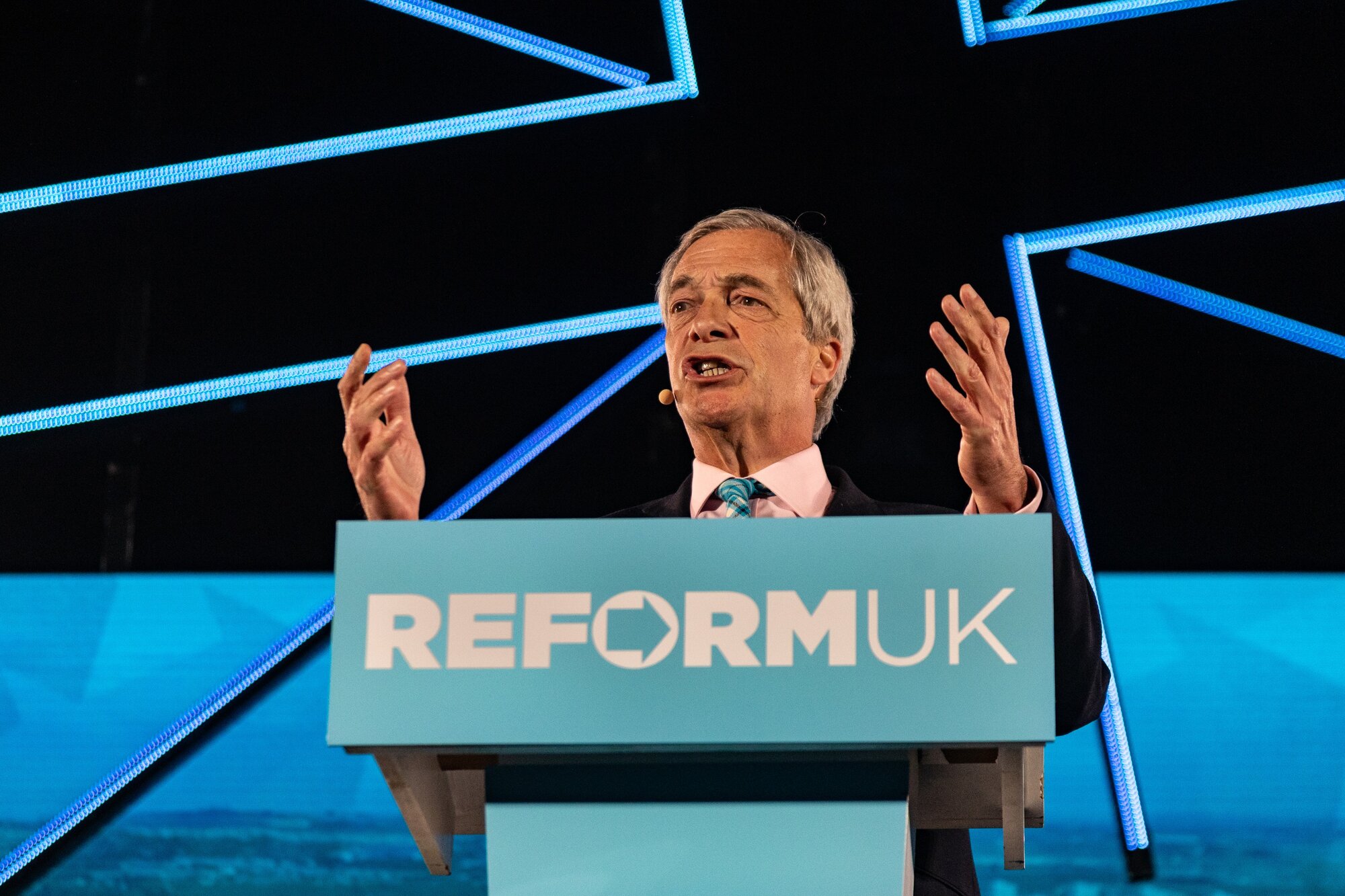
In a video posted on Reform’s social media sites on Tuesday morning, Farage claimed that British police had “anti-white prejudice” and encouraged his followers to “respond with pure cold rage”. Lawmakers across the political spectrum condemned his statements as divisive.
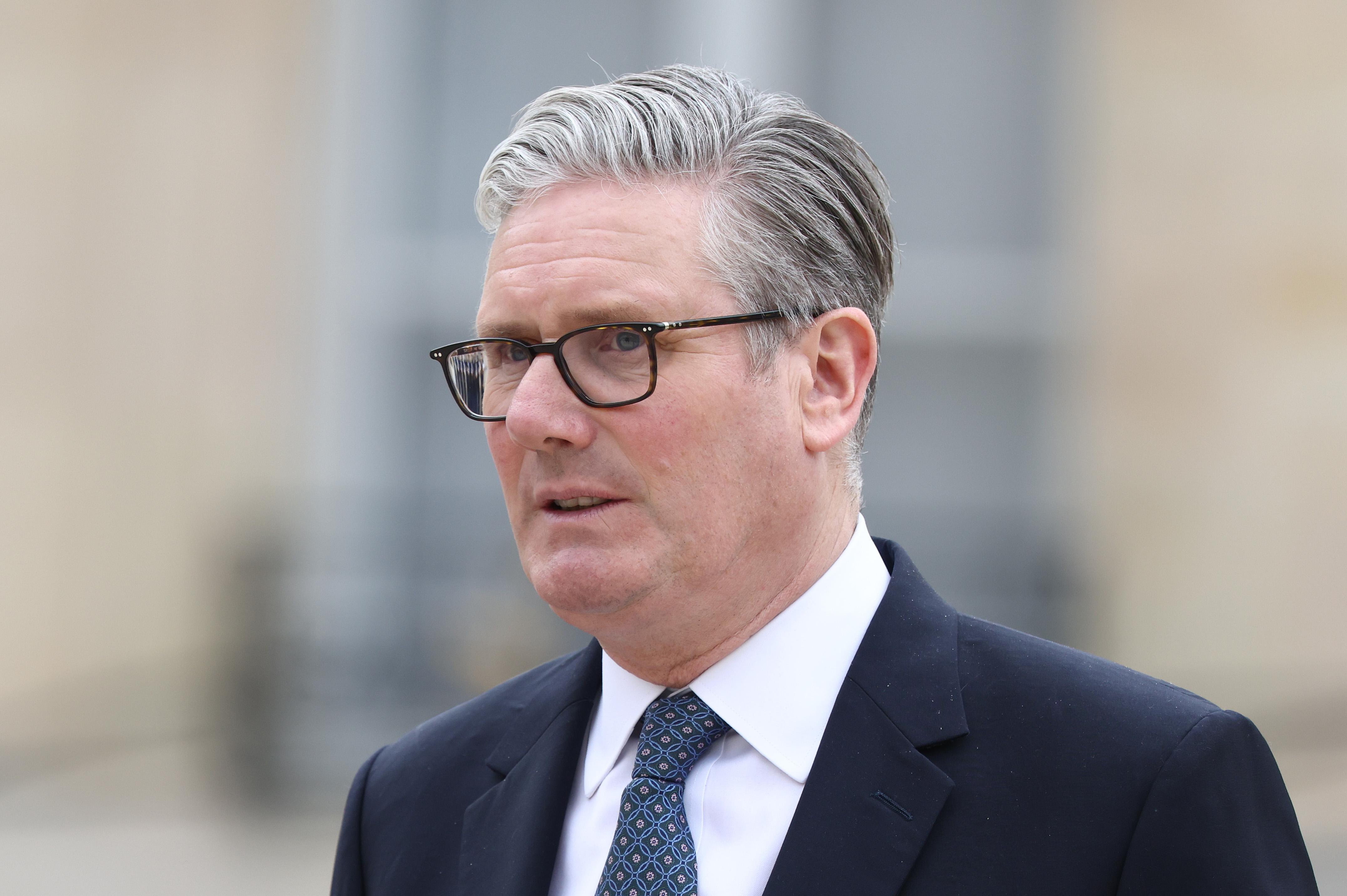
Prime Minister Keir Starmer highlighted the family’s appeal that the case not be politicised on Tuesday evening, saying in a televised interview that Farage was “completely wrong to use this to try and create division”.
“He would be wrong in any circumstances, but when Henry’s family are saying, ‘Please don’t do that, it’s our son,’ then really, as politicians, as human beings, we should start where they start.”
In Parliament on Wednesday, Starmer called the attacks on the police in Southampton “disgraceful” and cautioned that it was “a time for serious work, not rage”.
The prime minister said that there were “serious questions to answer, including how accusations of racism informed police thinking” in officers’ initial response at the scene of the stabbing.
“But no matter the pain we feel, there is no justification of more violence and disorder,” he said.
Farage, who spoke a short time later, was shouted at by fellow lawmakers, as he directed questions at Starmer about so-called “two-tier” policing – a claim, popular among right-wing activists, that the police treat white people more harshly than people from minority ethnic groups in Britain.
“Can he take some action and end this divisive practice of two-tier policing and make sure that all British citizens are treated the same?” Farage asked.
Several lawmakers shouted that Farage should condemn the violence in Southampton. Some called out, “You should be ashamed of yourself!”
Data has consistently shown that black and minority ethnic groups in Britain have significantly lower levels of trust in the police compared to white people. And a number of recent independent reviews of policing have found troubling indications of systemic anti-black racism.
Official efforts to correct those problems have been denounced by some conservatives, criticism that flared again in the wake of the Nowak case. Some members of the opposition Conservative Party, including Chris Philp, who speaks for the party on law-and-order issues, have criticised a 2022 Police Race Action plan that included language on tackling racial inequalities in police responses. The document is not a formal policy or training paper for officers.
The National Police Chiefs’ Council, the body that coordinates police forces nationally, said on Tuesday that it would review its anti-racism guidance to ensure clarity.
Chief Constable Gavin Stephens, chair of the council, said in a statement on Tuesday that it was essential “that we police without fear or favour in keeping the peace and enforcing the law. We must do so to earn the confidence of all communities.”
He noted that police forces nationally had been urged to renew efforts to address racism and discrimination.
“We are listening to legitimate concerns about how some of these commitments are worded or phrased, and, where needed, we can and will make changes, but this should not detract from the intent, which is to improve the quality of policing,” he said.
At Digwa’s sentencing, Judge William Mousley suggested that even if the police had begun first aid sooner, they could not have saved Nowak because of the nature of the wound. He described the weapon as a “large Sikh dagger” and said Digwa had cut an important vein, resulting in substantial blood loss.
Citing a pathologist’s assessment, the judge said: “No emergency medical treatment would have permitted access to the bleeding vein. In simple terms, he would not have survived, however quickly he received first aid, CPR or expert medical treatment.”
A joint statement from several Sikh community groups condemned the murder and said the knife used to stab Nowak was not the ceremonial kirpan commonly carried by members of the faith. That nuance is “critically important and may not have been explained or understood”, they said.
The murder has been used to call for the banning of the kirpan, which Sikhs have a legal right to carry.
Tan Dhesi, the first Sikh member of Parliament to wear a turban, criticised those who have tried to make the murder case about race or religion. “This wasn’t about Sikhism, it’s not about racism, it’s about the murder committed by one violent individual,” he told Sky News.
He said that the weapon used in the attack was known as a pesh-kabz, an “Indo-Persian weapon used centuries ago in battles to pierce through body armour”.
“It was used by somebody with an obsession with dangerous weapons,” he said, an observation that the prosecution had also made during Digwa’s trial.
This article originally appeared in The New York Times.
Written by: Megan Specia
©2026 THE NEW YORK TIMES