National accuses Labour of misleading New Zealanders on revenue gathering measures
National and Labour are scrapping over debt reduction, with the opposition party under pressure over its communications with ratings agencies.
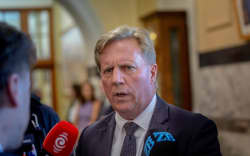
Finance Minister Nicola Willis is accusing Labour of misleading New Zealanders and calling into question the party’s claims a Capital Gains Tax will be its only new revenue measure.
Labour is standing by that claim, but is also considering changes to interest deductibility rules for investment properties - saying that will be detailed in its fiscal plan after the government delivers its Budget.
The dispute centres on a paragraph in ratings agency Fitch’s report in March, which maintained New Zealand’s rating at AA+ but lowered the outlook from “stable” to “negative”.
Under the heading “post-election deficit reduction”, the agency noted fiscal consolidation - which means reducing structural deficits and debt - was “likely to occur only after the 2026 election”.
“There is broad political consensus for fiscal consolidation, and New Zealand has a pre-pandemic track record of debt reduction and fiscal prudence,” the report said.
“The main change based on the election outcome could be the composition of the consolidation. The incumbent National Party-led coalition focuses on expenditure constraint, while a Labour Party coalition would emphasise revenue measures.”
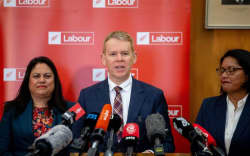
The problem for Labour is the party has committed to introducing no new revenue gathering measures other than the Capital Gains Tax announced in October, with all the proceeds ringfenced for health - in particular, the policy of three free GP visits a year.
Willis told reporters Fitch’s claims about Labour’s post-election debt reduction would have been based on Finance spokesperson Barbara Edmonds’ interview with the agency.
“They took the view in their report that Labour had informed them that they would be using revenue measures to achieve fiscal consolidation - which is mysterious because so far the only revenue measure that Labour have confirmed they have already spent on GP visits,” she said.
“So, clearly they have other revenue measures up their sleeve … they’re telling Fitch one story to make out that they’re fiscally prudent, they’re telling New Zealanders another. There’s more tax coming under Labour.”
But Edmonds said Fitch had asked about what revenue measures the party was looking at, and “we talked about the simple, targeted capital gains tax … that’s all”.
She did not think the fact the CGT had already been allocated to health came up in conversation, “but they’re quite well aware that our health system, given our ageing population, is of concern - so that was the conversation we had”.
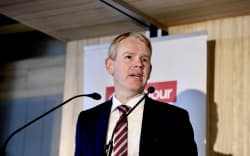
Labour leader Chris Hipkins was adamant the party would introduce no new revenue measures - and said Fitch would have been well aware from the party’s public announcement of the policy in October it would go towards health.
“My understanding is that Fitch asked her, will there be any additional tax measures introduced under Labour and she was very upfront about the fact that we had proposed a limited, targeted capital gains tax. They already had all of that information,” he said.
“We have already said that we will only be introducing the one additional tax, which is a capital gains tax … we’re not proposing any other tax increases either. Let’s be really clear about that. We’ve released our tax policy. It’s around a capital gains tax.”
He acknowledged there might be minor changes to government revenue “because you close loopholes and so on, but we’re not proposing any we’re not proposing a land tax, a wealth tax, all of those other things that the national party like to scaremonger about”.
“We don’t have any other significant revenue changes being proposed.”
However, he also indicated there might be another change set out in the party’s fiscal plan.
“There is still one piece that we haven’t announced, which we’ll set out in our fiscal plan, and that is around what we do around interest deductibility for investment properties.”
National campaigned at the last election on reinstating interest deductibility for residential landlords, allowing them to claim interest expenses from mortgages using their rental income.
This was aimed at curbing rent rises, but while the rental market has cooled since the rules were reversed at a cost of $2.9b over four years, it’s at best unclear how much of that cooling is thanks to the policy.
If Labour chose to reverse National’s reintroduction of the rules, that would provide additional funding to the government.
Edmonds had earlier quibbled about whether the removal of interest deductibility would count as revenue gathering, saying it was instead “a deduction from an expense”.
“So in relation to interest deductibility, we’ll make a decision as part of our wider fiscal plan … it’s not a new tax - which is why it’s important that we have a look at what happens during Budget to see where the books are.”
She also fired back at Willis, saying Fitch’s assessment was based on the whole balance sheet and “I think what they were quite clear on though is that the fiscal consolidation that the government has been harping on about for the past two years hasn’t actually occurred”.
Hipkins would not directly say whether Labour would revert to the previous interest deductibility rules for landlords, saying that would be set out in the party’s fiscal plan to be unveiled after the Budget.
He acknowledged any new government after the election would need to be careful with finances, and debt would need to come down eventually - but also indicated again that Labour could look to borrow more for some investments.
“One of the ways you can avoid short term expenditure is actually increasing the bill that you’re going to have long term - and those are the sorts of things that every government needs to weigh out. We’ll set that out later on in the year,” he said.
He also indicated spending the CGT on health could be seen as helping with the debt track.
“One of the things that all of New Zealand’s long term fiscal projections highlight as a risk for the country is the long term increase in health care costs by put by hypothecating CGT into the health system - including into preventative health care … that is one of the ways we can get to a more sustainable path for the country.”
Labour would make different choices to National, he said, “and that would include things like not giving tax breaks to landlords, not giving tax breaks to tobacco companies”.
Fitch refused to comment on the matter.
Sign up for Ngā Pitopito Kōrero, a daily newsletter curated by our editors and delivered straight to your inbox every weekday.