‘This is about identity’: Court challenge to puberty blocker ban begins
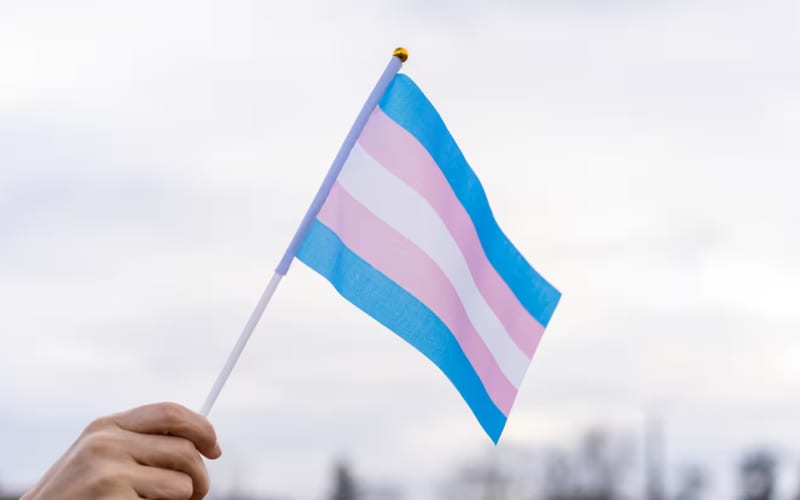
A group challenging a ban on puberty blockers has told a court that the decision was not - and has never been - about medication, and if it were, it would have been banned across the board.
“This is self-evidently about the identity of these particular users. It’s about who this very small group of young people are,” Victoria Casey KC told the High Court at Wellington.
“It’s about whether society will accept and affirm them as who they actually are, and allow them to access the wonders of modern medicine to help them realise their full potential.”
Casey is representing the Professional Association for Transgender Health Aotearoa (PATHA), which has taken a judicial review, challenging the Ministry of Health’s decision to ban new prescriptions for puberty blockers to treat:
- Gender dysphoria (where an individual’s gender incongruence has an adverse impact on their health and wellbeing).
- Gender incongruence (where an individual’s experienced gender and their assigned sex at birth persistently do not match) in children and adolescents.
Court documents say that if the new regulations were enforced, New Zealand’s position would be more restrictive than the United Kingdom, Sweden, Norway, and Finland.
PATHA is an interdisciplinary professional organisation that promotes the health, wellbeing and rights of transgender people.
It opposes the ban, saying it “will cause immense harm, both directly and indirectly, to transgender children and their whānau”.
It is seeking a declaration from the High Court that the regulations are unlawful and should be quashed.
Essentially, it argues that an individual, their whānau and clinicians - rather than politicians - are best placed to make prescribing decisions.
“This is a political decision - the politics of culture wars, not a clinical decision. And it is shocking in its irresponsibility,” Casey said.
“No drug in New Zealand has ever had this level of ministerial or political attention. No approved medicine in New Zealand has ever been subject to a ban of this kind,” she said.
She said puberty blockers had been prescribed for more than 40 years in New Zealand without any clinical problems, including the past 15 years to treat gender dysphoria and gender incongruence.
She cited the Ministry of Health’s 2024 evidence review, which, after reviewing the research, had recommended a cautious approach.
She urged the court not to read too much into the issue of low-quality evidence in relation to puberty blockers, saying this was incredibly common in medicine - particularly paediatrics - and didn’t necessarily mean what campaigners or lay people said it did.
She also said there was no evidence that puberty blockers were being prescribed in New Zealand outside the recommended approach.
And she cited several experts who all reached the same conclusion; there were no long-term clinical problems as a result of prescribing puberty blockers, including to bone density or other health outcomes.
One expert told the court that puberty blockers contained the same risk when prescribed for gender dysphoria and gender incongruence as they did when prescribed to patients with precocious puberty (early-onset puberty), which is still permitted.
The same expert also said doctors had a clinical obligation not to withhold medication from a patient.
Yet, Casey said, the Minister of Health had issued the ban based on “we don’t know what we don’t know, we can’t say for sure”.
Data from the 2023 census showed about 2600 of the adult population - about 0.7 percent - identify as transgender, which accords with overseas data, suggesting that 1 percent of the population identifies as transgender.
It’s estimated the ban will affect fewer than 100 young people a year, with the medicine typically prescribed between the ages of 12 and 15 years old.
Stronger safeguards: Minister
Announcing the ban in November 2025, the Minister of Health, Simeon Brown, said the change ensured stronger safeguards so families can have confidence that any treatment is clinically sound and in the best interests of the young person or child.
“Gonadotropin-releasing hormone analogues (known as puberty blockers) play an important role in treating a range of medical conditions,” the press release announcing the changes said.
“We are ensuring they remain available for patients who need them for conditions such as early-onset puberty, endometriosis, or prostate cancer, where there is strong clinical evidence of benefit.”
The ministry also found there was a lack of high-quality evidence that demonstrated the benefits or risks of the use of puberty blockers for the treatment of gender dysphoria or incongruence.
While this uncertainty persisted, the government was taking a precautionary approach, the statement said.
Advice released at the time suggested there had been an increase in the use of puberty blockers in 11 to 16-year-olds - both in New Zealand and internationally - between 2010 and 2020.
Yet it said, despite the overall increase, prescribing has been reducing in this country, since peaking at about 140 people in 2020, with fewer than an estimated 100 young people starting on treatment in 2024.
PATHA says it wasn’t consulted on the new regulations or the draft regulations.
However, the ministry says it undertook open public consultation on whether there should be additional safety measures for the use of puberty blockers in young people with gender-related health needs.
In July 2025, it provided advice to the minister, identifying four policy options, and advising that clinicians retaining prescribing discretion best met the policy objectives.
Banning new prescriptions was described as having a high risk of adverse health outcomes because of the possible negative impacts on mental health.
In September last year, a Cabinet committee considered which of the four options it should implement.
It agreed to “regulate to prohibit puberty blockers prescribing to treat gender incongruence or dysphoria in new patients, while making youth gender services more available”.
In November, the minister signed the regulations approving the ban, which came into effect the following month.
But since then, the court has ordered the ministry to take no steps to enforce the new regulations, pending the outcome of this review.
NZ First: The war on woke
Casey also referred to the way NZ First announced the ban, which came before Brown’s media statement.
She read a press release from Casey Costello, the Associate Minister of Health, who was part of the cabinet committee which made the decision.
“Today sanity won another battle on the war on woke,” the statement began.
“After years of dangerous ideological experimentation pushed by radical activists and rubber-stamped by weak politicians, the New Zealand government had officially banned puberty blockers for children.
“It’s a monumental victory for common sense and for every parent who’s been told to sit down, shut up, and let the so-called “experts” chemically sterilise their kids because they were “born in the wrong body”.
“No one is born in the wrong body.”
NZ First leader Winston Peters also made a social media post before the minister’s announcement, referring to Costello’s press release.
“New Zealand First was the only party that campaigned around the country about stopping the use of puberty blockers for children, and we never stopped fighting to make this happen,” the post said.
“It is common sense to put a pause on these unproven and potentially damaging drugs for children until we assess the results of clinical trials in the UK once it’s completed.”
Casey told the court this was NZ First claiming credit for the decision in unambiguous terms.
“These are not some random social media posts; these are posts from cabinet ministers who were at the cabinet committee that made the decision,” she said.
Casey also referred to the minister’s correspondence showing his intentions, which differed from the advice he was receiving from the ministry.
The Minister responds
Meanwhile, the minister says his decision was reasonable and appropriately cautious, given the recent increases in prescribing rates of puberty blockers and the lack of data to support the benefits or risks for puberty suppression in children and adolescents with gender dysphoria or incongruence.
The minister’s written submissions say the lack of data was of concern, not only in this country, but also overseas.
“Several jurisdictions subsequently took steps in response to data to restrict access to puberty blockers.
“The Minister was rightly alive to changes in overseas jurisdictions and took these into account as part of his decision-making on what was appropriate in New Zealand,” his submissions said.
The minister says PATHA also overstates the ministry’s position.
“At no point did the Ministry suggest there was ‘no basis’ for regulations, as alleged. Based on the evidence and surrounding circumstances, there were four policy options available to the Minister to address the concerns with puberty blocker use.
“While the Ministry indicated the status quo was preferred, the Ministry did not advise the Minister to not adopt a regulatory option.”
It also noted that the ministry’s 2024 review, which supported a cautious approach, also included drawing up regulations.
It also removed from its website any suggestion that puberty blockers were “safe and reversible”.
The minister’s submissions also defended the public consultation, saying it was comprehensive and resulted in a high volume of submissions on the issue of further safety measures for puberty blocker prescribing in children and adolescents.
Finally, it says the minister was not moved by an improper purpose.
“While acknowledging the reality of public discourse on questions of this nature - that they may be political and may include comments from his political colleagues - the Minister has confirmed he was required to, and did, put those comments aside in the exercise of his statutory responsibilities”.
Brian Dickey KC, representing the Minister of Health, was expected to start his submissions later on Monday.
The hearing before Justice Dale La Hood is set down for three days.
* This story originally appeared in the New Zealand Herald.
