Emitters’ claims that court case would shut them down are ‘hyperbolic’

Claims that a court case against major greenhouse gas emitters would put companies out of business are “frankly hyperbolic”, a select committee has heard.
Defendants in the lawsuit have told MPs a proposed law change is necessary to prevent billions of dollars in GDP being lost if the case succeeds.
The Justice Select Committee is hearing submissions on a bill that would amend the Climate Change Response Act to prevent companies being sued over damage caused by greenhouse gas emissions.
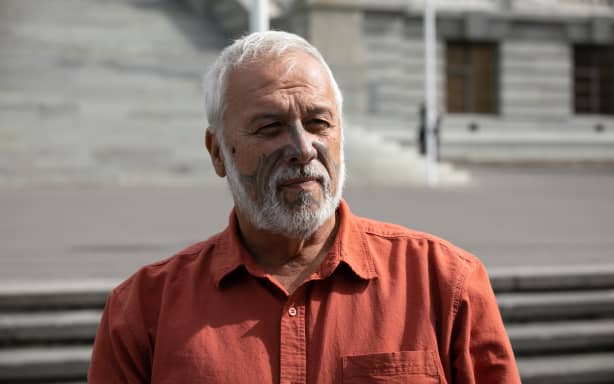
The bill is a direct response to climate activist Mike Smith’s legal case against Fonterra, Z Energy and four other major emitters.
A hearing is set down at the High Court for next year but the proposed law would apply retrospectively, stopping Smith’s case in its tracks.
The government has said the law change was necessary because Smith’s case was creating business uncertainty, and risked creating a “parallel regime” to existing climate change law.
It is proceeding with the bill despite advice from officials not to intervene in the court case.
Impact of court case would be ‘devastating’ - Fonterra
Fonterra and Z Energy, who are both defendants in the case, told Tuesday’s committee hearing they supported the bill and the government’s reasoning.
In its written submission, Fonterra said the courts were being asked to “override” Parliament’s existing regime for tackling climate change.
“If the court granted what is being asked, the impacts on Fonterra, our farmers, the dairy sector and the wider economy would be devastating.”
Smith has asked for a declaration from the courts that the companies are contributing to climate change through their emissions.
He also wants the courts to either order them to start lowering their emissions immediately and achieve net-zero by 2050, or order them to stop emitting entirely, from a start date that the court would determine.
Fonterra group director of global external affairs Simon Tucker told the committee what Smith was asking for “would have devastating economic, environmental, and social impacts”.
“In practice, if this were to happen, we would need to immediately cease operations.”
As part of its submission, Fonterra provided the committee with an economic impact assessment it had jointly commissioned with Z Energy and Genesis.
That estimated that GDP would drop by $22 billion by 2032 if the six defendants were forced by a court to stop all emissions immediately.
But other submitters to the committee the government’s claims were overblown or non-existent.
‘Fonterra is not going to go bust’
Auckland University associate law professor Vernon Rive, who was consulted by officials on the bill while it was being drafted, said “the frankly hyperbolic and implausible disaster scenario pitched by Fonterra today is misplaced”.
“Fonterra is not going to go bust,” he told MPs. “Parliament would not let that happen.”
The best way to proceed was to let Smith’s case go to trial, he said.
“It’s always open to Parliament to respond legislatively once the outcome of the case is known.”

Stopping the case now would remove a “brilliant opportunity” to get robust information and disclosure about the ability of large companies to reduce their emissions, he said.
In his written submission, Rive said the main remedy Smith was seeking was a declaration that companies had a legal duty to address their emissions.
“The case is not about redress. It is about corporate responsibility.”
The Supreme Court could not pre-empt the outcome of the case but “there are indications … that declaratory relief will be the likely outcome, if any.”
Bill is ‘bad law’
Rive was among many lawyers and legal groups who used Tuesday’s hearing to criticise the speed with which the bill had been developed and its retrospective application.
The timing of its introduction on 29 June, two days before elements of the Regulatory Standards Act came into force, had “conveniently” allowed it to dodge an additional layer of scrutiny, he said.
Lawyers for Climate Action president Jenny Cooper KC said it was a “disproportionate, knee-jerk reaction” to a single legal case that had not even been decided.
“It is bad law, based on bad policy, and it’s the result of a deeply flawed decision-making process,” she told the committee.
As well as interfering with a live court case, it could have far-reaching, unintended future consequences.
“It would effectively impose a total restriction on anyone’s ability to bring a claim for damages caused by any event where climate change is a contributing factor,” Cooper said.
There was no risk that legal cases such as Smith’s would interfere with existing climate law, because there was currently no regulatory regime for compensation or liability over climate damage, she said.
“Rather than developing suitable legislation to fill this gap, this bill simply says that there is no accountability for major emitters and no way for those suffering from climate harm to seek redress.”
The bill appeared to be a direct response to “secret lobbying” by Fonterra and Z Energy, Cooper said.

RNZ revealed in May that a previously undisclosed briefing document had been provided to the prime minister’s office by Fonterra and Z Energy, asking for a law change similar to what is now proposed.
The handling of the briefing is now the subject of two formal investigations, with the Ombudsman rebuking the Prime Minister’s Office earlier this month.
Z Energy chief executive Lindis Jones told RNZ today that the perception created was “deeply unfortunate”.
Fonterra’s Simon Tucker told the committee the decision of a staff member to send the document to a personal email address was “inappropriate and contrary to our internal policies”.