Cars with ridiculously tiny engines that we really like
Friday, 21 July 2017

There's no substitute for cubic capacity, or so they used to say. Used to.
With the development of technologies such as turbocharging and direct-injection over the past decade and some impressive weight-saving, many carmakers have been pursuing the concept of engine-downsizing with a passion.
Downsizing does not mean losing power or performance, because customers will not stand for that. It means enjoying the efficiency advantages of a small-capacity powerplant but providing the same sheer grunt-and-go.
Indeed, some companies have become so good at downsizing, engines of comically small capacity are now being fitted to relatively large vehicles. Here are five we reckon do it best.
SUZUKI SWIFT RS
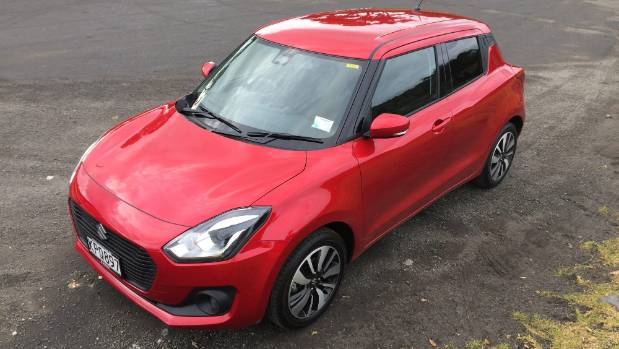
Flagship RS Swift also happens to have the smallest engine in the range. PHOTO: ROB MAETZIG/STUFF
So, Suzuki has released a new version of its popular Swift and has done what every other company does with a new car: made it slightly bigger, packed more equipment into it and improved the performance over the old model.
But Suzuki also did something else - it put less powerful, more frugal engines in the new Swift, yet still got that performance bump. How? That's the clever bit - by extensive weight saving. The new Swift is on average 135kg lighter than the old one.
**READ MORE:
* Cars you forgot that have five-cylinder engines
* Small Swift is big on performance
* Skoda Kodiaq storms onto NZ market
* Mercedes goes to luxury lengths with E-class coupe**
But here's something really out of left field about the new Swift: the most expensive, top performance version (so far, a new Sport is still coming) actually packs the smallest, yet most powerful engine.
In the true spirit of downsizing, Suzuki has jammed a fantastic 82kW/160Nm 1-litre three-cylinder turbo-petrol engine into the $25,990 RS model. Not only does this tiny little powerhouse use less fuel (5.8 litres per 100km on the Combined cycle), but it also brings a brilliant small-dog-that-thinks-its-a-big-dog growl to the Swift.
SKODA KODIAQ AMBITION
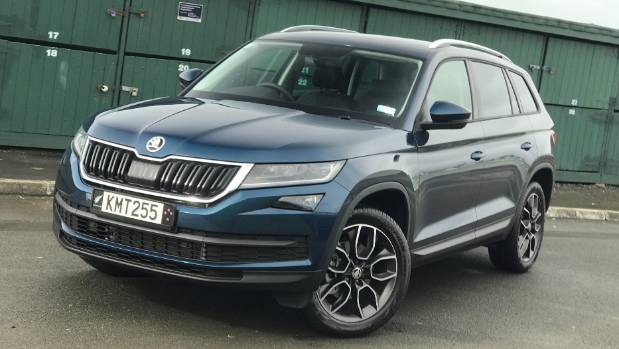
Skoda Kodiaq is every inch a full-size seven-seat SUV, but entry model has a 1.4-litre engine. PHOTO: DAMIEN O'CARROLL/STUFF
The Skoda Kodiaq is a large SUV the same size as a Hyundai Santa Fe, but the entry-level versions are powered by a 1.4-litre four-cylinder petrol engine.
Compare this with the entry level Santa Fe's 2.4-litre petrol four and you might think someone had got something drastically wrong.
But a closer look at the numbers reveals a different story.
While the Hyundai has 138kW versus the Skoda's 110kW, the Kodiaq out-torques the Santa Fe (250Nm versus 241Nm). The Santa Fe's torque peaks at 4000rpm, but the Kodiaq's comes on in full from as low as 1500rpm.
The $44,990, 1.4-litre Kodiaq Ambition+ 4WD can even tow the same 2000kg on a braked trailer as the Hyundai. The Kodiaq downsizes the fuel consumption as well - while the Santa Fe slurps petrol at the rate of 9.4l/100km, the Kodiaq sips it at a delicate 6.3l/100km.
MERCEDES-BENZ E 200
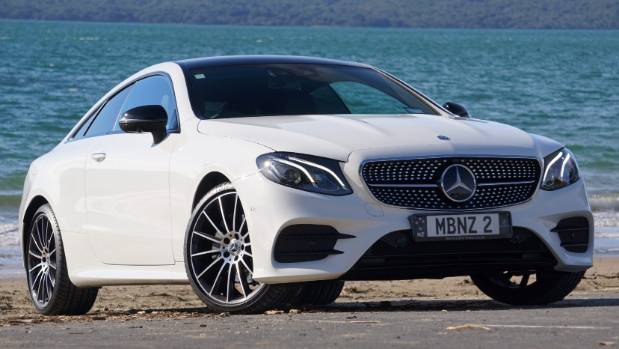
Mercedes-Benz E 200 coupe goes large on the styling and technology, very small on the engine: a 2.0-litre four. PHOTO: DAVID LINKLATER/STUFF
The Mercedes-Benz E-class is one of the most advanced production cars in the world in terms of engineering and active-safety/driver-assistance features. That applies equally to every model in the range: high-end versions may boast more luxury equipment and bling, but the automated-tech is standard no matter how much you spend.
It's dramatically downsized engines that help make the entry-level Es such bargains.
The '200' models have a 2-litre turbo-petrol four that's low on capacity but not short on power: 135kW/300Nm. It's not exactly packed with character, but it's still the same basic engine you get in the more expensive E 300. You get change from $100k with the E 200 sedan, but it's the coupe that really presents a strong case as a stylish cruiser. It looks and feels much more costly than its $102,900 pricetag suggests.
BMW 318i
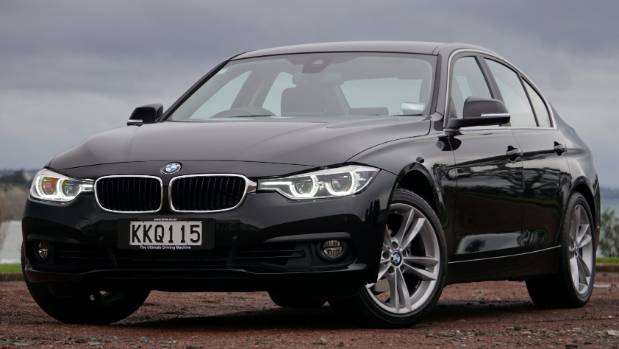
Looks like a swish 3-series on the outside, but inside the 318i throbs the three-cylinder heart of a Mini. PHOTO: DAVID LINKLATER/STUFF
A BMW 3-series with a three-cylinder engine?
That's right, the new 318i has the 100kW/220Nm 1.5-litre turbo-triple from the Mini (and BMW i8 for that matter), but matched to an eight-speed automatic gearbox. It's an idiosyncratic but still-impressive executive car and it costs (just) less than $60k.
More importantly, the 318i is a sweet drive. Less weight up front makes the little BMW an even better steer, performance is eager and while it isn't rapid, it's far from slow: 0-100kmh in 9.1 seconds is decent and it'll return 5.4l/100km in the Combined cycle.
Still not convinced?
Consider this: compared with the last (2.0-litre) 318i to be sold in NZ in the mid-2000s, the new one has 5kW less power but 20Nm more torque, it's 0.2sec faster to 100kmh and slurps two litres less fuel per 100km.
VOLVO XC90
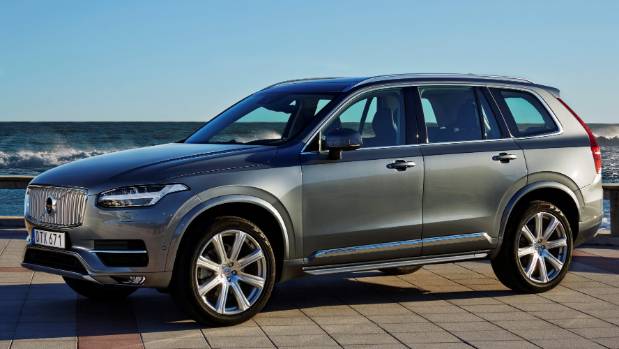
The new-generation XC90 was designed from the start as a four-cylinder model. PHOTO: SUPPLIED
There were a few eyebrows raised when the very large Volvo XC90 SUV was launched exclusively with 2.0-litre, four-cylinder engines: a turbo-petrol and a turbo-diesel.
We're done with sixes and eights, said Volvo. This is the way forward. So it has proved.
The XC90 has been acclaimed as one of the most impressive and luxurious SUVs on the market.
The petrol-four has plenty of power and torque: 236kW/400Nm in standard form (economy 8.0l/100km), or 246kW/440Nm with help from the Polestar tuning division in the R-Design model. Prices start at $97,900 for the D5 and top out at $136,900 for the T8 'twin-engine' plug-in hybrid.