The 'Unlikely Avengers' fighting to shut down infamous 'pokie dens'
Thursday, 2 May 2019
'Pubs' that make almost all of their money from pokie machines, as opposed to food or alcohol, have been around for ages. An unlikely collection of activists is fighting to shut as many of them down as possible. And they're winning. Steve Kilgallon reports in 'The Unlikely Avengers', a three-part Stuff series.
It's an unusual pub crawl. The bars involved won't feature on any best-of lists. There won't be any drinking. And the tour guide is a retired maths teacher, who today is moonlighting as a private detective.
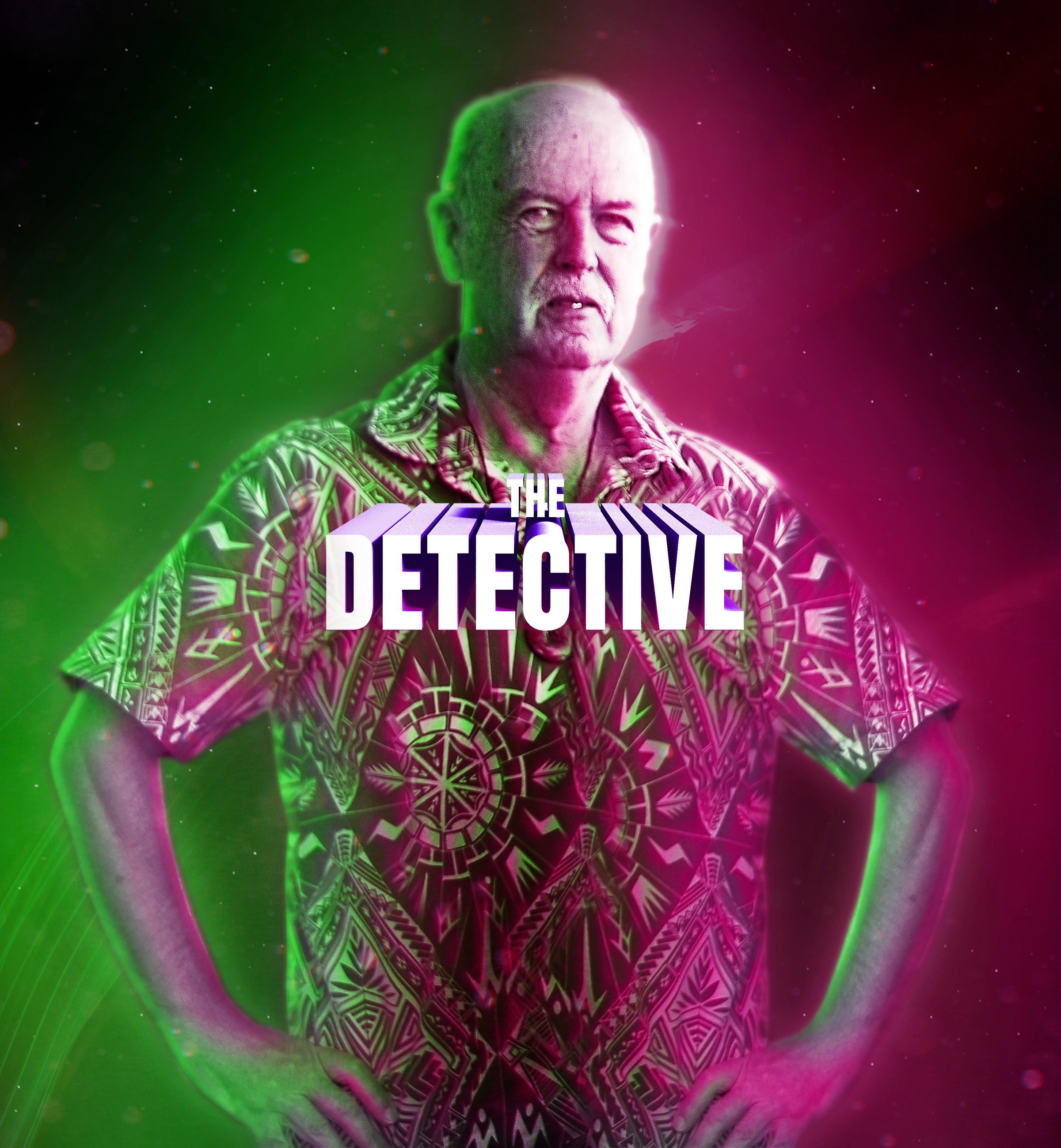
A slight 70-year-old with a gold-capped front tooth, Trevor Wilson uses his gold card to get around the seediest, most dismal bars in Mangere, Manukau and Papatoetoe. He used to teach in nearby Otara, so he knows the patch well.
He rarely buys a drink, but he always takes notes. What Wilson is looking for is drinkers, and they're rare in these places.
The law says you cannot hold a pub (tavern) licence if you're doing more trade on the pokies than you are in food and drink. Wilson is at the frontline of an unlikely grassroots coalition using that law to fight back against bottle stores and dive bars in deprived communities.
Alongside a campaigning lawyer, a former Auckland mayoral candidate, a senior Māori warden, a grandmother on a walking frame, a former homeless alcoholic and a social worker, the retired maths teacher is ranged against the might of the alcohol and gambling industries.
Yet this loose group of community activists is notching some victories. They've forced the closure of three pubs, several off-licences, and seen the removal of over 50 poker machines from some of New Zealand's poorest suburbs in south Auckland, Tokoroa, Tauranga and Gisborne.
In their sights is every dingy pokie bar and dodgy bottle store. And they've got the law on their side - in theory, if not always in practice.
'This is David against Goliath, because they have virtually unlimited resources and can hire the best lawyers and accountants,' says the lawyer, former corporate suit Grant Hewison. 'But what I'd say we have on our side is the truth.'
THE CAMPAIGN

There's a bit in the Sale and Supply of Alcohol Act which says you cannot hold a tavern licence if your primary activity is gambling. Licensing committees must weigh up whether a venue looks like a pokie den (is it shabby, dominated by pokies, has a small bar area), if it offers decent food and entertainment, and what revenue it derives from alcohol sales versus pokie fees.
Hewison fights against these places keeping their licences. Wilson, and others, gather the evidence.
.nsImageWrapper {position: relative; box-sizing: border-box; width: 100%; margin: 15px auto; max-width: 960px; font-family: 'Merriweather Sans','Open Sans',Helvetica,Arial,sans-serif; color: #333;} .nsImageWrapper img {width: 100%; border-style: none;} .nsImageCredit {font-size: 10px; text-transform: uppercase; color: rgb(162, 174, 180); text-align: right; font-style: normal; height: 1em; display: block; width: 100%; font-weight: 300;} .nsImageCaption {width: 100%; font-size: 14px; font-weight: 300; text-align: left; border-bottom: 1px solid rgb(235, 238, 240); padding: 0.8em 0 .58824em; line-height: 1.41176em; color: rgb(115, 120, 123); text-size-adjust: 100%;} @media only screen and (min-width: 841px) {.nsImageWrapper {font-size: 15px; font-size: 0.88235rem;}} @media only screen and (min-width: 300px) {.nsImageWrapper {font-size: 13px; font-size: 0.76471rem;}}
STUFF
Trevor Wilson uses his gold card to get around the seediest, most dismal bars in South Auckland, investigating breaches of licensing laws.
When we first meet, he pulls out sandwich bags full of coloured lecture cards on which he's scrawled his observations. Here's a typical visit to Mangere's Pacific Bar and Restaurant: '18 pokies, 17 playing, one watching, three barmen, no one in bar.' Wilson has visited the bar 20 times since last January. Only twice, he grins, has he bought a light beer.
So that's where we start, on a side street close to Auckland Airport. The Pacific is a longstanding target which is right now fighting to renew its liquor licence amid opposition from Wilson and Hewison's group and the alcohol licensing inspector.
Inside, Wilson leads me into a small lounge bar attached to the main entrance of a small hotel.
The bar is empty, except for a bored-looking barman leaning idly on the counter. But through a side door, the pokie room, with darkened windows, is crammed with 13 patrons playing on the 18 machines squeezed in there. Yes, says Wilson, that's about normal.
We head down the road to Manukau, where four bars sit within 200 metres of each other, a total of 73 pokie machines in one block. Royalz proclaims itself as a Gaming Lounge. Music blasts loudly, but there's nobody there at all. Shooters Pool Hall, four doors down, isn't empty. Eight people are playing pool. Nine are on the pokies. Not a single person has a beer in their hands and the barman looks like he hasn't moved for a while.
At Gordy's, where the door only opens once the bar staff have had a look at you, the count is nine and zero. At The Bar, we finally see a drinker. Four tradies sit around a high table drinking quart bottles. Another 16 people play the pokies in virtual darkness in the room behind them.
After visiting the Hunter's Inn in Papatoetoe (14 v 2), Club Rio (9 v 1) and the Milestone Tavern in Otahuhu (10 v 6), our combined count comes out at 80 gamblers and 13 drinkers (and nobody eating anything, not even the ancient-looking hamburgers sitting readymade under glass at Club Rio).
'What I am encouraging communities to do is go in there and observe how many people are gaming and how many people are consuming alcohol,' says Hewison. 'It's relatively safe, and it's one of the criteria.'
Going in and counting how many punters are drinking versus playing the pokies is a relatively new strategy, and not one they've been able to test yet. But already, one of those bars appears to have reacted: as they began preparing a challenge to the Pacific's licence renewal later this year, the Pacific decided to try for a restaurant licence instead. Hewison, smiling, points out that similar rules apply for one of those: you need to take in more on food than pokie trade, and nobody was eating when we turned up.
'EVERYONE'S SITTING AT THE POKIES'
Thirty decorated years in the police (he finished as Auckland City area commander) and a second career as a gambling inspector introduced Rob Abbott to some real dumps. After leaving the Department of Internal Affairs (DIA), he became chief alcohol inspector for Auckland Council, leading a team overseeing all licensed premises in the city.
So he insists he's seen many worse joints than the Copper Lounge, a bar in Papakura, south Auckland.
What singled it out was their owners' honesty. When it came to filling in their licence renewal forms, in the part where they were asked whether alcohol was their principal business, they said no, it was gambling.
That alerted Abbott, who began chasing down the figures.
The Copper Lounge was not a popular place to drink. In 2013, its average daily bar sales were just $42.89. In 2014, they were $60.20 - an annual income of $21,000. The owner told the licensing committee the 'bar was quiet, and she liked it that way'.
But the Copper Lounge made $147,000 in site rentals for its 18 pokie machines from the Manukau Counties Community Facilities Trust. Why so much? Because the machines were money-spinners. That year, they turned over a staggering $14.3m, delivering the pokie trust over $1m in revenue.

'There are places all over New Zealand that are gaming shops - there's no two ways about it,' Abbott says.
'No one drinking, no one eating, everyone sitting at the pokies. Inspectors had always seen it, but they didn't know what it meant and what they could do about it.'
He had an answer. In 2012, he'd been behind a DIA decision to shut down an Otara pokie den called the Galaxy, because the Gaming Act said pubs couldn't have gambling as their primary purpose (it was appealed to the Gambling Commission, and upheld). He knew the alcohol law said something similar, and in 2014, with support from Police and the Medical Officer of Health, used it to challenge the Copper Lounge's licence - and won.
Not much happened for a few years, but Abbott's team became increasingly uncomfortable about what they were seeing. So they drafted up a list of 28 pubs across the city they were concerned about.
Then he sent an Official Information Act request to his former employers for pokie turnover, and asked the bars for their financials (many refused). He was able to cut the list to 13 targets. Two have since lost their licences; five more surrendered them; three are currently applying for renewals and three are being reported on by inspectors.
It's noticeable the DIA hasn't revoked any licences on the same grounds since the Galaxy. But their recently-installed director of gambling, Chris Thornborough, says he's warned operators about their 'social licence' and adds: 'When we encounter any venue where it is obvious gambling is taking precedence … we will endeavour to close them down.'
Thornborough says he's told the industry they will be 'judged by the lowest common denominator and venues that seemingly have no other real purpose than gambling tend to be pretty horrible venues - which colours people's views about the pokie machine industry.'
A pokie industry source says Abbott's recent campaign has 'embarrassed' the DIA into action, and they too are now trying to revoke the licences of several pokie dens. Abbott was too diplomatic to comment on that suggestion.

Pokie dens are a longstanding blight, admits one industry insider, who describes them as 'cash cows,' delivering huge sums to the pokie trusts.
They've become more lucrative for their owners too, since the way they were paid for hosting the machines was changed to a commission basis. Some sites can turn over $100,000 a week on the machines, meaning a weekly commission of $13,000.
'This should have been shut down years ago: the rules are very clear and it should not be hard to do. These guys are breaking the rules and it is an embarrassment,' the source says.
PRINCIPLE VS PRACTICE
The avengers are on a crusade. Rob Abbott is just doing his job.
'There's a rumour in the industry that we are out to get bars and pokies. That's not our remit at all. We're just opposed to licences issued for the wrong purposes, not to pokies - that's where we [and the Avengers] diverge.'

Rob Abbott, the practitioner, was first to seize on the law. But Hewison, the avenger, was second. 'People kept saying 'Grant, you've got to try and get on to those pokie dens, they're horrible, let's get rid of them'. So I read the law and thought 'let's have a go at that'.'
Hewison's first opportunity was a routine renewal for the Opal Lounge, a 'shabby' Otahuhu bar. Hewison and three friends went in one night, ordered lemonades, played pool for an hour and saw nobody buy a beer. He asked for food, and the barman raised an eyebrow and offered to microwave up a frozen curry. He had his target.
His objection to the renewal automatically forced a full licensing committee hearing. The owners botched their paperwork and essentially admitted pokies were their biggest earner. Given two months to sort themselves out, they changed their minds, and to support their claims of an improved bar take, eventually produced a single-page, unsigned, undated and unnamed accountant's report whose figures didn't add up. 'That was our first big win,' says Hewison.
That bar is now a laundromat, it's nine poker machines gone forever. And Hewison and his unlikely coalition had a blueprint to take their fight nationwide.
* Meet the former alcoholic, homeless man fighting against pokies in part two of 'The Unlikely Avengers'