Dassault’s Falcon 10X: Private jet trips from Auckland non-stop to Chicago or Rio in reach
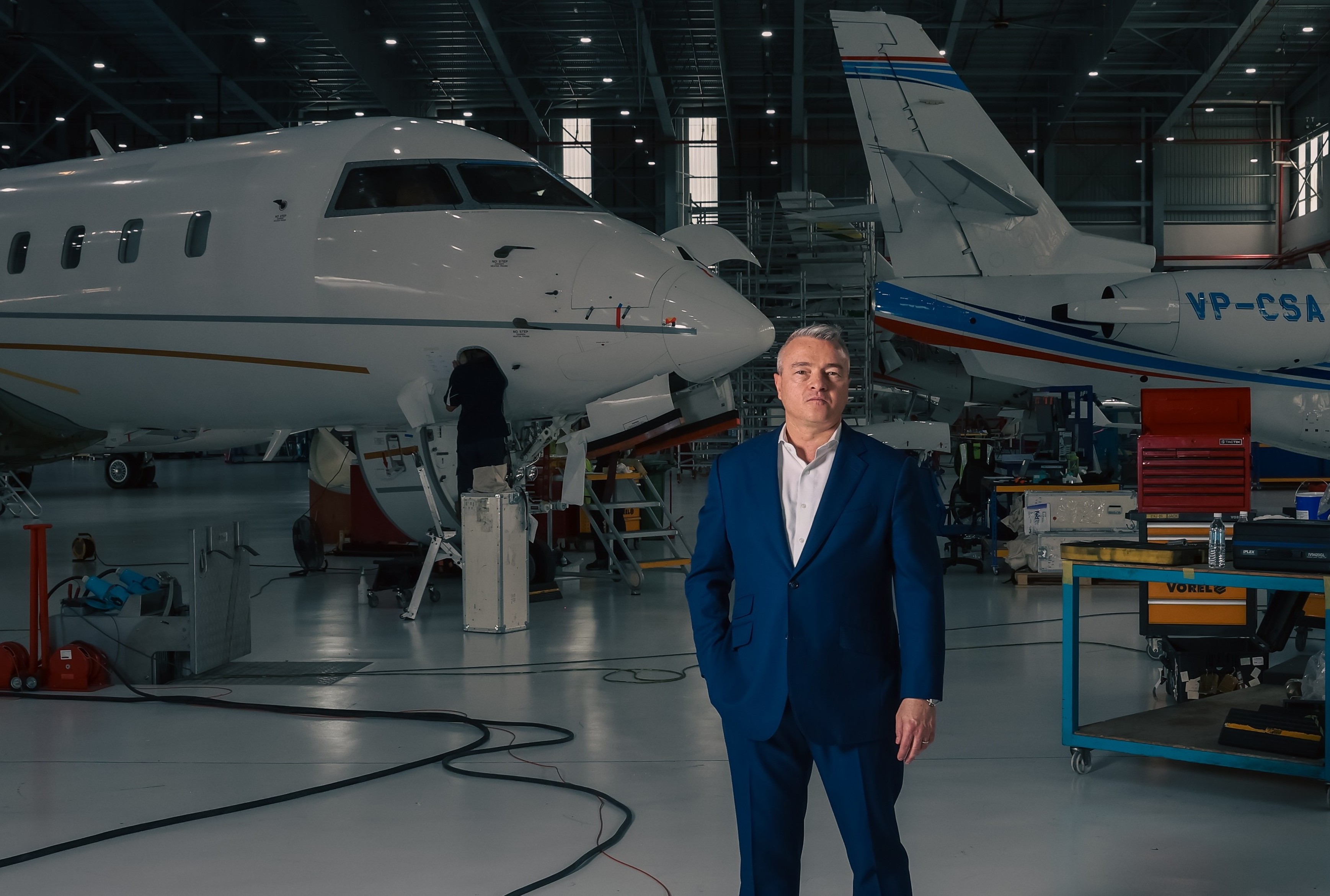
From the battlefield to the boardroom, new technology is changing the way private jets fly.
Dassault hopes its new Falcon 10X will outperform rivals and it’s especially interested in the New Zealand market.
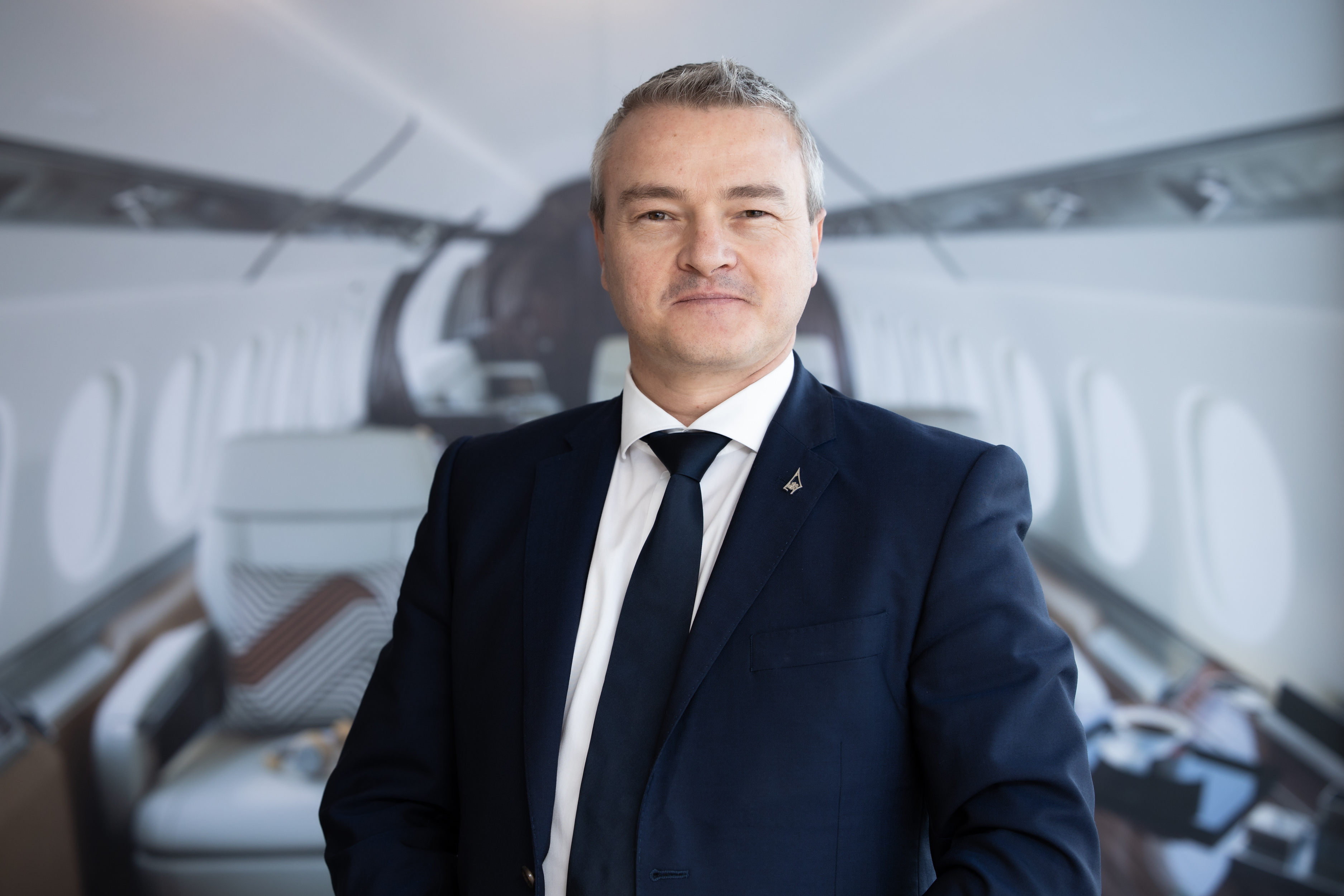
Didier Raynard, Dassault Aviation senior vice-president Falcon sales, Asia Pacific, told the Herald the business jet industry was not immune from the jet fuel price crisis and other challenges facing aviation.
“We are affected by the situation, but our clients still need to travel and they need to find ways to an aircraft to do that.
“The way we see it and the way our clients see it is really first, a way for them to travel fast, efficiently, to a place they need to go. Most of the time they need to go very close to their meeting place. So it’s not necessarily a huge international airport.”
For those who did not travel often enough to make buying a private jet economical, the charter market can come into play.
“So in that case, the aircraft is operated by what we call an aircraft management company with different rules than private aviation, and these aircraft are available for charter and that would make the travel again more efficient.”
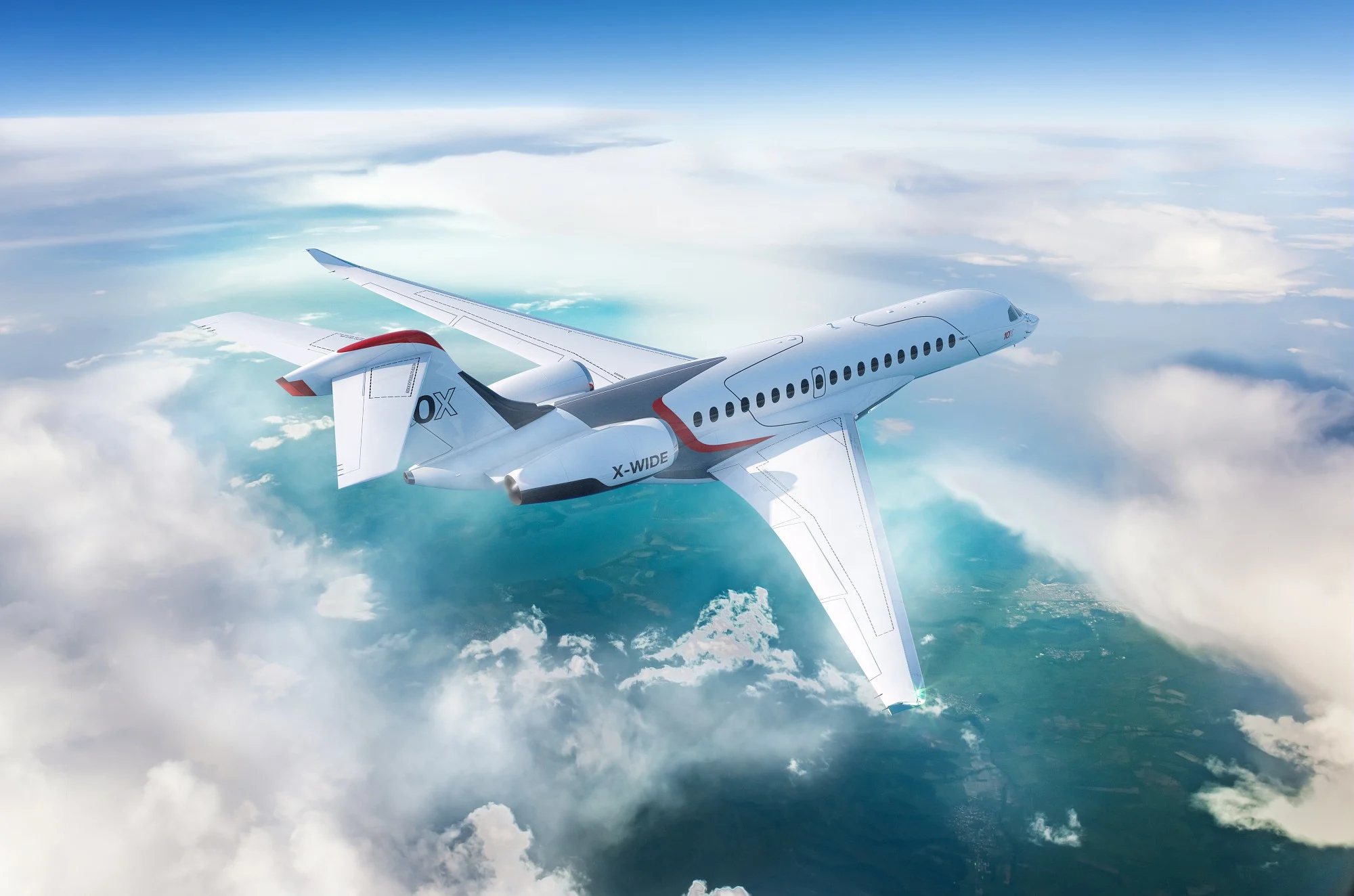
The upcoming Dassault Falcon 10X is a twinjet with a range of 7500 nautical miles (nm) or 13,890km and can seat up to 19 passengers.
From Auckland, Japan is easily within that range, and so is India. All of East Asia’s biggest cities are within the new Falcon’s range.
To the northeast, Los Angeles and Chicago could be reached without stopping. Toronto is inside the edge, but New York is likely too far.
Across to South America, Sao Paulo, Rio de Janeiro and Buenos Aires are in reach.
And to the west, beyond Australia and across the Indian Ocean, the business jet could reach Johannesburg.
Raynard said the 10X would be ideal for business travellers from New Zealand needing to reach meetings in Asia-Pacific hubs.
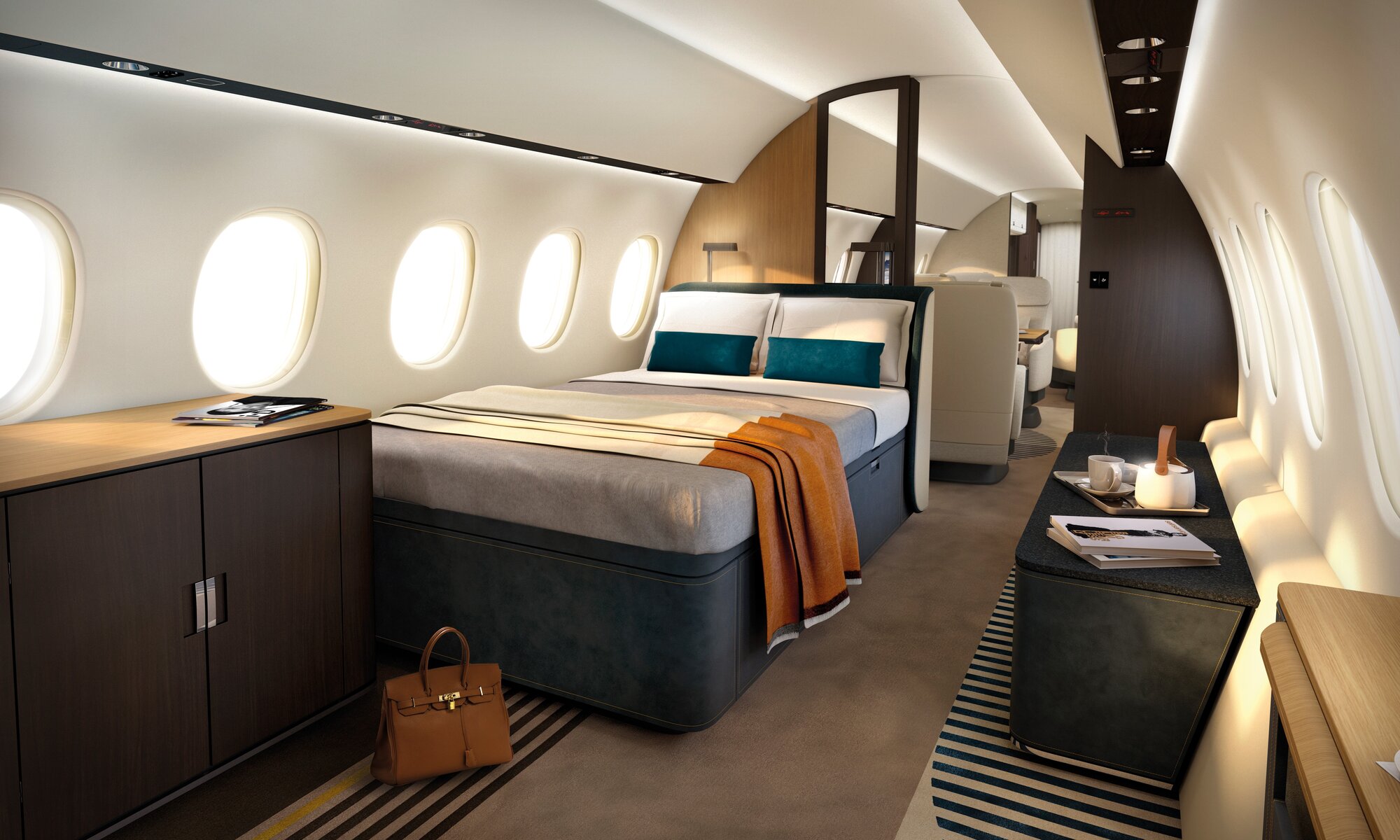
The French aerospace company has said the 10X would have the largest, most comfortable and most versatile cabin in a purpose-built business jet, with an interior about 20cm wider and 5cm taller than its nearest competitor.
It’s not a huge field, but ultra-long-haul competitors include the Gulfstream G700 and G800 and the Bombardier Global 7500 and 8000, which Bombardier says is the world’s fastest civilian aircraft since Concorde.
All can reach speeds beyond Mach 0.9 and all have ranges exceeding 7500nm.
How it’s made
Technology honed on Dassault’s military aircraft informed the 10X’s aerodynamics, materials, avionics and flight controls.
“We have different manufacturing plants in France, but everything is gathered in Bordeaux, and the aircraft is assembled there, test flown there, and then it’s flown to our completion centre in the US where the aircraft spends eight to 10 months... where we paint the aircraft and do the completion of the cabin,” Raynard said.
The aircraft has Rolls-Royce Pearl 10X engines, which include the capability to operate on 100% sustainable aviation fuels.
Dassault’s revenues last year were about one-tenth of those at Boeing and Airbus but in a similar league to Bombardier, Gulfstream and Brazil’s Embraer.
Airbus and Boeing have huge backlogs, which combined exceeded 15,000 aircraft and a value of US$1.25 trillion ($2.1t) in the first quarter.
Raynard said Dassault also had a backlog but indicated it was nowhere near as dramatic.
“What is important for us is to be able to propose a very neat time for our clients and we have to adapt. It’s not an easy exercise for us obviously, but we need to adapt our productions with the market and right now we are able to provide deliveries within, depending on the model that we have in the Falcon family, between 14 and 18 months, which is, I would say, acceptable for our clients.”
If the client had to start operations faster, Dassault could try to find an interim solution in the pre-owned market.
Dassault said 37 Falcon and 26 Rafale fighter aircraft were delivered last year. As of December 31 last year, the backlog was 220 Rafale and 73 Falcon aircraft.
The Falcon range included the 7X, introduced in 2005, and the 6X, which entered service in November 2023. It also included the 8X trijet, a stretched version of the Falcon 7X, with a longer cabin and longer range at 11,945km.
There is also the smaller 2000LXS twinjet and the 900LX trijet.
Dassault CEO Eric Trappier said in March that corporations would account for most projected sales, with Reuters reporting the 10X would have a maiden flight soon, be in operation in 2027, and enter service towards the end of the decade.
The Falcon 10X unit price will probably be about US$90 million ($153m).
What people want
You might get the impression people flying on private jets want comfort and even a little luxury, but what’s the number one request? Well, it’s much the same as when a guest arrives and asks after the obligatory greetings: “Mind if I have your Wi-Fi login?”
“Satellite communication is extremely important,” Raynard said on a video call to New Zealand from Kuala Lumpur.
“It’s the number one priority for our clients. Give you an example – an aircraft on charter for instance, if it’s not fitted with internet on board, it would be almost impossible to lease out. So when we speak with our clients, they want to make sure first of all that they can carry on their business and be able to contact and to be contacted in flight.”
The New Zealand private jet world
Raynard said there were about 25 private jets based in New Zealand last year.
A chunk of the market was all about domestic trips but Raynard said Dassault could have an impact on international connections.
“It’s a small market, but it’s a very important market for us.”
He said he couldn’t divulge in detail who was in discussions now about ordering the Falcon 10X.
“What I can say is that we do have some inquiries and a very good level of discussion with existing operators for our aircraft, not only in New Zealand but in [Asia-Pacific].”
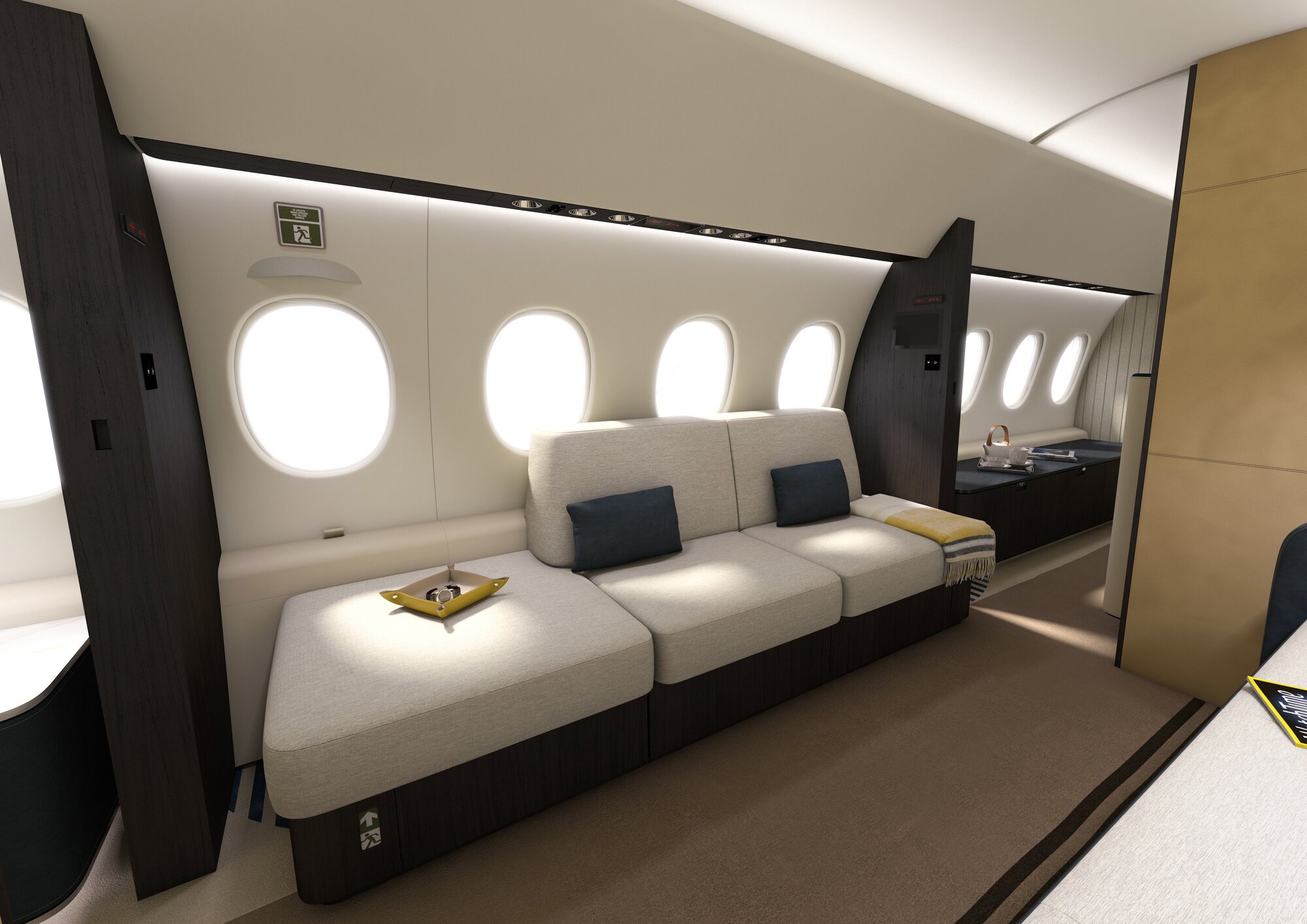
Raynard said the 10X’s cabin, 2.03m tall and 2.77m wide, should be a good selling point for the New Zealand market.
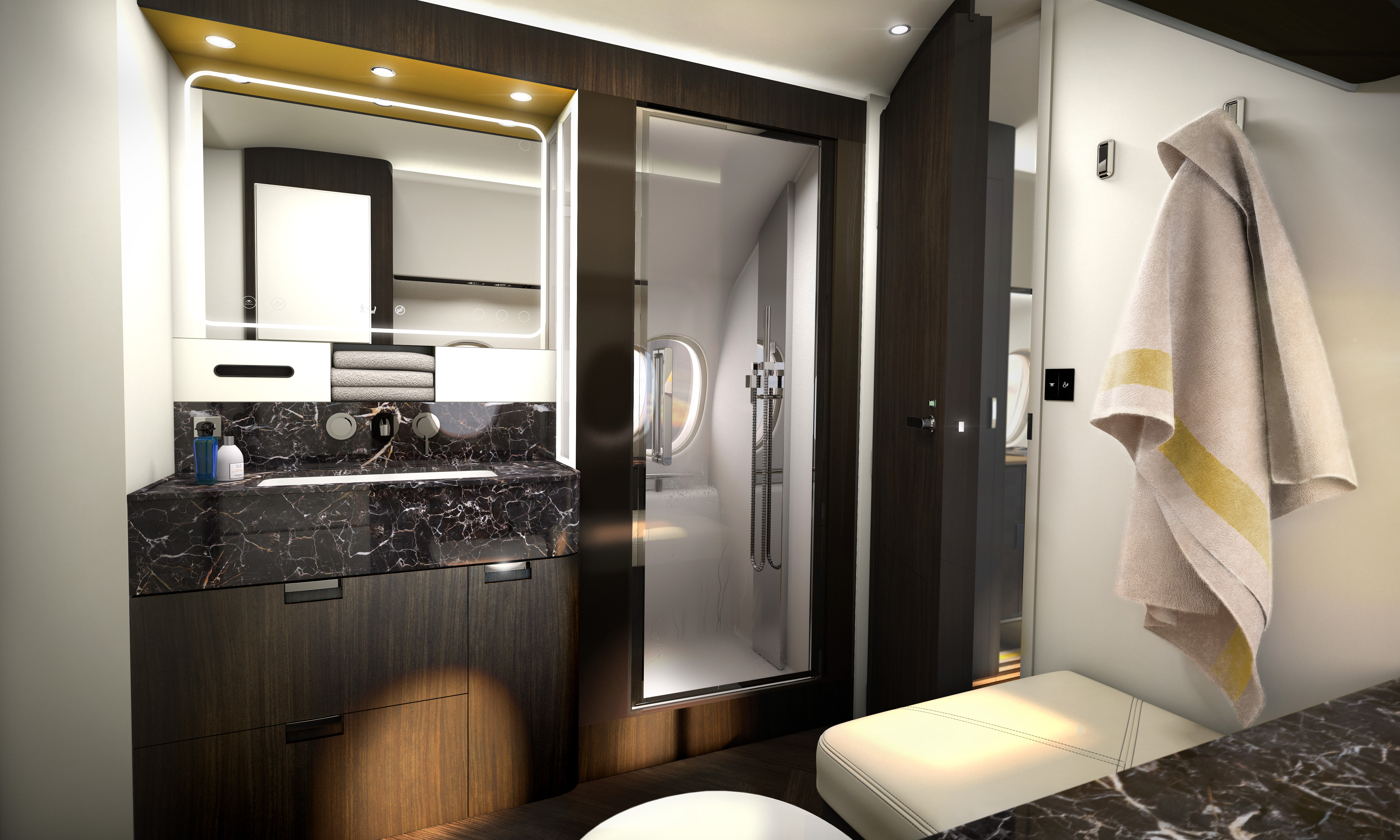
“This is an aircraft that provides five different lounges... It’s got a larger cross-section than any other purpose-built business jet.
“These aircraft are designed to fly 17 hours and above, so you need to be able to provide a galley, big enough to ... provide catering for the passengers for such a flight and also provide an area for a third or fourth pilot sometimes to rest.”
An array of configurations could be available and Dassault would also be able to provide a shower.
New Zealand’s maritime climate and capricious weather can provide headaches for aviators. Dassault has said the 10X had enhanced and synthetic vision capabilities and would be capable of operating in bad weather conditions.
Fighting fit
Raynard said Dassault was the only business jet manufacturer also making fighter aircraft.
“This is a company which is over 100 years old and we’ve been manufacturing fighters for a long, long time.”
He said the application of military technology to civilian uses was one reason the Falcon should be fuel-efficient, because air force customers wanted aircraft that didn’t burn massive holes in budgets or create burdensome logistics.
Raynard said the wings had slats, which allowed the aircraft to modify the wing’s aerodynamic profile, meaning more lift at lower speed, and the ability to use shorter runways than competitors.
“I can tell you that our aircraft are able to land at Taupō, a very small airport, even in wet conditions, so that’s very impressive, and this is one of the reasons why we are able to sell a Falcon in New Zealand.”
He said the company was also proud of its digital flight control system.
“We know this technology very well because we are the only one able to design, manufacture all the pieces of the digital flight control system. So on our Falcon, for instance [it’s] entirely designed and manufactured by Dassault and it’s a military technology that has been incorporated in business aviation for the first time on the 7X back in the mid-2000s. And today, most of the business aircraft manufacturers use that technology to a different level.”
He said the 10X had a smart throttle, a single lever managing two engines, that would be the first in business aviation.
As for other models, he said the 7X was selling well, especially in Asia-Pacific, and the Royal Australian Air Force had been operating a 7X for about eight years now.
He said in a few weeks, a pre-owned 7X was coming back to New Zealand. He understood that one was unlikely to be available for charter.
“We do have a Falcon 2000 available for charter in New Zealand, but most of our clients operate the aircraft privately. It’s a mix between their business and their private use.”
Challenges
“The biggest challenge for us is to navigate through the global political situation and economic situation,” Raynard said.
Then he cited supply chain issues, being able to increase production and therefore provide better lead times for new aircraft.
“What is important is really to be as close as possible to the market, and this is what we are doing. We have local teams in Asia-Pacific. We travel regularly ... The key for us is to be as close as possible to our clients and our operators in order to improve the service that we can offer them.”
He said Dassault had a subsidiary called Execujet MRO Services which in New Zealand supported the Falcon.
MRO meant maintenance, repair, and overhaul.
He said there were technicians in Auckland and Wellington trained on Falcons. Some were trained on legacy aircraft, which Raynard said was important too.
“We don’t have yet a Falcon 6X in New Zealand and Australia, but we do have technicians trained on the 6X as well.”
And what about advice for any aspiring business jet pilots?
Whereas an airline pilot might have different passengers every day, and not get to know them, business jet pilots might get repeat custom from the same small group of people and get to know them well.
Raynard said airline pilots generally had rosters or schedules known some time in advance, whereas with private jets, you might get called up at short notice.
“Sometimes you don’t know where you’re going to go, when you’re going to go, so it requires a bit more flexibility.”
John Weekes is a business journalist covering aviation. He previously covered consumer affairs, crime, politics and courts.