Dawn Aerospace raises $42m, develops satellite refuelling tech
Christchurch-based Dawn Aerospace has raised US$25 million ($42m) at a US$195m valuation - the bulk of which is earmarked for satellite refuelling technology that could revolutionise the industry.
Today, when a satellite runs out of fuel for its thrusters, it falls out of the sky – typically after three to five years for a low-Earth orbit design (thrusters are used to adjust a satellite’s orbit, while solar-powered reaction wheels are often used for finer tweaks to altitude, or the direction a satellite is facing).
Dawn Aerospace chief executive and co-founder Stefan Powell says his company is now actively developing what it calls the “Loop” in-orbit refuelling system.
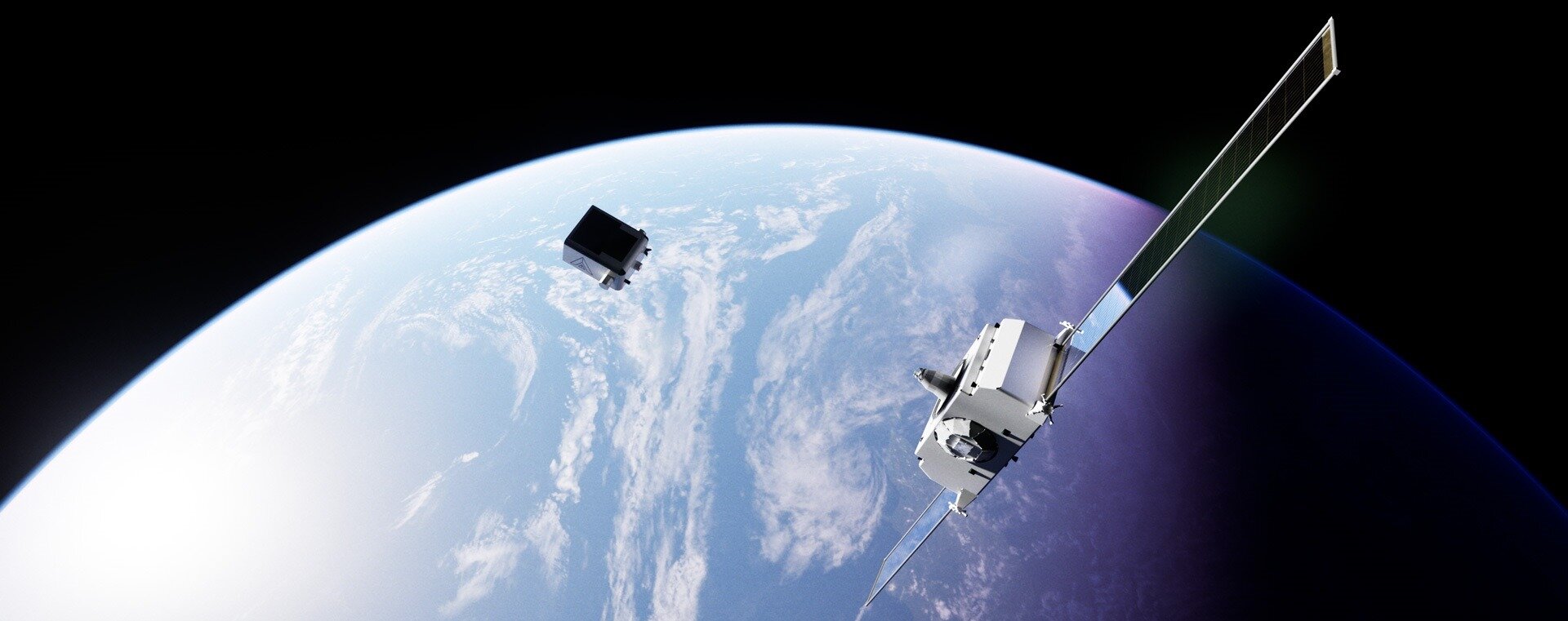
Once up and running, it will consist of a smart, reusable Space Utility Vehicle (SUV) that can dock with a satellite and deliver propellant, plus a network of Orbital Propellant Depots (OPDs or “disposable dumb tanks”) that are launched “opportunistically” whenever a rocket has spare capacity.
One SUV could deliver hundreds of kilograms of fuel, Powell says, or enough to refuel 50 to 60 satellites depending on size.
He says a $1m refuelling satellite launch could save $100m worth of satellites from having to be replaced – or at least not for another five years.
But there’s also a second major reason that refuelling appeals.
Today, the average low-Earth orbit (leo) satellite flies some 550km above the planet, Powell says.
But if a satellite is able to use more fuel to deal with the greater drag at lower altitudes, that could be reduced to 300km. That means faster satellite broadband and better photos, Powell says.
And in a world of increasing space junk, a debris-free lower orbit is also a safer orbit, Powell says.
Dawn has already developed a Docking and Fluid Transfer (DFT) docking port, which will be included with satellite propulsion systems it’s sold to the Netherlands’ Air Force for a series of new satellites, plus two unnamed companies. It’s also working with CNES (the French national space agency) and others on refuelling architecture.
But the showpiece will be Dawn’s launch of a Space Utility Vehicle and Orbital Propellant Depot in 2028 for a technology demo. All going well, Powell sees a commercial launch in 2029.
The US$25m raise
The raise announced overnight, which follows a $20m Series A in 2022, was backed by a clutch of US venture capital (VC) firms, led by Dallas-based Balerion Space Ventures.
NZVC, founded by Mark Pavlyukovskyy, a Ukrainian who relocated to NZ in 2021, also chipped in, as did several local VCs who participated in early rounds: Icehouse Ventures, Derek Handley’s Aera and Global From Day One (GD1).
Powell says the firm has grown from $3m revenue in 2022 to “well over $15m with growth over 90% in the past 12 months and cashflow-positive operations”.
Powell said this financial momentum coincides with a global surge in aerospace and defence investment, as US and Europe military and space budgets hit historic highs.
Private investors are also piling in. But while SpaceX has grabbed headlines with its multitrillion-dollar initial public offer (IPO), Powell says with earlier-stage firms “investors want to see real hardware and real revenue”.
Powell says the firm’s income from contracts has exceeded the amount it’s raised from venture capital.
Kiwi-Dutch roots
Dawn was co-founded in 2017 by Waikato-raised brothers James Powell (who studied mechanical engineering at Canterbury University) and Stefan Powell, a one-time Rocket Lab intern who moved to the Netherlands to study aerospace engineering at the Delft University of Technology, where he worked on a project with three fellow students who would also become co-founders: Jereon Wink, Tobias Knop and Robert Werner.
The firm set up its operational headquarters in Christchurch, but also maintains a facility in Delft.
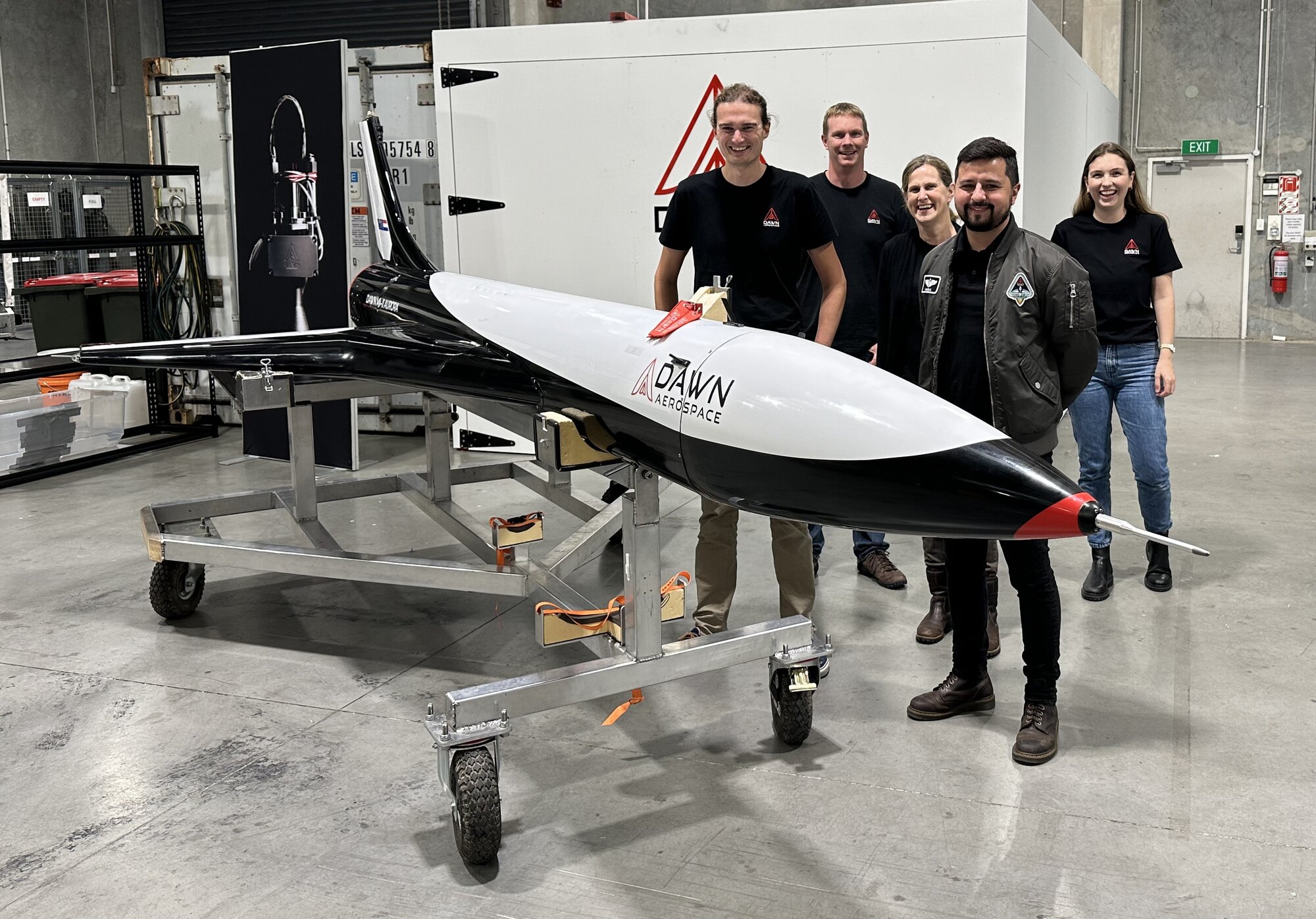
In 2018, the start-up raised $3.4m in seed funding to develop its Mk-II Aurora suborbital, rocket-powered spaceplane – an unmanned vehicle for taking small payloads to high altitudes.
Last year, Dawn made its first Aurora sale.
The Oklahoma Space Industry Development Authority – a state government-owned agency that operates a runway and aerospace innovation hub – paid US$17m, covering the spaceplane, ground support and maintenance. The Mk-II is due to be delivered next year.
Earlier this year, Dawn participated in a joint naval defence trial called Darte (Dawn Aerospace Radar Tracking Experiment).
The trial took place off the coast of Banks Peninsula and saw the HMNZS Te Kaha attempting to track an Aurora spaceplane as it hit speeds of Mach 1.1 and altitudes of around 25km.
The navy said the frigate’s radar proved its chops, without the need for expensive offshore testing and provided valuable data about defending against high-velocity projectiles.
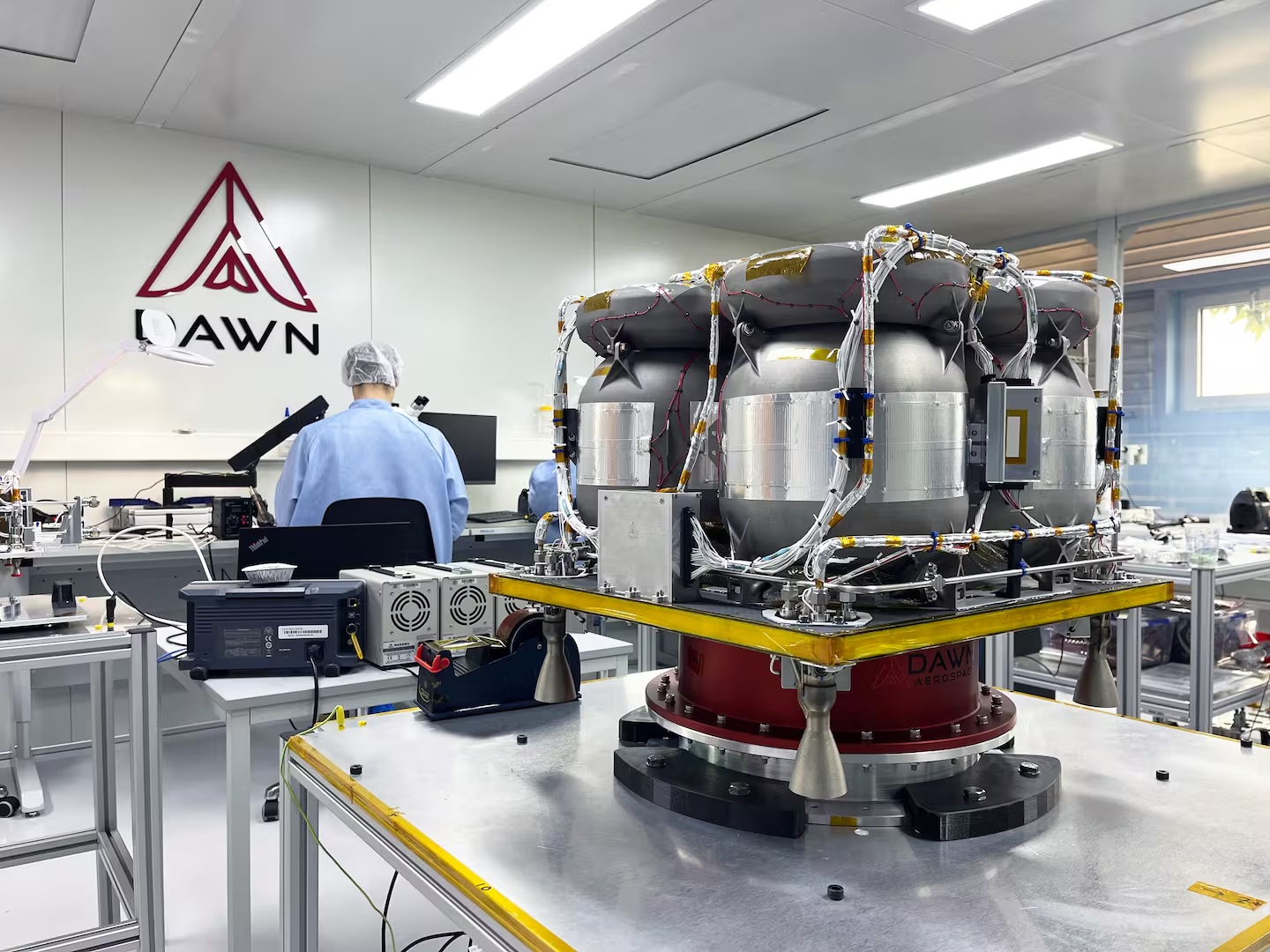
Dawn’s second major line of business has been propulsion systems, which now power more than 50 satellites.
A signature feature is that the Kiwi-Dutch company’s systems are fuelled by a combination of nitrous oxide and propene, billed as a cleaner, safer alternative to the widely used hydrazine.
Two blokes in a shed
“When we first backed Dawn, the company consisted of founders working out of a garage with a radio-controlled model aircraft and a vision for scalable, sustainable space transportation,” Icehouse Ventures partner Barnaby Marshall said.
“Today Dawn is more than 140 staff, tens of millions in annual revenue, hundreds of operating units in orbit and a supersonic aircraft.”
$26m from Icehouse Ventures
Icehouse Ventures has invested $26m in Dawn since 2018, participating in every round of capital raising, Marshall said.
He added, “Rocket Lab is now New Zealand’s most valuable company ever, which should permanently change the way we think about our aerospace economy. Dawn Aerospace is proof that isn’t a one-off. New Zealand could produce dozens of iconic aerospace companies in the coming decades.”
The now US-incorporated Rocket Lab will be added to the Nasdaq 100 next Monday. The Kiwi-founded firm’s market cap has tripled over the past year to US$60 billion.
“New Zealand has a few things going for it in aerospace that are hard to replicate. First principles engineering mentality, free airspace, a regulator in the CAA that is both practical and globally respected, and now dedicated infrastructure like Tāwhaki National Aerospace Centre buoying the sector,” Marshall said.
Chris Keall is an Auckland-based member of the Herald’s business team. He joined the Herald in 2018 and is the technology editor and a senior business writer.