From submarines to spin rooms: How Defence Minister Chris Penk stays afloat in politics
The surprising thing about new Defence Minister Chris Penk is not that he occasionally gets himself into trouble, but that he doesn’t get into more trouble than he does.
Penk is one of the most out-there ministers in Christopher Luxon’s Government, in terms of being active on social media and available to the media for interviews.
And he understands the danger that comes with it.
“I suppose there’s an element of risk inherent in that, but I also think it’s worth erring on the side of being more engaging, not less,” he tells the Herald in an interview.
Penk is available to just about any journalist who asks, and also to outlets that some ministers wouldn’t go near, such as The Spinoff, the Bradbury Group (hosted by leftwinger “Bomber” Bradbury) or the right-leaning site the Platform.
He presents as affable and earnest, with a willingness to address any question.
“I think the Fourth Estate’s got a really valuable role,” says Penk.
“But also I enjoy talking to people who are engaged in more or less the same occupation I am, albeit, you know, on other sides of the coin in terms of making decisions when you’re in Government, as opposed to opposition, on the one hand, or holding power to account and understanding those decisions and interrogating them, which is, of course, your business,” he says, referring to the media.
“I think our fates are inextricably linked. And I think more conversation, not less, and more accessibility, is a positive thing.”
His ease with the media may relate to the fact that his wife, Kim Choe, is a former Newshub journalist. The couple have two children, aged 8 and 4.
When Penk was first elected to Parliament in 2017, replacing former Prime Minister Sir John Key in Helensville, he was a prolific tweeter, often mocked by opponents for attempts at humour – corny humour rather than nasty – and occasionally landing himself in trouble.
Perhaps his biggest faux pas was in his second term in Opposition, when he tweeted in response to something New Zealand First leader Winston Peters had said on Newstalk ZB, about why he had gone with Labour in 2017 and not National.
“You look at the sex maniacs and the mess that they’re in now and tell me, what option did I have?” Peters said on ZB in 2021.
In the banter that followed, Penk tweeted, using his own asterisks: “Winston Peters is the real s*x maniac because he can f**k a whole country at once.”
Judith Collins was National leader at the time and was singularly unimpressed and ordered it be taken down.
Since taking over the Defence portfolio from Collins in April, Penk now finds himself working more closely with Peters, the Foreign Minister in the three-party coalition.
So has he ever apologised to Peters for that tweet?
“No. I think we understand each other pretty well,” says Penk.
“The great thing about Winston is he’s got an excellent sense of humour.”
One of those that used to engage with him on Twitter, as X was then, was Neale Jones, a former chief of staff to Andrew Little and Jacinda Ardern, and a regular political commentator.
Jones remembers tweeting to point out something Penk had got wrong.
“Normally politicians will get very defensive or just ignore you. But he actually reached out privately and said ‘hey, I didn’t mean to get that wrong and actually I don’t like to say things that are untrue so can you send the information through to me and I’ll correct it.’
“I just thought at the time, even though he was someone I didn’t agree with politically on a lot of things, I did admire his integrity there.”
When National formed the Government in November 2023, Penk was made a junior minister outside Cabinet as Veterans Minister, with an associate role in Defence, but his main portfolio was Building and Construction.
Over two years, he brought attention to the portfolio in a way that hasn’t been done since Shane Jones suggested regulations for showerheads to limit water use in 2008.
Penk changed the building consent system, reformed the earthquake-prone building code, made 40,000 building products more accessible to tradies, and allowed granny flats to be built without consent.
“He has done a lot of micro reform that isn’t glamorous stuff,” said Neale Jones. “But just makes it easier to get things done and built.
“That’s something I’ve observed and been reasonably impressed with. He has been effective at getting on with it and making it a more efficient system.”
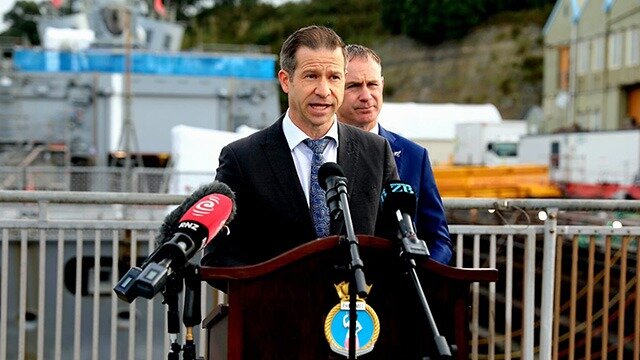
In the Herald’s last Cabinet report card, Penk was among three ministers with the high score of 9, mainly for his work in Building and Construction.
His old boss, former National leader Simon Bridges, who now heads the Auckland Chamber of Commerce, said he had heard feedback on Penk’s recent engagement with business.
“He’s actually at the better end of ministers because he listens genuinely, he engages authentically, the audiences like him. And frankly that’s not true of all ministers.”
He had heard feedback from one high-end business event recently that Penk hadn’t answered a question particularly well.
“But he was straight down afterwards to the group who had asked the question to say he appreciated he had not answered it well.”
Bridges said Penk in his first term had a tendency to over-complicate issues.
There were a few “rough edges” and “youthful nerdiness that needed to be shaped up a bit.
“But he has greatly improved over time. And that is the hallmark of the best politicians. They don’t stay still. They are like a good wine and they improve over time.
“He has kept the affability, but he has added some polish and some heft.”
Penk doesn’t always get it right.
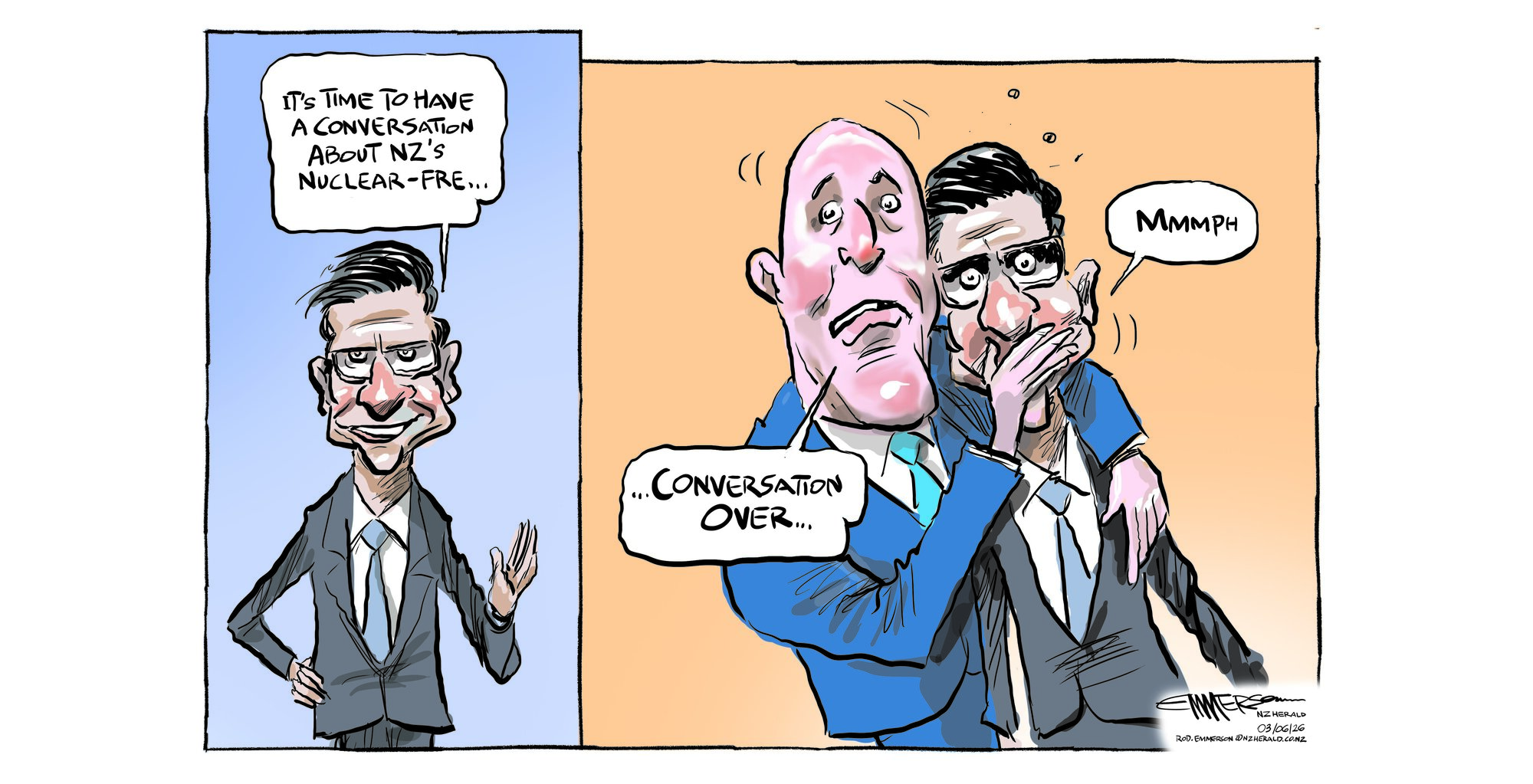
He got himself into bother in Singapore recently answering a question from a Bloomberg journalist about whether New Zealand should change its laws banning nuclear-propelled vessels – as well as nuclear weapons – in light of Australia’s plans to acquire nuclear-powered submarines from the United States and Britain.
After assuring the interviewer that there were no plans to change the policy, he said such a conversation would be helpful.
Penk accepts he could have expressed himself better, but he is sticking by his answer, suggesting people missed the context of Australia’s Aukus deal for nuclear-powered subs.
“We do need to think about the implications of that, not because we need to change our position, but because we need to understand that we’re going to be more vulnerable without the protection of our only formal ally, at least in a subsurface sense.”
Penk was at the Shangri-La Dialogue – the annual defence and security conference attended by Defence Minister and military brass from around the world.
It gave him the chance to hold meetings with his political counterparts from Australia, Richard Marles; the United States, Pete Hegseth; Britain, John Healey who last week resigned based on underfunding; the Philippines, Gilberto Teodoro jr; Italy, Guido Crosetto; Norway, Tore O Sandvik; Japan, Koizumi Shinjiro; Malaysia, Mohamed Khaled bin Nordin; Vietnam, General Phan Van Giang; the Netherlands, Dilan Yeşilgöz-Zegerius; and Singapore, Chan Chun Singh.
He also met defence secretaries from Germany, Nils Hilmer; and India, Rajesh Kumar Singh; and US Senators Tammy Duckworth and Pete Ricketts.
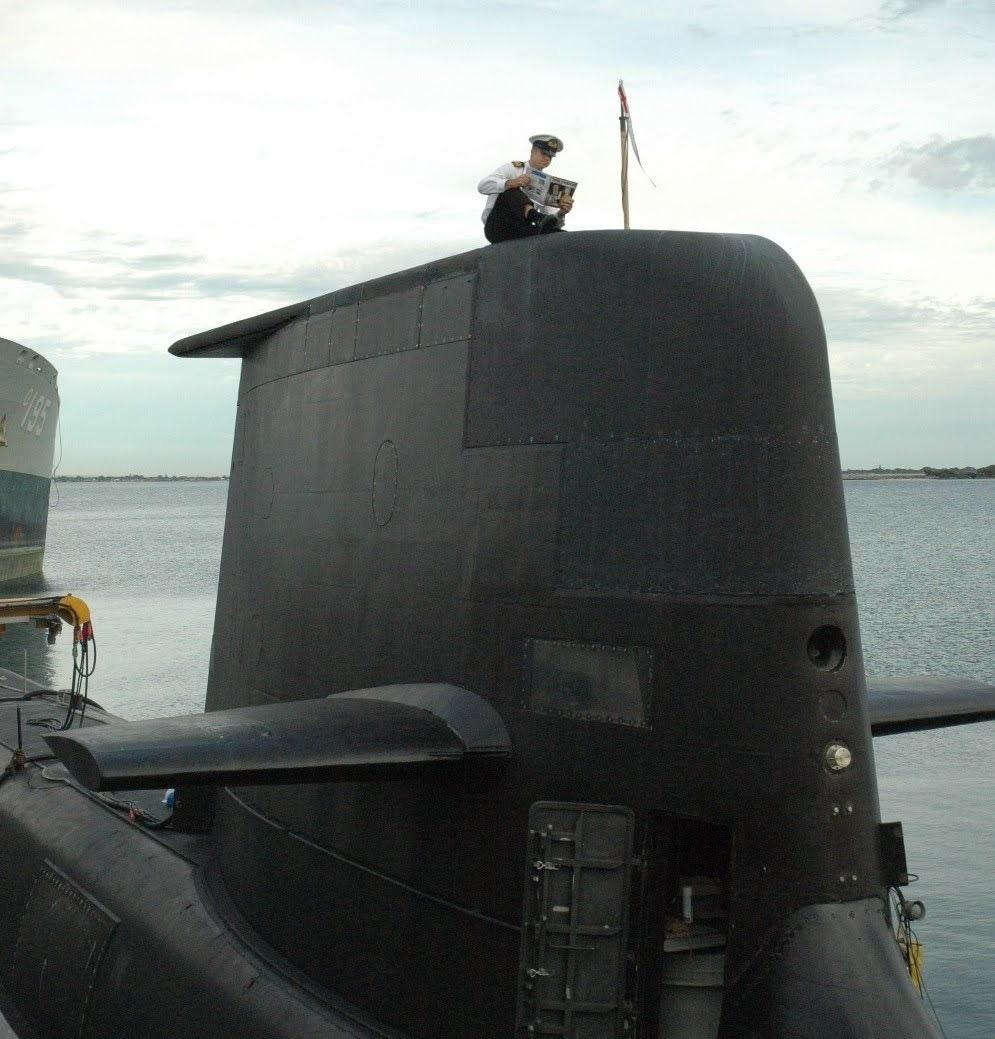
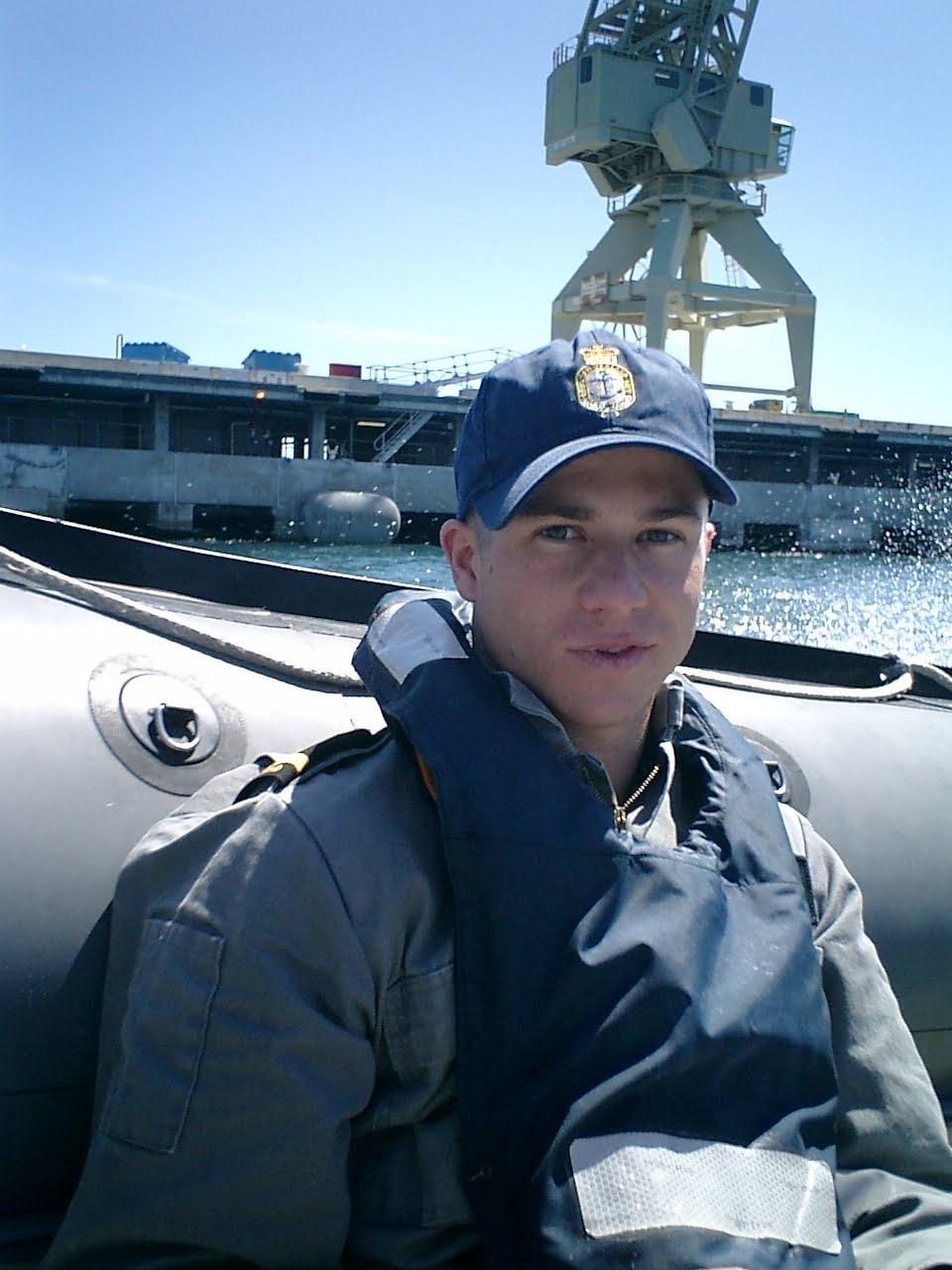
Unusually, Penk is an expert in submarines, having served for about four years on the HMAS Sheean sub in the Australian Navy, based in Perth. It was a Collins-class diesel-electric submarine, the sort being replaced by the Aukus plan.
It was about 77m long and 8m wide with about 50 crew and fairly cramped quarters. In his early days, he slept in a room off the galley that he shared with a sack of onions and was later upgraded to a room shared with torpedoes.
Penk, who got Australian citizenship a short time after joining the Navy, was a navigating officer and the longest he was continuously underwater was 51 days.
“I would map us through the ocean, do the navigation, and also be on the periscope. That’s sort of an exercise in seeing what else is out there and avoiding hitting it.”
He had no problem with claustrophobia.
“I think if you’re claustrophobic, you wouldn’t go into that environment.”
Yes, he has been on a nuclear-powered submarine. He vaguely remembers it was a British one, visiting Australia. But he hasn’t crewed on one.
Before serving in Australia, he had already served as a navigator in the New Zealand Navy for four years.
At the age of 21, he found himself steering the frigate Te Kaha through the South China Seas in an exercise with the Five Power Defence Pact. He also visited Shanghai on Te Kaha, about 40 nautical miles up the Yangtze River.
He served as an aide-de-camp with Governor-General Dame Silvia Cartwright, having reached the rank of lieutenant.
“I see people now who’ve got a lot more gold than I ever had on my shoulders, and they call me minister and I have to work hard not to call them ‘sir’ in the hierarchical way that you get beaten into you.”
Penk is one of five boys in his family. Before joining the New Zealand Navy, he was educated at Kelston Boys High and got a BA from Auckland University. After his submarine service, he went back to study law and had set up his own commercial practice before entering politics.
He not only acquired defence from Collins when she left to head the Law Commission, he took over her space portfolio and ministerial responsibility for the spy agencies, the SIS and the GCSB, which is part of the Five Eyes intelligence network.
He has already approved the deployment of New Zealand Defence personnel to Poland to Operation Legio, a Norwegian-led multinational project to train Ukrainians closer to Ukraine than the current UK trainers in Operation Interflex.
Penk doesn’t believe there will be any great difference in his approach to defence, compared with Collins.
The main change would be in the circumstances under which the next decisions were made under the Defence Capability Plan, a plan to acquire $12 billion of assets over four years.
If the coalition keeps power and Penk keeps defence, the plan will include taking a recommendation to Cabinet on what to replace Anzac frigates Te Kaha and Te Mana with.
Given the increased emphasis on integration with Australia’s Defence Force, all signs point to Japan’s Mogami class because it is what Australia has just ordered.
But whether it is for leverage or not, Penk insists that is not a foregone conclusion.
“Australia’s acquisition of those is a major consideration, but it’s not the only consideration.
“You can imagine that there would be decisions there, weighing the relative value that each of those platforms would provide and that’s a level of detail that I’m not yet exposed to.”
Australia, New Zealand and the United States were part of the 1951 Anzus security alliance until the US suspended New Zealand over its anti-nuclear policy and then laws in the 1980s.
Australia and the United States remain formal allies under Anzus and Australia remains a formal ally of Australia.
But how would Penk describe New Zealand’s relationship with the United States: allies, partners or very, very, very good friends?
While he had heard “the A word” used recently, the term ally usually related to a security agreement whereby partners were “obliged and expected to come to the aid of others, no questions asked, in the event of a military intervention by a third party.
“And we don’t have that relationship currently with the US because Aukus is not active in terms of US and New Zealand, sorry Anzus.”
The reference to “the A-word” was contained in a press statement by the State Department in early June when it announced it had approved the possible sale of five MH-60R Multi-Mission Helicopters (Seahawks) to New Zealand for US$1.5 billion ($2.57b).
“This proposed sale will support the foreign policy and national security of the United States by improving the security of a major ally that is a force for political stability and economic progress in the Asia-Pacific region.”
The State Department clarified that in a statement to the Herald, saying there was no change in policy.
“US treaty obligations to New Zealand under the Anzus treaty remain suspended.”
The use of the term “major ally” had a technical meaning under 1996 US law in the context of foreign military sales, and included many countries that did not have a treaty alliance with the United States.
Integral to the Defence Capability Plan is the goal to increase New Zealand’s Defence spending to 2% of GDP by 2032-33 and the Seahawk sale is part of that.
Penk found himself needing to defend New Zealand’s spending at the Shangri-La Dialogue.
Hegseth, in response to a question by a New Zealand journalist, said 2% was “freeloading”.
“We demand 3.5% from our allies and partners,” Hegseth had said in his speech.
“And we are going well beyond that number. We expect every single ally and partner to match that kind of resolve.”
Penk dismissed a suggestion it was bullying talk from the US.
“I wouldn’t use that phrase. I mean, it was certainly a forthright statement about America’s view of the world, but it was probably fair to say … that we’ve seen that before and we’ve heard that before, so it wasn’t unexpected.”
He talked to Hegseth afterwards about how New Zealand was “playing our part”.
“And of course, we’re doing that for reasons that we consider to be important, as opposed to because anyone tells us.”