India Free Trade Agreement: Winston Peters hits back at Christopher Luxon as row deepens between NZ First, National
A row is deepening between National and NZ First over the New Zealand-India Free Trade Agreement, with Winston Peters hitting back at Prime Minister Christopher Luxon for labelling his immigration concerns “wrong”.
Trade Minister Todd McClay, appearing at a briefing on the deal in Parliament on Thursday, fought back. While he didn’t name Peters, he proactively sought to address “speculation” relating to the trade deal, particularly regarding claims about migration.
The dispute between the two parties over the FTA escalated on Wednesday when the Prime Minister told the Herald that Peters was “wrong” to be claiming tens of thousands of people could come to New Zealand and take Kiwi jobs under the India deal.
Peters, also the Foreign Affairs Minister in Luxon’s Government, responded by pointing the Herald to comments from the Indian Government which spoke of an “unprecedented” deal being secured in terms of student mobility and post-study opportunities.
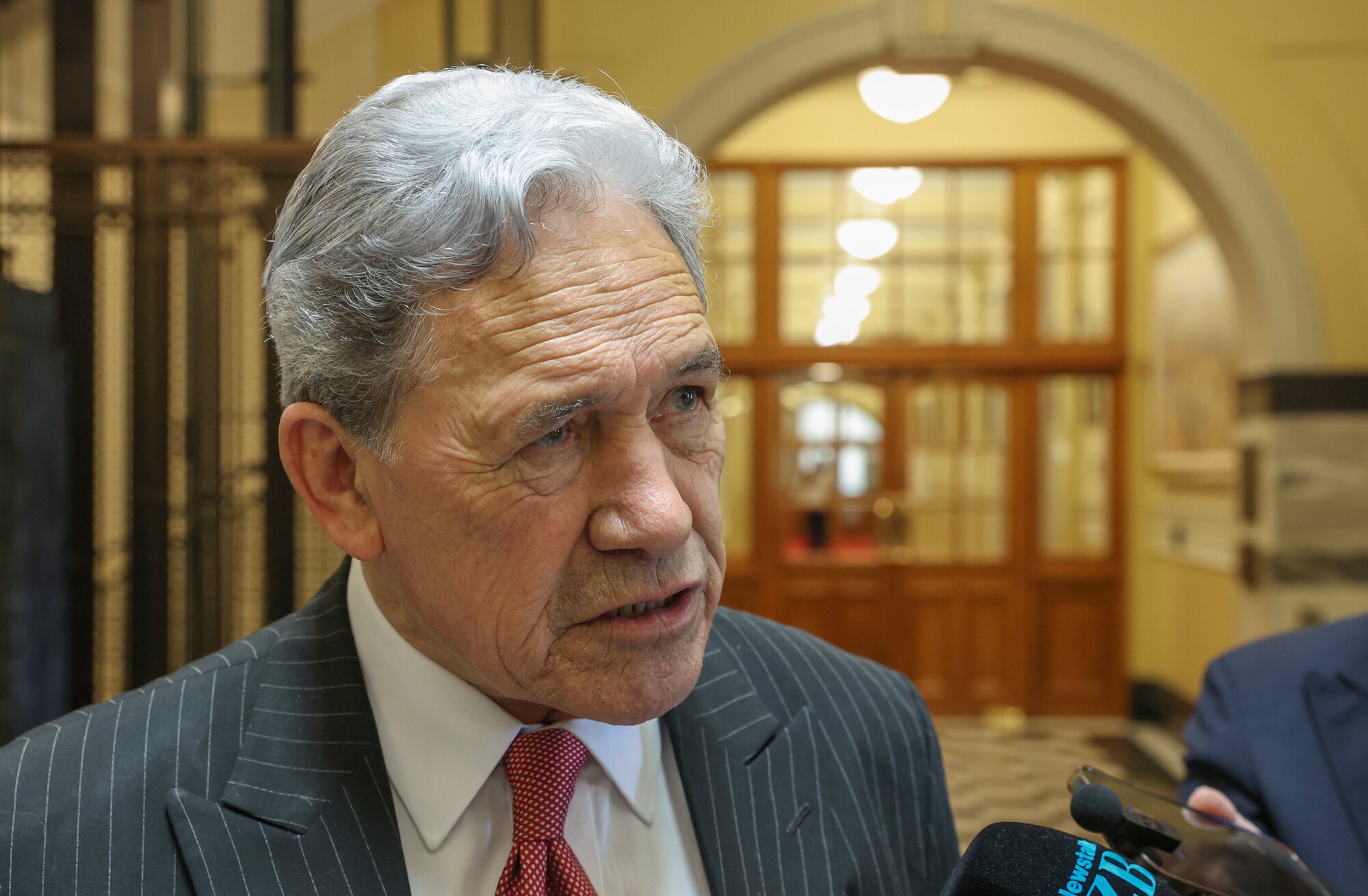
He then doubled down on Thursday morning, releasing a statement saying there had been “a lot of talk about Indian FTA and not much comprehension about what the consequences are for New Zealand”.
The NZ First leader questioned: “Why have we been more generous on migration with India than in any other FTA?”
“Why has migration been made one of [the] centrepieces of what is meant to be a free trade deal, not a free migration deal,” he said.
The text of the formal trade agreement has not been publicly released, but more information us expected to be shared in the coming weeks. The agreement is currently being looked over by lawyers to ensure it reflects what both sides negotiated.
Material shared by the Ministry of Foreign Affairs and Trade (MFAT) says the deal would allow for 1667 workers’ temporary employment entry (TEE) visas to be granted for occupations where New Zealand has a skills shortage.
“These TEE visas are for three years, and the total number available under the commitment is capped at no more than 5000 at any one time over that three-year period,” the document says.
“This represents less than 6% of the current average total number of skilled visas issued to Indian nationals each year by New Zealand.”
MFAT later updated the document after an error was found in that last point.
“This number is less than 6% of the average number of total skilled visas issued each year by New Zealand,” the updated document said.
The material goes on to say the agreement includes a Working Holiday Scheme, with up to 1000 places for young Indians, with the right for Indian students to work up to 20 hours a week. Eligible students graduating from a New Zealand institution can receive a Post-Study Work Visa, for a limited timeframe.
Peters claimed in his statement the 5000 temporary visa holders could bring their spouses and children with them to New Zealand.
“So, given a standard family size of two parents and two children, this means 20,000 people in New Zealand at any one time under the new visa which has been created exclusively for Indian citizens.
“If National is saying the numbers of potential visa holders are not this high, then is it saying that Indians coming to New Zealand under the visa will be banned from bringing their spouses and children with them?”
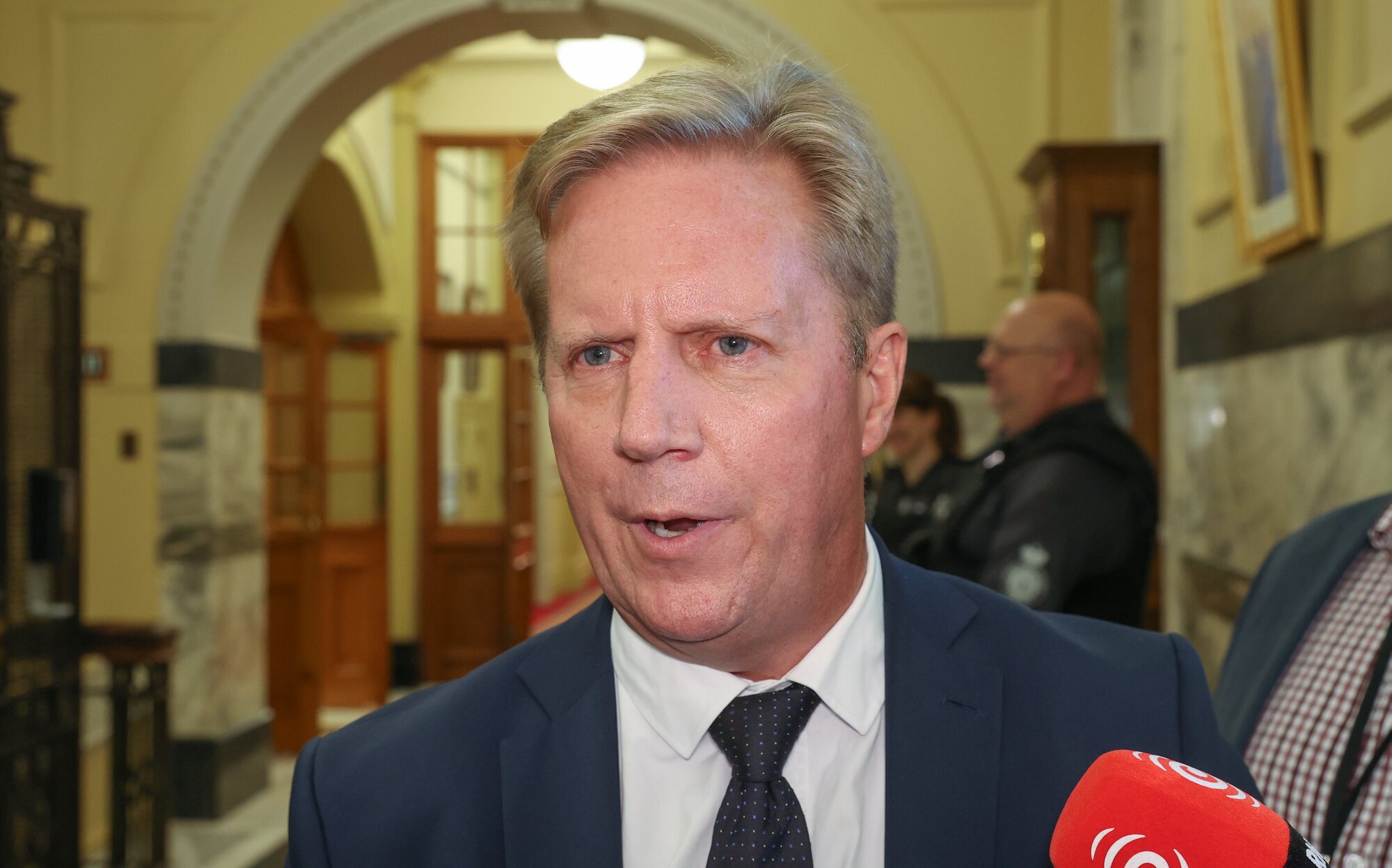
Speaking to the Foreign Affairs, Defence and Trade Select Committee, McClay said the FTA gives “no right” to those possibly 5000 temporary visa holders “to bring a family member to New Zealand”.
However, he did acknowledge that any person coming to New Zealand on a work visa for more than a year did have the “ability to bring those people in”.
McClay clarified to the Herald afterwards that there was “nothing new in this [the FTA]” regarding bringing family members to New Zealand.
The Indian workers wouldn’t have “any greater right than anyone else who’s a skilled worker coming into the country from any country”.
“The agreement doesn’t give any right to bring family members in ... it gives no right at all. But if elsewhere in Government policy, people are able to do that, from anywhere in the world, there would be no difference here at all.”
McClay also noted any New Zealand Government, current or future, would retain the ability to change those settings.
“The agreement doesn’t take that right away from anybody. So look, if Mr Peters has worked it out that way, because currently in New Zealand if someone comes here on a work permit, their family can come, that must only be because he as a Cabinet member has agreed to that.”
The Trade Minister also stressed to the committee that the 1667 workers were to address skill shortages.
“I want to be categorically clear, there is nothing about immigration in this agreement. Nobody in this agreement has a right to come to New Zealand under any condition other than the policy set by a current or future New Zealand Government,” McClay said.
“Should 1670 Indians want to apply to come here to work in an area we have a deficit of skills, they have the ability to do so, but they must fulfil the normal criteria.”
In his statement, Peters also said it could be expected the applications to migrate to New Zealand from India “will significantly increase across the board”, including due to the uncapped number of students allowed.
“Our serious concern is that migration to New Zealand, across the board, is too high, especially given tough economic times. Judging by both the FTA and how it’s being promoted in India by the Indian Government, we’re likely to see much more migration from India in the years ahead.”
Then, in a pointed rejection of the Prime Minister’s comment, Peters said: “Neither New Zealand First, nor the Indian Government, are ‘wrong’ about that”.
A document released by the Indian Government said the FTA “removes numerical caps on Indian students”, but McClay told the Herald there was already no cap on the number of students who can come to New Zealand.
“If a future New Zealand government says actually we’re going to limit the number of students coming in, they have the ability to do so. All the FTA says is if a student comes to New Zealand, they have to meet the criteria set by New Zealand policy.
“In this case, they have to have funds to be a student. They have to be genuine. They have to have been accepted to a place in the university or somewhere that meets the various criteria and nothing else changes.
“Those are able to be changed as governments over time have done so, but there was no cap, so there’s nothing to be taken away.”
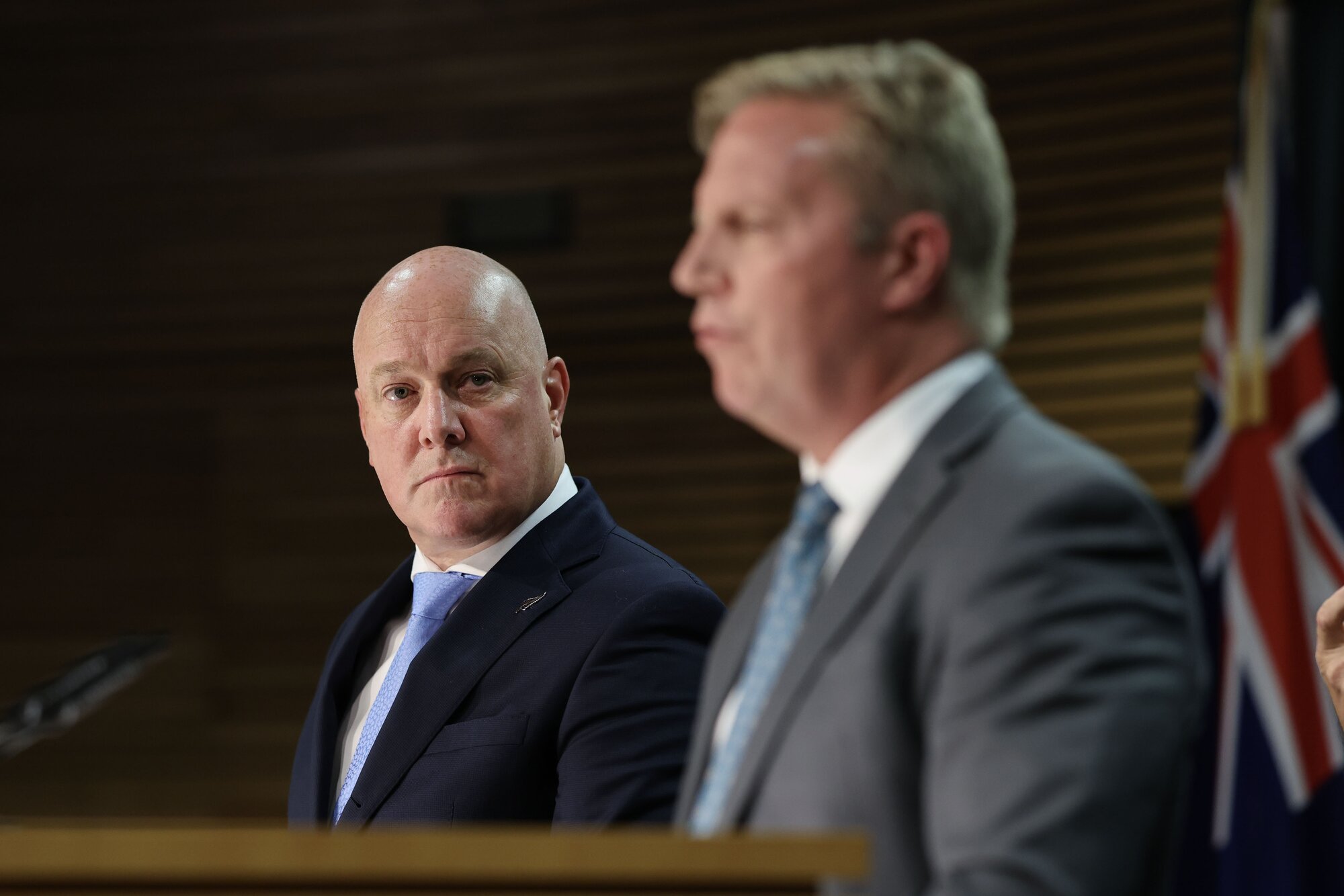
Asked if he thought it was embarrassing for New Zealand to have the Foreign Affairs Minister in an open dispute with the Prime Minister and the Trade Minister, McClay said Peters was making his comments as NZ First leader.
Regardless, he doesn’t think India is going to take much notice.
“I think India is a country of 1.4 billion people. They’ve just done a trade deal with the European Union. They’ve called it the mother of all deals. I don’t think they’re thinking about New Zealand anymore.”
Jamie Ensor is the NZ Herald’s chief political reporter, based in the press gallery at Parliament. He was previously a TV reporter and digital producer in the Newshub press gallery office. He was a finalist in 2025 for Political Journalist of the Year at the Voyager Media Awards.