Government announces major fuel import step at post-Cabinet press conference
The Government will allow fuel that meets Australian criteria into the New Zealand market as pressures are felt at the pump over the effective closure of the Strait of Hormuz.
Associate Energy Minister Shane Jones said the decision would remove “unnecessary technical barriers” amid a tight global fuel market where “flexibility matters”.
It would help ensure New Zealand wasn’t excluded from supply Australia was accessing, and ultimately provide fuel importers with more options, he said.
“Countries that can access a wider range of shipments are better placed to keep fuel flowing.”
New Zealand’s fuel specifications were already very similar to Australia’s.
Fuel refined to Australian standards was compatible with New Zealand vehicles, the NZ First MP said. That fuel also met safety and quality expectations, he added.
New Zealand would not, however, be following Australia’s lead and relaxing standards to allow higher-sulphur fuel - although the Government would monitor whether further changes to fuel specifications could open up further supply channels if necessary.
This arrangement could remain in place for up to 12 months if needed.
Jones, along with Prime Minister Christopher Luxon and Finance Minister Nicola Willis, made the announcement after today’s Cabinet meeting.
Labour leader Chris Hipkins not offering policy ideas to help Kiwis amid fuel price rises
David Williams
Asked repeatedly what alternatives Labour could suggest, Hipkins said the onus to present ideas was on the current Government.
Government considering rapid law change after concerns fuel restrictions not currently legal
David Williams
Finance Minister Nicola Willis confirmed the Government had received advice on updating the 1981 Petroleum Demand Restraint Act in response to the crisis.
David Williams
David Williams
David Williams
Could NZ be drawn in as Iran, US and Israel edge closer to regional conflict?
David Williams
Waikato University international law professor Alexander Gillespie told The Front Page that bombing civilian infrastructure is generally illegal under the laws of armed conflict.
Hong Kong stocks sink more than 3% on Middle East crisis
David Williams
Hong Kong stocks tumbled more than 3% on Monday as markets across Asia were hit by fears over the economic impact of the Middle East war that has sent oil prices soaring past $110 a barrel.
The Hang Seng Index shed 3.3% to 24,435.74 in morning trade, while Shanghai stocks dived 2.2% to 3871.75.
– AFP
Government to allow fuel meeting Australian standards into New Zealand market
David Williams
The Government will allow fuel that meets Australian criteria into the New Zealand market as pressures are felt at the pump over the effective closure of the Strait of Hormuz.
In a statement, Associate Energy Minister Shane Jones said in a tight global fuel market that “flexibility matters”.
The decision would remove unnecessary technical barriers and help ensure New Zealand isn’t excluded from supply our neighbours across the Tasman are accessing, he said.
Ultimately, it would provide fuel importers with more options by permitting fuel refined to Australian specifications to be supplied domestically.
“Countries that can access a wider range of shipments are better placed to keep fuel flowing.”
New Zealand’s fuel specifications were already very similar to Australia’s and fuel refined to Australian standards was compatible with New Zealand vehicles, the NZ First MP said. That fuel also met safety and quality expectations, he added.
New Zealand would not, however, be following Australia’s lead and relaxing standards to allow higher-sulphur fuel, Jones said, which was a decision made so Australia can access high-sulphur fuel from its Brisbane refinery.
“We will keep an eye on whether further changes to fuel specifications could open up further supply channels if necessary.”
The temporary alignment with Australian specifications could remain in place for up to 12 months if needed.
No discussion about breaking Strait of Hormuz blockage
David Williams
On New Zealand getting involved with or helping address the chokehold on the Strait of Hormuz, Prime Minister Christopher Luxon said there had been "no proposal, no debate and no discussion" on such an issue.
The Iranians were holding "hostage" swarms of ships by not letting them pass through the strait, he said.
"What we want to see is a quick resolution to this conflict ... and making sure we get the parties to negotiate a settlement is really important to New Zealand and the world, obviously.
"This is not good for the world economy," he said.
David Williams
Associate Energy Minister Shane Jones said New Zealand's diesel supply was "existential" for the economy.
Assistance to target low-income households
David Williams
Finance Minister Nicola Willis said tomorrow's financial assistance announcement would concern workers, families with children and low-income households.
There were some final details that needed to be addressed before the announcements.
David Williams
A further announcement will be made tomorrow for targeted support for households most impacted by the fuel price increases, Willis said.
Willis says key focus is fuel supply and prices
David Williams
Finance Minister Nicola Willis said her main areas of focus was the impact of the conflict on fuel supply and fuel prices.
She said the latest figures, released earlier today, was consistent with normal levels.
"There was not cause for concern about fuel supply in the short term."
On fuel prices, Willis said the conflict was impacting almost every New Zealander. "Unfortunately, the Government is not in a position to mitigate that impact on everyone."
She cites debt increases and possible credit rating downgrades which could have negative economic impacts in the longer term.
Luxon speaks with Albanese
David Williams
Christopher Luxon said he had been speaking with his Australian counterpart Anthony Albanese to ensure the two nations were working together "as much as possible".
Government won't be able to alleviate pressure for everyone
David Williams
Luxon says in reality, the Government would not be able to alleviate the pressures of rising prices for everyone.
The impact on households and businesses would differ depending on circumstances, and the first step was ensuring New Zealand had enough fuel supply.
"Fuel security is without doubt the most pressing issue," he said.
PM says ongoing Middle East conflict will impact NZ economy
David Williams
During the post-Cabinet press conference, Prime Minister Christopher Luxon said the conflict in the Middle East will have an impact on the economy but how long that conflict lasted and the ultimate impact on the economy was out of New Zealand's control.
Global economy under 'major threat' from Strait of Hormuz crisis: IEA chief
David Williams
The global economy is under "major threat" from the energy crisis caused by the Middle East war and "no country will be immune" to its effects, International Energy Agency chief Fatih Birol said.
Speaking at the National Press Club in Australia's capital, Birol compared the current energy crisis to those of the 1970s and the impact of Russia's 2022 invasion of Ukraine.
"This crisis as things stand is now two oil crises and one gas crash put all together," Birol said.
"The global economy is facing a major, major threat today, and I very much hope that this issue will be resolved as soon as possible.
"No country will be immune to the effects of this crisis if it continues to go in this direction. So there is a need for global efforts."
Donald Trump and Tehran have issued tit-for-tat threats as the war entered its fourth week, with the US President demanding the Islamic Republic reopen the blocked Strait of Hormuz, through which around 20% of the world's oil and gas shipments transit.
The bottleneck has nearly halted all petroleum shipments through the narrow waterway.
Oil prices rose again early on Monday, with US benchmark crude briefly touching the US$100-per-barrel mark.
Birol told Australian media that at least 40 energy assets across the region had been "severely or very severely damaged" in the conflict.
– AFP
At least 40 energy assets 'severely' damaged in war
David Williams
The head of the International Energy Agency said on Monday that at least 40 energy assets had been "severely or very severely" damaged in the Middle East due to the war in the region.
"At least 40 ... energy assets in the region are severely or very severely damaged across nine countries," Fatih Birol said.
– AFP
World could face worst energy crisis in decades, IEA chief warns
Joel Kulasingham
The war in the Middle East could see the world face its worst energy crisis in decades, International Energy Agency chief Fatih Birol warned, describing the situation as "very severe".
"Many of us remember the two consecutive oil crises in the 1970s ... at that time, in each of the crisis, the world has lost about five million barrels per day, both of them together, 10 million barrels per day," Birol told the National Press Club in Australia's capital Canberra.
"As of today, we lost 11 million barrels per day, so more than two major oil shocks put together," he said.
– AFP
Middle East war to dominate Houston's 'Davos of Energy'
Joel Kulasingham
Energy industry leaders will converge on Texas this week for an annual conference dominated by oil and gas supply disruptions from the war launched by the United States and Israel against Iran.
More than 10,000 attendees are expected for CERAWeek, the gathering in Houston that has taken on unexpected importance as fuel prices soar since the Middle East war began in late February.
From Monday (local time), the conference will bring together experts from industry, finance, government and academia to discuss energy and myriad related topics including international trade, artificial intelligence, the hunt for critical minerals and the prospects for new nuclear capacity.
Of particular interest will be a Monday morning session with US Energy Secretary Chris Wright, a critical player in President Donald Trump's Administration's response to the recent surge in gasoline prices.
Other big names appearing at CERAWeek include Chevron chief Mike Wirth, TotalEnergies chief Patrick Pouyanne, Shell chief Wael Sawan, Saudi Aramco's Amin Nasser and Cheniere Energy boss Jack Fusco.
– AFP
Trump's Iran deadline looms
Joel Kulasingham
US President Donald Trump's deadline for Iran to reopen the Strait of Hormuz is fast approaching.
In a post on his Truth Social platform, Trump said the US would "obliterate" Iranian power plants if it does not "FULLY OPEN, WITHOUT THREAT, the Strait of Hormuz, within 48 HOURS from this exact point in time".
Trump posted at 12.44pm yesterday, meaning Iran has until 12.44pm tomorrow (3.14am, March 24 in Tehran) to open the strait.
Iran responded by threatening to completely shut the strait and target US-linked oil fields in the Gulf.
‘Time for caution’: Fonterra warns on war risks as it delivers bumper profit
Joel Kulasingham
Fonterra is confident it can navigate the logistical challenge of the Iran conflict but warns it will flow to costs if it is prolonged.
Govt reveals latest NZ fuel stock figures
Joel Kulasingham
The Government has released the latest fuel stock figures as it moves to a twice-weekly model of updating New Zealand on the supply situation in light of the Middle East conflict and effective closure of the Strait of Hormuz.
The update, accurate to March 18, shows New Zealand had 49.9 days’ worth of petrol either in-country or on-water, 45.5 days of diesel and 44.7 days of jet fuel. The combined stock total is 46.9 days.
A further eight shipments were expected to arrive by April 1. Of those, seven were expected between March 19 and 25. They carried 20 days of petrol, 16 of diesel and 12 of jet fuel.
An additional vessel was scheduled for between March 26 and April 1. That, however, carried no petrol, four days of diesel and 10 days of jet fuel.
Iraqi pro-Iran group extends pause in US embassy attacks
Joel Kulasingham
An Iran-backed armed group announced that it would continue its five-day pause on attacking the US Embassy in Baghdad.
Since the start of the war in the Middle East, pro-Iran armed groups have claimed responsibility for near-daily attacks on US interests in Iraq and across the region, while strikes have also targeted these groups.
On Thursday (local time), Kataeb Hezbollah, designated a "terrorist organisation" by Washington, said it would stop attacking the Baghdad embassy under certain conditions, including an end to attacks on residential parts of Iraq and the southern suburbs of Beirut.
The latter area is a bastion of Lebanon's Hezbollah, which is also Iran-backed and is at war with Israel.
"The deadline given to the embassy of American evil will be extended by an additional five days," Kataeb Hezbollah said in a statement on Monday.
It added that it would respond to "any violations by the enemy accordingly" and inform a mediator of its "response mechanism".
– AFP
Oil prices up following Trump ultimatum on Iran
Vera Alves
Oil prices rose after US President Donald Trump gave Iran a 48-hour ultimatum to open the Strait of Hormuz or face decimation of its energy infrastructure and Israel warned the war would continue for several more weeks.
Shortly after the 2200 GMT (11am NZT) open, the price of West Texas Intermediate (WTI), the US benchmark crude, for May delivery was up 1.8% to just over US$100 ($171) per barrel, before retreating slightly.
The price of North Sea Brent crude for May delivery rose at a similar rate, to US$113.44 per barrel before sliding to around US$111 some 45 minutes into trading.
On February 27, the day before the US-Israeli attacks began on Iran, the prices stood at US$67.02 and US$72.48 per barrel respectively.
– AFP
Gull station at Auckland's Schnapper Rock runs out of fuel
Joel Kulasingham
A Gull petrol station on Auckland’s North Shore has run dry.
The self-service Gull station in Schnapper Rock has run out of all grades of petrol and diesel, RNZ reports.
A staff member at the nearby Albany Foodmarket told RNZ the area had been very quiet and said she was unsure when the station’s next fuel delivery was due.
A fuel delivery driver at the Gull station said he had noticed several Auckland petrol stations had run out of fuel, particularly those operating without staff.
Starmer and Trump speak on the phone about Strait of Hormuz
Joel Kulasingham
Sir Keir Starmer spoke to Donald Trump on the phone about the need to reopen the Strait of Hormuz.
Downing Street said on Sunday night (local time): “The Prime Minister spoke to the President of the United States, Donald Trump, this evening.
“The leaders discussed the current situation in the Middle East, and in particular, the need to reopen the Strait of Hormuz to resume global shipping.
“They agreed that reopening the Strait of Hormuz was essential to ensure stability in the global energy market.
“They agreed to speak again soon.”
Hours earlier, in a further souring of relations between London and Washington, the US President shared a sketch mocking Starmer, depicting the Prime Minister as scared of speaking to Trump by phone.
– Daily Telegraph UK
Luxon: Govt to provide update on economic response 'later today'
Joel Kulasingham
In a post on X, Prime Minister Christopher Luxon said: "There is much to discuss at Cabinet today. Global instability reinforces the need for sensible economic management to help Kiwis get through this challenge.
"The Finance Minister [Nicola Willis] and I will be joined by Associate Energy Minister Shane Jones later today to give you the latest update at our post-Cabinet press conference."
The update is expected at 4pm.
US defends easing Iran oil sanctions
Joel Kulasingham
US Treasury Secretary Scott Bessent defended a temporary lifting of US sanctions on Iranian and Russian oil to quell market turmoil, saying it undercut Iran's ability to sell oil at higher prices and that it would have been sold to China in any case.
"That Iranian oil was always going to be sold to the Chinese. It was going to be sold at a discount," he said in an NBC interview.
"So which is better? If oil prices spiked to $150 and they [Iran] were getting 70% of that, or oil prices below 100?"
Bessent added that the US was “jiu-jitsuing” Iran by “using their own oil against them”.
– AFP
Macron warns of 'risk of uncontrollable escalation'
Joel Kulasingham
France President Emmanuel Macron says he has met with Saudi Crown Prince Mohammed bin Salman.
In a post on X, Macron said: “I reiterated to him France’s solidarity and our commitment to contributing to the defence of Saudi airspace, as the country is subjected to repeated and unacceptable strikes by Iranian missiles and drones.”
Macron called for a “moratorium on energy and civilian infrastructure”.
“In the face of the risk of an uncontrolled escalation, it is more essential than ever that all belligerents agree to establish a moratorium on energy and civilian infrastructure and that Iran restore freedom of navigation in the Strait of Hormuz.
“The time has come for responsibility and restraint, in order to create the conditions for a resumption of dialogue, which alone can guarantee peace and security for all.”
We’ll send price of oil soaring, vows Iran
Joel Kulasingham
Iran has threatened to destroy energy sites across the Middle East after Donald Trump gave the regime 48 hours to reopen the Strait of Hormuz.
Tehran said it would target energy and oil infrastructure, with Mohammad Bagher Ghalibaf, the Iranian Parliament’s speaker, warning that oil prices would “rise for a long time” as a result.
Iran’s powerful Revolutionary Guards said the Strait of Hormuz – the shipping lane through which a fifth of global oil and liquefied natural gas normally transits – would also be “completely closed” if Trump followed through with his threat to “obliterate” Iran’s power plants.
The US President said he would start “with the biggest one first” if the Islamic regime did not relinquish its stranglehold on the narrow shipping lane before the end of Monday (local time).
In response to Iran’s threats, Trump told Israeli media on Sunday night: “You’ll find out soon what will happen with the ultimatum on the power plants – the outcome will be very good.”
He added that “there will be a total destruction of Iran and it’s going to work great”.
– Daily Telegraph UK
US ‘accelerates deployment of thousands of marines’ to Kharg Island
Joel Kulasingham
The US has reportedly accelerated its deployment of marines and its navy to the Middle East.
Donald Trump already has troops on standby to invade Tehran’s critical oil depot of Kharg Island.
But the Jerusalem Post reports that senior US officials have informed their counterparts in Israel and other nations that it appears there may be no alternative but for a ground invasion to be launched.
Discussions have begun within the US Administration regarding whether to occupy the island to force Iran to stop blocking vessel traffic through the Strait of Hormuz.
A US source told the publication that “the US military has accelerated the deployment of thousands of Marines and Navy personnel to the Middle East”.
Trump has already dispatched the 31st Marine Expeditionary Unit, made up of the USS Tripoli, an amphibious assault ship and two amphibious transport docks, the USS San Diego and the USS New Orleans, with about 2200 marines embarked across the fleet.
A second, similarly sized fighting force, led by amphibious assault ship the USS Boxer, set sail from San Diego on Wednesday (local time), reportedly destined for the Middle East. It is accompanied by two transport docks, USS Comstock and USS Portland.
Combined, the two task groups have the potential to deliver an invasion force of more than 4000 marines, who could storm Kharg Island in a matter of weeks.
– Daily Telegraph UK
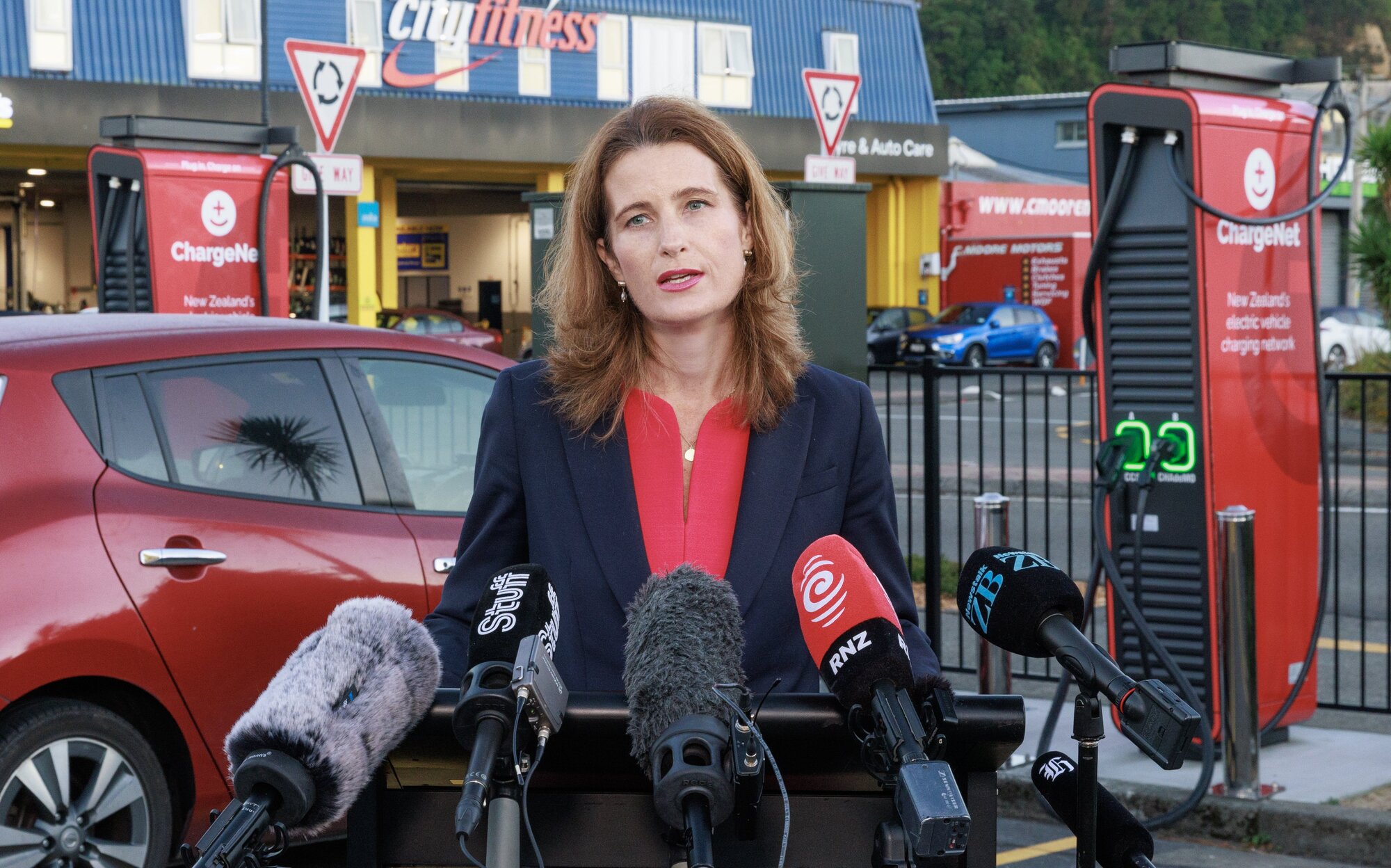
Govt announces $50m loans to install more EV chargers
Joel Kulasingham
Since the start of the war in Iran and increasing fuel insecurity, electric-vehicle sales have jumped by up to 50%.
Are global markets facing prolonged disruption, similar to Covid?
Joel Kulasingham
Forsyth Barr's Zoe Wallis on what to watch in the markets this week.
Lebanon PM: Iranian Guards commanding Hezbollah
Joel Kulasingham
Lebanon Prime Minister Nawaf Salam said members of Iran’s Islamic Revolutionary Guard Corps are commanding Hezbollah’s operations in the group’s ongoing war against Israel.
The Lebanese PM condemned the Iran-backed terror group for firing rockets at Israel and dragging the country into the war in the Middle East.
In an interview, Salam said: “It was declared that this war was in retaliation for the assassination of [Iran Supreme Leader Ali] Khamenei, so this means this war was imposed upon us.”
Referring to the incident in which an Iran-made drone hit a British base in Cyprus earlier this month, Salam said “that was the Revolutionary Guard, which is present and, unfortunately, is managing the military operation in Lebanon”.
“These people have forged passports and entered the country illegally,” he added.
The Lebanese Government has this month banned any activity by the Islamic Revolutionary Guard Corps in the country.
Beirut also imposed a ban on Hezbollah military activities and called on the group to hand over its weapons to the state.
“We are committed to the decisions we have made and we are working to implement them,” Salam said.
– Daily Telegraph UK
Map of the Middle East highlighting the Strait of Hormuz
Joel Kulasingham
About 20% of the world's oil passes through the Strait of Hormuz.
The Islamic Revolutionary Guard Corps said Iran will completely shut the strait if US President Donald Trump proceeds with threats to target Iranian energy facilities.
Iran’s exiled Crown Prince calls on Trump to spare civilian infrastructure
Joel Kulasingham
Iran’s exiled Crown Prince Reza Pahlavi has called on US President Donald Trump to spare Iran’s civilian infrastructure but continue targeting the regime.
Pahlavi urged the US and Israel to “eradicate” the Islamic Republic and “its apparatus of repression”.
“Iran is not the Islamic Republic,” he wrote on X.
“Iran’s civilian infrastructure belongs to the Iranian nation and is the asset of a free Iran’s future. The Islamic Republic’s infrastructure is a machine of repression and terror, deployed to prevent that future from being realised.
“Iran must be protected; the Islamic Republic must be eradicated.”
He encouraged Trump and Benjamin Netanyahu to “continue targeting the regime and its apparatus of repression, while at the same time preserving Iran’s civilian and vital infrastructure, which our people need to rebuild the country”.
Pahlavi added that the moment of Iran’s freedom was “near”.
– Daily Telegraph UK
Trump is finally eyeing an exit from Iran. But will he take it?
Joel Kulasingham
Ever since United States President Donald Trump began what he now delicately calls his “excursion” into Iran, Washington has been consumed by the question of when he would call it a day – even if many of his war goals remain unaccomplished.
Mood around the Gulf tense as US escalates war efforts
Vera Alves
Gregg Carlstrom, Middle East correspondent for the Economist, says the mood around the Gulf remains tense.
He told Ryan Bridge TODAY that although the magnitude of Iran's attacks on the Gulf states has "significantly" decreased since the beginning of the war, concern remains about how long the conflict will go on and how it will escalate.
"Particularly when you hear the talk that we heard from Donald Trump about attacking power plants in Iran.
"If he did that, I think it's quite likely Iran would strike at similar facilities in Gulf countries, not just power plants, but water desalination as well, and those things are critical for life in a very inhospitable region."
Judging from United States military's movements into the Middle East, it seems as though the country is looking to escalate the war, rather than wind it down, Carlstrom said.
"What they [the US] are doing right now is sending significant numbers of troops to the region, not just warplanes and warships as we've seen previously, but a marine detachment making its way to the Middle East from Japan; there's a couple of amphibious assault ships on their way from California."
Nato chief ‘absolutely convinced’ alliance will reopen Strait of Hormuz
Joel Kulasingham
Mark Rutte said he is “absolutely convinced” that Nato will be able to reopen the Strait of Hormuz.
The secretary general of the alliance argued that the secret nature of the military operation required its members to take time to plan their responses.
He told Fox News: “European allies and partners all over the world have used the last couple of weeks to make sure that we come together. They start planning to see what we can do collectively as allies, as partners of the United States.”
Nato has come under fire from Donald Trump for its failure to act quickly and help reopen the waterway.
However, despite this, Rutte said the US operation was “crucial” as a result of the “existential threat” from Iran.
– Daily Telegraph UK
Could Iran really strike Britain?
Joel Kulasingham
The missile that's central to claims that Iran can now strike London is longer than a double-decker bus and based on a design from North Korea.
The Khorramshahr is around 13m long and can carry a payload of up to 18,000kg, about the weight of a large family car.
Yet the crucial statistic of whether its range extends to the UK remains uncertain, missile experts say.
Israel faces ‘weeks’ of more fighting
Joel Kulasingham
Israeli citizens have been told to expect the war in the Middle East to carry on for weeks more.
The Israel Defence Forces (IDF) said there was no immediate end in sight to fighting against Iran and Hezbollah in Lebanon.
Brigadier General Effie Defrin, the military’s spokesman, said in a televised briefing: “Citizens of Israel, we face more weeks of fighting against Iran and Hezbollah.
“With each passing day, we are further weakening the [Iranian] terror regime. We will not allow it or its proxies to threaten the citizens of Israel or the existence of the state of Israel.”
Meanwhile, he said that Israel had managed to intercept more than 90% of incoming missiles.
– Daily Telegraph UK
NRC boss: Transport operators need to pass on fuel costs to customers
Joel Kulasingham
National Road Carriers chief executive Justin Tighe-Umbers says it is "absolutely key" for transport operators to pass increasing fuel costs on to customers.
He told Ryan Bridge TODAY that some companies have the right within their contract to adjust what they charge.
"Others don't have this ability, and it's absolutely critical that customers respond maturely to this ... because there's just no way trucking firms can sit on a doubling of diesel."
Fuel accounts for 25% of the costs for transport operators, said Tighe-Umbers.
"Seeing that [diesel] double, I guess you're seeing fuel getting closer to 50% of their costs which is significant."
Luxon: Iran war will have 'significant financial impact' but 'we cannot support everybody'
Joel Kulasingham
The volatility stemming from the war in Iran means it’s important to have good economic managers in charge of the country, Prime Minister Christopher Luxon says.
His comments follow Fitch downgrading New Zealand’s outlook from stable to negative, citing concerns over debt levels. The country’s core rating remains at AA+.
Luxon told Newstalk ZB’s Mike Hosking Breakfast the war would have a “significant financial impact” and would affect the Government’s Budget – even if, as Hosking predicts, it ends in the next three weeks.
“We are going into this better than we were two years ago. You would have seen even a week before the Iran conflict kicked off, our preliminary forecast had us performing much better than we were even three months ago,” he said.
Asked if he was worried people would blame him for the results of the war, Luxon said New Zealanders are tired.
“We've rolled in through Covid, we've come out through inflation and recession on the other side, we've dealt with tariffs last year, we're dealing with a fuel crisis this year. People are just saying ‘when will life get back to normal?’”
He said it was important to balance cost of living support with good financial discipline.
“We will do everything we can to support New Zealanders, but I have to be really straight up and honest to say we cannot support everybody to the extent they probably want to be supported because we're going to deal with some of the financial constraints that we've got.”
The cheapest places to get petrol in NZ
Joel Kulasingham
Gaspy director Mike Newton says a spread of petrol stations across the country have the lowest prices today.
Waikato stations, including in Morinsville and Hamilton, Gull in Mangawhai, Eskdale in Hawke's Bay and a station in Otago, are all in the top five cheapest, he told Ryan Bridge TODAY.
Otara is the cheapest place to get petrol in Auckland, but a range of stations are priced 5c more expensive at $3.23 a litre across the city.
'We have not been asked': Luxon on efforts to open Strait of Hormuz
Joel Kulasingham
New Zealand had not been asked or engaged around any multilateral efforts to open the Strait of Hormuz, Luxon said - responding to a report that Nato secretary Mark Rutte overnight had said a group of Nato countries and allies including New Zealand were coming together to secure the strait.
Rutte’s statement was referring to two separate things, Luxon said.
The first was like-minded countries including New Zealand signing up for a joint statement on Friday night condemning the closure.
“The second part of what they're alluding to is then there is a discussion around multilateral efforts to how you might go about doing that. We have not been asked, we have not been engaged on any of that and obviously any future decisions around that we'd have to have a pretty big discussion at Cabinet.”
Luxon: Govt planning for possible shortage of crude oil
Joel Kulasingham
The Government is planning for future scenarios where there could be a shortage of crude oil, Prime Minister Christopher Luxon says.
He remained focused on security of fuel supply, he told Newstalk ZB’s Mike Hosking Breakfast, saying that would have “the biggest single impact on jobs and incomes”.
And he says the Government will have something to say “shortly” on relief for those affected by soaring fuel prices, particularly diesel which was affecting rural communities.
Asked if he needed another week to make those decisions, he said no. "We’re going to need to get people support quickly.”
Luxon said New Zealand's fuel supply was “in quite good shape”.
He would be talking to the Singaporean Prime Minister shortly, and fuel importers had reassured the Government they had good supply – confirming that went beyond the 49 days of fuel currently in stock.
“Having said all of that, I’m wanting our system to think about ... is there going to be a shortage of crude at some point coming through that strait? Because even if it comes through and it flows through and it’s released tomorrow, there must be some lag effect in the system.”
Refineries in South Korea and Singapore were trying to secure supply from the US and other sources.
Asked about Russian fuel, he said “we don’t need to go there at this point in time”.
Strikes reported in Iraq
Joel Kulasingham
Three strikes south of Baghdad have been reported.
Local authorities said the Popular Mobilisation Forces (PMF) were targeted but that there had been no casualties.
The pro-Iranian state security agency has previously targeted US forces.
“Units of the PMF were targeted by drone strikes and airstrikes, with three strikes in different locations,” a statement from a local emergency crisis cell said, adding that the positions were deserted and there were no casualties.
– Daily Telegraph UK
MBIE to provide 1pm update on NZ fuel data
Joel Kulasingham
The Ministry of Business, Innovation and Employment will provide an update on fuel data at 1pm today, Finance Minister Nicola Willis says.
"It will be slightly changed, but will again confirm that we have ample stocks both in the country and on the way."
Willis told Ryan Bridge TODAY that the Government will keep reporting the data twice a week.
Numbers will fluctuate between shipments of fuel as they carry large quantities, she said.
Israeli settlers burn buildings in attacks on West Bank villages
Joel Kulasingham
Palestinian residents said that Israeli settlers torched buildings and cars in attacks on several villages in the occupied West Bank, with Israel’s Army condemning “violence of any kind” after the fact.
The reported arson yesterday came in the midst of a spate of killings of Palestinians by Israeli settlers in the West Bank since the start of the Iran war.
Trump's Iran deadline could be negotiation strategy
Joel Kulasingham
Donald Trump’s 48-hour deadline for Iran to open the Strait of Hormuz could be a negotiation strategy, foreign policy expert Jeffrey Price says.
The US President has warned he will obliterate the country’s power plants if the strait is not opened immediately.
But Trump has used deadlines before, and sometimes they have been extended, Price, a senior fellow at the Johns Hopkins Foreign Policy Institute, told Newstalk ZB’s Mike Hosking Breakfast.
“If you look at his Truth Social, people have noted that just the day before he had a different post which was about conditions that might lead to the winding up of the military operation.
“Those included a lot of military objectives, protecting our allies, and not about, say, regime change or changing the sort of the conduct of the Iranian regime within its borders. So it might just be a negotiating strategy. We'll see.”
Price said in previous hostilities with Iran, both the objectives and Iran’s response had been more limited.
“But as they say in the Pentagon, the enemy gets a vote. And this operation seems to be maximalist, aimed at regime change, and got a furious response from Iran. And they've shown they're able to respond symmetrically when they want to.”
Winston Peters: Govt will 'seriously consider' providing assistance to secure Strait of Hormuz
Joel Kulasingham
Foreign Affairs Minister Winston Peters says the Government will "seriously consider" providing assistance to secure the Strait of Hormuz, if done for safety.
Peters told Ryan Bridge TODAY if support is provided "not in a warlike way or a bellicose way, but in a safety way", the Government will seriously consider it.
Asked if that meant sending military assets, Peters said, "if you haven't got military assets, you have no help you can give at all".
"We're talking about the safety and security of people, it's not taking part in a war or engaging in anything that we're not involved in."
Peters said this is a time for "great caution" and "cool minds" as international relations have become more unpredictable.
Israel investigating own forces killed civilian near Lebanon border
Joel Kulasingham
Israel’s military is investigating whether its own fire killed a civilian near the Lebanese border on Sunday (local time).
Hezbollah had claimed an attack in the same area.
Israeli emergency workers said that a man was killed in a “direct hit” on his car by a rocket from Lebanon, making him the first fatality in the north of the country since the latest round of fighting.
The military said it was now investigating whether he had been killed by Israeli fire. Two Israeli soldiers have been killed in fighting in Lebanon.
“The possibility that the incident involved fire originating from IDF [Israel Defence Forces] soldiers is being examined,” the military said in a statement.
– Daily Telegraph UK
Army chief: Israel to 'advance targeted ground operations' in Lebanon
Joel Kulasingham
Israel's military will expand its ground operations in Lebanon against Hezbollah, its army chief said, warning that the offensive against the group was still in its early stages.
"The operation against the Hezbollah terrorist organisation has only begun ... This is a prolonged operation," Lieutenant General Eyal Zamir said in a statement.
"We are now preparing to advance the targeted ground operations and strikes according to an organised plan," he added.
Zamir's comments came as Israel struck more targets in south Lebanon on Sunday (local time), including a key bridge, triggering a warning from the Lebanese President that it could be launching a full ground invasion.
Lebanon was pulled into the Middle East war when Hezbollah began firing rockets into Israel on March 2 to avenge the killing of Iran's Supreme Leader Ayatollah Ali Khamenei in an Israeli-US strike.
Israel has sent troops into Lebanon and carried out extensive airstrikes, while Hezbollah has launched rocket barrages.
"In recent weeks, we have achieved significant accomplishments: we have struck more than 2000 targets, dozens of weapons storage facilities, and struck and eliminated hundreds of terrorists," Zamir said.
"We will not stop until the threat is pushed away from the border and long-term security is ensured for the residents of northern Israel."
– AFP
New Zealand will offer its help to support flow of oil
Helen
New Zealand will offer its help to support the flow of oil through the Strait of Hormuz if other countries do too, according to a Herald commentator.
United States President Donald Trump has called for allied nations to join a coalition to secure the strait and the flow of oil through it.
Fran O'Sullivan told Herald NOW Business with Garth Bray, although Prime Minister Christopher Luxon has said that whether New Zealand joins is a decision for Cabinet, she believed "if others went, he would want us to go too."
"I mean, that's the nature of previous decisions he's made. I think if you go back to the issues which are happening with Gaza earlier on and flow around there, that's what we do."
O'Sullivan said the decision would not be popular.
Iran launches fourth missile attack against Israel
Helen
Iran has launched its fourth missile attack of the morning against Israel.
No injuries were reported but sirens were triggered across the country.
Last night, 175 people were injured in an Iranian ballistic missile strike in Dimona and Arad.
– Daily Telegraph UK
Hezbollah says it attacked soldiers in north Israel
Helen
Lebanon's Iran-backed Hezbollah militant group said it attacked Israeli soldiers in northern Israel's Misgav Am on Sunday (local time), where first responders said rocket fire from Lebanon killed one person.
In a statement, the group said its fighters targeted "a gathering of Israeli enemy soldiers" in Misgav Am "with a rocket barrage" – one of a series of attacks it claimed against Israeli troops in northern Israel and southern Lebanon on Sunday.
The death is the first Israeli fatality from fire from Lebanon since fighting started with Hezbollah on March 2.
– AFP
Six killed, one missing after helicopter accident in Qatar waters
Helen
Six people were killed and one person was reported missing in a helicopter accident in Qatar's territorial waters, the Interior Ministry said on Sunday.
Qatar's Defence Ministry had said hours earlier that a helicopter crashed after a "technical malfunction" during a routine flight, without specifying the type of helicopter or the purpose of the flight.
Iran repeats its warnings against infrastructure
Helen
Iran's military has renewed its threats against the region's infrastructure after US President Donald Trump vowed to "obliterate" power plants in the Islamic Republic if the Strait of Hormuz was not swiftly reopened.
"Following previous warnings, if Iran's fuel and energy infrastructure is violated by the enemy, all energy, information technology and desalination infrastructure belonging to the US and the regime (Israel) in the region will be targeted," the Iranian military's operational command Khatam Al-Anbiya said in a statement carried by the Fars news agency.
The statement came after Trump gave Iran a 48-hour deadline to open the vital route in the Gulf to shipping traffic after it was effectively closed early in the Middle East war.
The new targets
Helen
More than three weeks into the Middle East war, key infrastructure across the region – from gas and oil facilities to nuclear sites – has come under fire.
Now, the conflict could spill over to power plants.
US President Donald Trump has threatened to strike those located in Iran if Tehran does not reopen the strategic Strait of Hormuz, vital to global oil supplies, by Monday night.
Iran has more than 90 power plants, some of them on the Gulf coast at the heart of the hostilities that began on February 28 with US-Israeli strikes on Tehran.
About 38% of its electricity comes from combined-cycle plants, followed by gas-fired stations (26%).
Renewables make up 13% of output and nuclear energy only about 1%, according to the state IRNA agency, citing officials in December 2024.
Iran currently has just one operational nuclear power plant at Bushehr, with a capacity of 1000 megawatts – only a fraction of the country's needs.
Russia helped build the plant.
Iran and Russia signed a US$25b deal in September 2025 to build four nuclear plants in southern Iran, each with a capacity of about 1255 MW, according to IRNA.
'Escalate to de-escalate'
Helen
The United States may need to "escalate" its attacks against Iran to be able to wind down the war, Treasury Secretary Scott Bessent says.
President Donald Trump gave seemingly contradictory trajectories for the US military campaign, threatening to "obliterate" Iranian energy plants if Tehran did not fully open the pivotal Strait of Hormuz, just a day after saying US objectives were "very close" and that he was considering "winding down" the war.
Asked on NBC's Meet the Press if Trump was winding down or escalating the war, Bessent said: "They're not mutually exclusive. Sometimes you have to escalate to de-escalate."
"This is the only language the Iranians understand," he argued.
Iran's threats against shipping through the Strait of Hormuz, through which about a fifth of global gas and oil supplies flows, have caused energy prices to soar around the world.
Govt moves to twice-weekly updates
The Government is moving to a twice-weekly model of updating New Zealand on the supply situation in light of the Middle East conflict and effective closure of the Strait of Hormuz.
The update, accurate to March 18, shows New Zealand had 49.9 days’ worth of petrol either in-country or on-water, 45.5 days of diesel and 44.7 days of jet fuel. The combined stock total is 46.9 days.
A further eight shipments were expected to arrive by April 1. Of those, seven were expected between March 19 and 25. They carried 20 days of petrol, 16 of diesel and 12 of jet fuel.
An additional vessel was scheduled for between March 26 and April 1. That, however, carried no petrol, four days of diesel and 10 days of jet fuel.
“This data does not include shipments more than two weeks away, including cargoes already loaded, currently loading or planned,” the Ministry of Business, Innovation and Employment said.
In comparison, the previous update, which was accurate to March 15, showed New Zealand had 51.3 days’ worth of petrol either in-country or on-water, 47.1 days of diesel and 49 days of jet fuel.
Eleven shipments were expected to arrive by March 29.
Willis said she expected the exact number of days of fuel stock to jump around slightly, but New Zealand continued to have ample stock, in-country and on the way.
Australia receives about 80 shipments of oil per month on average, according to the Guardian.
On Sunday, it was reported that six oil ships expected to head to Australia from various Asian nations had been deferred or cancelled in recent days.
Govt watching for disruptions
Willis said that hadn’t happened to any vessels coming here.
“But that is one of the things that we are watching for that would be a sign that we might have future supply disruptions,” she said, acknowledging it was a small proportion of the overall shipments Australia receives.
“Some of those are deferred rather than cancelled, so they’re somewhat delayed.
“What we can expect is with the crunch that’s on with the Strait of Hormuz, the extra tankers that are around other ports in the world, that there may be delays in shipments, and that shouldn’t always be taken as a sign that there will be supply shortages, but that we can expect some delays in the supply chain.”
National Fuel Plan
The Government has the National Fuel Plan, which lays out potential measures that could be taken should there be a larger impact on New Zealand’s supply of fuel. New Zealand is currently at Level 1, which primarily involves the Government co-ordinating with industry to limit any potential disruption.
Willis said New Zealanders were already voluntarily taking action to reduce their own travel, including carpooling or taking public transport.
“I just note that Kiwis are making those choices even without me telling them to.”
She acknowledged some petrol stations had experienced high demand and some were seeing their stock dwindle more quickly, depending on how competitive their prices were.
“The fuel companies are ready to make sure that they can be topped up again. If a station runs dry, it can be topped up.
“Ultimately, New Zealanders are making their own decisions about when they fill their tanks, but it doesn’t have an overall impact on the supply of fuel available in New Zealand.”
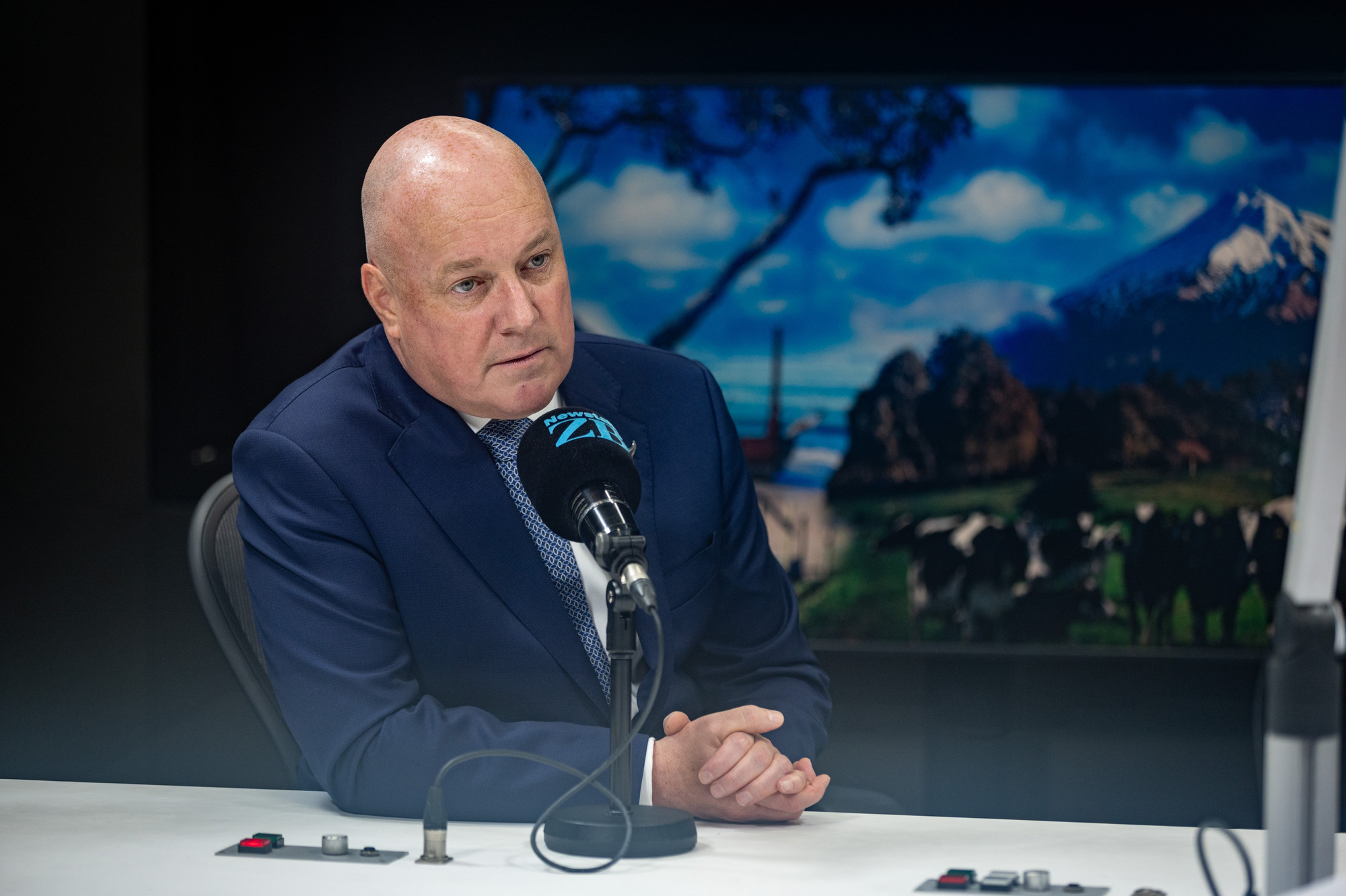
Last week, Luxon said the Government was preparing for the “worst-case scenario”.
Among possible actions the Government could take is diversifying where fuel is imported from, broadening the types of fuel that can be imported, and bringing down the minimum amount of fuel companies must hold.
Over the weekend, petrol hit $4 a litre in some Auckland suburbs, with an average of $3.30 a litre for unleaded 91 and $3.61 a litre for unleaded 98 across the country.
In terms of Government support for households challenged by rising prices, the Herald reported last week that two potential levers that could be pulled would be making adjustments to the In-Work Tax Credit and the Independent Earner Tax Credit.
If these were increased, the beneficiaries would be working people and families, as opposed to New Zealanders on the benefit or superannuants.
Jamie Ensor is the NZ Herald’s chief political reporter, based in the press gallery at Parliament. He was previously a TV reporter and digital producer in the Newshub press gallery office. He was a finalist in 2025 for Political Journalist of the Year at the Voyager Media Awards.