Youth justice: Big spike in serious repeat young offenders. Where are they, and what offences do they commit most?
The latest youth justice statistics show a 26 per cent spike last year in the number of serious young offenders who continue to offend, with the Covid-19 pandemic seen as a contributing factor.
The youth justice indicators - released yesterday by the Ministry of Justice - show 877 young people aged between 14 and 17 identified as “serious and persistent” offenders, the highest number since 2016/17 and well above the previous year (694 such offenders).
The most common offences were burglary/unlawful entry, robbery/extortion and theft, while the number of offenders rose most sharply in Canterbury - where it more than doubled in a year - followed by Northland.
There was also an increase in the number of serious and persistent child offenders (aged between 10 and 13), though the rise was far more modest - 4 per cent from 2021/22 to 2022/23.

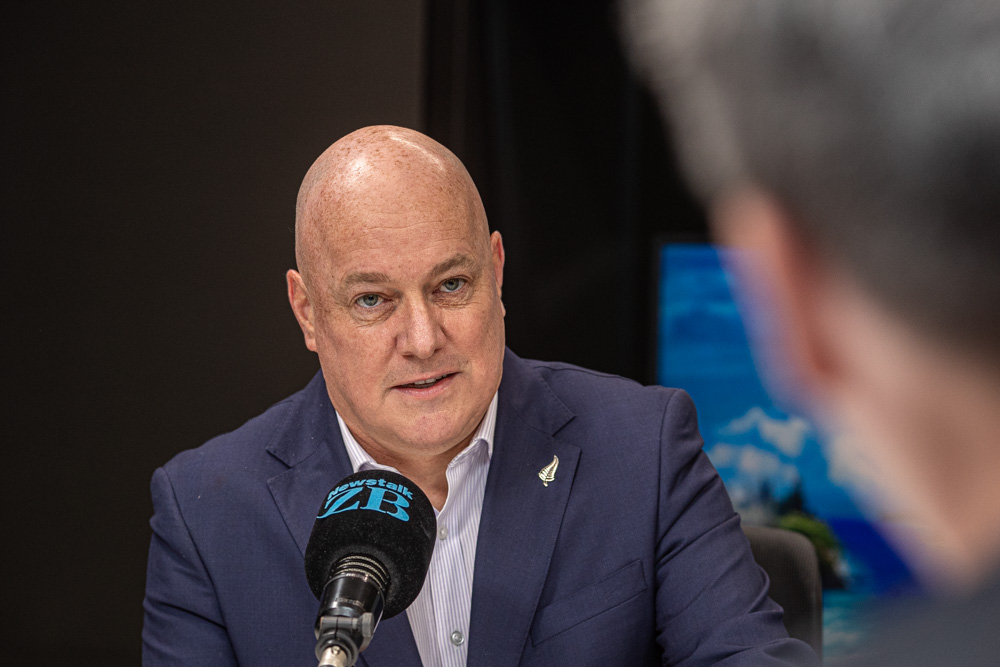
Speaking to Newstalk ZB’s Mike Hosking earlier this morning, Police Commissioner Andrew Coster said police were making “a bit of traction” on youth crime, but there were a small group of offenders causing a huge amount of harm.
This is the first time the numbers for serious and persistent youth offending - added due to Government priorities - have been included in the data. They’ve had at least three police proceedings - ranging from a warning to being charged - within 12 months, with at least one of the offences having a maximum penalty of at least seven years’ jail.
The rising trend underlines the challenge for the Government to turn the sharp increase into a 15 per cent reduction in the number of serious and persistent offenders by 2030 - one of its public service targets.
There has also been a rise in the number of child and youth offenders overall, as well as in the number of police proceedings per capita and reoffending rates among children.
While there has been a steady fall in youth crime statistics over the last 15 years, the numbers reinforce the uptick in the post-pandemic years.
“Drug and alcohol issues, family violence, stress, poverty, intergenerational trauma - those are the driving factors,” said Auckland University Professor Ian Lambie, who is the chief science adviser (justice) to the Prime Minister’s Office.
“A thing like Covid places more stress on all of us, but particularly families with children who couldn’t go to school, were under more financial stress, were isolated from the community. The underlying issues have never gone away, but Covid highlighted them.”
The latest statistics show, for child offenders (aged 10 to 13):
For youth offenders (aged 14 to 17):
The number of per capita police proceedings also increased for both age cohorts: 7 per cent for those aged 10 to 13, and 11 per cent for those aged 14 to 17.
While reoffending rates remained relatively static, the two-year rate for children managed outside the formal justice system increased from 36 to 40 per cent; the biggest increases were for 10- and 11-year-olds.
Not included in the statistics were ram raids, which may have captured crime headlines in recent years but are not a specific offence category. Police have said that the number of ram raids spiked in mid-2022 and have been falling since.
The youth justice numbers are also distinct from justice statistics based on finalised court charges, though both data sets show an increase in recorded youth crime.
Lambie said the trend in statistics highlighted the need for early intervention to alter a child’s life course from what he has previous termed the “prison pipeline”, or ”the seemingly inevitable journey from early offending to eventual adult prison”.
“We need a whole whānau and community approach. We need to focus on children under the age of 10 who are potentially the most high-risk of ending up in the Youth Court,” he told the Herald.
“It’s partly a justice response, but it’s really more an education and health response. Education is absolutely key, and obviously health, but a mental health response is key as well.”
The Government has a public service target of a 15 per cent reduction by 2030 in the total number of children and young people with serious and persistent offending behaviour.
Budget 2024 included $28 million over four years – split between Oranga Tamariki, courts, justice and police – for a pilot sending serious repeat young offenders to a boot camp, expected to start in the middle of this year and to be run by Oranga Tamariki.
The policy has been described as regurgitating a failed experiment, though the Government says they will be better than previous iterations; the boot camps from the last National-led Government had re-offending rates at more than 80 per cent.
The Government is also pursuing Social Investment 2.0, which aims to use data to target our most vulnerable with early, locally-delivered interventions to alter one’s life course away from the wrong side of the tracks.
Derek Cheng is a senior journalist who started at the Herald in 2004. He has worked several stints in the press gallery and is a former deputy political editor.