All Blacks v France: Assistant coach Mike Blair on the All Blacks’ attacking blueprint moving forward
By Liam Napier in Christchurch
There was no hesitation, no guesswork required, to decipher the defining direction the All Blacks are attempting to chase.
Dave Rennie’s era will be defined by speed, pace and tempo of attack.
Victory over France in the first test of the year in Christchurch was far from perfect. It was frustrating at times, tense and nervous as the All Blacks ran down the clock to close out the knife-edge contest and their defence must drastically improve.
But from an attacking perspective, everyone could immediately see where this team could go.
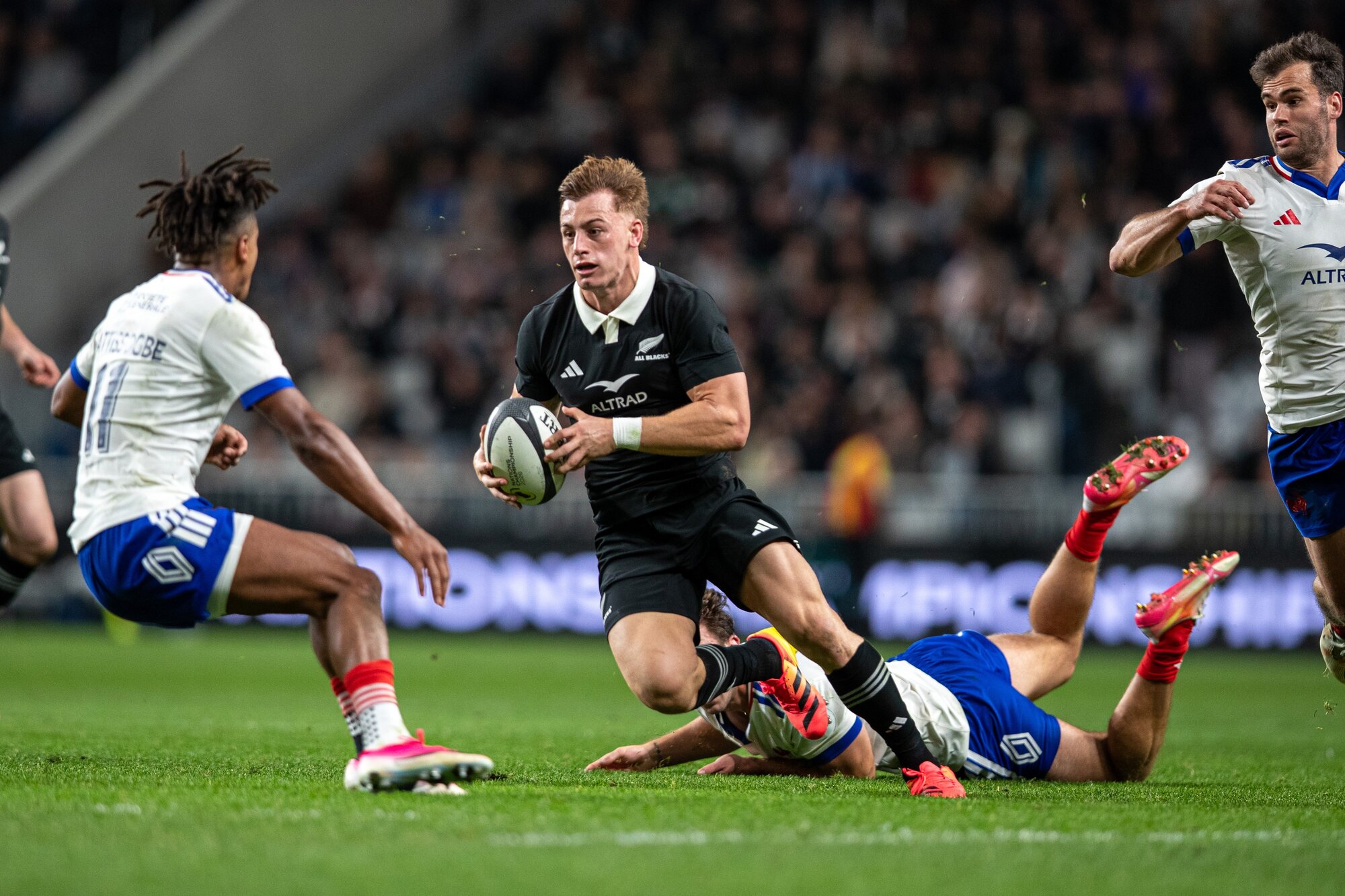
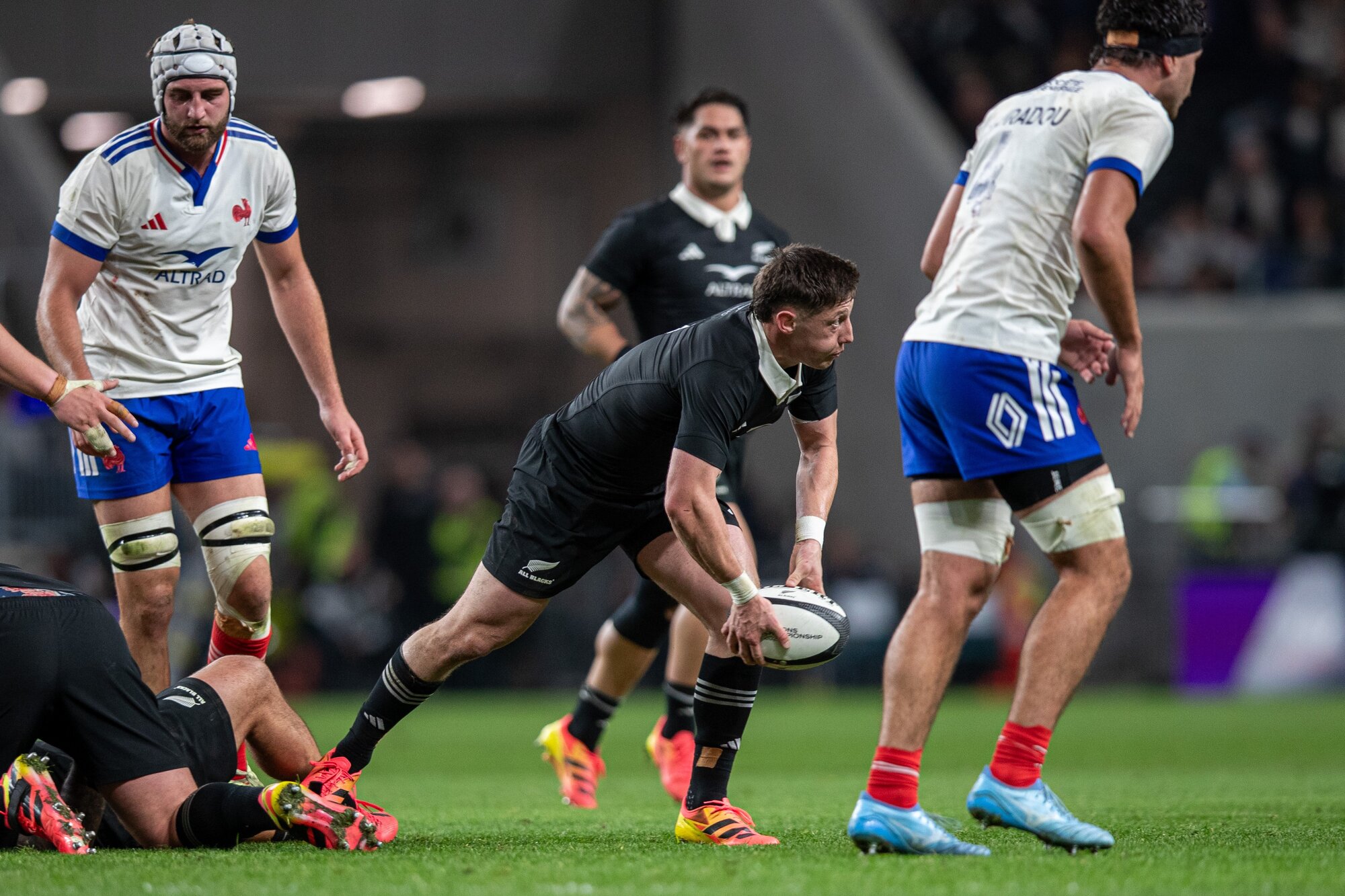
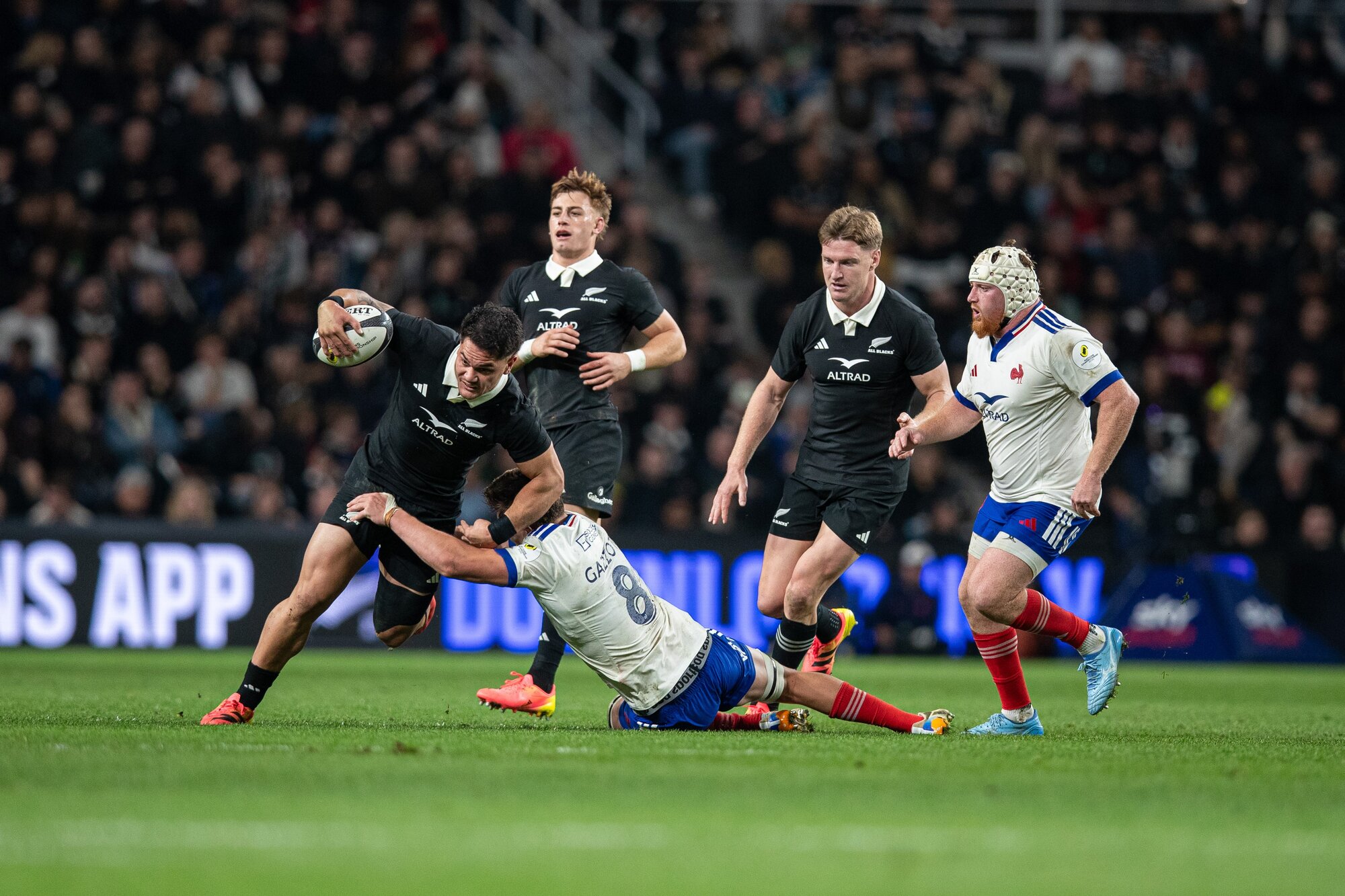
It didn’t always stick and the skill execution, the option-taking, needs refinement but with their speed of ruck, ball movement, freedom, offloading and bodies in motion, the All Blacks’ attack evoked memories of yesteryear.
One match into Rennie’s tenure and New Zealand have a clearly defined direction.
In many ways, this approach makes sense.
Rugby in the modern age, in its constant quest to improve the on-field product, continues to embrace law tweaks such as free kicks from scrums to minimise stoppages and speed up the game.
New Zealand rugby players inherently want to use the ball. This is true throughout history. But so, too, is this approach now prevalent in both hemispheres, with this year’s Six Nations dominated by high-scoring contests.
Rennie and new All Blacks attack coach Mike Blair, while only one match into their budding national partnership, grasp where the game is going.
Combine that with a quest to embrace New Zealand’s natural athleticism and, with more time together, there is already a sense the All Blacks could soon rekindle their elite attacking potential.
Peter Lakai and Cam Roigard’s tries are examples of how lethal the All Blacks can be when they get it right to capitalise on quick, clean ruck ball.
An area that consistently struggled to fire the last two years, with individual brilliance relied on far too heavily, has rapidly improved – and should only get better as cohesion builds, ruthlessness increases and conditioning comes to grips with Rennie’s demands for repeat efforts.
“When you coach a team, you look at how the game is being played, the direction it’s going, the quality of player you’ve got, the skills they’ve got and then try and mould and formulate a plan to get the best out of them,” Blair said one day after the All Blacks’ 34-32 win.
“We’ve talked about momentum and how you can play with that. We’ve talked about multi options and everyone being alive. It’s giving the players a bit of freedom and not being really structured, letting guys express themselves. They’ve got huge natural ability, so letting that be at the forefront of our attack.
“I was pretty pleased. We created a lot of opportunities, some of them we didn’t take. That’s a bit of rustiness, a bit of cohesion, with the players. It’s not a huge amount of time we’ve had together. We’ll build on that next week.
“It’s time in the saddle, training together, working together to get that cohesion.
“Did they enjoy the speed of the game? I’m not too sure. They worked really hard and they’re feeling it this morning, but we’ve shown the players where we have to be to play that type of game. We’ve got a good idea of it now, and some hard work ahead.”
On a hard and fast track under the Christchurch roof, the All Blacks relished the chance to play. Their ball-in-hand approach was starkly evident as they kicked just six times in the first half. The box kick, in particular, was largely shelved.
With Wellington forecast to whip up its usual wind and rain, the All Blacks may need to adapt, slightly, against Italy next weekend but during their breathless championship-winning run, the Hurricanes proved attack does not have to be hindered by conditions.
“We think we’re dangerous with ball in hand and we can stress opposition with that,” Blair said. “We probably could have kicked a little bit more to have a bit more balance to the game.
“Kicking isn’t a negative thing. It can be used to break a game up, to create unstructured turnovers and counter-attack. We need to get the balance right with that but I love the mentality to go after the French team, hold on to the ball and create stress on their defence.”
The attacking blueprint is set. Finish a few more chances and the All Blacks could again become a potent beast.
Liam Napier is a Senior Sports Journalist and Rugby Correspondent for the New Zealand Herald. He is a co-host of the Rugby Direct podcast.