All Blacks v Ireland: Eden Park clash shapes Nations Championship - Gregor Paul
In the context of the Nations Championship, this Saturday’s clash between the All Blacks and Ireland is arguably the pivotal encounter of the July phase of the competition.
This is No 2 versus No 3 in World Rugby’s rankings, but in the inter-hemisphere context, it is No 2 versus No 2 based on the respective last Rugby Championship and Six Nations finishes of New Zealand and Ireland.
It is the heavyweight fixture of the final round.
A win for the All Blacks will put them in pole position to top the Southern Hemisphere table – their November run against Scotland, Wales and England is considerably easier than that of the Springboks, who face Ireland, France and Italy.
If Ireland win, they will return home undefeated, which will place them ahead of the French who lost in Christchurch, with both yet to play South Africa, Argentina or Fiji.
Whether anyone particularly cares about the wider Nations Championship is not yet clear.
Certainly this Saturday, for New Zealanders the only thing that will matter is preserving the 32-year unbeaten record at Eden Park and seeing the All Blacks put together a more accurate and clinical performance.
For Ireland, another win in New Zealand will be a source of celebration in itself, as despite the fact defeats on home soil happen more often than they used to, an away victory against the All Blacks remains a coveted prize.

Whether, by November, there will be greater fan buy-in, or more overt effort by the media, players and coaches to frame tests in the context of the Nations Championship is the great unknown.
To date, each nation has seemingly viewed things through rugby’s default lens of every test having meaning and context in its own right.
Old habits are hard to break, and coaches especially love to say how they are not looking beyond the next opponent – which must be a giant buzz kill for those empowered to market the Nations Championship.
The most the All Blacks have said about it has been a lukewarm endorsement from head coach Dave Rennie, who said: “It’s [July tests] got a bit more interest now because the Southern Hemisphere are scrapping against each other, even though we won’t play each other.
“I quite like the concept, it’s a focus for three weeks and you put it to bed for a few months, and then come back in November. I think it’s got a bit of merit.”

Perhaps there is something deeper to explain this reticence to get behind the Nations Championship – its flawed formatting has created a farcical inequity.
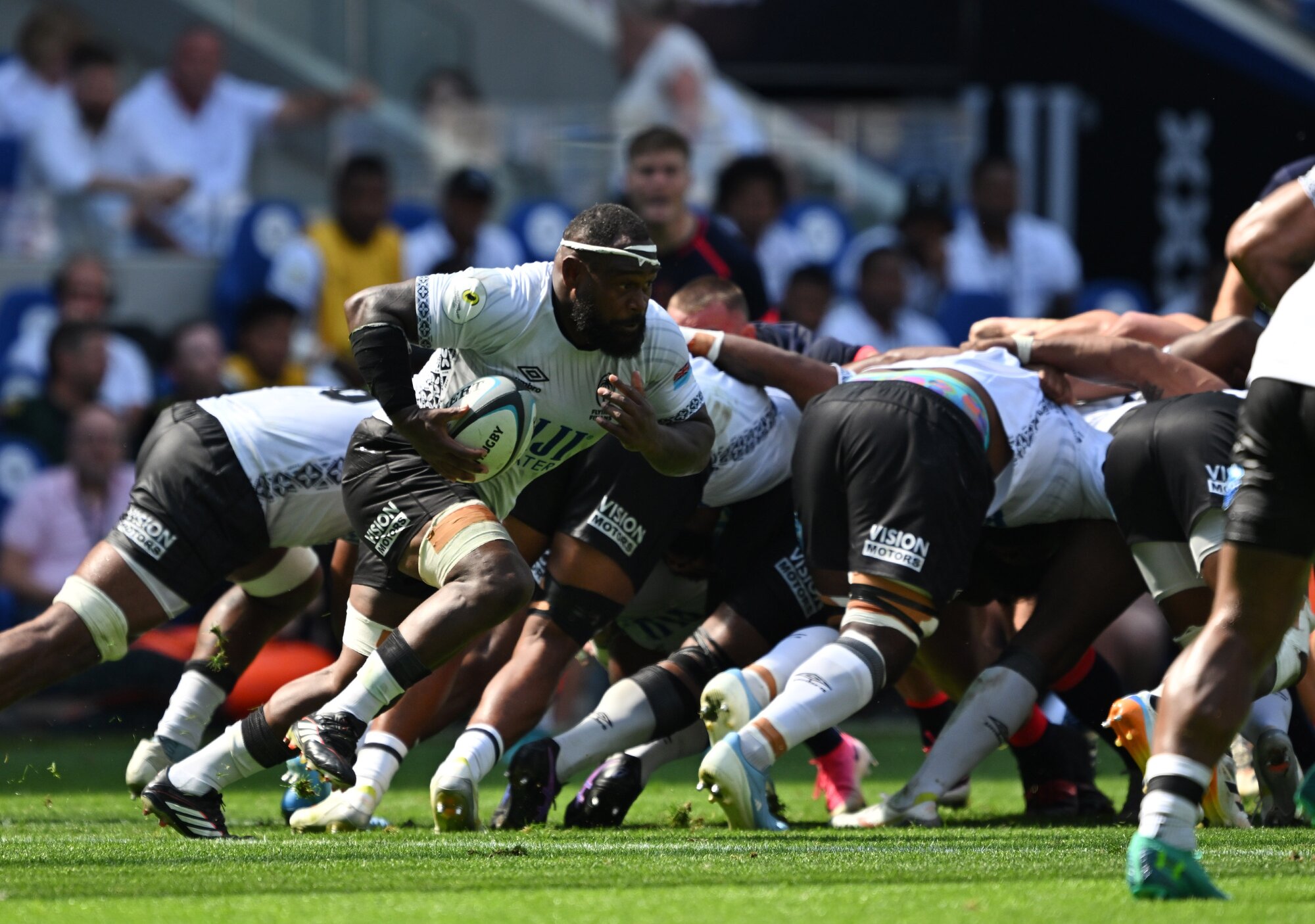
The ridiculousness of how this has been made to work was on show last weekend when Fiji played a home game in Liverpool and Japan were forced to travel to Australia to play Ireland.
The madness will go one step further this weekend when Scotland and Fiji clash at Murrayfield in Edinburgh, in what will be a home game for the latter.
This means that Scotland, a semi-serious contender to top the Northern Hemisphere contingent, have four home games rather than three, and Fiji have been denied the chance to play in conditions that would greatly enhance their chances of winning.
This flawed and inequitable set-up speaks more to the corrupt power dynamics of the global game and its ability to sell itself as a sport built on noble values, while turning a blind eye to the inequities it creates to protect the big guys.
Fiji supposedly can’t play at home because they don’t have a stadium with the requisite 25,000 seats to host games.
There is no facility in Fiji with 25,000 seats so why invite them to join the competition and apply this arbitrary insistence on stadiums having a minimum capacity?
The commercial arrangements of the Nations Championship don’t extend to pooling gate revenue, so the rationale for imposing a minimum capacity feels more like a means to prevent the game’s most powerful unions having to play in the sweltering heat and humidity, and all but eliminate the possibility of losing to Fiji.
If this seems far-fetched, then why didn’t Ireland play Japan in Tokyo last weekend at one of the many venues that have capacities way beyond 25,000 seats?
Japan coach Eddie Jones made his thoughts on why the game was being played in New South Wales – the week after Ireland had played in Sydney and the week before they were due to fly to Auckland.
“Ireland have all the power at World Rugby,” he said.
“So we have to play our home game – which should be in Tokyo – in Australia to make sure Ireland don’t have to travel too much.”
Jones is known to have had a few off-the-wall rants, but this one is factual rather than emotional and possibly tinged with memories of how Ireland struggled with the heat and humidity at the 2019 World Cup where they lost to hosts Japan in pool play.
The rugby these past two weeks has been entertaining and compelling, but that can’t be used to hide the inequities and inconsistencies of the set-up and pretend that everything hasn’t been set up to protect the powerful.
Gregor Paul is one of New Zealand’s most respected rugby writers and columnists. He has won multiple awards for journalism and written several books about sport.