All Blacks v Ireland: The most important change witnessed in Dave Rennie’s side in Nations Championship – Gregor Paul
Three tests into the Dave Rennie era and the All Blacks’ new favourite word – optimism – is likely being felt around the country.
The All Blacks posted three wins in July and progressed week-to-week by adding little bits to their attack, tightening their set piece and improving their understanding and execution of their defensive structure.
From being a team last year who didn’t look like they could walk and chew gum, now they can do both and blow bubbles.
The fog that sat over this team throughout 2024 and 2025 has lifted – and the All Blacks now have a universally understood vision of being a team that plays at a high-tempo with a multi-option attack plan.
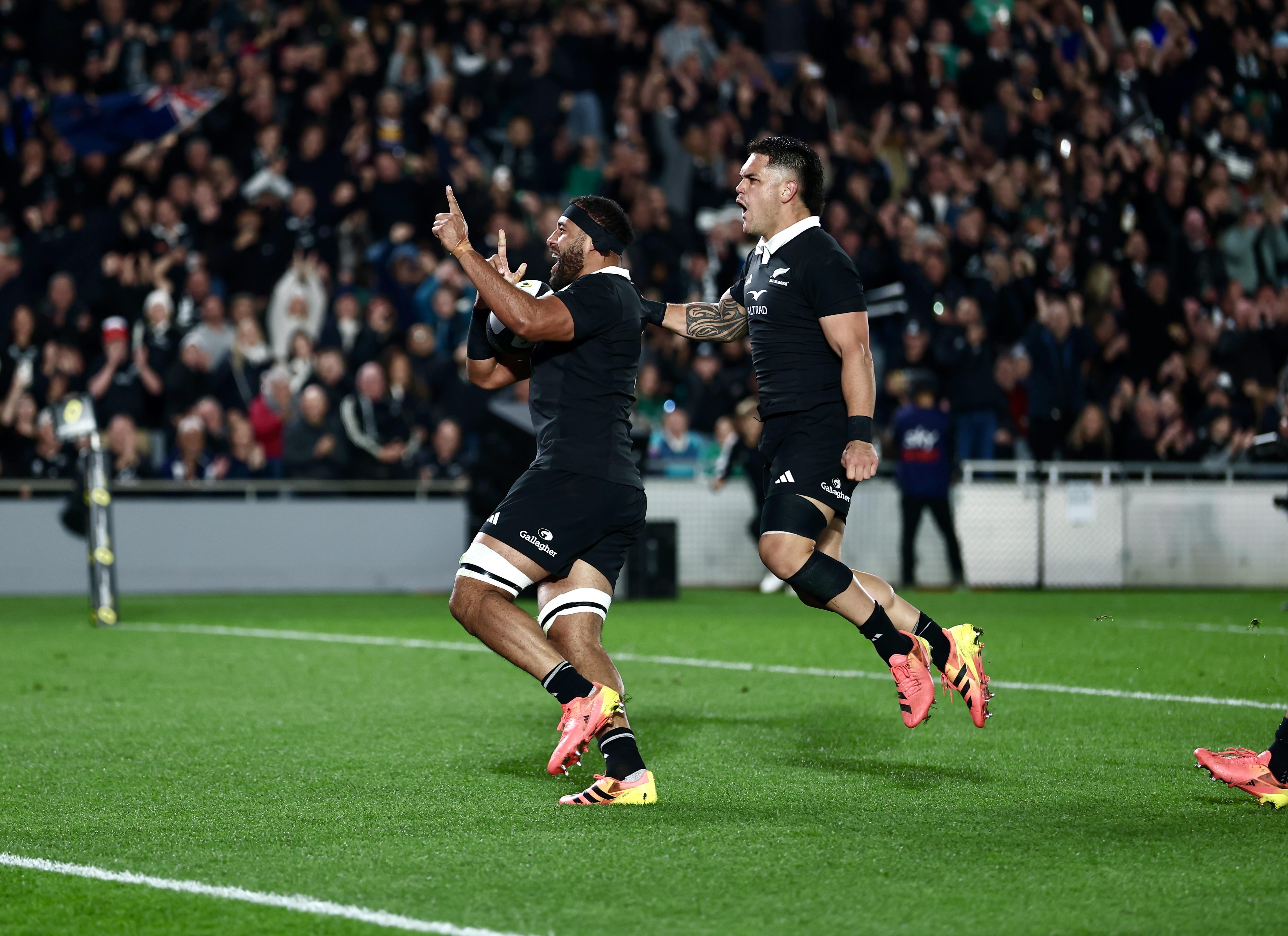
The new set-up enables the All Blacks to be direct with ball in hand and have power athletes such as Patrick Tuipulotu and Asafo Aumua smash around the edge of rucks or have a legion of runners work off the exceptional distribution and decision-making prowess of Jordie Barrett.
The bigger breakthrough, perhaps, has been the ability to get the players to understand how a kicking game can facilitate their running opportunities and how to use the boot to exploit an unstructured defence.
These dots may not seem overly hard to connect, but for some reason, in New Zealand, kicking the ball has been sold as the rugby version of vaping – a pointless, harmful habit that serves no purpose.
That narrative, though, is a greater mis-sell than Donald Trump’s claims to have won the 2020 US presidential election – an agenda-filled fantasy that shows poor recognition of the big picture.
Other key developments have been the installation of Ruben Love in what appears to be his rightful place in the All Blacks No 10 jersey.
Young, fearless and resilient, Love is playing like he has 50 test caps rather than eight and inevitably he’ll endure tougher tests where he’s denied time and space, but so far, he’s looked like he thrives under pressure.
And maybe that’s what’s most important – he wants to be the commander-in-chief, wants to get his hands on the ball, make the strategic decisions and bark orders at those around him.
That’s a big part of the job, because a playmaker exuding confidence instils confidence in everyone else.
The surprise of the July series – not to the coaching staff but to the fan base – has been the successful reinvention and installation of Luke Jacobson as the preferred openside.
The wider perception was of Jacobson being a handy Super Rugby grafter, not quite quick enough, big enough or anything enough for the demands of test rugby.
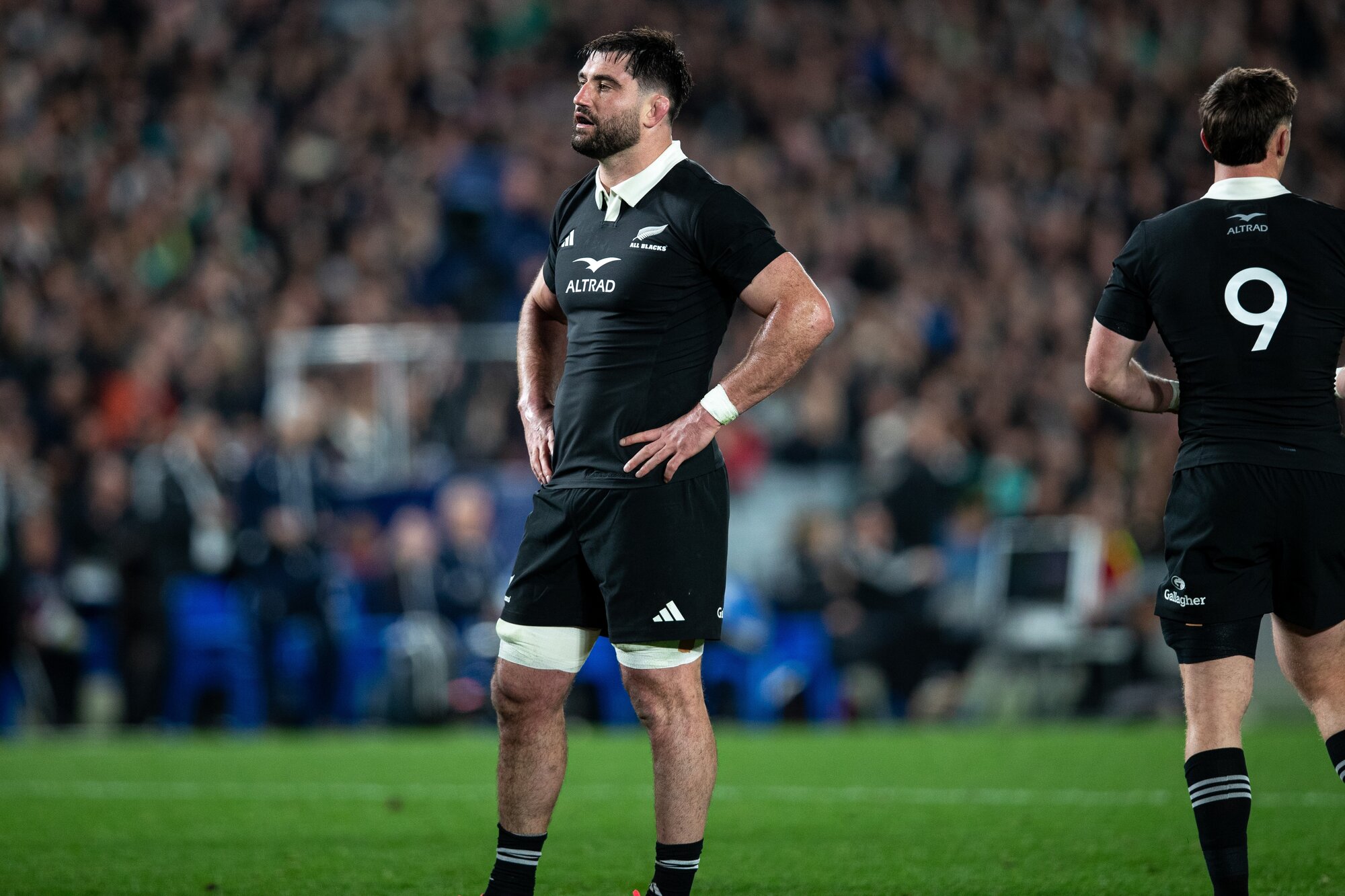
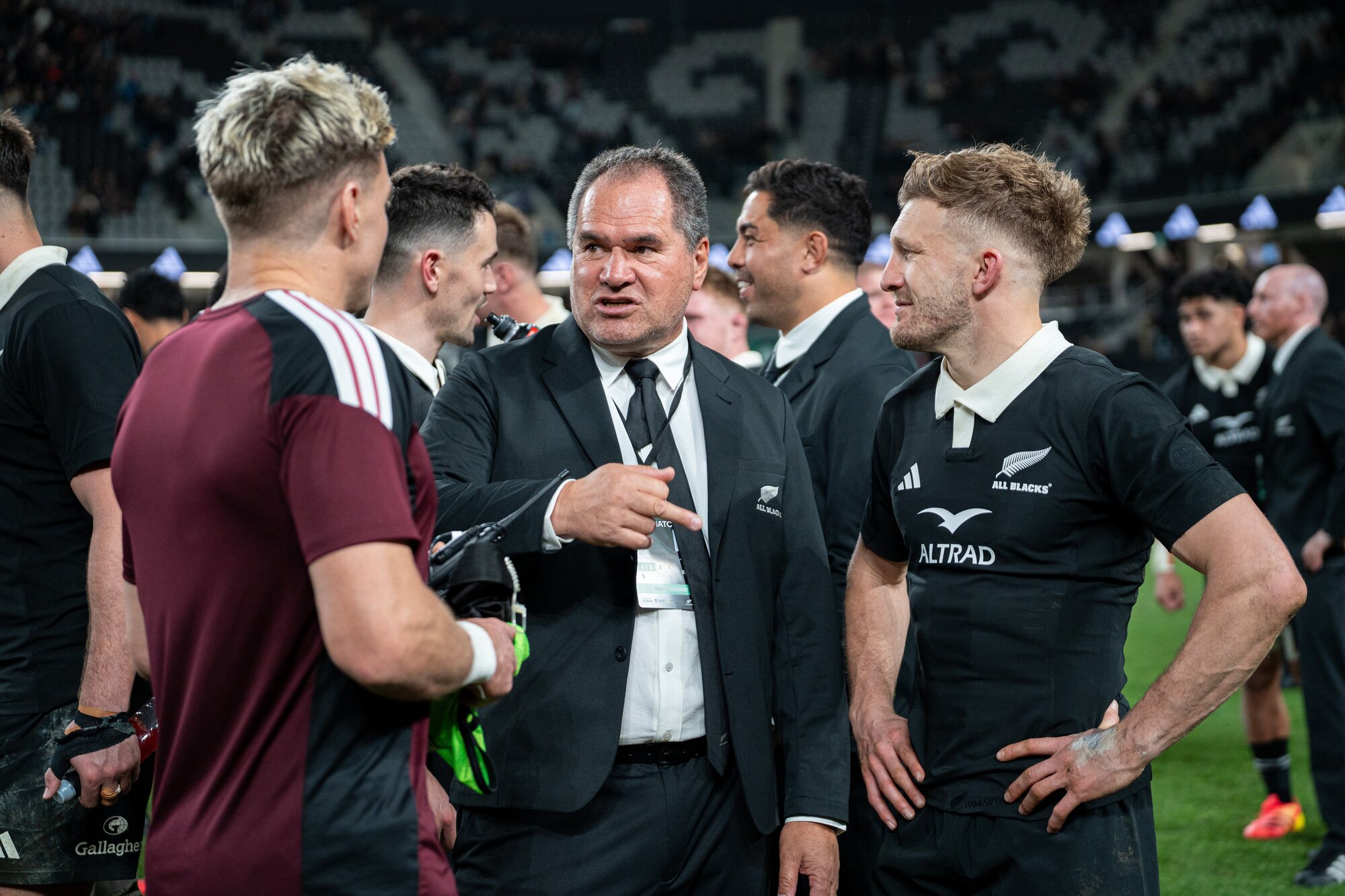
Rennie, though, had a different take – he saw Jacobson as the sort of genuinely tough cruncher he felt the modern game has a need for and has made him the central piece of his collision warfare unit.
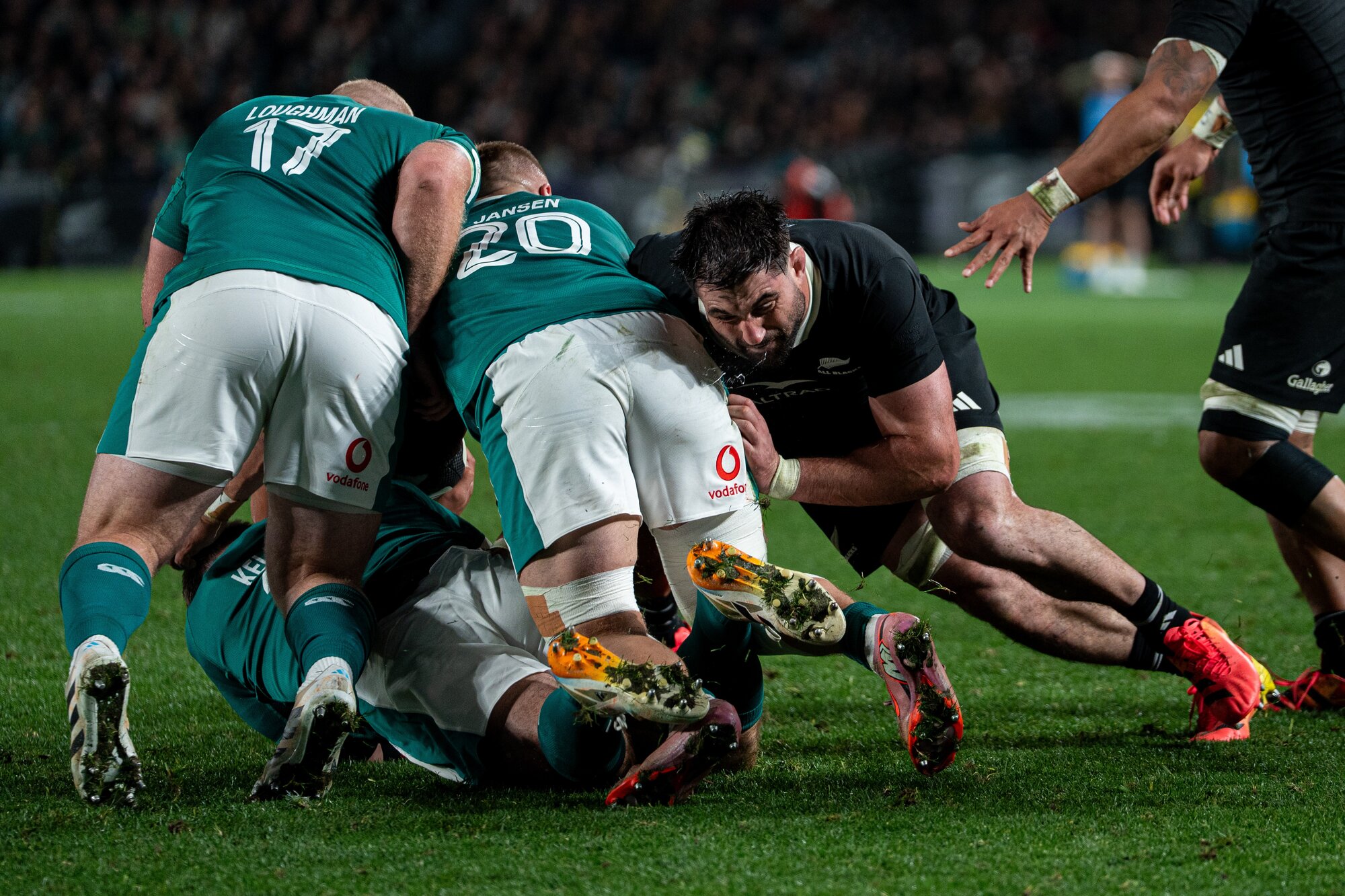
Jacobson is not an orthodox No 7 and certainly doesn’t align with wider perceptions of how an All Blacks openside should play, but he’s been bang on brand for the role he’s been given – making some big tackles against Ireland, as well as pinching a couple of turnovers because he was brave enough to throw his body into the fray.
His yellow card against Ireland was being framed by some as a brain explosion, but it was more ill-advised than idiotic and if Irish lock James Ryan hadn’t been lying on the wrong side of the ruck – a position too many men in green took as their default at Eden Park – Jacobson would have been able to wrap his right arm and the optics would have been more favourable.
But the most important change witnessed in the last three weeks is that the All Blacks once again know who they are and have rediscovered their identity.
It’s a huge missing piece to have relocated as the All Blacks need that clarity of connection between who they are and how they want to play.
Identity and purpose drives the style and intention and no doubt with mental skills coach Gilbert Enoka back in the camp – with his 20-plus years of experience with the team – will have driven a better connection with the legacy and this All Blacks side will have a defined sense that they are writing the next chapter of history.
But as many positives as there have been in the last three weeks, this remains an All Blacks side with much to improve and develop.
They had Ireland on their knees after 40 minutes but couldn’t finish them off. They were defensively passive for much of the game against France and for the final 20 minutes against Italy, they lost their structure and accuracy.
The micro-detail and precision is not where it needs to be and the great unknown remains whether this side are capable of winning a series in South Africa – or even winning a test in the Republic.
As Mike Tyson famously said, everyone has a plan until they are punched in the face and this essentially is the same with international rugby in the current climate, where game plans work against France and Ireland but get obliterated by the Boks.
The All Blacks’ scrum has been solid, their lineout functional and work under the high ball much smarter, with the designated catcher turning to face his own tryline and the cavalry stacked behind him to pounce on the loose ball.
But all these facets, plus their commitment to the collision, will be tested in a uniquely brutal way by the Springboks and what seemed so bankable in July can quickly become fragile.
There is good reason to be optimistic about where the All Blacks currently sit on their growth curve, but everything has to be tempered by the knowledge that the South Africans are going to punch them in the face.
Gregor Paul is one of New Zealand’s most respected rugby writers and columnists. He has won multiple awards for journalism and written several books about sport.