Dave Rennie recalls old heads to complement bold new All Blacks era – Liam Napier
Turns out there is ample room for old heads in a new era.
Dave Rennie’s All Blacks regime had marked itself as an out with the old, in with the new, fresh start.
Widespread changes remain evident – with more to come – but so, too, is Rennie harnessing the value seasoned heads can bring by going back-to-the-future with his latest appointments.
Rennie’s decision to include Sir Graham Henry as an independent selector is another move, following Gilbert Enoka’s recall as mental skills coach, that strikes a balance between change and embracing the past by tapping into institutional knowledge and evoking genuine probes from outside the All Blacks bubble.
While the wider All Blacks coaching team will voice their views, Rennie, his lead assistant coach Neil Barnes and Henry will have the final say on squad and match-day selections.
It’s a clear and concise approach that welcomes robust debate and clarity from the outset.
By contrast, in Scott Robertson’s first year in charge, he adopted a convoluted system that allowed all five coaches to select their areas of responsibility, before scrapping that in his second season when he, Scott Hansen and Jason Ryan became the sole selectors.
An independent All Blacks selector is not a new concept. Sir Brian Lochore had Sir Colin Meads as a national selector in 1986. Lochore then fulfilled that brief when Henry led the All Blacks from 2004-2011. And Grant Fox performed the same duties during Sir Steve Hansen’s eight-year tenure.
The 79-year-old Henry is now preparing to come full circle by assuming that role for Rennie.
Leaning on someone outside the All Blacks environment, particularly those with the vast experience and standing Lochore, Fox and Henry command, provides a point of difference and perspective.
Henry, the World Cup-winning All Blacks head coach, has an inherent connection to the team’s legacy and an understanding of the leadership required for success on the increasingly unforgiving test scene.
While it remains to be seen whether Rennie’s selection panel will translate to improved results, Henry will be forthright in expressing his opinions, which guarantees more healthy combative debate alongside the straight-shooting Barnes.
Every coaching team need contrasting, challenging views.
While the finer rugby detail and executing skills under pressure shape all teams, mastering the art of selection is the most important factor in determining results.
Rennie’s tenure began with a near full-scale cleanout of the All Blacks coaching staff. Forwards coach Ryan, in a rescoped role, is the only survivor from Robertson’s coaching team, with Scott Hansen, Tamati Ellison, Bryn Evans and other backroom staff, including the previous doctor, mental skills coach and trainer, all moving on.
On that basis alone, there’s no denying Rennie’s change-merchant status.
Rennie’s new coaching team, that features Scotsman Mike Blair combining with Rennie to overhaul the underwhelming attack, Barnes and Ryan leading the forwards and Tana Umaga assuming responsibility for defence, will gradually attempt to instigate a different style from Robertson’s approach.
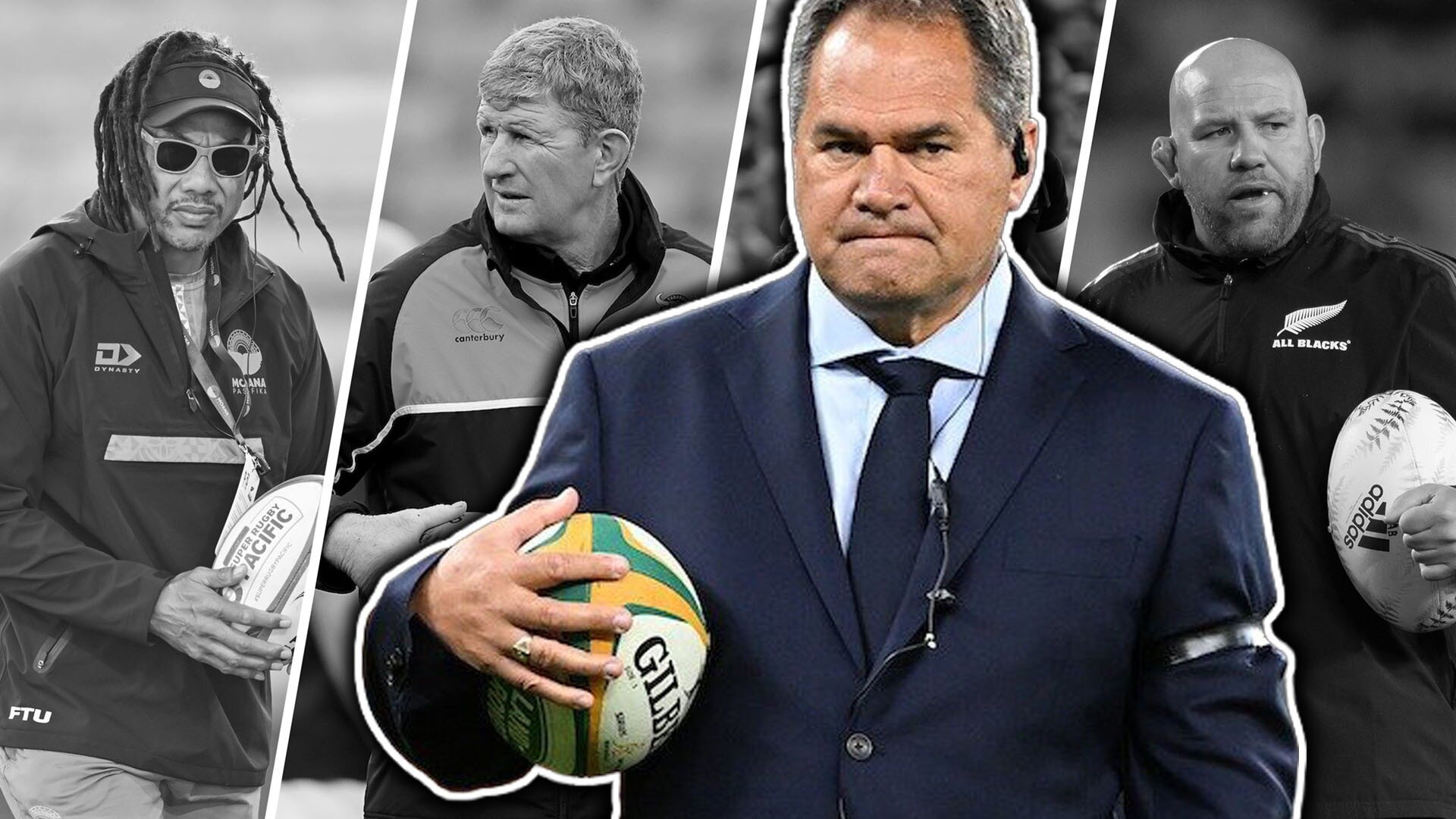
Further notable changes are expected to flow before the start of the test season, with the All Blacks captaincy and remodelled leadership group yet to be determined.
Recalling Enoka’s 23 years’ experience with the All Blacks as mental skills coach and Henry’s rugby knowledge sits in stark contrast to those changes, though, by welcoming the throwbacks to the past.
Those moves signal Rennie recognises that not everything needs to change and, in fact, embracing and learning from the past can be as powerful as evolution.
While there will be a need to evolve to suit the needs and personalities of the modern player, Enoka brings his intelligence from one of the most successful periods in All Blacks history – and a deep understanding of the legacy the team strive to uphold.
Henry will spend time with the All Blacks during their home tests this season. Outside his selection responsibility, he is sure to be called upon to share his wisdom. Having lived the highs and lows on the test front line, he should be a valued sounding board for Rennie too.
As he fronted media in Auckland on Tuesday, while spending a week in New Zealand that involves visiting the Highlanders and Hurricanes as his league-leading Japanese team Kobe savour a break before their finals, Rennie’s other telling comments centred on his desire to take Richie Mo’unga on the All Blacks’ gruelling tour to South Africa in August.
New Zealand Rugby remains steadfast that Mo’unga must first play for Canterbury in the NPC before he is eligible for the All Blacks, after three seasons in Japan. The situation would be different had Mo’unga committed to return home for more than one year.
Rennie didn’t plan to select Mo’unga for his first three All Blacks tests in July as he’s comfortable with the depth at first five-eighths that includes Beauden Barrett, Damian McKenzie and Ruben Love.
But he will bring Mo’unga into the All Blacks environment in July to ensure he is up to speed with the game plan – and Rennie had hoped to take him to South Africa and throw him straight into the mix in the first tour match against the Stormers.
“The criteria means we can’t do that,” Rennie said.
“We’re still hoping to get him in so he can get his head around things. Maybe if there are injuries, there’s the option to bring him in [to South Africa]. He’s got his head around it. He’s prepared to go and play NPC.
“We’ve accepted that situation and understand New Zealand Rugby’s mindset around it so we’ll get on with it now.”
The desire to fast-track Mo’unga’s recall is another example that those with experience at test rugby’s coalface are highly valued commodities.
Liam Napier is a Senior Sports Journalist and Rugby Correspondent for the New Zealand Herald. He is a co-host of the Rugby Direct podcast.