Meet La Base, The New Skincare Brand That Uses Human Breast Milk In Its Custom Formula
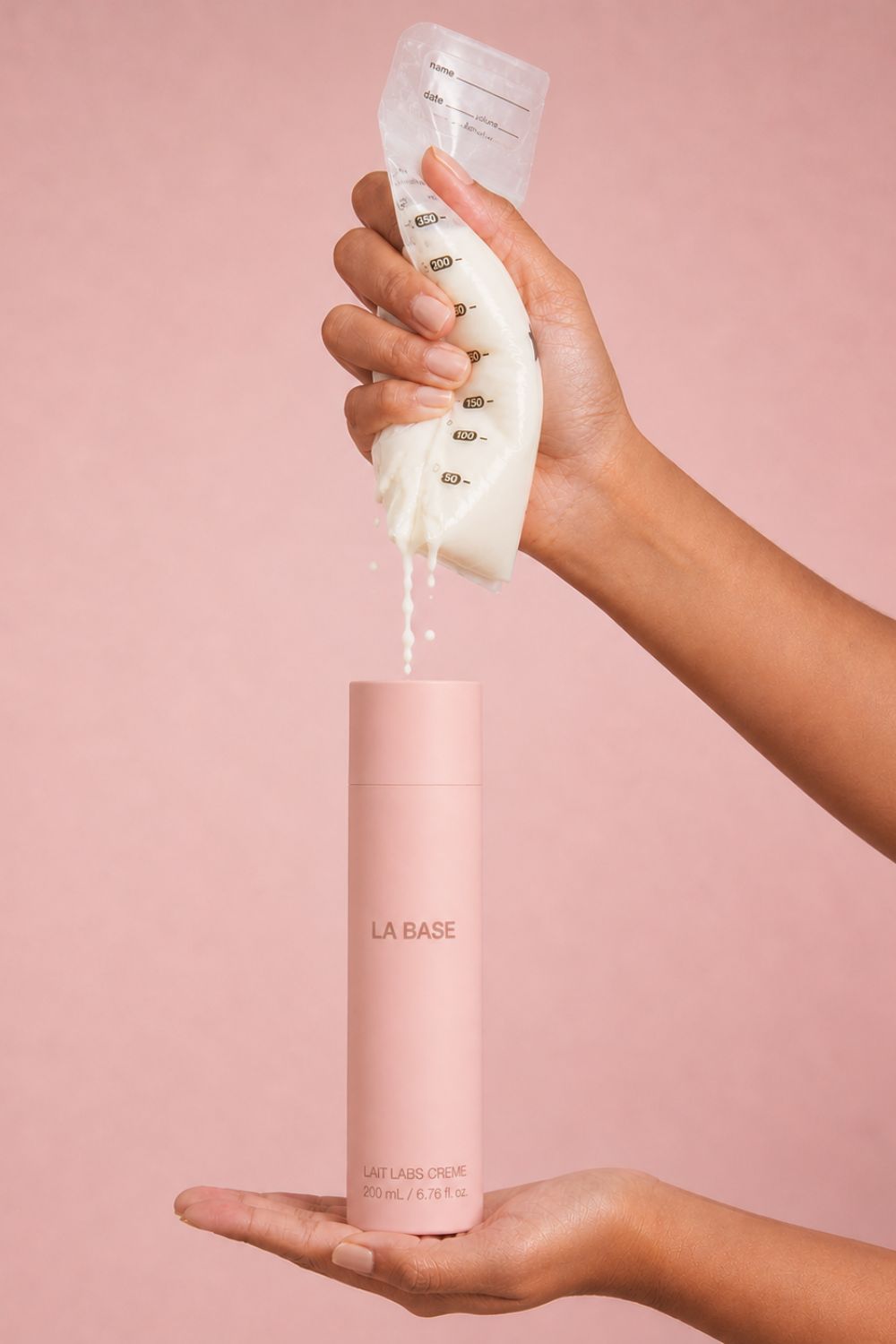
Would you use skincare that contained breast milk? Our beauty editor (and her friend) tried it.
“I feel like a scientist,” my friend, Grace, said as she decanted 150ml of her expressed breast milk into a sterilised beaker.
We weren’t in a fancy laboratory or a skincare manufacturing facility.
Instead, we were standing behind her kitchen bench in her sunny Epsom home, her 4-month-old baby boy, Wynn, cooing in the front pack while we studied the La Base Lait Labs Kit recipe card in front of us.
It’s not unusual for Grace and me to be milling about in her kitchen (we meet most Thursdays for coffee), but this time we had homework. Tasked with trialling a new skincare kit that heroes breast milk, I’d gingerly asked if she was happy to express a bit of hers to mix into the skin-soothing formula.
She was, thankfully. All in the name of research.
“I feel like I shouldn’t be allowed to do this; it should be done in a laboratory,” Grace, a keen baker and mother of three, said as we began the process.
We retrieved the four sachets labelled Phase A-D to blend with the breast milk to create a custom skincare formula, not dissimilar in texture to thickened cream. Phase A and B were liquid formats – the former contained lavender hydrosol, glycerin and citric acid, the latter almond oil. Phase C was a powder containing colloidal oatmeal, shea butter, plant-based emulsifier and xanthan gum.
Grace commented that the shea butter looked like soap flakes interspersed with the colloidal oatmeal.
“The oat kernel flour and shea butter are all things that I would use on the boys’ skin anyway,” Grace said, but added she felt nervous about any type of fragrance or essential oils on her eldest son Franco’s hyper-sensitive, eczema-prone skin.
Next, we covered the beaker with tinfoil and placed it in a pot of simmering water to heat through for 30 minutes.
“It’s like porridge texture,” Grace said as she removed the pot from the heat and scraped the sides of the beaker with the spatula to ensure all the shea butter flakes had melted.
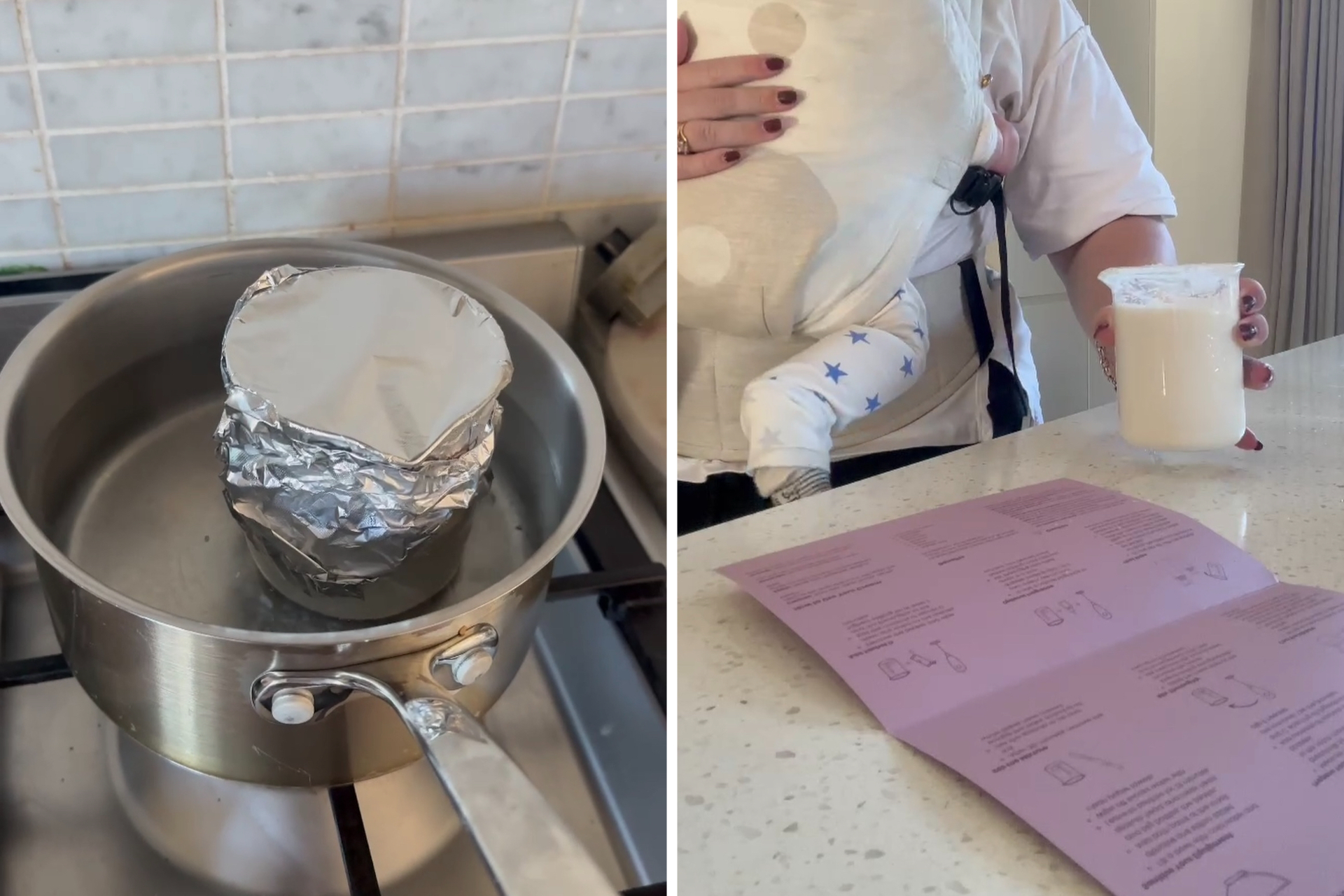
We used a hand mixer to whip the formula into a rich, creamy texture while pouring in Phase D – an eco-certified preservative combined with panthenol to keep the cream fresh for up to five months.
“It smells quite natural – I can’t smell breast milk. The lavender smell isn’t as strong any more, but I can smell the oats,” Grace said.
The final step was to scoop the cream into the two bottles provided – a 200ml nursery bottle and a 100ml nappy bag bottle. Grace was unsure about using the drops of fragrance to scent both (the brand recommends forgoing this step for babies under six months), so we kept the larger size fragrance-free and added the scent in the smaller one to use on her two eldest children.
“It feels really nice; it doesn’t sit on top of the skin but feels quite moisturising. It’s not greasy or thick. I’m super interested to see how it goes,” Grace said. “That was fun; it took a little longer than I expected, but super interesting.”
For $220, you, too, can become a cosmetic chemist – transforming your own breast milk into what La Base calls “a powerful healing cream for your baby’s delicate skin”.
After the birth of her son, Remy, almost five years ago, cosmetic chemist and La Base founder Sarah Leclerc sought to find a natural alternative to help heal his nappy rash.
Her midwife suggested trying breast milk. Inspired, Leclerc combined her experience as a pharmacy technician and her studies in cosmetic chemistry to blend her breast milk with other key ingredients to use on her son.
At the time, few recipes existed online and the ones that did had a limited shelf life. Her testing ground was applying the formulas to her husband. Six months later, Leclerc landed on her final formula and a year after that turned it into a kit.
“My son’s nappy rash would take a few days to heal using Sudocrem, but when I used the formula I made, it would heal his skin within a day,” she says.
Originally, consumers would send LeClerc their breast milk, and she would blend the formula for them, but this process felt complicated and clunky. Instead, she turned it into a kit for at-home use.

“In terms of baby skincare, there’s nothing that’s more adapted to your own baby than making your own skincare using your breast milk,” Leclerc says, adding consumers will get the best result by using breast milk expressed throughout the day to get all different levels of everything.
The La Base Lait Labs cream has fewer than 10 ingredients, and Leclerc says each ingredient is included to amplify what breast milk already does, only making it nicer to use.
“Breast milk is very runny. If you’re going to put it on the skin, not a lot is going to get absorbed before it runs off. So putting it in a thick cream like this ensures that it stays on the skin long enough to absorb the benefits, and it’s not going to be as tacky or sticky as breast milk can be,” she says.
A mother of two myself, I was already familiar with the healing properties of breast milk – including its feedback loop between mum and baby depending on their needs (like having higher fat content in the evening to allow baby to fall asleep, or producing antibodies when baby is sick). Historically, I’d made milk baths using it for my eldest son, and applied some to my youngest during a bout of conjunctivitis.
While my breastfeeding journey ended long ago, my interest in La Base was piqued after spotting it on Georgia O’Sullivan’s Instagram feed following the birth of her son, Louie, with All Black Damian McKenzie.
Lait Labs started as a nappy rash cream, but its uses cover many skin needs.
Leclerc says she applies a small dab of cream over a blemish at night, and finds it’s “not as red and quite a bit smaller” come morning. Her husband plays football and uses it to soothe chafed areas. A former co-worker would apply it to soothe sunburn, while another would apply it to her psoriasis.
“There’s no limits to what you can use this for, and everybody has skin. I know everybody’s skin is different, but all of these benefits really work on all kinds of skin [issues] – any cuts, grazes, mosquito bites, sunburn ... it’s a full family product,” she says.
One of La Base’s most loyal clients is based in Malaysia, and uses the Lait Labs cream to treat her daughter’s eczema. While no longer breastfeeding herself, she sources breast milk from a friend and purchases refills “by the truckload”, Leclerc says.
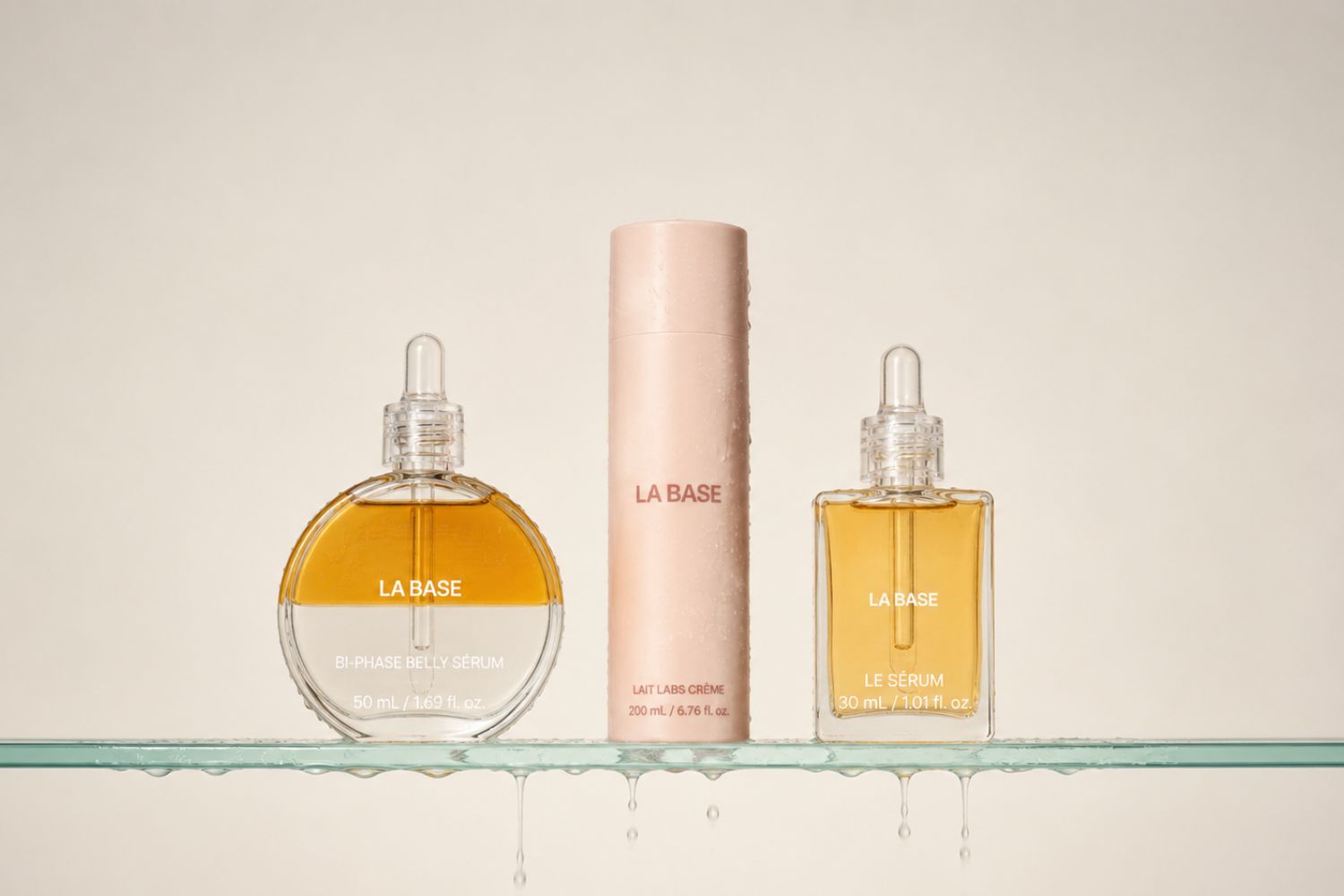
There’s currently no alternative to breast milk that’s been tested to use with the kit, and Leclerc adds there’s no guarantee the formula would work or stay stable if blended with cow’s or goat’s milk.
“We do realise that there is a need for something like this that is efficacious. It sucks to say, but breast milk is just incredible. There have been brands that have tried to replicate it in a lab to create synthetic versions,” she says.
This includes BIOMILQ, , a cellular agriculture company in the United States that uses donated mammary cells and cultures them to secrete milk in the lab, and TurtleTree in Singapore, a biotech company that uses precise fermentation processes to produce human milk oligosaccharides (HMOs) to make a commercial formula that claims to be functionally identical to breast milk.
“But there’s nothing really that has been able to replace it,” Leclerc says.
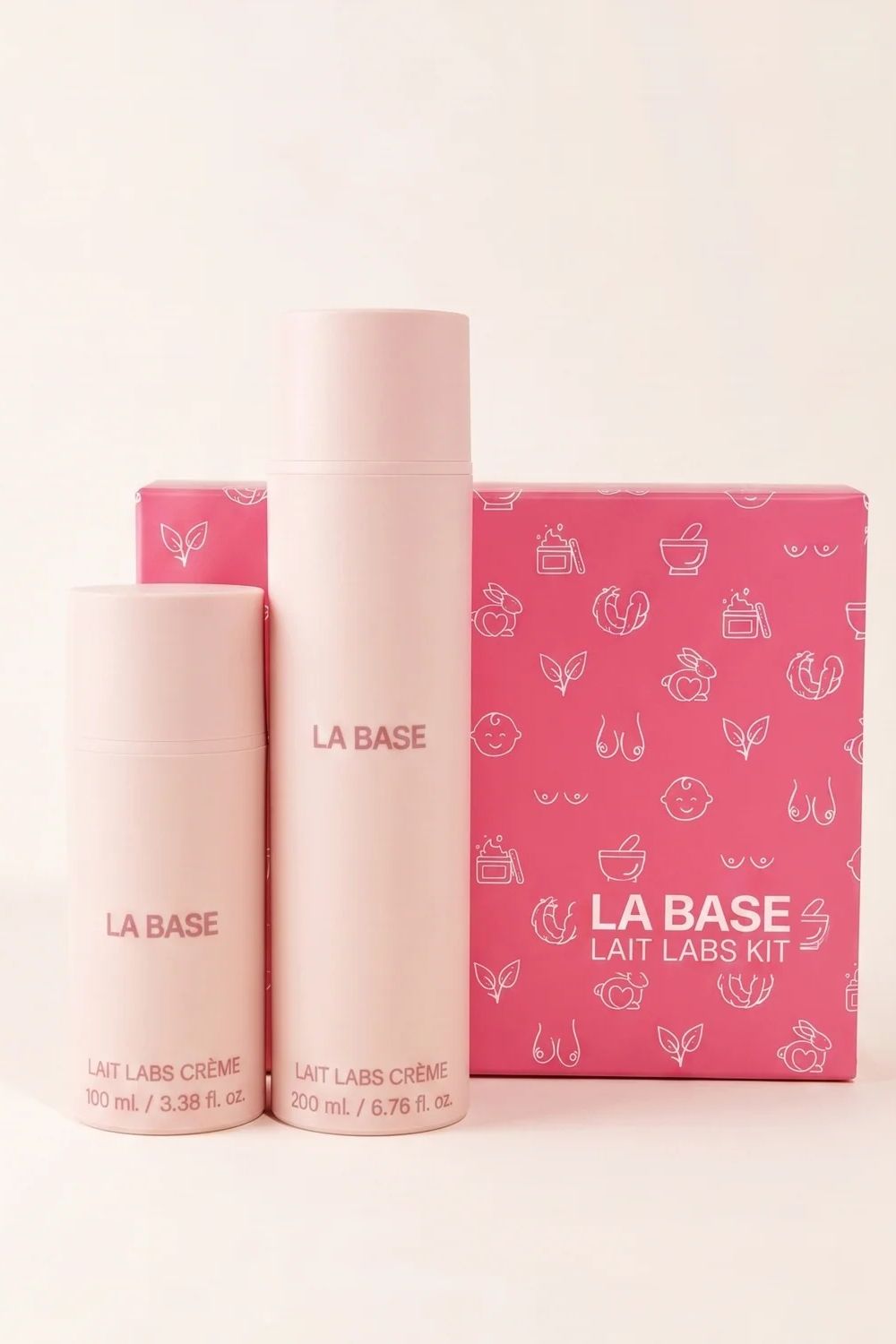
DIY formulations like La Base’s Lait Labs Kits speak to the wider movement towards personalisation – where beauty brands seek to appeal to consumers by highlighting the ritualistic aspect of mixing formulations.
It’s one of La Base’s unique propositions, Leclerc says.
“Not only does it come from you, but you also made it for yourself. All of that love and care is poured into this [product] for your baby, because [breast milk] is originally made for your baby,” she says.
“A lot of the feedback we’ve had is how empowered women feel to make it. You know exactly what is going into the bottle, alongside your own breast milk, and then at the end you get this cream like what you would buy off the shelf at a pharmacy.”
Leclerc likens the process to growing your own food for your children – interacting with the breast milk before it turns into a cream that you can apply topically to your own child.
“We second-guess everything we put on vulnerable little babies. So when you see it and develop it yourself from your own body, it has this agency over anything else that you want to use on your baby, or anyone else in the family,” she says.
“As mums, we go to the ends of the earth to find solutions for our kids. So when you find one, you don’t let go.”
Two weeks after our science experiment, Grace shared her honest thoughts about the cream with me over text.
“Full transparency – I haven’t used it on Franco’s eczema as he’s having a bit of a flare at the moment. I didn’t want to introduce anything new while his skin was already reactive. But I’ve used it multiple times on myself and my daughter Goldie. With the cold snap and our heat pump being quite drying, she had itchy, dry skin so I used it on her,” she wrote.
“I really like the consistency; it feels nice and nourishing without being thick. It’s still early days so I don’t have firm results, but emotionally to know exactly what has gone into it and that I’d actually made one of the ingredients myself makes reaching for it feel so much nicer than a random cream from the chemist.”
More beauty
The country’s top makeup artists share their favourite lipstick and lip liner combos; how to keep skin hydrated and plump in the harsh winter months and should you incorporate creatine into your wellness stack?
What’s Your Go-To Lip Combo? 8 Top Makeup Artists Share Theirs. How to create plump, full-looking lips, according to the pros.
Everything Your Teen Should (And Shouldn’t) Be Using On Their Skin. Here’s how to tell your teen that elaborate, 10-step routines and too-harsh products are no good for their skin.
Creatine, explained: Everything you need to know about this trending supplement, according to the experts. Curious about creatine? Here’s everything you need to know about the supplement that’s taken the wellness world by storm.
How To Build The Perfect Skincare Routine For Winter, According To Two Skin Experts. These winter skincare swaps help maintain dewy, hydrated skin all year round.