Election 2026: NZ First leader Winston Peters takes on National, own Government policy at Fieldays; would ditch Paris climate agreement, questions rates cap
Winston Peters is dialling up his attacks on National and his own Government at Fieldays, distancing himself from the Prime Minister on climate issues, questioning the coalition’s rates cap policy, and suggesting farmers change their voting habits.
The NZ First leader was in full election–mode at Mystery Creek, Waikato on Friday, telling those in attendance at one speech that they may have a tendency to vote one way, but this year they should “take some insurance” and support his team.
“We know that you’ve got a penchant for voting certain political parties. You can’t help yourself, no matter how useless they are, no matter how they’ve done for you.
“You keep on voting like you’re some sort of penance, but take some insurance out this time.”
He repeatedly criticised the National Party, often unprompted, slamming it for signing up to “stupid” climate targets, attacking it for signing the India Free Trade Agreement (FTA), and blaming it for the Resource Management Act (RMA) it’s now getting rid of.
One of his ministerial colleagues, Andrew Hoggard, got a quick serve, again off–the–cuff.
While not naming him, Peters, laughing, said the Act MP had done the “most dangerous thing I’ve ever seen” while starting a chainsaw in a recent social media video. Hoggard has said it’s his own technique and advises others to take expert advice.
When the Herald later interviewed Peters, he dismissed a question about Government policy by instead talking about what NZ First would be offering at the November 7 election.
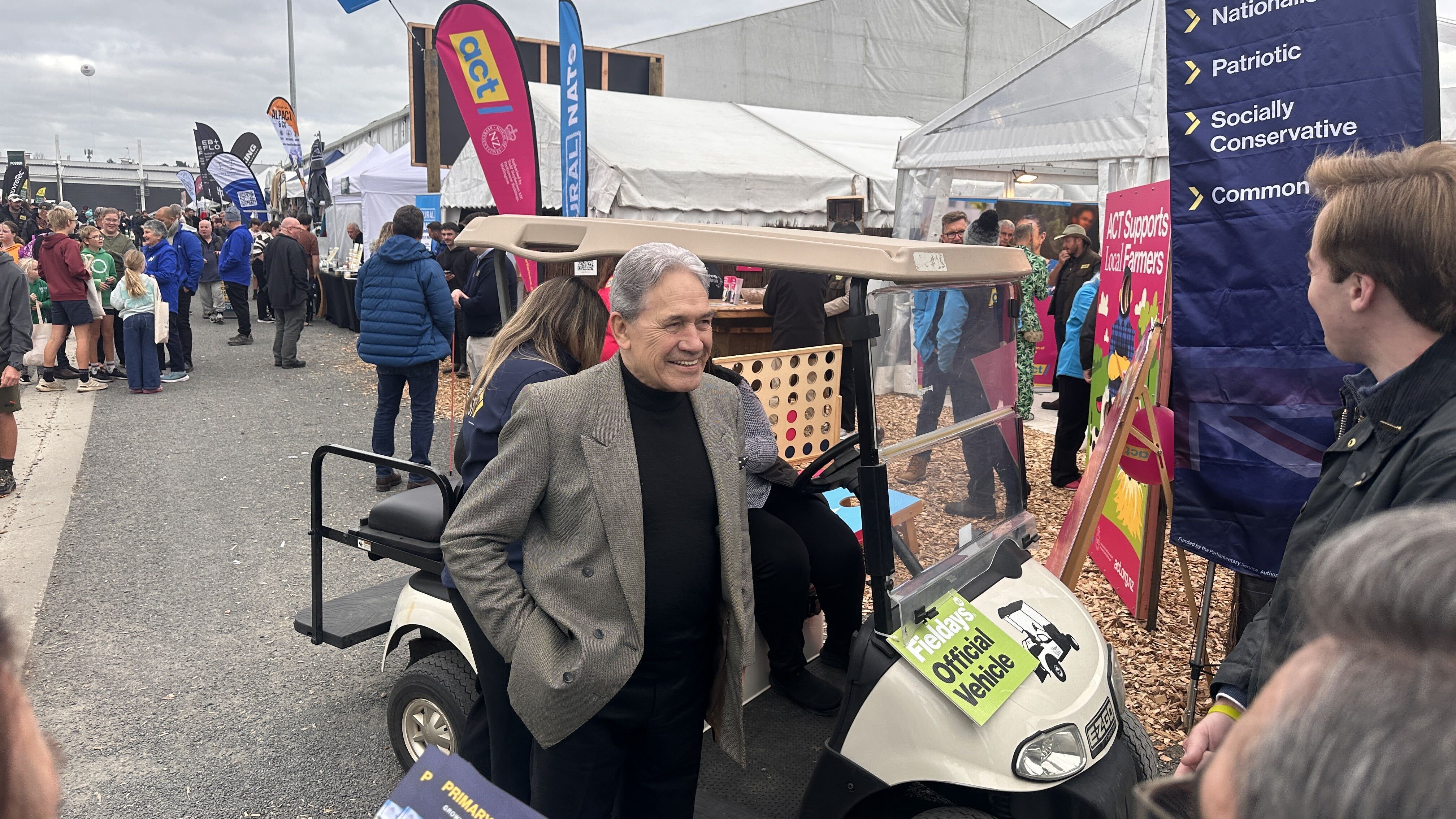
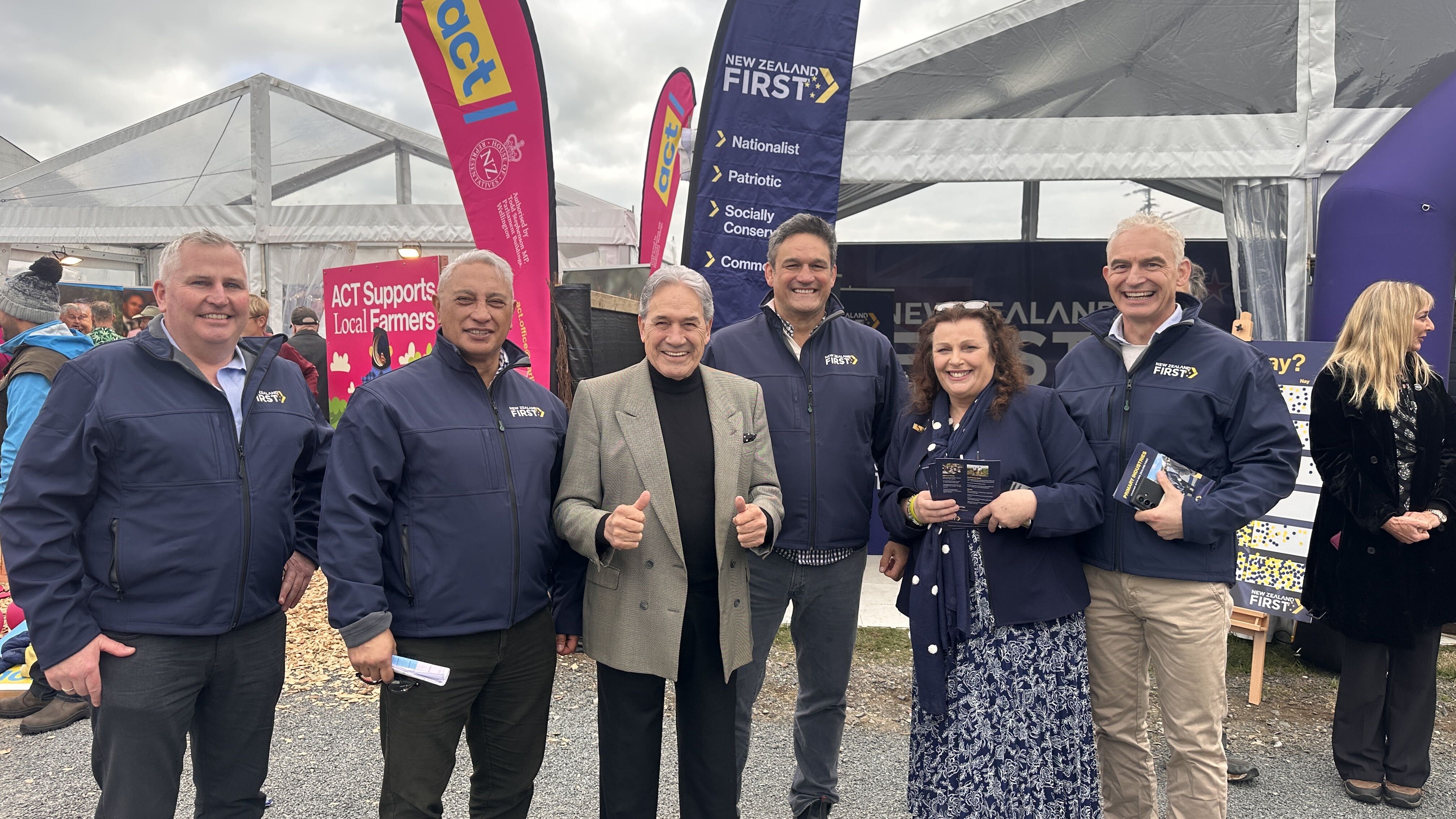
As the veteran politician stood in front of the NZ First stall, crowded by volunteers and candidates, others working the tent told visitors they could get a photo with the next Prime Minister.
New NZ First recruits Stuart Nash, the former Labour minister, Taine Randell, the former All Black, and Alfred Ngaro, the ex–National minister, were along for the ride.
It was Nash’s first public campaigning outing with his new leader since his candidacy was announced. He told the Herald the difference to working with Labour is that while Labour may set up “working groups” and “consider things”, NZ First “is the party that does stuff”.
Getting out of Paris
That “stuff” could include pulling New Zealand out of the Paris climate agreement. While the coalition Government position is to remain in the framework, Peters wants out.
In past speeches, as recently as last month, Peters has spoken about needing to “re–evaluate our Paris commitments”.
He’s said that in order to meet an upcoming target New Zealand would need to send billions offshore. The politician has also highlighted New Zealand’s relatively low emissions profile compared to the likes of China or the United States.
On Friday, when asked about the Paris agreement, he said former National Prime Minister Sir John Key and former National climate change minister Paula Bennett had signed New Zealand up to “stupid targets”.
As part of New Zealand’s commitments under the Paris Agreement, Bennett introduced what’s called a Nationally Determined Contribution (NDC) target. That was originally to reduce net greenhouse gas emissions to 30% below gross 2005 levels by 2030.
However, her successor Climate Change Minister James Shaw later told his Cabinet colleagues that the target wasn’t compatible with the objective of the Paris Agreement and recommended an increase to New Zealand’s ambitions.
In 2021, Shaw and Dame Jacinda Ardern announced the NDC target would change to reduce net emissions by 50% below gross 2005 levels by 2030.
Peters asked attendees at the Fieldays Rural Advocacy Hub hosted by Federated Farmers: “You’re members of the National Party, aren’t you, many of you?”
“They went off to Paris and they signed up, and you’ve got no idea what they signed up to. But here is the blunt, hard facts right here, right now.
“Either we take a plain common sense decision and say we’re not going to sacrifice this country and it’s production one more minute, or we’re gonna go along and do as Mr Luxon said just yesterday. He’s gonna try and meet the targets.”
Peters is referring to remarks from the Prime Minister this week, that included acknowledging that hitting the upcoming 2030 climate target would be “difficult and tough” but that “we’re going to do everything we can”.
Luxon ruled out sending “billions” overseas as part of offshore mitigation. The Treasury yesterday released a report saying that could cost $5 billion.
Peters went on to say, “there’s no point in us belonging to this any longer”.
“It’s a fiction. We can’t afford it.”
He mentioned comments from former United Kingdom Prime Minister Tony Blair, who in an essay last month said cheaper energy and electrification should be prioritised over net zero goals, with oil and gas resources used.
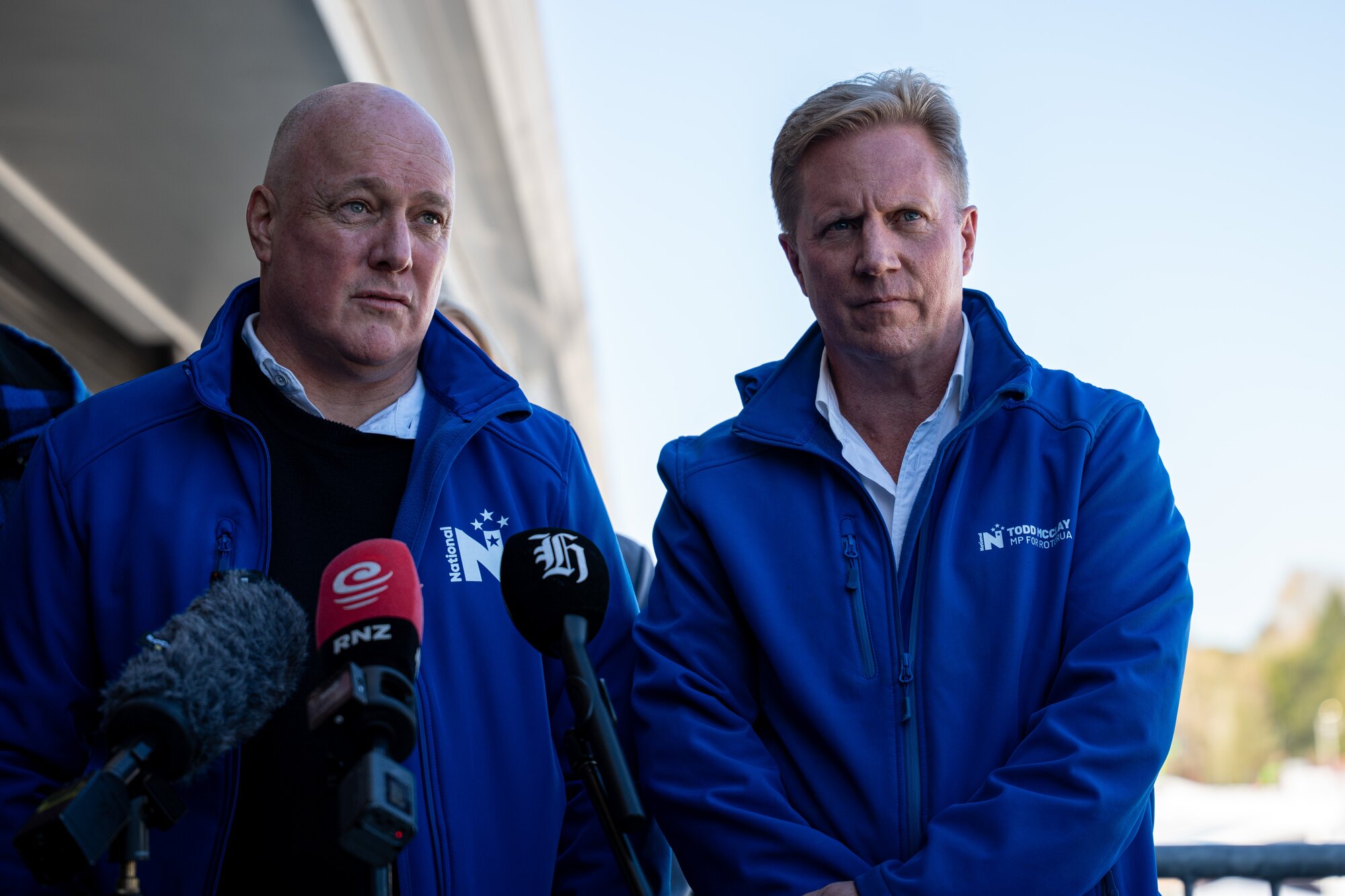
Luxon said this week that the position of the Government – which includes National, Act and NZ First – was to stay in the Paris agreement, as leaving could hurt the marketability of New Zealand products.
Peters told the Herald that NZ First had “to live with the fiction until the next election”.
“It’s up to the New Zealand people to realise right here, right now, that what they’re being promised is a shibboleth.”
He questioned Treasury for revising down its estimate for how much offshore mitigation may cost to hit the NDC 2030 target.
A 2023 report estimated it could cost up to $23.7b, but Treasury yesterday said its estimates had come down (now it’s up to $5b) in part due to the price of offshore mitigation being “towards the lower end” of the range used three years ago.
“Why would I trust Treasury?... They never get anything right,” he told the Herald.
Act also put out its climate policy this week, stating that unless the Paris Agreement accommodated updated targets “that reflect the real warming impact of New Zealand emissions” then “New Zealand should leave it”.
The party proposed a new NDC, which would treat long–life gases like carbon dioxide and short–lived gases like methane differently, revisit emissions reductions plans and keep agriculture outside the Emissions Trading Scheme.
“Last year, ACT made it clear that the Paris Agreement is broken and that New Zealand deserves a better climate deal. Today, we are putting forward exactly what that better deal looks like,” said climate spokesman Simon Court.
Questioning rates caps
Asked by a Fieldays attendee about local government reform, Peters laid into “those that promised to cap rates”.
“If you want to cap rates, go and vote for the right people to be on the council.”
The Government has a rates cap policy which would include a range for annual rates increases. Local Government Minister Simon Watts said analysis suggested a target range of 2% to 4% per capita per year, meaning “rates increases would be limited to a maximum of 4%”.
In a statement last December, Watts said there would be a transition period starting in January 2027, with councils required to consider the impact of rates caps on their long–term plans. The full model would come into effect by 2029.
Asked by the Herald about rates caps, Peters said the Government’s position was “not even being maintained”, pointing to recent rate rises in Auckland above 4%.
The cap hasn’t come into effect yet, but Peters said: “No, look, we’re taking this to the election”.
“We’re saying in the 2026 election, you elect the right councillors. You take control of your council. Don’t have them out the other way around.”
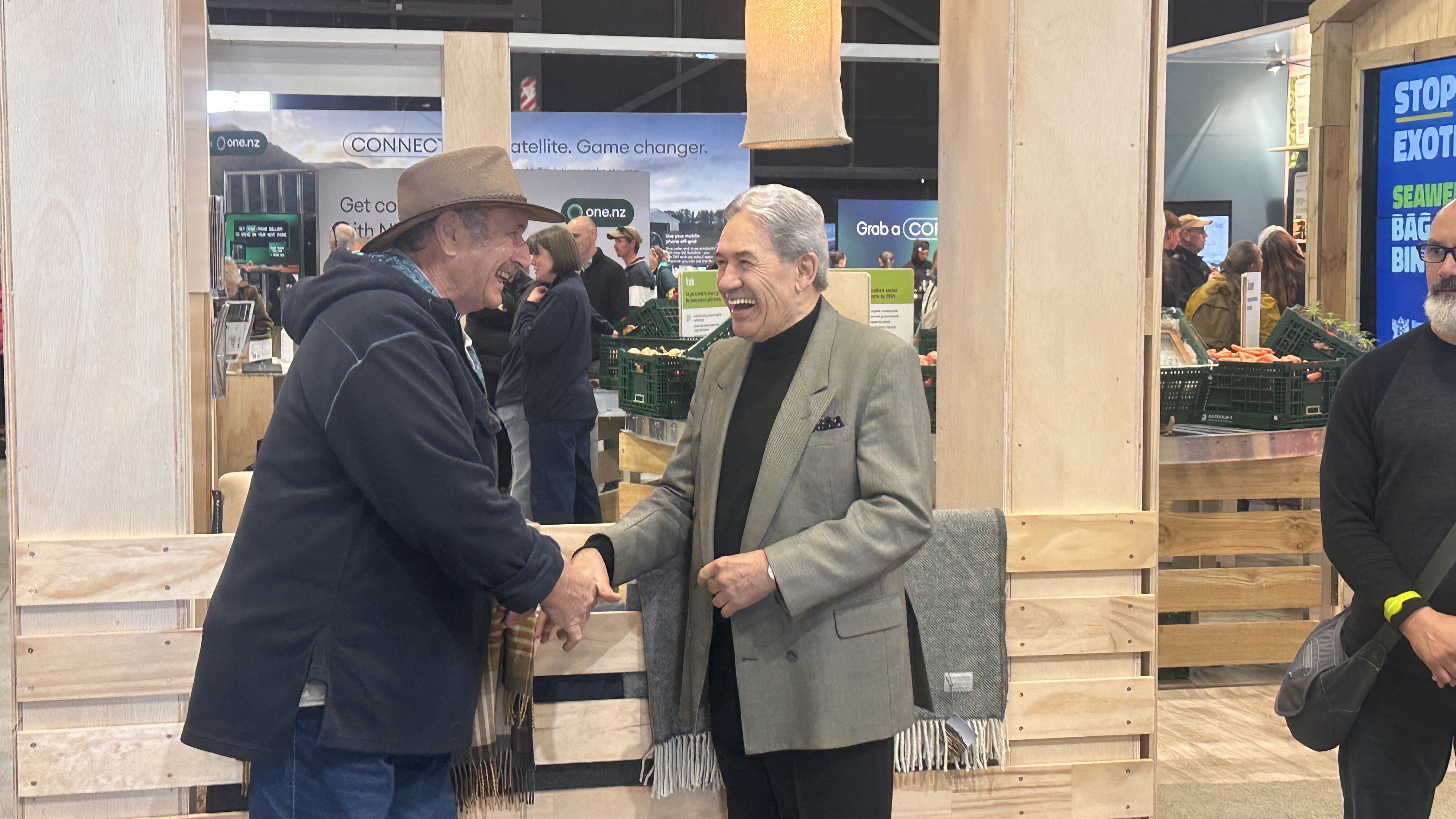
Asked if that meant he thought central Government shouldn’t be weighing in on rates, Peters said he didn’t think it would work.
“It won’t. It won’t work. Have they got any council to agree with them so far?”
Peters then said it was “not a Government policy” but instead a “National Party policy”.
When the Herald again pointed out the Government was implementing the rates cap policy, Peters said: “Well they say they’re implementing it”.
“We are now close to the election. We’ve come to a time at the moment we should not be announcing new policy for Government.
“We should be announcing new policy for political parties. I do believe we’re just too close to the election to be running this stuff up.”
The rates cap policy was under consideration by the Government throughout last year and announced in December. Legislation is expected to be enacted this year and become law on January 1, according to Watts’ December statement.
Watts said in May that councils “need guardrails so that they can focus on prioritisation and make decisions about what it is best to spend their revenue on”.
Out campaigning
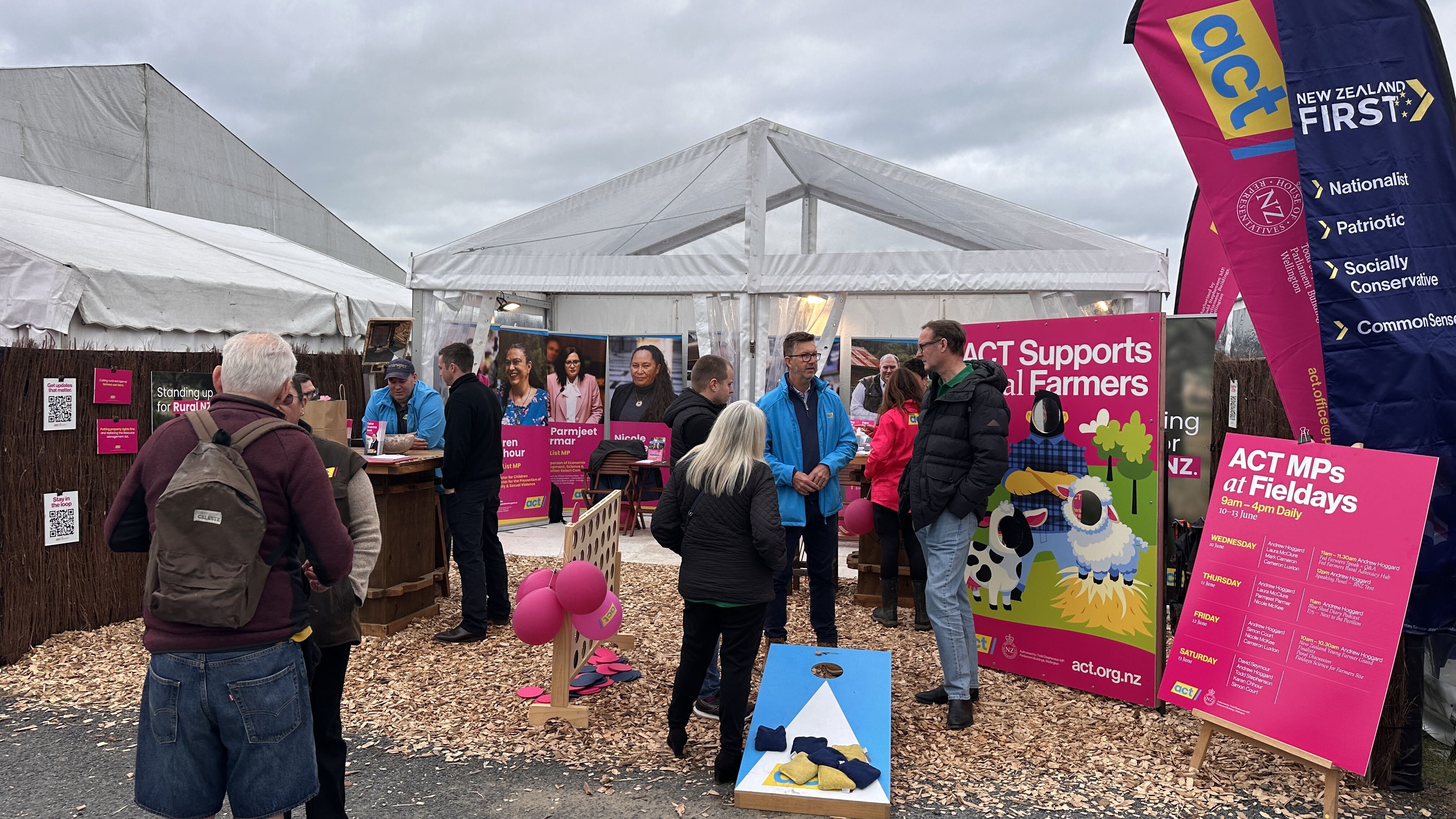
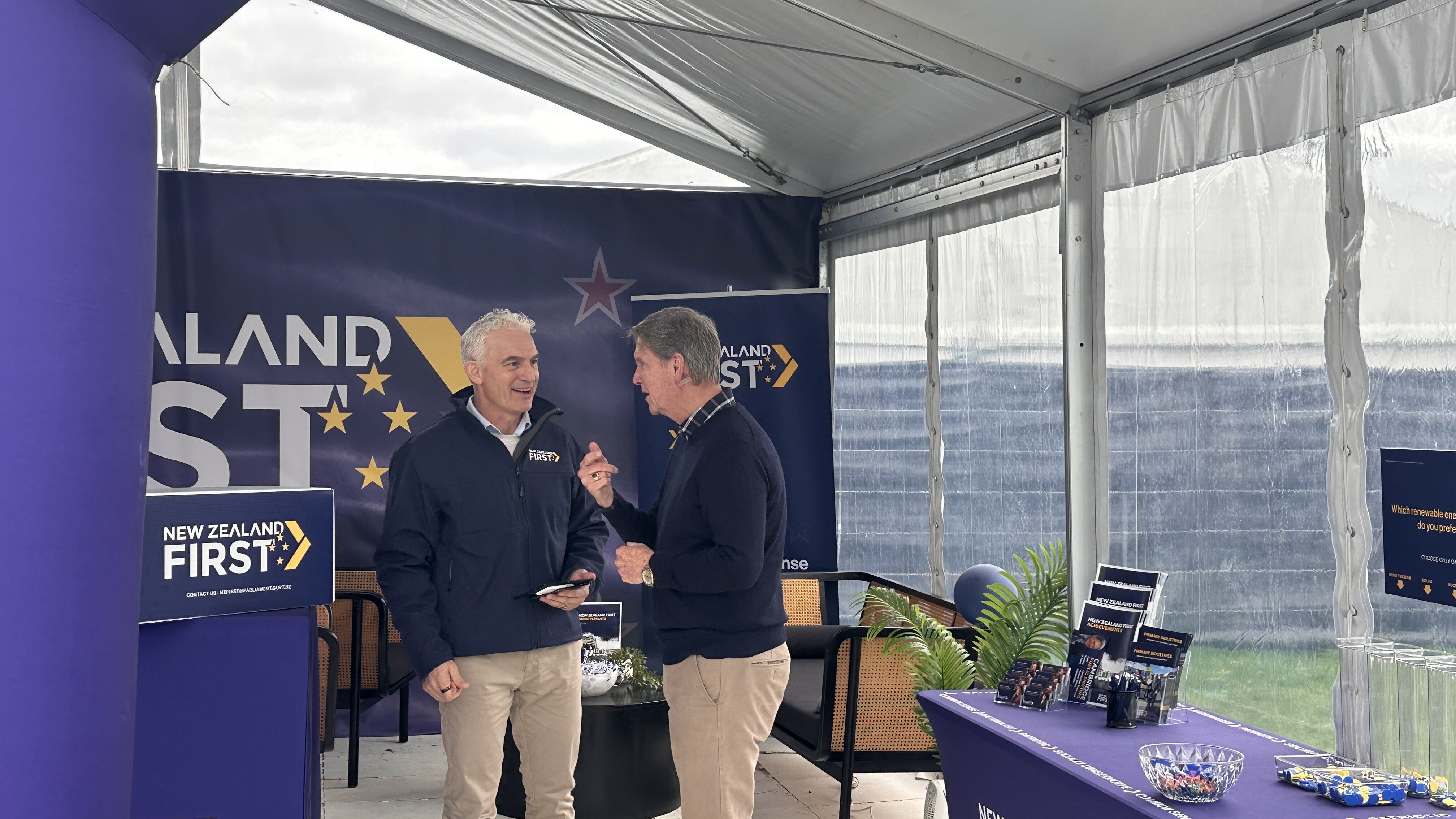
When Peters turned up to NZ First’s stall, right on the outskirts of the Fieldays site with National and Act to their side, the tent was a hive of activity, with a number of new and old candidates mingling with volunteers and Fieldays attendees.
Some of the candidates were taking advantage of a spare piece of land – which has been the centre of much debate at Fieldays this week – to film a video when the Herald arrived.
A sticker poll set up asked people questions like, “should the biological definition of Woman & Man be defined in legislation”, whether there should be a binding referendum on Māori seats, and if cash should be protected as a means of payment. In all cases, there was a clear majority in the affirmative.
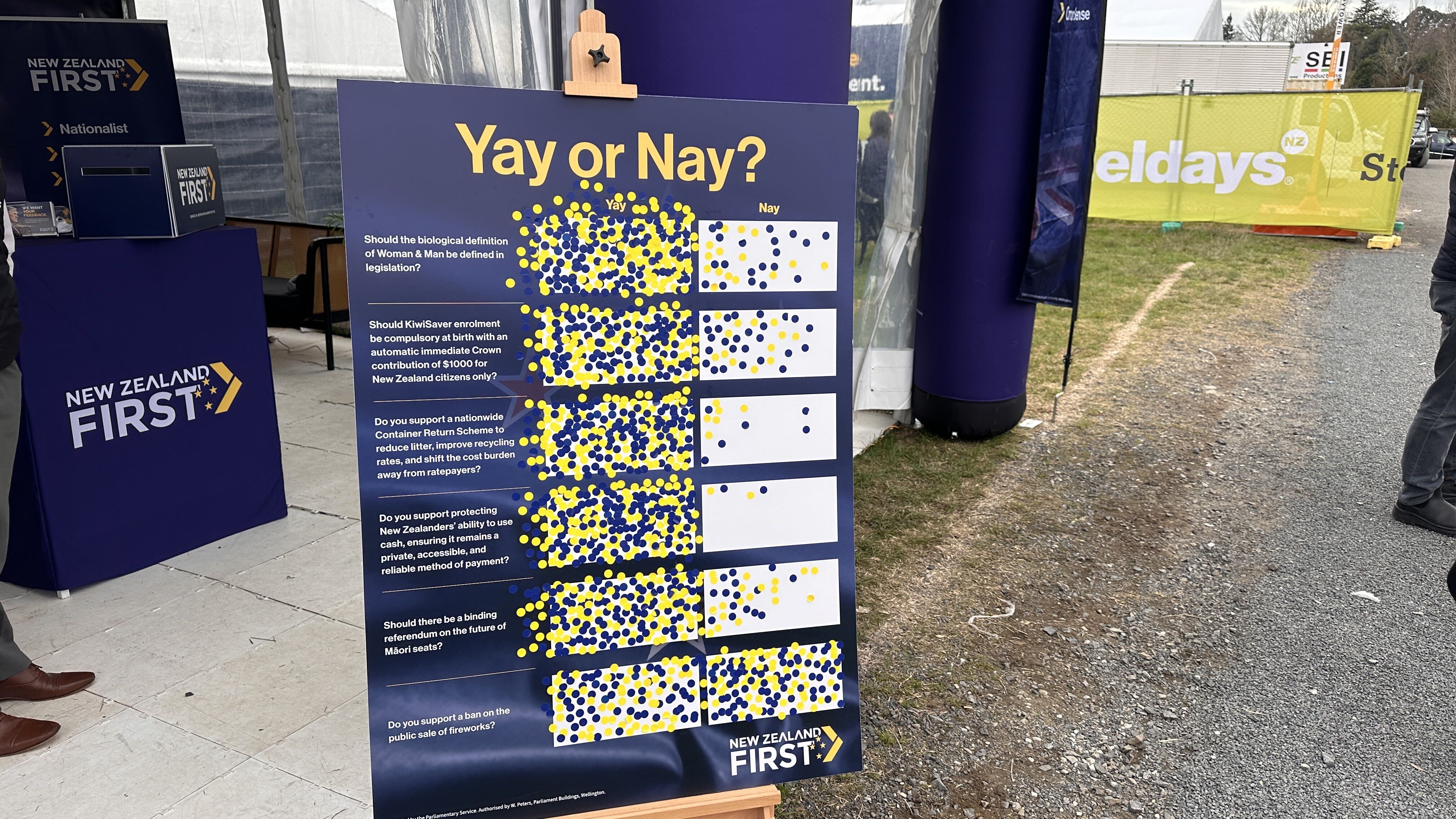
The only question that appeared split down the middle regarded support for a ban on the public sale of fireworks, something the party has a proposed Member’s Bill on.
As Peters was walking through the Fieldays site to his speech, people frequently shouted – and sometimes murmured – “it’s Winston”. When taking photos with attendees, Peters would nearly always tell them to say “cheese”.
Some of NZ First’s big new names, like Nash, Randell and Ngaro, were amongst it.
When Peters arrived and saw Nash, the NZ First leader inspected the back of Nash’s jacket and the party logo it showed.
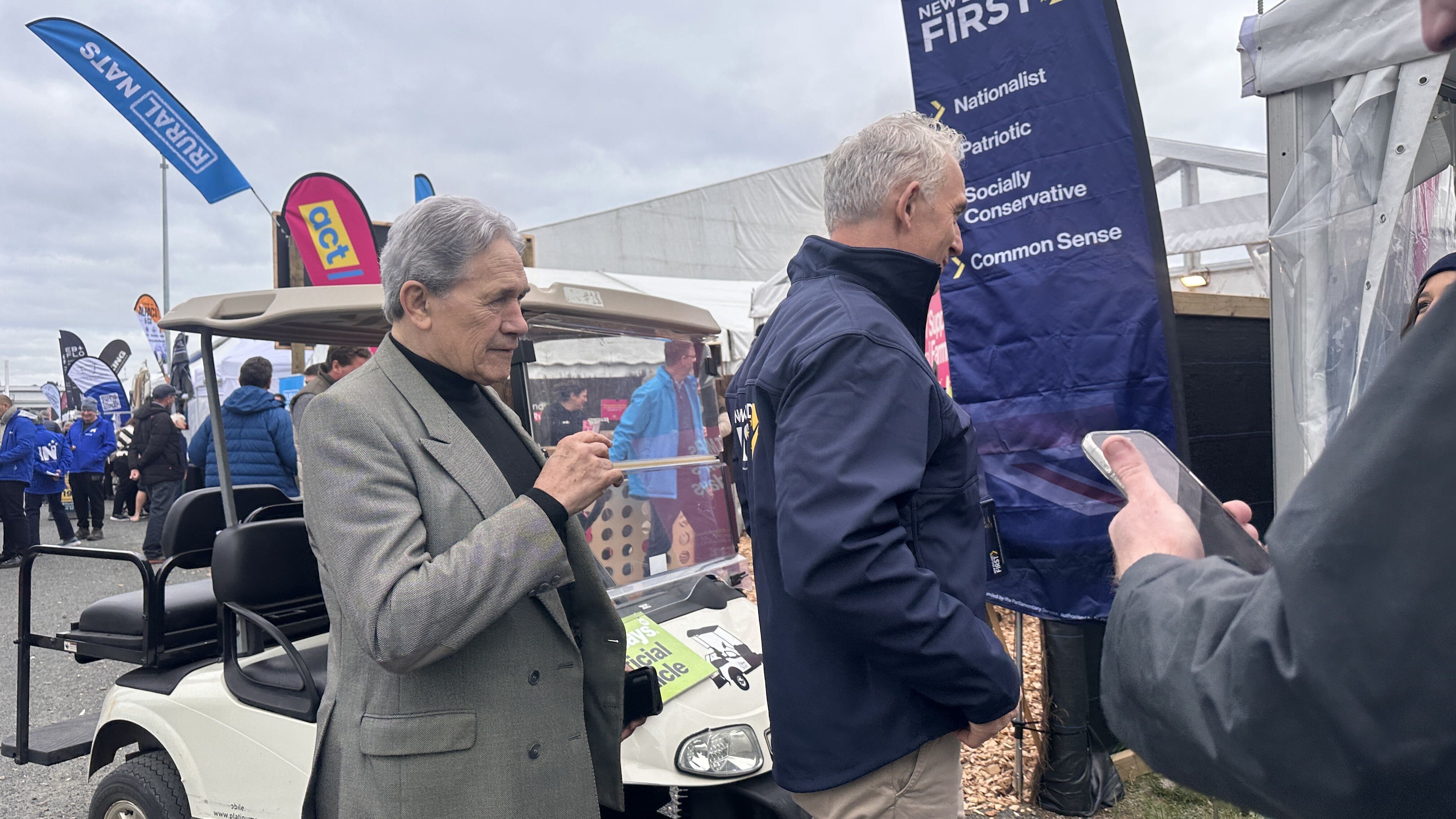
Nash, who’s well accustomed to political campaigning, having formerly been a long–serving Labour MP before turbulence in 2023 led him to be sacked from Cabinet and leave Parliament, told the Herald he was loving speaking to people who “want solutions to answers”.
He said NZ First had “those solutions” and while Labour tended to set up “working groups” and “consider things”, he believed his new party was “the party that does stuff”.
Nash highlighted the Provincial Growth Fund as an example of why “nearly everyone here understands that New Zealand First is the party of provincial New Zealand”.
“People love the politics of pragmatism, and that’s really, really important in this day and age, and that’s what New Zealand First delivers.”
Jamie Ensor is the NZ Herald’s Chief Political Reporter, based in the press gallery at Parliament. He was previously a TV reporter and digital producer in the Newshub press gallery office. He was a finalist in 2025 for Political Journalist of the Year at the Voyager Media Awards.