Forty years after Anzus blow-up, New Zealand is ready to build new alliances – Thomas Coughlan
THE FACTS
It’s been 40 years almost to the month since the United States suspended its Anzus defence obligations to New Zealand.
In that time, New Zealand has had only one ally, Australia – a sort of might-as-well alliance that coexists with our “independent foreign policy” national mythology only because we know the rest of the world, including our enemies, can’t be relied upon to distinguish one country from the other.
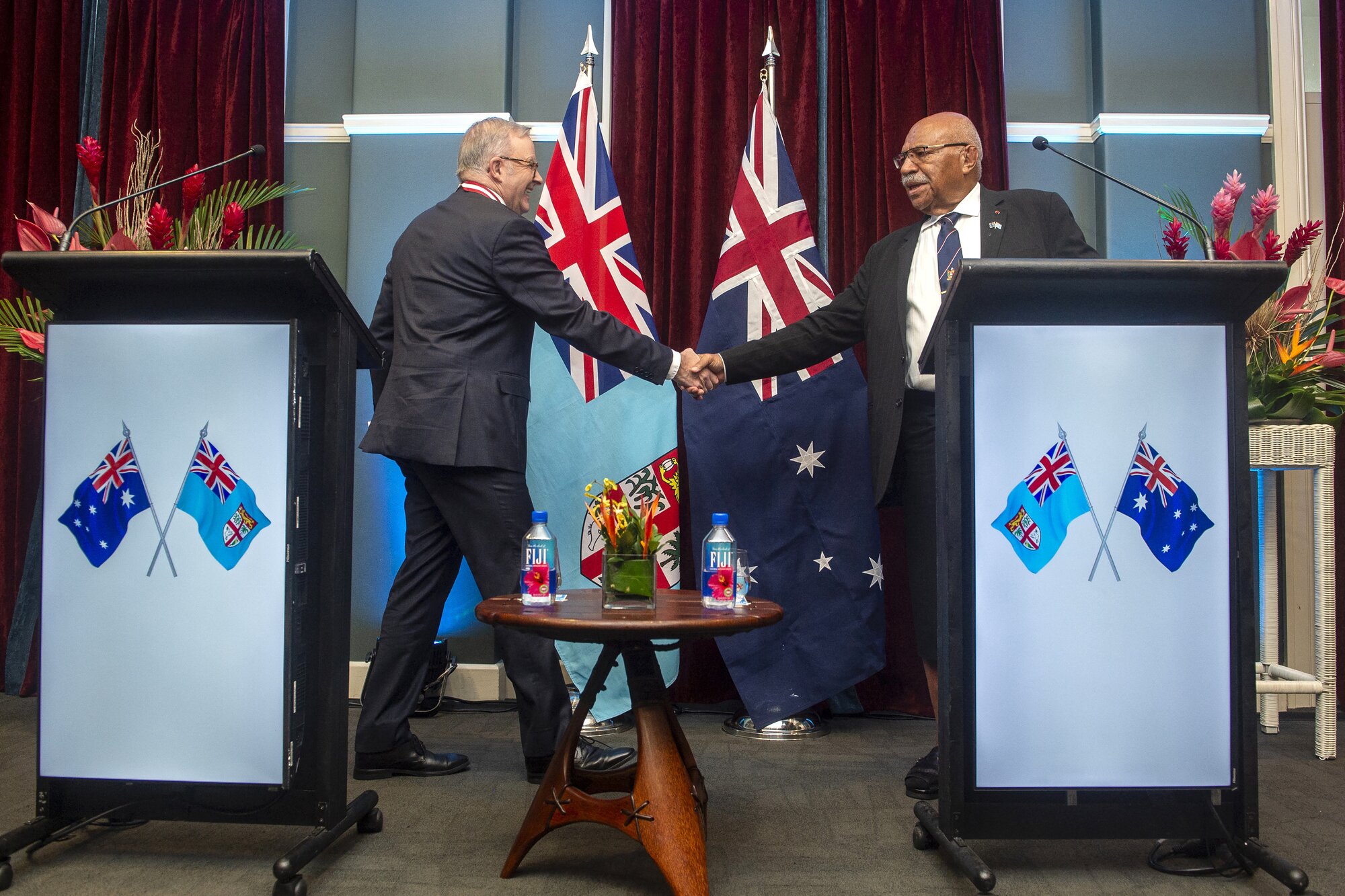
As of Thursday, there’s a chance may change, with the Government confirming it will investigate joining the Ocean of Peace, an Australia and Fiji-led mutual defence alliance for the Pacific.
The deal includes a mutual defence obligation to consult on whether measures should be taken in relation to a “security-related development that threatens the sovereignty, peace or stability” of either party.
That’s not quite an obligation at the level of Nato’s Article 5 – the gold standard of defence packs – which means an attack on one country is considered to be an attack on all members of the alliance, which has a headquarters, secretariat and frequently deploys together under a battle-tested command structure, but it’s a step up from anything to which New Zealand is currently a party.
The Ocean of Peace is growing; Papua New Guinea, which entered into an alliance with Australia last year seems keen to join. Tonga may join too.
Not since the days of Seato, our own Temu Nato, has New Zealand even contemplated such a web of allies.
There’s some confusion over how fast this can be wrapped up, with different sources saying different things about whether a decision will be reached by the election. However fast the Government moves on entering into the deal, it’s almost impossible that it would be ratified by Parliament before the election, meaning that even if the Government did sign up before polling day, the deal could be put on ice by the next Parliament.
Moving fast would be a mistake. This is one of the most significant foreign policy decisions to be taken in a generation. Given it’s so close to the election, it would be right for the matter to be debated on the campaign trial. Given its significance, its fair for the Opposition to weigh in too, as it may be a Labour Government that must contemplate sending New Zealanders into danger to enforce the deal.
But, there’s good reason to doubt the deal will mean Kiwi soldiers heading to defend Fiji any time soon.
As China, the country everyone thinks this deal is aimed at, ably demonstrated this week, any conflict with this alliance would last approximately as long as it takes for an ICBM to reach the Pacific from whichever Chinese submarine was nearest.
But this deal isn’t mainly about deterring a potential invasion, but about keeping invaders and their proxies out of the Pacific in the first place and demonstrating to our Pacific family the depth of our relationship: There is no deeper relationship than a mutual defence agreement, even if the wording of this particular one isn’t quite as strong as others.
What it will involve is joint drills and training, meshing the forces of the countries together to ensure they can fight cohesively if they were ever called upon to do so. Alliances, almost by necessity, draw countries closer together, squeezing out space for anyone else. It’s not hard to see why China-spooked Pacific nations, including Australia and New Zealand, like the idea.
This deal will fill a perceived power vacuum in the Pacific, creating a military version of the “Pacific solutions to Pacific problems” mantra that has sat at the heart of Pacific dealmaking for decades.
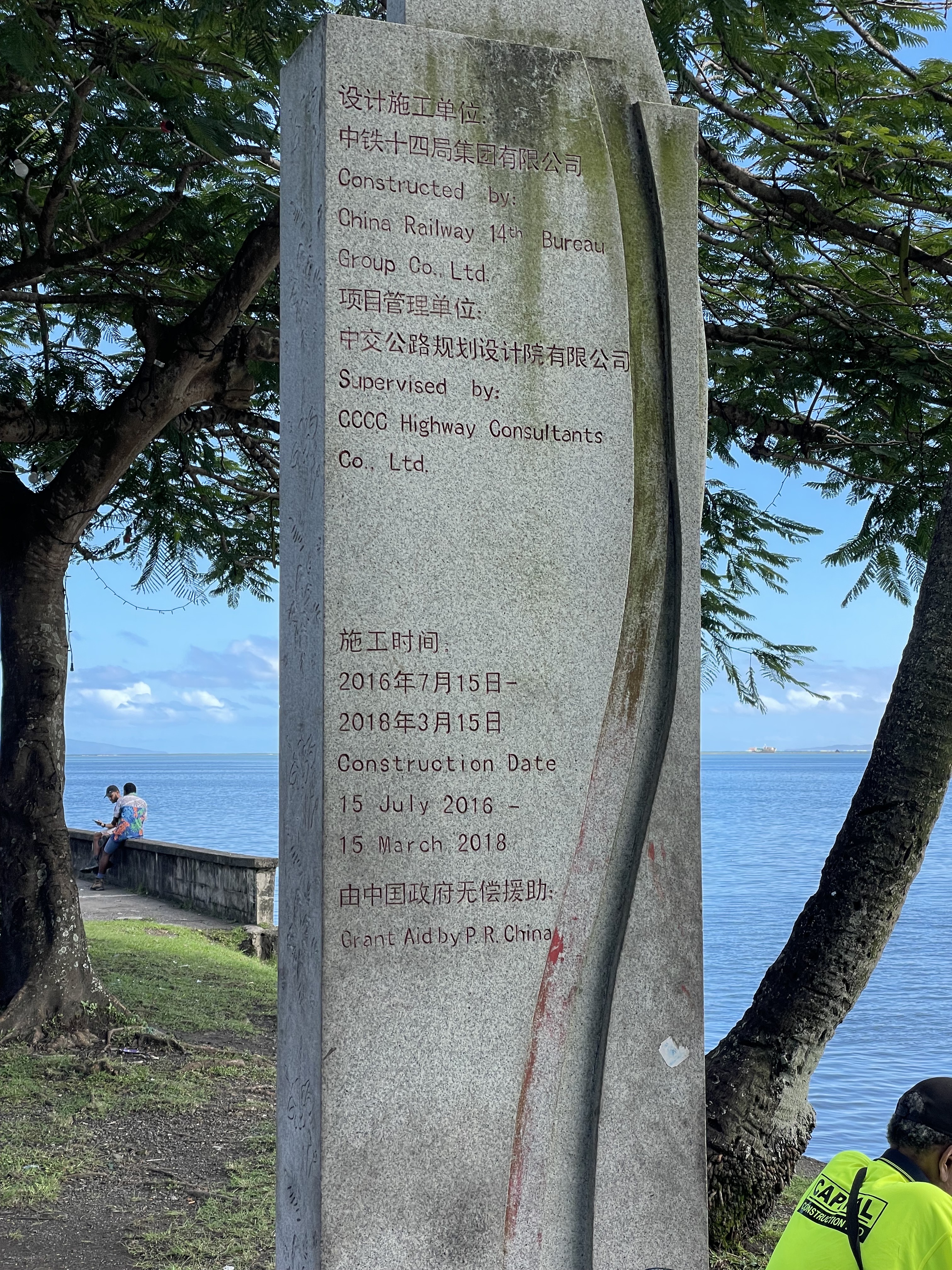
In the past decade, we’ve seen an increased Chinese interest in the Pacific. Chinese overseas economic development spend to the region has picked up. One of the main bridges in Suva, linking the waterfront with the capital’s impressive covered market, was built and funded by China and is called the Fiji-China friendship bridge in recognition of that.
Last year, I trekked through the hinterland behind Suva on a reporting trip and was surprised at the number of people kitted out in swag from Chinese construction companies. Chinese workers had been through town recently on aconstruction project and had left piles and piles of clothing behind.
In Solomon Islands, Chinese presence is more vivid – and powerful. In 2022, the country entered into a policing and security pact with China. Chinese police now keep the peace in parts of the country, particularly around China’s mining operations. The police presence gives China great power in, and potentially over, the country.
New Zealand has long recognised this kind of encroachment as a real security threat. The 1987 Defence White Paper, issued by the then-Labour Government after the Anzus blow-up, made the point, focusing more explicitly on South Pacific security more than had been done in the past, when it was interlinked with the protections offered by Anzus.
Security would no longer be earned by gallivanting around the world with the Americans on whatever domino theory-inspired crusade took their fancy in the hope that when times got tough, they’d step up to defend us. From 1987, security started at home.
Back then, however, the region was far more benign. The paper noted security in the region was primarily of the economic variety, with the main fear being destructive cyclones and natural disasters. Our defence posture, back then, would involve using the military to assist in responding to those disasters.
This South Pacific focus was rolled back slightly by the Bolger Government; ironic, given that the Government (then under Jenny Shipley’s leadership) actually deployed troops to East Timor (alongside troops from Australia and Fiji).
The South Pacific focus has only grown in importance since.
The 2021 Defence Assessment published by the Ardern Government put things more explicitly, stating that one of the gravest security threats facing New Zealand was the “establishment of a military base or dual-use facility in the Pacific by a state that does not share New Zealand’s values and security interests”.
Officials warned that “such a development would fundamentally alter the strategic balance of the region”.
“In addition to crowding out access to limited Pacific infrastructure, such a military facility would enable a greater quantity, quality and diversity of military capabilities to operate in and through the region, as well as potentially supporting grey zone and other activities counter to New Zealand’s interest”.
This week’s announcement is a logical extension of that, filling a vacuum in the Pacific by establishing a very clear security architecture that one day may include every state in the region with a military.

This is a big step for New Zealand. For decades our relative lack of alliances has been seen as a function of our independent foreign policy.
We tell ourselves that we make and break friendships as we see fit in light of the circumstances of the time — free of the constraints of alliances signed generations ago. Certainly the Nato alliance seems an odder and more unwieldy grouping now than it did after World War II when the alliance was created.
But a Nato-member diplomat told me that they thought this was a little funny. Every sovereign country has an independent foreign policy. Every Government makes its own choices. A country with plenty of alliances can still independently choose how to enforce them – or how not to enforce them. New Zealand’s fraught American alliance is a lesson in this.
In fact, while the Fourth Labour Government is responsible for weaving the independent foreign policy idea into our national myth as it defended its nuclear-free policy, the idea had been floating around since the 1940s, when the Government established what would become the Ministry of Foreign Affairs and Trade (MFAT).
There are unintended consequences to these alliances too. The 1987 white paper led Prime Minister David Lange to conclude that our expensive Defence Force had been built to accommodate the needs of the United States as much as our own. Sometimes independence is lost by accident rather than design.
New Zealanders will need to ask themselves whether the past 40 years of independent isolationism look somewhat anachronistic as China’s power grows ever stronger and ever closer – or whether our 1980s-style of independence is worth holding on to.