‘Hopelessness and desperation’: The impact of new emergency housing policies on those at the coalface
Government policies on emergency housing are contributing to a sense of “hopelessness and desperation” among the homeless, social service providers have told the Government.
Their on-the-ground feedback is contained in a briefing to ministers of a survey of 15 homelessness services that also said the “absence of emergency housing has noticeably worsened the homelessness situation”.
Tighter restrictions on emergency housing that came into force in August 2024 have been hailed as a game-changer by Associate Housing Minister Tama Potaka, but criticised as turning desperate people into the streets.
The Government has already achieved its public service goal target of reducing the number of households in emergency housing from 3100 to 800 by 2029. The number in September 2025 was 441.
More than 1000 households and 2300 children have been moved to a social housing tenancy, while emergency housing in Rotorua has dropped from a peak of 250 households to zero.
“Rotorua is significantly better now that we’re stopping emergency housing motels, with support from Government,” Rotorua Mayor Tania Tapsell told the Herald in 2025.
But homelessness has been rising as the doors to emergency housing have narrowed. The number of successful applications has plummeted following new rules that allow grants to be declined if a person caused or contributed to their own need.
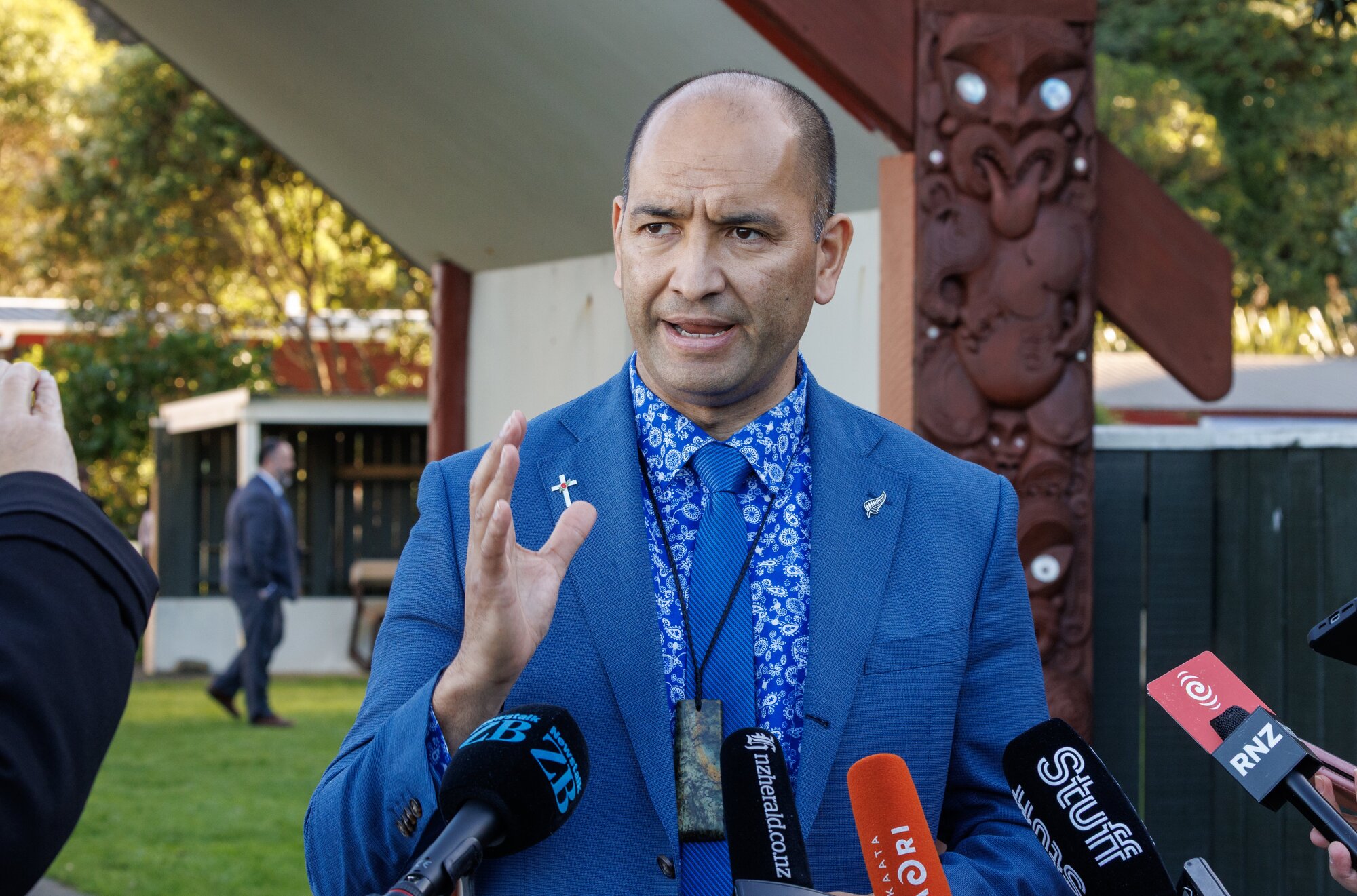
The Government has challenged whether its emergency housing policies have contributed to rising homelessness.
But it concedes it has no information on the living arrangements for about 20% of those who have moved out of emergency housing.
The Homelessness Insights Report in June 2025 showed at least 800 people estimated to be living without shelter in Auckland, with 270 people in Christchurch and 140 people in Wellington. In July, a report from the Ministry of Housing and Urban Development said homelessness appeared to be growing faster than the rate of population growth (3%).
About the same time, the social service providers delivered their report to Potaka, and in September, the Government announced a series of actions to reduce homelessness.
This included a further 300 Housing First placements, though Auckland and Wellington city missioners said this was nowhere near enough.
Services tell minister: Homelessness is rising - almost everywhere
The announcement followed a key meeting in July with the National Homelessness Data Project, which is headed by sector leaders that include the Salvation Army, Kahui Tu Kaha, Christchurch Methodist Mission, University of Otago, Wellington City Mission and Downtown Community Ministry, and supported by Community Housing Aotearoa and the Housing First Backbone.
A Ministry of Housing and Urban Development briefing, based on interviews with the service managers on the homelessness front lines, accompanied the meeting.
“Almost all (13 out of the 15 surveyed) services reported further increases in homelessness in their communities over the past six months and none reported a reduction in homelessness,” said the briefing, released to the Herald under the Official Information Act.
Policies were described as “too harsh”, while tightening access to emergency housing “and other hardship support [are] contributing to the sense of hopelessness and desperation of those experiencing homelessness”.
The new self-contributing criterion was singled out.
“People seeking support do not understand decisions made by MSD [Ministry of Social Development] to decline support ... Of particular concern is the way criteria such as ‘contributing to their own homelessness’ are interpreted and applied by MSD,” the briefing said.
“The absence of emergency housing has noticeably worsened the homelessness situation, highlighting the need for alternatives.
“Single people are struggling to find adequate support, with families prioritised by the Government for the limited housing available.”
It said the organisations working at the coalface were facing “reduced resources, which reduces capacity to respond to needs”, while provincial and small-town communities were facing “significant need relative to their size and location”.
Those issues were expected to worsen, the briefing said.
How to respond: Officials brief minister
Officials prepared potential responses for Potaka on issues that service managers were expected to raise in the meeting.
This is standard practice and, as it was in this case, the suggestions often become key talking points for the minister involved.
The suggestions included:
How to fix it
The briefing outlined the service providers’ recommendations, including investing in wrap-around health and addiction services and housing provision, reviewing the rules on accessing emergency housing, and allowing greater discretion in those rules to ensure they don’t lead to more homelessness.
Greater discretion was one of the key aspects of the Government’s announcement of its plan to tackle rising homelessness in September. It remains to be seen whether this has had an impact on the acceptance rate for emergency housing applications.
The Government has also been considering “move on” orders to clean up Auckland CBD, even though police proceedings for public order and health and safety offences are at a 10-year low.
Prime Minister Christopher Luxon was adamant any policies would have to support the needs of rough sleepers rather than moving the problem to another part of the city.
At the end of November, the Government and Auckland Mayor Wayne Brown announced:
The Government was still seeking advice on further measures, including “move-on” orders.
Derek Cheng is a senior journalist who started at the Herald in 2004. He has worked several stints in the press gallery team and is a former deputy political editor.