How Christopher Luxon’s law and order reforms line up with the evidence - Derek Cheng
THREE KEY FACTS
Derek Cheng is a senior journalist who started at the Herald in 2004. He has worked several stints in the press gallery team and is a former deputy political editor.
OPINION
Stop the dumb stuff. Supercharge what’s working. Outcomes, outcomes, outcomes. These are some of Christopher Luxon’s favourite lines, and they make perfect sense.
The Prime Minister’s got plenty more whenever he hears the words “law and order”: “I’m sick of it. People are sick of it. The country is sick of it. You cannot have a 33% increase in violent crime, a 50% growth in gangs, a quadrupling of ram raids, a 100% increase in retail crime ... New Zealanders don’t feel safe in their own homes, businesses and communities.”
So what’s he supercharging in the law and order space? A lot, from Three Strikes to boot camps for youth offenders to anti-gang laws. Do they work? Not according to evidence.
The last boot camps under a National-led Government had reoffending rates north of 80%. And while probably not all of them in the history of the world have failed, academic reviews suggest it’s the quality of support and programmes that makes a difference, that is, nothing necessarily to do with the boot camp model.
As for the anti-gang laws, Ministry of Justice officials were scathing not only in saying there was no evidence they would work, but they could make matters worse. The independent evidence from Australia is also hardly an endorsement: the powers were often used against non-gang people, including the homeless, young and indigenous.
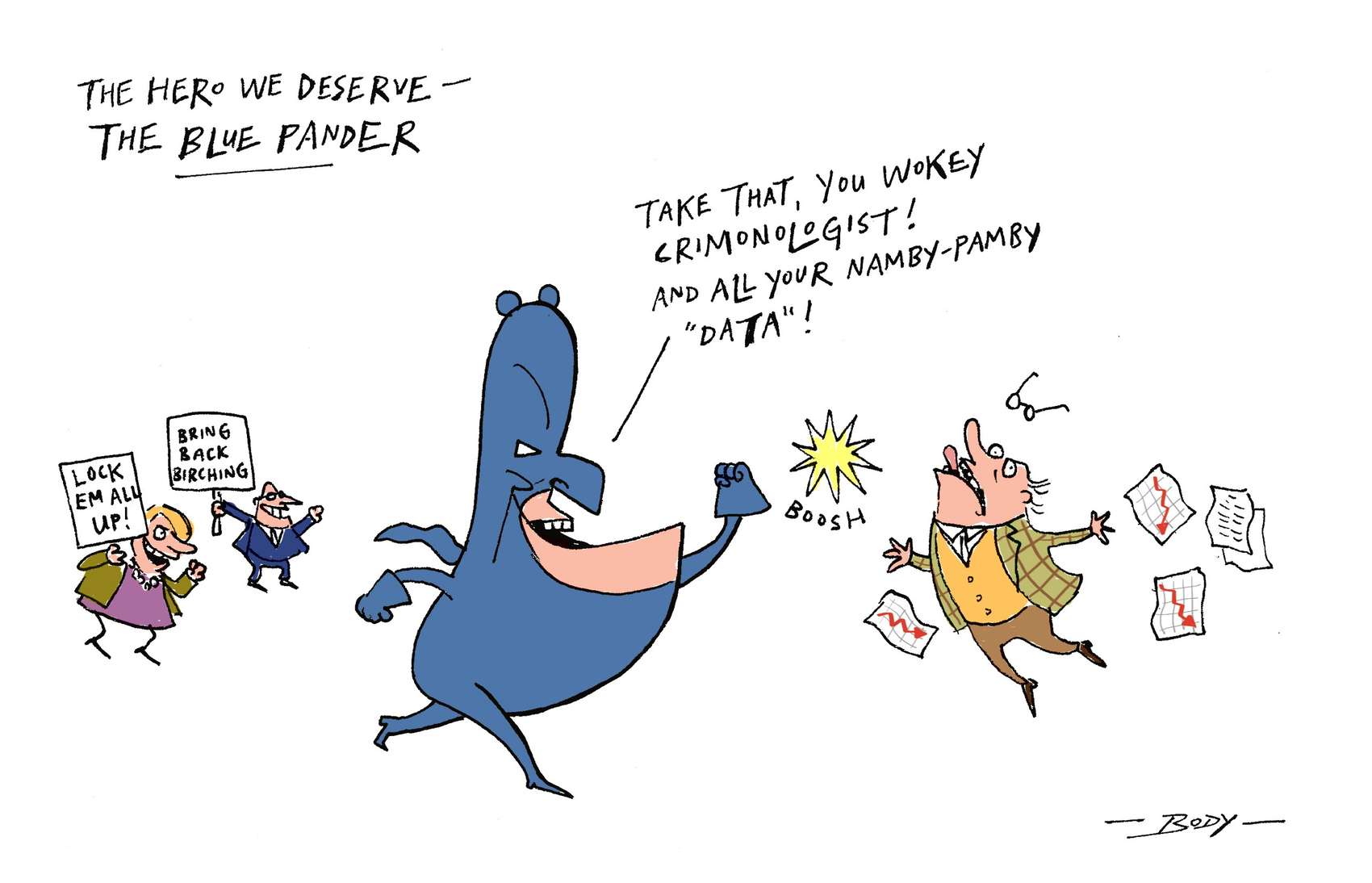
And Three Strikes version 1.0 made no discernible difference to crime rates but left many people with sentences that breached their right against severely disproportionate punishment, leaving the Crown hundreds of thousands of dollars out of pocket in compensation payments.
Version 1.0 had a suggestion of a 1.4 percentage point deterrent effect. But this was offset by a negative impact on rehabilitation: criminals in jail with no parole (like those serving time for strike-two or strike-three offences) are five times more likely to be back in prison within a year of release than those who serve half their sentence and are released on parole (with all the supervision that parole entails).

So said the Ministry of Justice in its regulatory impact statement, perhaps the only document more scathing than their assessment of the anti-gang laws. It’s the officialese equivalent of “this is dumb stuff” - no “significant quantifiable benefit” while costing millions, exactly what Luxon railed against (not without cause) with Labour.
It also seems to have been written specifically to cast long shadows over the Government’s favourite law and order claims: that putting people behind bars for longer improves public safety (or defers the harm until they’re released or redirects it into prison); and that harsher sentences deter criminals (not compared with certainty of being caught), restore public confidence (the opposite happened between 2003 and 2016) and are good for Māori, who make up 37% of crime victims (unable to be tested).
Officials are hardly omniscient, of course. They put policy through the wringer and give ministers their reckons. It’s common for ministers to disagree.
Nor are any crime statistics definitive, or put in proper context. So let’s look at Luxon’s.
Gang membership up 50%: One of the main contributing factors is the 501 deportees from Australia, which National has as much control of as Labour.

Ram raids quadrupled: The peak was in August 2022, amid a global trend in rising youth crime - fallout from increased isolation due to being schooled at home during the pandemic.
Retail crime has doubled: Much can be ascribed to the software Auror, an app-based programme that makes it easier to report retail crime. In 2017, 15% of retail crime was reported through Auror, jumping to 65% by 2022.
Violent crime up 33%: This is police data on reported victimisations for “acts intended to cause injury”, but this captures all reports, including anything vexatious or unproven. It’s a very different picture - falling or stable year on year from 2017 to 2022 - looking at the number of people charged and convicted for this offence.
One of Luxon’s public service goals is to reduce the number of violent crime victims by 2030, but not via the police metric he constantly cites. Instead he is using violent offences (assault, robbery and sexual assault) as measured in the NZ Crime and Victims Survey (NZCVS).
This is considered a more comprehensive measure because, unlike police and court data, it includes unreported crime (about three-quarters of all crime is unreported).
But citing the trend with this measure doesn’t suit Luxon’s political point, that violent crime rose dramatically under Labour. The survey runs annually and its six reports cover March 2018 until October 2023, almost all the time Labour was in office. The latest survey, released this week, says over that period there’s been “no significant difference” in the proportion of New Zealanders who experienced a violent offence.
None of this means that crime isn’t a problem, or that it isn’t increasing. The main thing to look for is trends, which are generally steady or rising slightly in the last couple of years, including for youth crime.
And the trend for public confidence in police is dropping, as are public perceptions of feeling safe - though both are still high.
This doesn’t align with Luxon’s rhetoric - that Kiwis don’t feel safe in their homes - but he’s right that some of the data is trending the wrong way and needs to be reversed.
His other point is that it’s about accountability, and putting victims ahead of offenders. That justifies longer sentences, which is the Government reflecting the will of the community.
This doesn’t mean mob justice, but it’s a move in that direction. Judges will still have discretion but the Government will shift the spectrum of where a decision might land towards the more punitive.
There are two main reasons why Luxon can’t really practise what he preaches and dump the stuff with no evidence behind it - even if he wanted to.
Firstly, going back on what he campaigned on would be politically foolish, nor would it go down well with coalition partners, who would likely be comfortable if Luxon wanted to shift the spectrum even further.
And “no evidence” doesn’t mean those policies won’t work, or didn’t work in the case of Three Strikes 1.0. How can it be known definitively that it didn’t deter one despicable criminal act? It can’t.
Even if the policies are ineffective, they’re only one part of the enormous, intersecting puzzle that feeds the crime equation, and crime trends may still end up falling. This is more likely if the non-punitive stuff - cracking down on truancy, more visible police on the beat, Social Investment 2.0, rehabilitation for remand prisoners - is effective (and supercharged?).
The second obstacle to Luxon walking the walk is that “tough on crime” resonates with voters. In one survey, a plurality of voters (47%) think imprisonment is being used “too little”. A strong majority of voters- and even 48% of Green voters - support Three Strikes.
Supercharge the good stuff and drop the dumb stuff, then, as long as the focus groups say it’s okay.