Dave Rennie hire tests if NZ Rugby is ready to open doors to outsiders – Gregor Paul
THE FACTS
When the two Daves – Rennie and Kirk – held court after the appointment of the former as All Blacks coach, they presented as worldly, open-minded and acutely conscious that New Zealand is one small part of international rugby’s ecosystem.
Chairman Kirk said Rennie’s wider global exposure, and specifically his time in the Northern Hemisphere with Glasgow, where he picked up insight into the playing mentalities of the Six Nations, was a critical factor in winning him the job.
There was even an admission from Kirk that New Zealand now lags the Northern Hemisphere in some respects.
“The game is changing a lot and the Northern Hemisphere, in some cases, we don’t like to say it, but it’s true, are leading. So people who’ve been in that environment were valuable,” he said.
Rennie stayed on the same narrative by urging Kiwis to acknowledge the quality of rugby played in the north while saying there is an outdated and erroneous belief that all the game’s innovation happens in New Zealand.
The double act Daves seemed progressive, internationalist even, or at least outwardly focused enough to hold a deep understanding of the wider global environment in which the All Blacks operate.
This was a significant departure from New Zealand Rugby’s policies and attitudes of the past decade that have left the national body open to accusations it has governed with a miscalculation about how much rugby capital the country has in the bank.
There’s maybe even been a touch of unfounded arrogance and lack of self-awareness about the way New Zealand Rugby (NZR) has rejected innovative ideas, such as a Super Rugby Pacific draft, privately saying it couldn’t agree to let key talent be exposed to the vastly inferior high-performance systems of Australian clubs.
This, while its own player pathways are universally recognised as shambolic – a chaotic bunfight between provinces and Super Rugby clubs where it is not clear who has responsibility for what.
This sniffiness about inferior, foreign programmes has extended to Japan, where it’s obvious that part of NZR’s reluctance to consider changing its eligibility laws is based on its conviction the Top League, where every Kiwi still of the calibre to play for the All Blacks goes, is a junkyard for has-beens.
And yet it’s a league that has by far the superior coaching capital and contains significantly more World Cup winners and genuine world-class players than Super Rugby.
So too has there been a protectionist element to coaching roles in New Zealand – in the case of the All Blacks head coach it is explicit and non-negotiable that the occupant must be a New Zealander, while with Super Rugby roles, particularly assistants, the recruitment of outsiders is not encouraged with various logistic obstacles put in the way.
A few foreigners such as current Hurricanes coach Clark Laidlaw, as well as Ronan O’Gara (Crusaders assistant 2018-2019) and Mick Byrne (All Blacks skills coach 2005-2015), have found a way into the system, but three appointments hardly suggests there is an open door for non-New Zealanders.
When former Prime Minister Sir John Key said in 2021 that New Zealand had become a smug hermit kingdom, he meant in its political handling of the Covid pandemic, but he could have broadened the remit to national rugby agendas and not been wrong.
For 26 minutes, then, as the two Daves fronted the media corps on Wednesday, it became possible to believe that NZR, after years of being held hostage by its isolationist mindset, is now ready to usher in a new era of Glasnost.
But how ready NZR is to shift from its protectionist and slightly xenophobic past, and reconfigure its high-performance mindset from closed to open, is going to be tested by Rennie.
The new All Blacks supremo is in the process of recruiting his wider coaching team and is looking to bring in Neil Barnes to work with the forwards alongside the incumbent Jason Ryan, who will have a slimmed-down brief to focus more on scrums and mauls.
Rennie is also keen to bring in his current Kobe assistant, Mike Blair, who won 85 caps for Scotland and is a British and Irish Lion, to run the attack.
Blair and Rennie go way back, first working together at Glasgow. As Rennie said, the new coaching group faces a sprint to the World Cup, so trust between the team is paramount, and Blair also knows precisely what sort of game model the new All Blacks coach is looking to build.
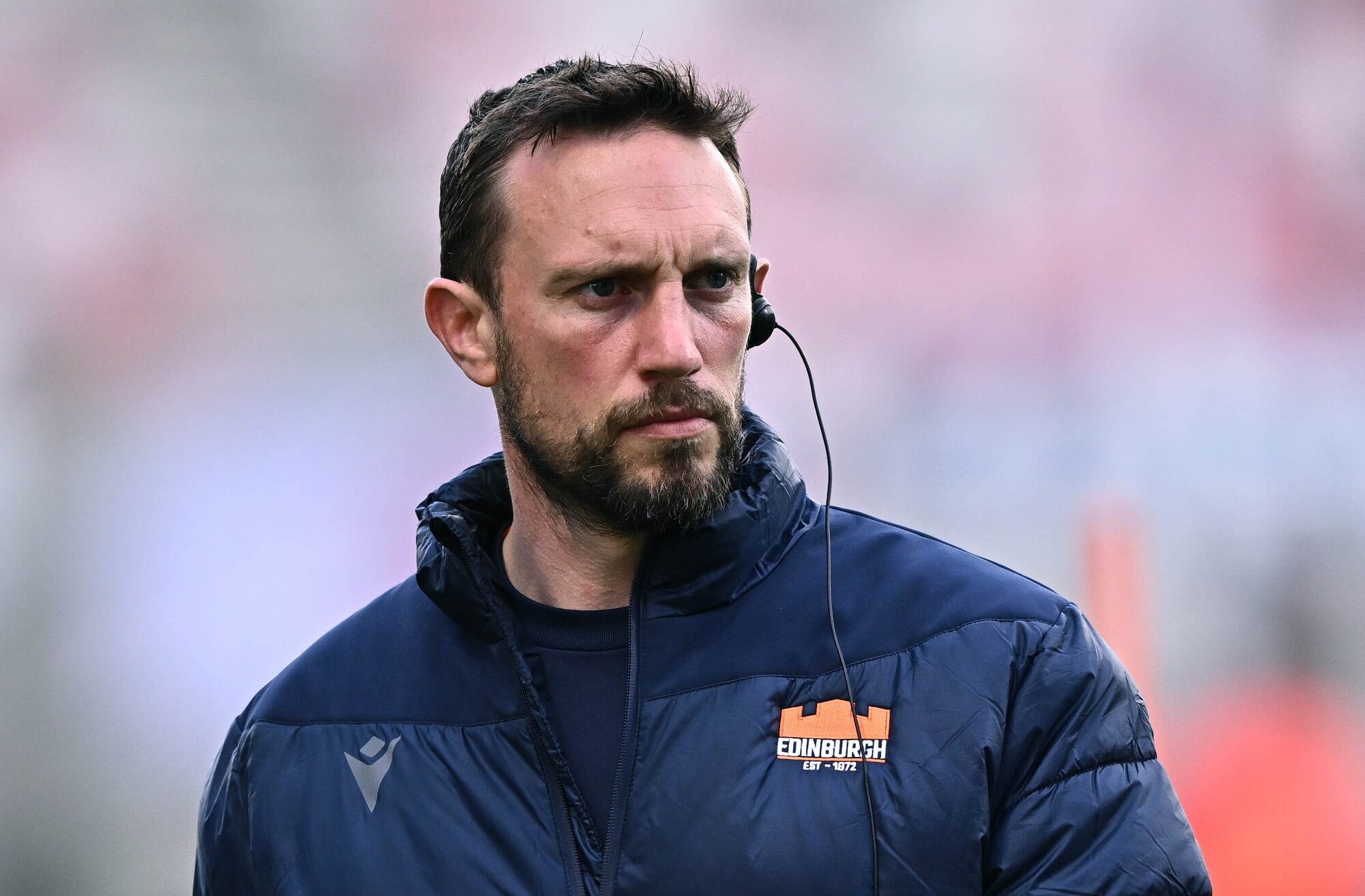
Blair, who is bright, articulate and worldly having played in Scotland, France and England, and coached in Japan, seems like the perfect choice – but for the fact he’s Scottish.
The Springboks have fully embraced international appointments in their set-up with two Irish assistants in Jerry Flannery and Felix Jones and New Zealander Tony Brown, but can NZR, even with Kirk’s acknowledgment about which hemisphere may be leading the rugby world right now, sign off on a Scotsman joining the All Blacks coaching staff?
Kirk, who lives in Australia, almost certainly doesn’t see nationality as any pre-determined indicator of likely success, but he may have been spooked by his appearance on the Mike Hosking Breakfast on Newstalk ZB, on which he faced a question from a listener about whether former All Blacks coach Scott Robertson was moved on because of feedback from North Island-based players.
It demonstrated not just the provincial bias endemic among some domestic rugby followers and their susceptibility to believe in ill-founded conspiracies, but the severely restricted scope of vision they hold about the scale of the world in which the All Blacks operate.
Appointing Blair would be a welcome admission that NZR knows it doesn’t hold all the high-performance answers, but it will be a hard sell to a public that will inevitably count the number of Chiefs players in Rennie’s first All Blacks squad and cry foul.
The second major test of NZR’s Glasnost era will come when Rennie, who has already said as much publicly, challenges the current eligibility rules around All Blacks selection and says it’s mad that he can’t pick a player such as Brodie Retallick, who left for Kobe after the 2023 World Cup but is now fitter, faster and stronger than he’s ever been.
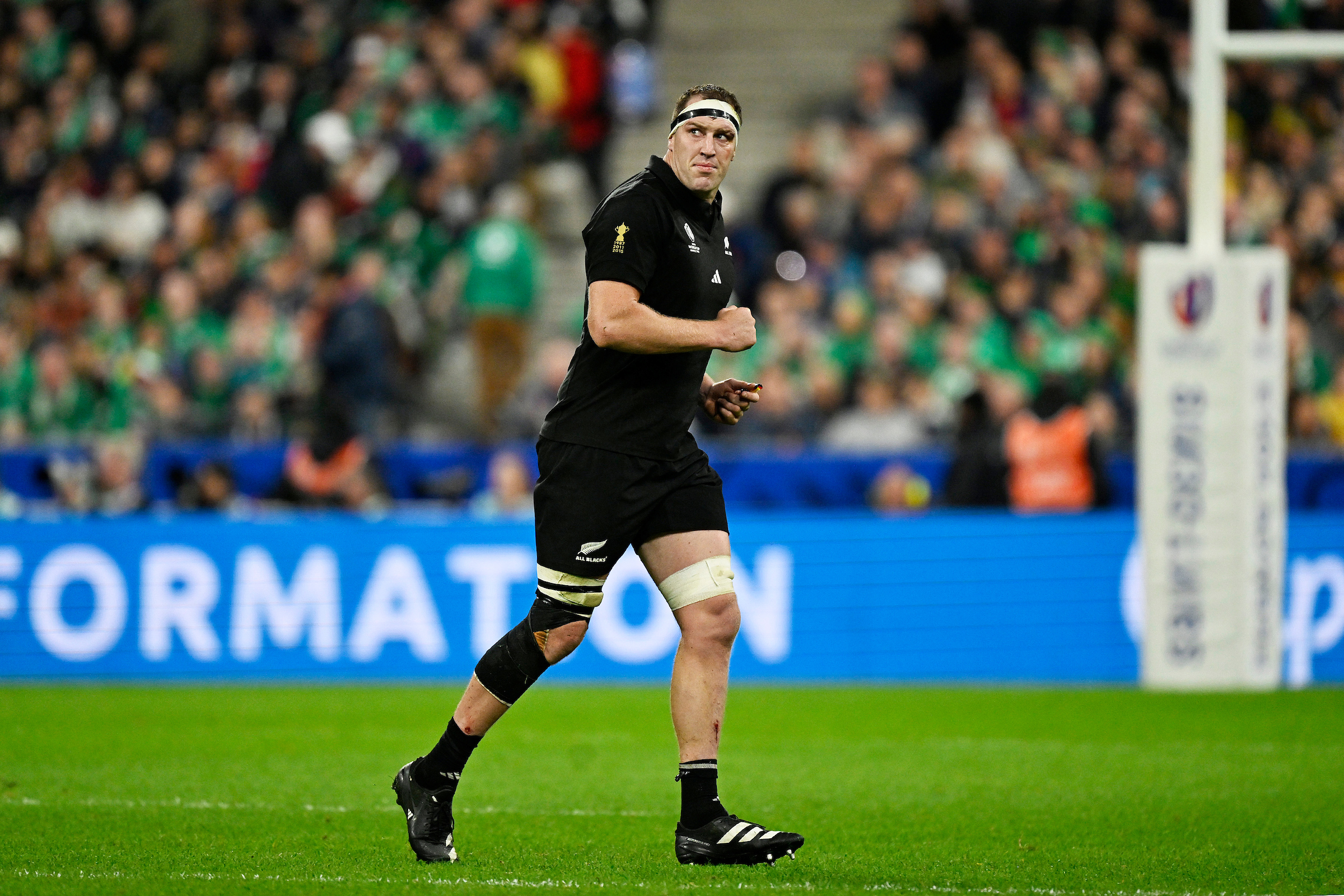
Rennie, having spent four seasons in Japan, was clear that the standard of rugby is good and improving, but more pertinently, that spending time there has a healing and rejuvenating power for veteran athletes like Retallick.
He hasn’t laid out how he would like things to change, but it’s easy to imagine him making a commonsense plea to say that anyone in Japan with 80-plus test caps should remain eligible and trust him to work out whether they merit selection or not.
It would be a hard case to reject if NZR really has accepted that it holds fewer high-performance trump cards than it previously realised, and that the game in New Zealand can be strengthened, not weakened, by embracing some foreign influence.
Gregor Paul is one of New Zealand’s most respected rugby writers and columnists. He has won multiple awards for journalism and written several books about sport.